
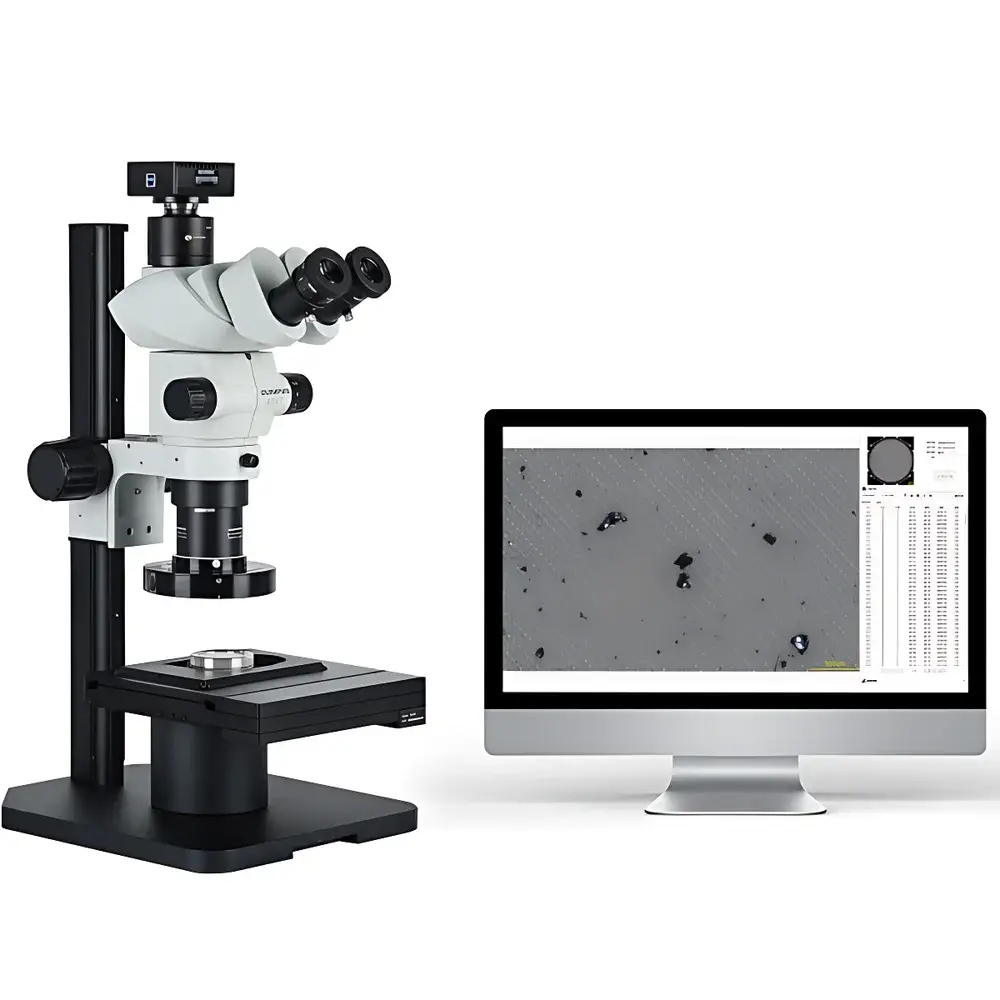
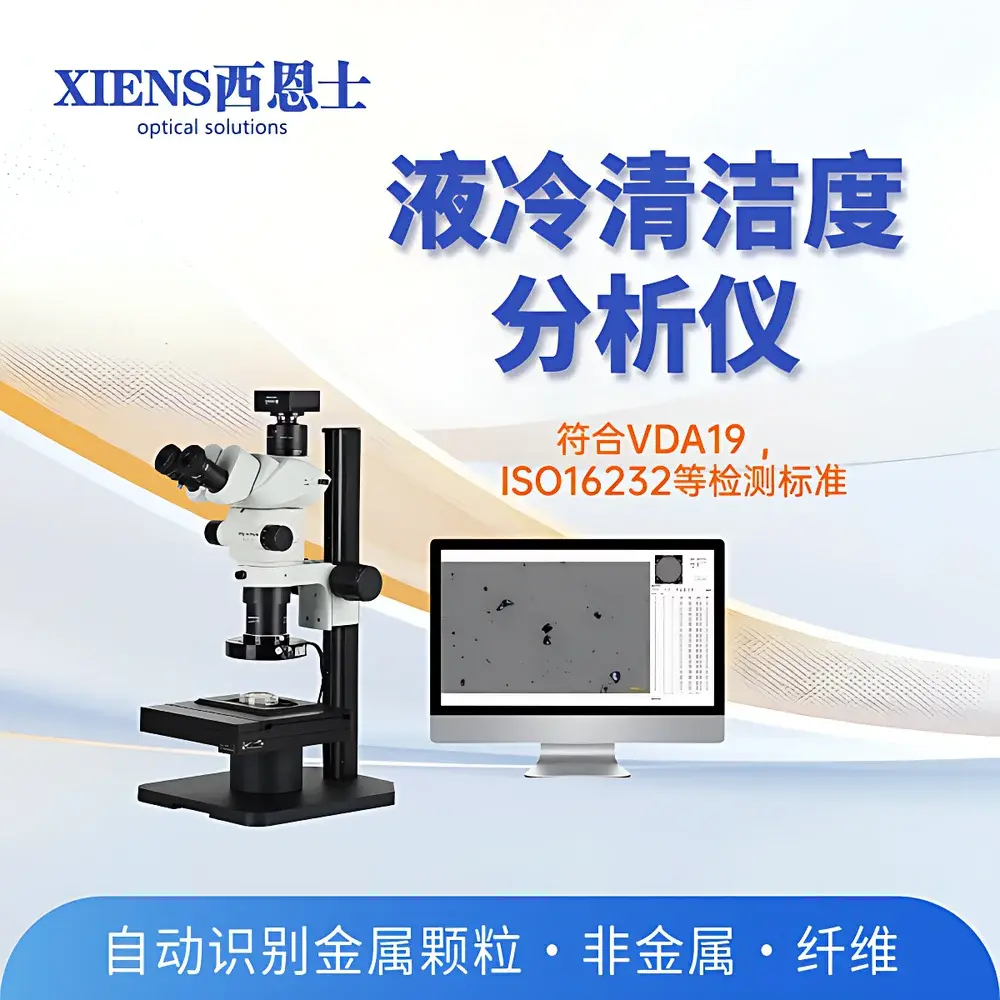
SinCE SinAPC-15A Automated Coolant-Based Particle Contamination Analyzer
| Brand | SinCE |
|---|---|
| Origin | Jiangsu, China |
| Manufacturer Type | Authorized Distributor |
| Regional Classification | Domestic (PRC) |
| Model | SinAPC-15A |
| Pricing | Upon Request |
Overview
The SinCE SinAPC-15A Automated Coolant-Based Particle Contamination Analyzer is a purpose-built optical metrology system designed for quantitative particulate contamination assessment in precision engineering components—particularly those exposed to liquid cooling circuits, such as automotive powertrain modules, electric vehicle battery cooling plates, hydraulic valves, and aerospace heat exchangers. Unlike conventional dry-sampling microscopes or manual filter analysis workflows, the SinAPC-15A integrates coolant-coupled particle extraction, automated filtration, digital microscopy, and ISO 16232-compliant image-based particle classification into a single, closed-loop platform. Its core measurement principle relies on controlled fluidic transfer of contaminants from component surfaces into a defined coolant medium, followed by vacuum-assisted membrane filtration and high-resolution stereo microscopic imaging under standardized illumination (LED cold white light, adjustable intensity). The system operates on the fundamental premise that particle mass, size distribution, and morphological classification (e.g., metallic vs. non-metallic, fibrous vs. granular) are directly correlated with functional risk—especially in systems where residual debris may induce abrasive wear, flow restriction, or electrochemical degradation.
Key Features
- Integrated coolant handling module with programmable flow rate (0.5–5.0 L/min), temperature stabilization (±1.5 °C), and particle suspension homogenization via ultrasonic agitation prior to filtration
- Automated dual-stage filtration: primary coarse pre-filter (100 µm mesh) followed by secondary analysis-grade membrane (pore size: 5 µm or 10 µm, certified for ISO 16232 Annex B compliance)
- Stereo microscope optics with 6.7–45× continuous zoom, motorized Z-axis focus control, and calibrated pixel-to-micron mapping (0.58 µm/pixel at max magnification)
- Automated particle detection and classification engine compliant with ISO 16232-10:2018 criteria—including length, width, aspect ratio, convexity, and grayscale threshold segmentation
- Full audit trail generation: time-stamped acquisition logs, operator ID linkage, instrument calibration status, and raw image archiving with embedded EXIF metadata
- Modular design supporting optional accessories: automated sample carousel (up to 12 parts), solvent-resistant fluid path upgrades, and GLP-compliant electronic signature integration
Sample Compatibility & Compliance
The SinAPC-15A accommodates components ranging from small solenoid valves (<50 g) to large EV battery cooling manifolds (≤5 kg, max dimension 350 mm × 250 mm × 120 mm). Sample mounting utilizes configurable fixtures with vacuum or mechanical clamping; internal cavity flushing is supported via custom nozzles with pressure regulation (0.1–0.6 MPa). All analytical outputs conform to ISO 16232 (Road vehicles — Cleanliness of components of fluid circuits), including mandatory reporting per categories A–F (particle size classes) and material-type sub-classification (ISO 16232-9 Annex D). System validation documentation supports IQ/OQ protocols aligned with ISO/IEC 17025:2017 requirements. While not FDA-registered, the architecture meets foundational data integrity expectations outlined in FDA 21 CFR Part 11 for electronic records when deployed with validated software configuration and access controls.
Software & Data Management
The proprietary SinCE VisionSuite v3.2 software provides a secure, role-based interface for method creation, acquisition control, particle enumeration, and report generation. Each analysis session generates a structured XML dataset containing particle coordinates, morphometric parameters, and contextual metadata—exportable in CSV, PDF/A-2, or ASTM E2928-compliant formats. Database management supports SQL Server or PostgreSQL backends with encrypted storage and configurable retention policies. Audit trails are immutable and timestamped to UTC; all user actions—including parameter edits, report approvals, and calibration updates—are logged with operator credentials and IP address (where network-deployed). Optional add-ons include LIMS API connectors (RESTful JSON) and SFTP-based automated report dispatch to enterprise quality systems.
Applications
- Pre-shipment verification of transmission valve bodies and fuel injectors per OEM cleanliness specifications (e.g., GM W317610, Ford WSK-M2G317-A2)
- In-process monitoring of machining coolants in high-precision gear manufacturing lines
- Root-cause analysis of premature bearing failure in EV traction inverters through coolant residue profiling
- Validation of cleaning process efficacy across multiple cycle types (aqueous, solvent, ultrasonic, vapor degreasing)
- Regulatory submission support for medical device fluid-path components under ISO 13485 quality management systems
FAQ
Does the SinAPC-15A require external compressed air or vacuum sources?
No—the system includes an integrated oil-free diaphragm vacuum pump (ultimate vacuum: 80 kPa) and regulated pneumatic actuation for filter holder sealing.
Can it analyze particles smaller than 5 µm?
While the standard filtration membrane is rated at 5 µm, the optical resolution enables reliable detection of particles ≥3 µm under optimal contrast conditions; sub-5 µm quantification requires method validation per ISO 16232-10 Clause 7.3.
Is remote diagnostics supported?
Yes—via secure TLS-encrypted VNC tunneling with pre-authorized technician access; all remote sessions are logged and require dual-factor authentication.
What calibration standards are supplied?
NIST-traceable stage micrometers (10 µm and 100 µm pitch), certified polystyrene microsphere reference sets (5 µm, 10 µm, 25 µm), and ISO 16232-compliant test filters with known particle counts.
How is data backup handled?
Automatic daily incremental backups to local NAS or cloud object storage (AWS S3 or Azure Blob); encryption-at-rest and versioned snapshots ensure recoverability within RPO/RTO targets defined per customer SLA.




