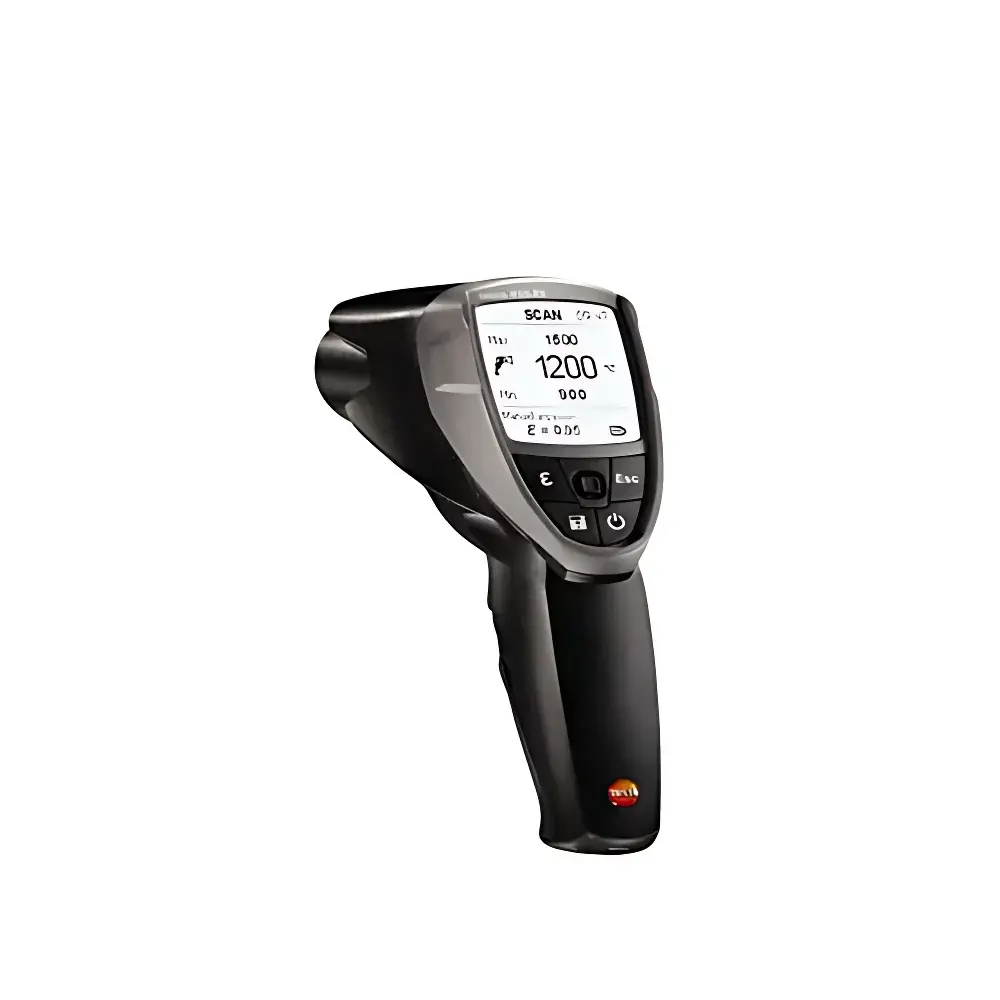
testo 835-T2 Advanced Infrared High-Temperature Thermometer
| Brand | testo |
|---|---|
| Origin | Germany |
| Model | 0560 8352 |
| Type | Portable Infrared Thermometer |
| IR Temperature Range | –10 to +1500 °C |
| IR Accuracy | ±2.0 °C or ±1 % of reading |
| Optical Resolution | 50:1 |
| Laser Aiming | 4-point visible laser |
| Emissivity Table | 20 pre-stored values |
| Data Storage | 200 measurements |
| Contact Probe Input | Type K thermocouple (–50 to +1000 °C) |
| Display | Backlit dot-matrix LCD |
| Weight | 514 g |
| Dimensions | 193 × 166 × 63 mm |
| Operating Temperature | –20 to +50 °C |
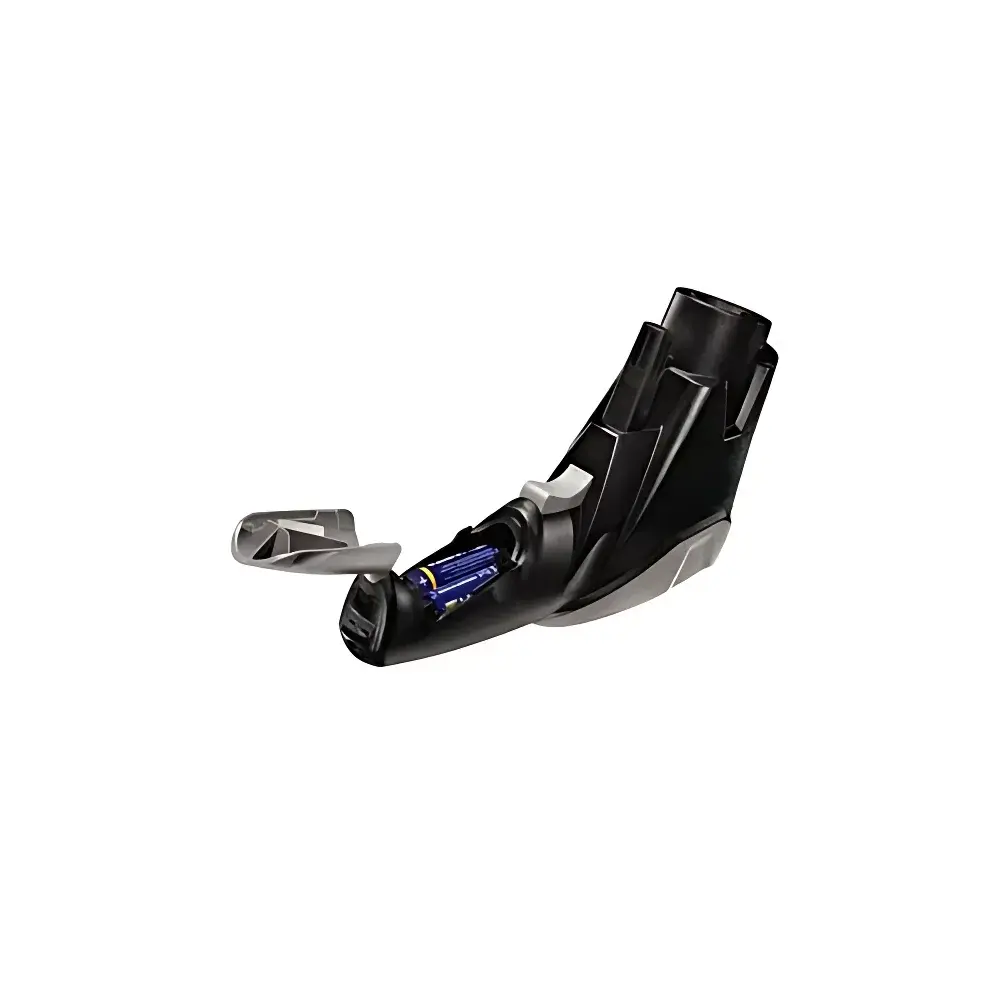
| Battery | 3 × AA (25 h typical, no backlight/laser) |
| Compliance | EN 61326-1:2006 |
Overview
The testo 835-T2 Advanced Infrared High-Temperature Thermometer is an engineered solution for non-contact surface temperature measurement in demanding industrial environments where safety, repeatability, and thermal stability are critical. Based on calibrated infrared radiation detection in the 8–14 µm spectral band, the instrument measures emitted thermal energy and converts it to temperature using Planck’s law of blackbody radiation—corrected for surface emissivity and ambient conditions. Its extended range of –10 °C to +1500 °C enables reliable monitoring of high-temperature processes without physical contact, eliminating risk of sensor degradation, thermal drift, or operator exposure. Designed for use in glass manufacturing, ceramic kiln control, metal heat treatment, foundry operations, and refractory maintenance, the 835-T2 delivers traceable, field-deployable metrology aligned with ISO/IEC 17025–informed measurement practices.
Key Features
- Four-point visible laser targeting system for unambiguous identification of measurement spot geometry—critical for small, moving, or spatially constrained targets.
- 50:1 optical resolution ensures precise targeting at distance: a 10 cm diameter measurement area at 5 m standoff distance, minimizing background radiation interference.
- Integrated emissivity library with 20 preconfigured material-specific values (e.g., oxidized steel, molten aluminum, glazed ceramic, graphite), supporting rapid setup without manual lookup tables.
- Dual-mode operation: simultaneous infrared and contact measurement via detachable Type K thermocouple input—enabling cross-verification and empirical emissivity determination for unknown surfaces.
- Backlit dot-matrix display with adjustable brightness and automatic timeout (30 sec default), optimized for low-light furnace rooms or high-glare outdoor installations.
- On-device data management including min/max tracking, user-defined alarm thresholds with audible and visual alerts, and location-tagged measurement logging (up to 200 records).
Sample Compatibility & Compliance
The testo 835-T2 is validated for use across heterogeneous industrial surfaces—including oxidized metals, refractory linings, molten glass, sintered ceramics, and carbon composites—where conventional contact probes fail due to thermal shock or contamination risk. Its optical design minimizes influence from steam, dust, or ambient radiant sources when operated within specified environmental limits (–20 to +50 °C operating temperature; <95 % RH non-condensing). The device conforms to EN 61326-1:2006 for electromagnetic compatibility in industrial settings and supports traceability through factory calibration documentation (included). While not certified for intrinsic safety or hazardous area use, its robust ABS+PC housing meets IP54-rated ingress protection against dust and water splashes—suitable for workshop, production floor, and mobile maintenance applications.
Software & Data Management
Measurements are exportable via USB interface to the free testo EasyClimate PC software (Windows-compatible), enabling structured analysis, report generation (PDF/CSV), and long-term trend visualization. The software supports audit-ready metadata tagging—including timestamp, emissivity setting, measurement mode (IR/contact), and operator ID—and facilitates compliance with internal QA protocols. Though not FDA 21 CFR Part 11–validated out-of-the-box, the software architecture permits integration into GLP/GMP-aligned workflows when paired with organizational SOPs governing electronic record retention, user access controls, and calibration log synchronization.
Applications
- Real-time monitoring of glass annealing lehrs and float bath temperatures (±1 °C repeatability at 600–800 °C).
- Verification of ceramic glaze firing profiles in tunnel kilns, ensuring uniformity across ware zones.
- Thermal mapping of blast furnace tuyeres, ladle linings, and continuous casting molds.
- Preventive maintenance of induction heating coils, vacuum furnace elements, and exhaust manifolds.
- Validation of heat treatment cycles (e.g., austenitizing, tempering) per ASTM E2877 or ISO 9001 clause 7.6 requirements.
FAQ
What is the minimum spot size measurable at 3 meters distance?
At 3 m, the 50:1 optics define a circular measurement area of approximately 60 mm diameter—ensuring representative averaging over surface heterogeneity.
Can emissivity be adjusted manually beyond the built-in table?
Yes: users may enter custom emissivity values from 0.10 to 1.00 in 0.01 increments for specialized materials or aged surfaces.
Is the Type K probe input compatible with third-party thermocouples?
Only testo-certified Type K probes (e.g., 0600 0393, 0600 0394) are guaranteed for accuracy; non-certified probes may introduce offset errors exceeding ±1.5 °C.
How is calibration maintained in field use?
Annual recalibration against NIST-traceable blackbody sources is recommended; field verification using testo’s optional calibration check source (0554 0010) is supported.
Does the device support Bluetooth or Wi-Fi connectivity?
No—data transfer is USB-only; wireless capability is not implemented to maintain EMC integrity and battery longevity.