
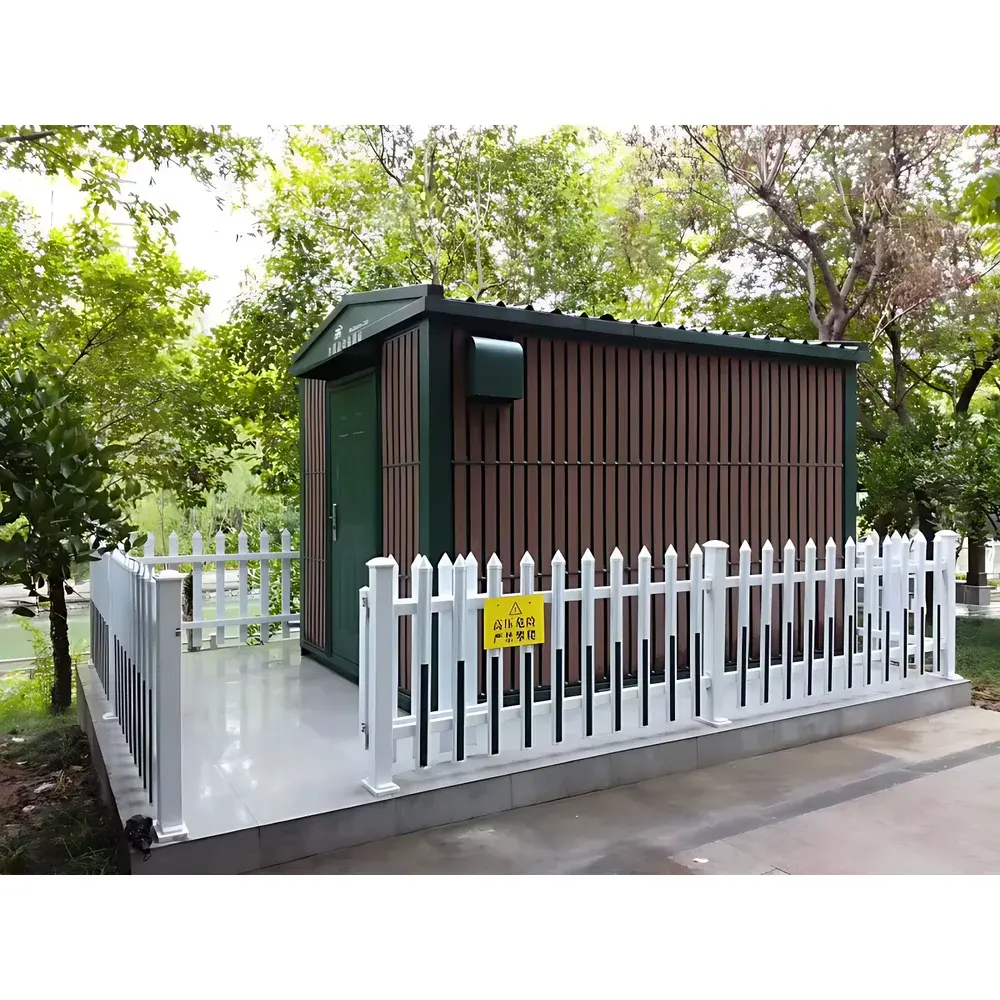
FPI MiniStation Series Compact Online Water Quality Monitoring System
| Brand | FPI |
|---|---|
| Origin | Zhejiang, China |
| Manufacturer Type | Original Equipment Manufacturer (OEM) |
| Country of Origin | China |
| Model | MiniStation |
| Pricing | Available upon Request |
Overview
The FPI MiniStation Series Compact Online Water Quality Monitoring System is an engineered solution for high-density, spatially distributed water quality surveillance in urban, peri-urban, and ecologically sensitive environments. Designed around the principle of modular, site-adaptive deployment, the system integrates multi-parameter analytical sensors, low-power telemetry, and embedded environmental condition monitoring into a physically compact architecture. Unlike conventional fixed-station water monitoring platforms—typically requiring ≥20 m² footprint, civil foundation work, and extended commissioning timelines—the MiniStation leverages standardized, factory-assembled enclosures with footprints of 8 m², 4 m², 1 m², and as minimal as 0.3 m². This enables rapid installation on existing infrastructure (e.g., bridge piers, utility poles, riverbank retaining walls, or municipal manhole access points), eliminating land acquisition and reducing time-to-operation to under 72 hours. Its core measurement paradigm supports continuous, real-time acquisition of physicochemical parameters—including but not limited to pH, conductivity, dissolved oxygen (DO), turbidity, ammonium-nitrogen (NH₄⁺-N), nitrate-nitrogen (NO₃⁻-N), total phosphorus (TP), chemical oxygen demand (COD) via UV-Vis spectroscopy, and optional hydrological variables (water level, flow velocity)—all synchronized with precise GPS-stamped timestamps.
Key Features
- Modular footprint options: 8 m², 4 m², 1 m², and ultra-compact 0.3 m² configurations—engineered for zero-footprint integration where space is constrained
- Parameter-flexible sensor architecture: Supports up to 12 simultaneous water quality and hydrological parameters; configurable per site-specific regulatory or research requirements
- Low-power operational design: Average power consumption <15 W (with solar/battery hybrid option available); suitable for off-grid deployment
- Pre-integrated environmental hardening: IP66-rated enclosure with temperature-controlled sensor chamber, anti-fouling flow cells, and self-cleaning optical windows
- Field-customized mechanical and electrical interfaces: Includes adaptable mounting kits, conduit entry systems, and dual-channel RS-485/4–20 mA analog outputs compliant with SCADA integration standards
- Urban-aesthetic industrial design: Powder-coated aluminum housing with matte finish and neutral color palette; engineered for visual harmony in public infrastructure settings
Sample Compatibility & Compliance
The MiniStation is validated for continuous monitoring of surface water (rivers, lakes, canals), wastewater effluents, stormwater runoff, groundwater abstraction points, and combined sewer overflows. All wetted components comply with ISO 10523 (pH), ISO 7888 (conductivity), ISO 5815-1 (DO), and EN ISO 7027-1 (turbidity). Sensor calibration traceability follows NIST-traceable reference materials, with documented uncertainty budgets per parameter. The system meets CE marking requirements for electromagnetic compatibility (EN 61326-1) and environmental stress (EN 60068-2 series). For regulatory reporting, data output formats conform to China’s HJ 353–2019 and HJ 354–2019 technical specifications for online water quality monitoring systems—and are compatible with international frameworks including EPA Method 1666 (COD), ASTM D1293 (pH), and ISO 5667-3 (sampling protocols).
Software & Data Management
Data acquisition and remote management are handled via FPI’s proprietary AquaLink™ Edge Platform—a secure, TLS 1.2 encrypted, Linux-based embedded software stack. It provides local data buffering (≥30 days at 15-minute intervals), automatic gap-filling via linear interpolation during comms outages, and dual-path transmission (4G LTE + LoRaWAN fallback). The cloud-hosted AquaView™ dashboard supports role-based access control (RBAC), automated QA/QC flagging (e.g., drift detection, range violation alerts), and export in CSV, NetCDF, and WaterML 2.0 formats. Audit trails meet GLP/GMP-aligned logging standards: all configuration changes, calibration events, and manual overrides are timestamped, user-ID stamped, and cryptographically signed. Optional FDA 21 CFR Part 11 compliance package includes electronic signatures, audit trail review tools, and system validation documentation (IQ/OQ/PQ templates provided).
Applications
- River basin-scale water quality grid monitoring: Enables sub-kilometer station spacing for high-resolution pollution source attribution and hydrodynamic modeling input
- Ecological river-lake section assessment: Supports routine compliance with China’s “River Chief System” performance indicators (e.g., Class III–V water body criteria under GB 3838–2002)
- Wastewater and stormwater network load profiling: Quantifies pollutant fluxes at key junctions to inform CSO mitigation strategies and TMDL development
- Groundwater vulnerability mapping: Paired with piezometric sensors for spatiotemporal analysis of contaminant plume migration
- Urban blue-green infrastructure evaluation: Monitors retention pond efficiency, bioswale performance, and green roof runoff quality in real time
FAQ
What is the minimum recommended maintenance interval for the MiniStation system?
Routine sensor verification and cleaning are recommended every 30 days in moderate-fouling environments; bi-weekly in high-turbidity or algae-prone waters. Full preventive maintenance (e.g., pump calibration, reagent replacement, firmware update) is scheduled quarterly.
Can the MiniStation integrate with third-party SCADA or municipal GIS platforms?
Yes—via Modbus TCP, OPC UA, or MQTT protocols. Pre-built drivers are available for Siemens Desigo, Schneider EcoStruxure, and Esri ArcGIS Urban. Custom API integration support is included in professional services.
Is remote calibration possible without on-site technician dispatch?
Zero and span calibrations for pH, conductivity, DO, and turbidity can be executed remotely using onboard standard solutions and automated fluidic sequences. Electrode diagnostics and drift compensation algorithms are embedded in firmware v3.2+.
How does the system handle power outages or communication blackouts?
Onboard lithium-iron-phosphate battery sustains full operation for ≥72 hours; data continuity is preserved in non-volatile memory. Upon recovery, buffered data auto-synchronizes with no loss or duplication.
Does FPI provide validation documentation for regulatory submission?
Yes—each unit ships with a Factory Acceptance Test (FAT) report, sensor calibration certificates (traceable to national metrology institutes), and optional Site Acceptance Test (SAT) support aligned with ISO/IEC 17025 laboratory practices.
Related Products







