
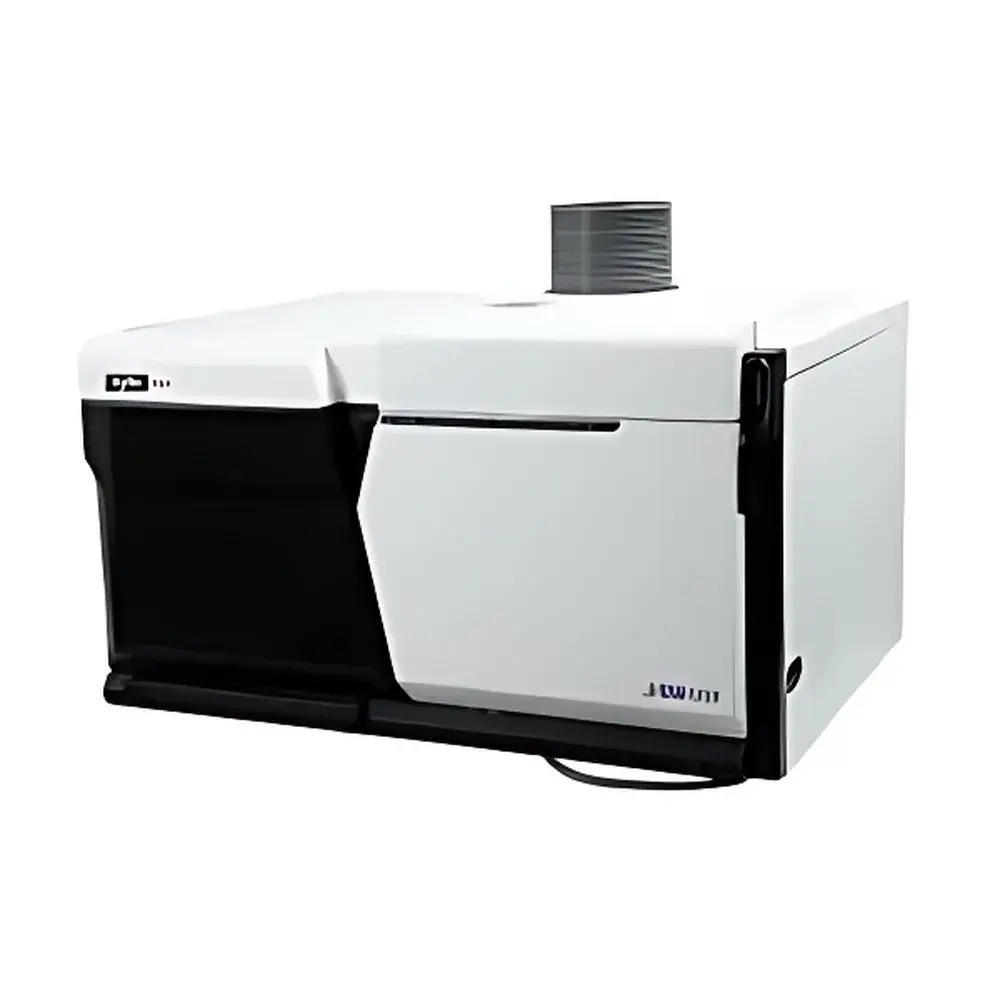
Titan Instruments Kylin S13 Triple-Channel Atomic Fluorescence Spectrometer
| Brand | Titan Instruments |
|---|---|
| Origin | Beijing, China |
| Model | Kylin S13 |
| Instrument Type | Multi-channel Atomic Fluorescence Spectrometer |
| Sample Introduction | Dual Sequential Injection Pump |
| Waste Disposal | Rear Exhaust Design |
| Hydride Generation Mode | Vapor Generation / Hydride Generation |
| Gas Flow Control | Mass Flow Controller (MFC) |
| Detectable Elements | As, Sb, Bi, Sn, Se, Te, Pb, Ge, Hg, Cd, Zn, Au |
| RSD | <0.6% |
| Linear Dynamic Range | >3 orders of magnitude |
| Detection Limits | As, Sb, Se, Bi, Te, Hg, Sn, Pb < 0.01 µg/L |
| PMT Wavelength Range | 160–320 nm |
| Atomizer Temperature Control Range | 100–350 °C |
Overview
The Titan Instruments Kylin S13 Triple-Channel Atomic Fluorescence Spectrometer is a high-performance, multi-element hydride generation atomic fluorescence (HG-AFS) system engineered for trace-level quantification of hydride-forming and cold-vapor elements in complex environmental, food, clinical, and industrial matrices. Based on the fundamental principle of atomic fluorescence spectroscopy—where ground-state atoms in a quartz cell are excited by a high-intensity, element-specific hollow cathode lamp (HCL), emitting characteristic fluorescence photons detected by a low-noise photomultiplier tube (PMT)—the Kylin S13 implements a fully optimized optical and fluidic architecture to maximize signal-to-noise ratio and long-term measurement reproducibility. Its triple-channel configuration enables simultaneous, independent detection of three target elements without spectral interference or cross-talk, significantly improving throughput in regulated testing workflows such as those defined under US EPA Method 7063, ISO 17294-2, and China’s GB 5009.11–2014 and GB 5009.17–2014 standards for arsenic and mercury in food.
Key Features
- Triple-channel parallel detection architecture with full channel symmetry—each channel features identical optical path length, PMT gain calibration, and real-time reference-beam drift correction to ensure inter-channel accuracy better than ±1.5% RSD across all operating conditions.
- Dual sequential injection pump system with integrated micro-volume precision syringes (±0.2% volumetric repeatability), enabling programmable reagent addition, reaction timing, and gas–liquid separation control for robust hydride generation kinetics.
- Orthogonal dual-beam optical design with 90° fluorescence collection geometry minimizes stray light and plasma background interference, enhancing detection sensitivity especially for low-Z elements (e.g., Se, Sb) at sub-ng/L levels.
- Multi-lamp turret accommodating up to six HCLs with auto-positioning and current stabilization—lamp selection, current ramping, and pre-heating are software-synchronized to analytical sequence, eliminating manual alignment and reducing warm-up delays.
- Smart plug-and-play hollow cathode lamps with embedded EEPROM identification—each lamp stores operational history (total on-time, average current, peak voltage), enabling predictive maintenance and GLP-compliant lamp lifecycle tracking.
- Temperature-controlled quartz-trap atomizer with PID-regulated heating (100–350 °C, ±0.5 °C stability), dynamically adjusted per element via method file to optimize atomization efficiency and minimize memory effects.
- EFC-based gas delivery system with real-time pressure/flow telemetry and automatic fault shutdown—supports dual-gas operation (Ar carrier + H₂ or Ar-only for cold vapor Hg) with flow stability <±0.5% over 8-hour continuous run.
Sample Compatibility & Compliance
The Kylin S13 is validated for direct analysis of acid-digested aqueous extracts from soils (per HJ 680–2013), particulate matter filters (HJ 1133–2020), drinking water (HJ 694–2014), biological tissues (blood, urine, hair per WS/T 107–2016), and petroleum distillates (ASTM D7622–19). All sample introduction modules—including the optional 160- or 212-position polar-coordinate autosampler—are constructed from PTFE-coated carbon-fiber probes and inert fluoropolymer tubing to prevent adsorption and metal leaching. The system complies with ISO/IEC 17025:2017 requirements for method validation, supports full audit trail per FDA 21 CFR Part 11 (with electronic signatures, role-based access, and immutable log archiving), and meets GLP/GMP documentation standards for contract laboratories conducting routine compliance testing in food safety (Codex Alimentarius GSFA), environmental monitoring (EU WFD), and pharmaceutical excipient QC (ICH Q2(R2)).
Software & Data Management
KylinControl™ v4.2 is a dual-language (English/Chinese), 64-bit Windows application built on a modular architecture compliant with ASTM E1382–95 data format conventions. It provides comprehensive instrument control, method development wizard, automated calibration curve fitting (linear, quadratic, weighted least-squares), and integrated QC charting (Levey-Jennings, Shewhart). All raw spectra, dwell-time logs, lamp status records, and gas flow telemetry are time-stamped and stored in encrypted SQLite databases with SHA-256 hashing. The software includes configurable report templates aligned with CNAS-CL01:2018 annexes, supports LIMS export via ASTM E1467–05 XML schema, and maintains full revision history for all method files and instrument configurations.
Applications
- Environmental Monitoring: Quantification of As, Sb, Se, and Hg in ambient air PM2.5, wastewater effluents, groundwater, and contaminated soil—validated against HJ 694–2014 and HJ 702–2014 protocols.
- Food & Feed Safety: Routine screening of inorganic arsenic in rice, methylmercury in fish tissue, and cadmium in dairy powders per GB 5009.11–2014, GB 5009.17–2014, and EU Commission Regulation (EU) No 2023/915.
- Clinical Toxicology: Trace-level determination of Se in serum, Pb in whole blood, and total Hg in urine using matrix-matched calibration and internal standard correction (Bi or Ge).
- Geological & Metallurgical Analysis: Multi-element assay of Au, Te, and Ge in rock digests and slag samples following ISO 11047:2022 and ASTM D5685–19 guidelines.
- Pharmaceutical Quality Control: Residual catalyst metal testing (Pd, Pt, Ni) and elemental impurity profiling (ICH Q3D Class 1 & 2a elements) in active pharmaceutical ingredients (APIs) and excipients.
FAQ
What regulatory standards does the Kylin S13 support for food testing?
It fully implements Chinese national standards GB 5009.11–2014 (As), GB 5009.17–2014 (Hg), and GB/T 22105–2008 (soil As/Hg/Pb), with method validation packages available for AOAC 2015.01 and ISO 17294-2.
Can the instrument perform simultaneous analysis of As, Se, and Hg without interference?
Yes—the triple-channel optical isolation, wavelength-selective PMT gating, and independent reaction zones prevent spectral overlap and chemical interferences during co-analysis.
Is the system compatible with microwave digestion systems from other vendors?
All standard 50 mL quartz or PTFE digestion vessels (including Milestone, CEM, and Anton Paar formats) interface seamlessly via the optional high-temperature autosampler tray and dilution module.
How is data integrity ensured during long-term unattended operation?
The system logs every hardware event (lamp ignition, pump stroke, temperature setpoint change) with cryptographic hash verification; all user actions are timestamped, attributed, and non-erasable per 21 CFR Part 11 Subpart B.
What maintenance intervals are recommended for the atomizer and gas system?
Atomizer quartz tubes require replacement after 500–800 analyses (depending on matrix); EFC sensors are calibrated annually using NIST-traceable mass flow standards—full diagnostics are accessible via the embedded service menu.





