
- All
- Favorite
- Popular
- Most rated
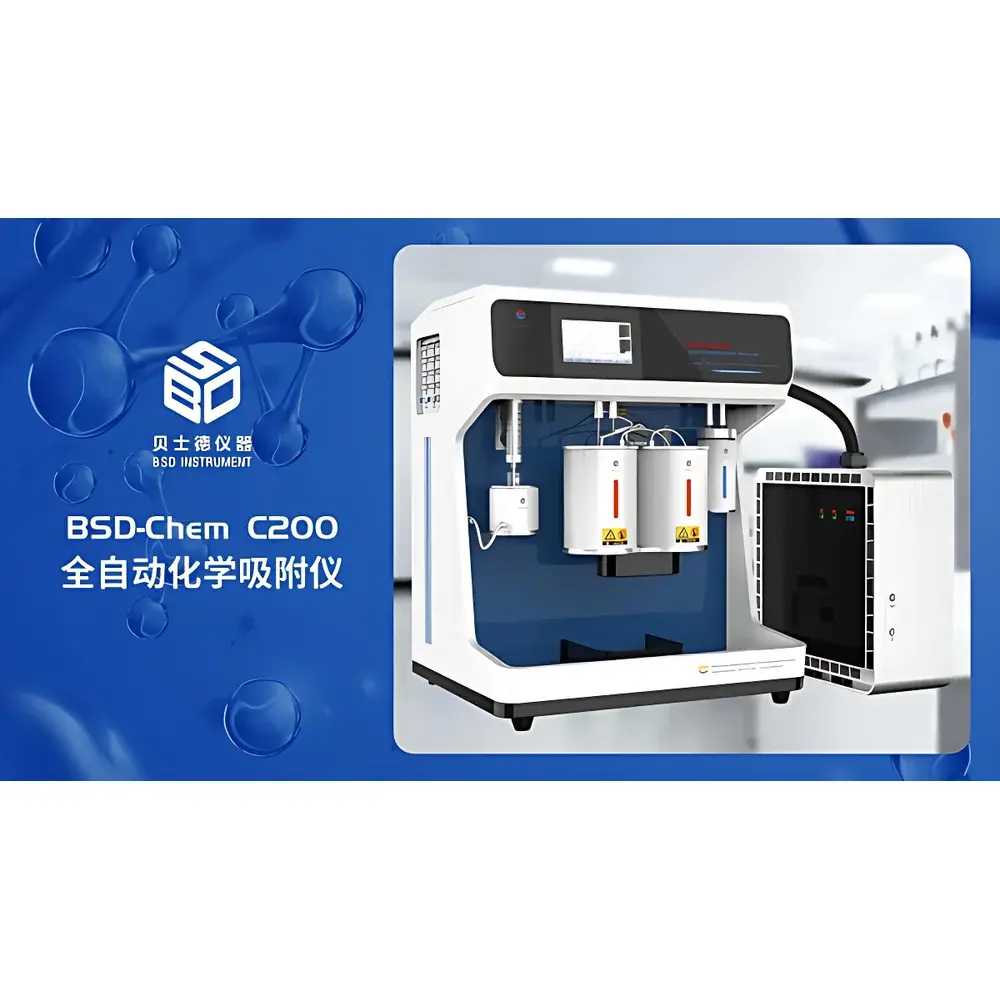
| Brand | Beishide Instrument |
|---|---|
| Origin | Beijing, China |
| Manufacturer Type | Direct Manufacturer |
| Instrument Type | Automated Chemisorption Analyzer |
| Test Principle | Continuous Flow Method |
| Gas Inlet Ports | 12 channels |
| Heating Temperature Range | Ambient to 1200 °C |
| Isothermal Stability | Ambient to 60 °C |
| Ramp Rate | 1–100 °C/min |
| Pressure Options | Atmospheric (standard), optional up to 10 MPa |
| Core Functions | TPD, TPR, TPO, TPSR, TPS, Pulse Titration, Desorption Kinetics (Ed, Ad, n), Adsorption Kinetics (Ea, ΔH, Aa) |
| Optional Coupling | Online MS (INFICON), FT-IR (Thermo Fisher Nicolet iS20/iS5) |
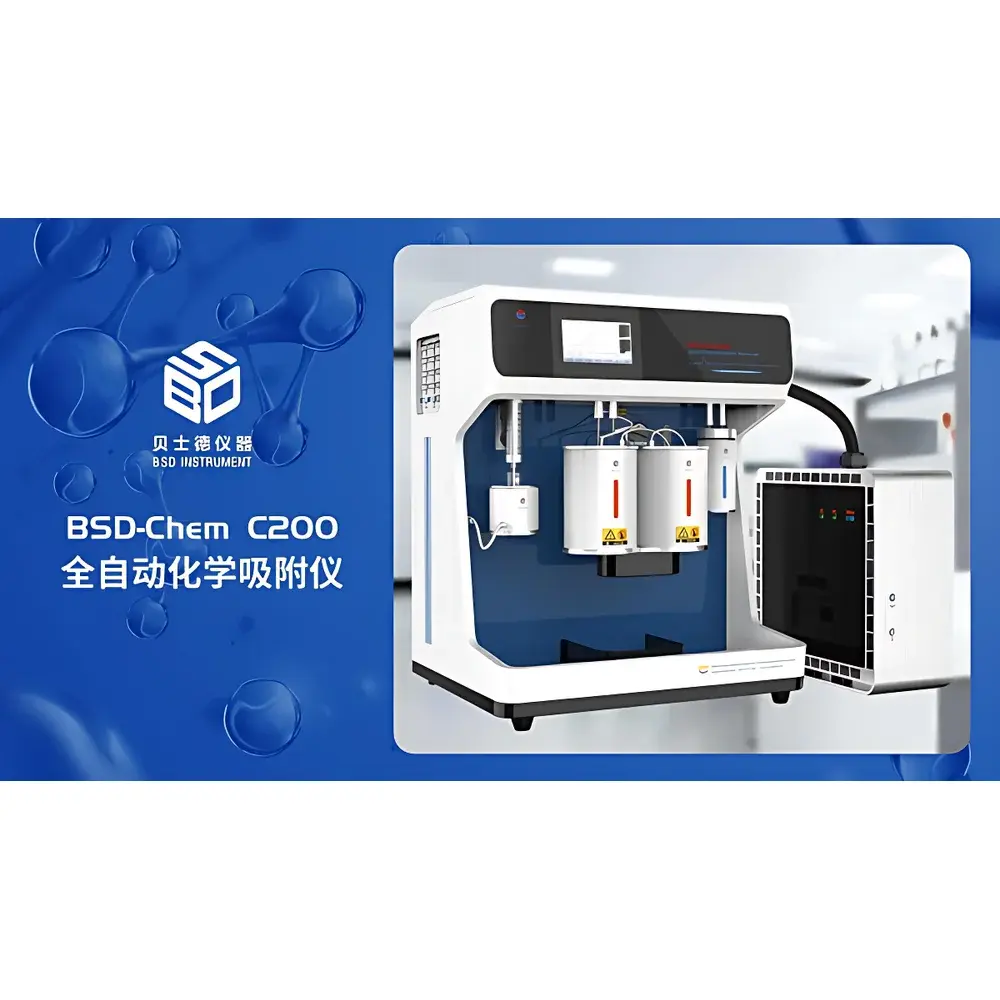
| Brand | Beishide Instrument |
|---|---|
| Origin | Beijing, China |
| Manufacturer Type | Direct Manufacturer |
| Instrument Type | Chemisorption Analyzer |
| Model | BSD-Chem C200 |
| Testing Principle | Continuous Flow Method |
| Gas Inlet Channels | 12 |
| Heating Temperature Range | Ambient to 1200 °C |
| Isothermal Stability | Ambient to 60 °C |
| Heating Rate | 1–100 °C/min |
| Pressure Options | Atmospheric (standard), optional 1 MPa / 3 MPa / 10 MPa |
| Core Functions | TPD, TPR, TPO, TPSR, TPS, Pulse Titration, Desorption Kinetics (Ed, Ad, n), Adsorption Kinetics (Ea, ΔH, Aa) |
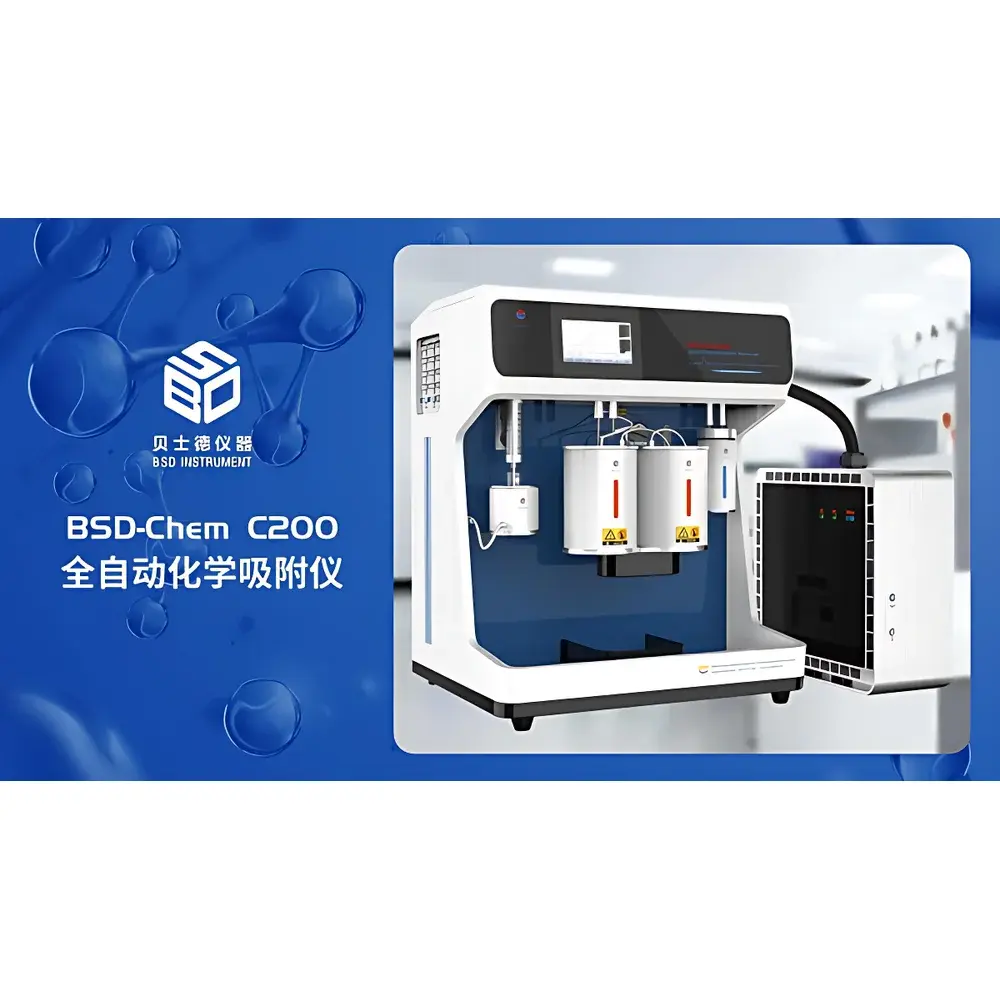
| Brand | Beishide Instrument |
|---|---|
| Origin | Beijing, China |
| Manufacturer Type | OEM Manufacturer |
| Product Category | Domestic |
| Model | BSD-Chem C200 |
| Instrument Type | Chemisorption Analyzer |
| Measurement Principle | Continuous Flow Method |
| Gas Inlet Ports | 12 channels |
| Heating Temperature Range | Ambient to 1200 °C |
| Isothermal Stability | ±0.1 °C from ambient to 60 °C |
| Ramp Rate | 1–100 °C/min |
| Pressure Range | Atmospheric (standard) |
| Test Capabilities | 1. Temperature-Programmed Desorption (TPD), 2. Temperature-Programmed Reduction (TPR), 3. Temperature-Programmed Oxidation (TPO), 4. Temperature-Programmed Surface Reaction (TPSR), 5. Temperature-Programmed Sulfidation (TPS), 6. Pulse Titration, 7. Desorption Activation Energy (E<sub>d</sub>), 8. Pre-exponential Factor for Desorption (A<sub>d</sub>), 9. Desorption Order (n), 10. Adsorption Activation Energy (E<sub>a</sub>), 11. Enthalpy of Adsorption (ΔH), 12. Pre-exponential Factor for Adsorption (A<sub>a</sub>) |
Show next