
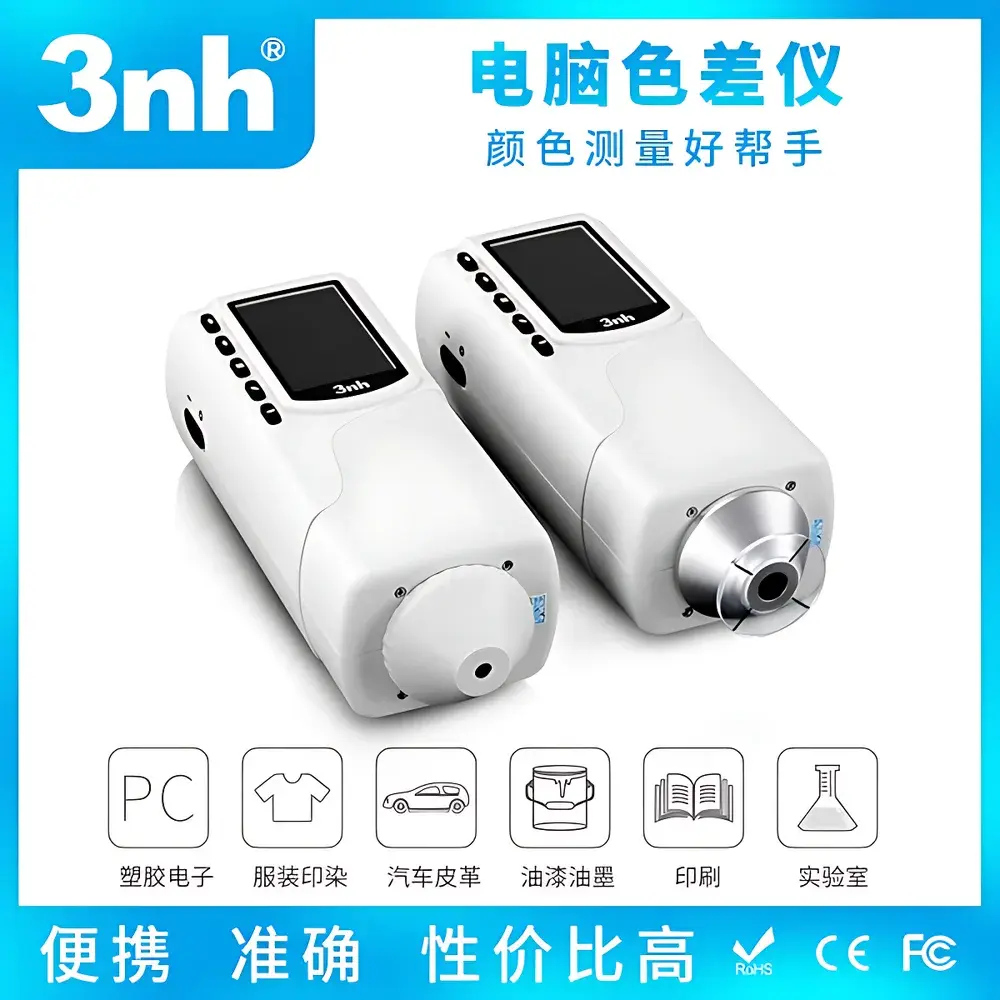
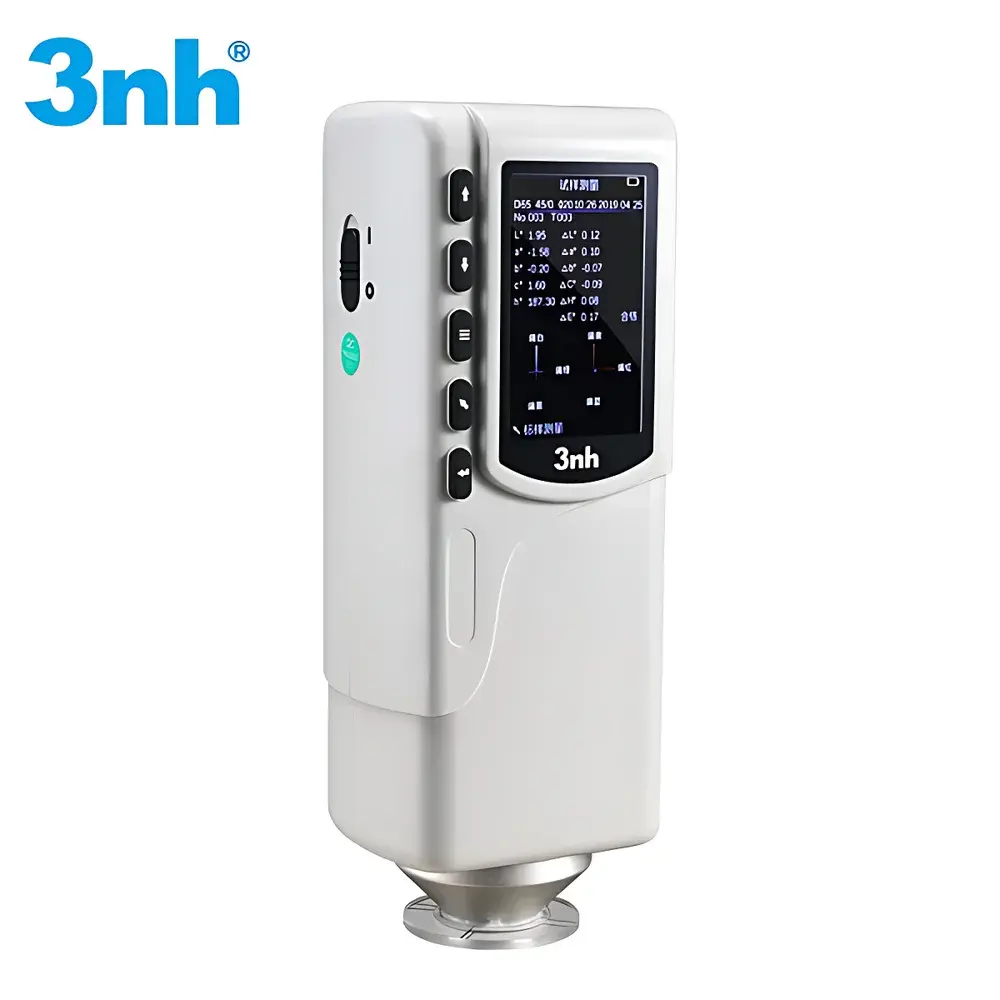
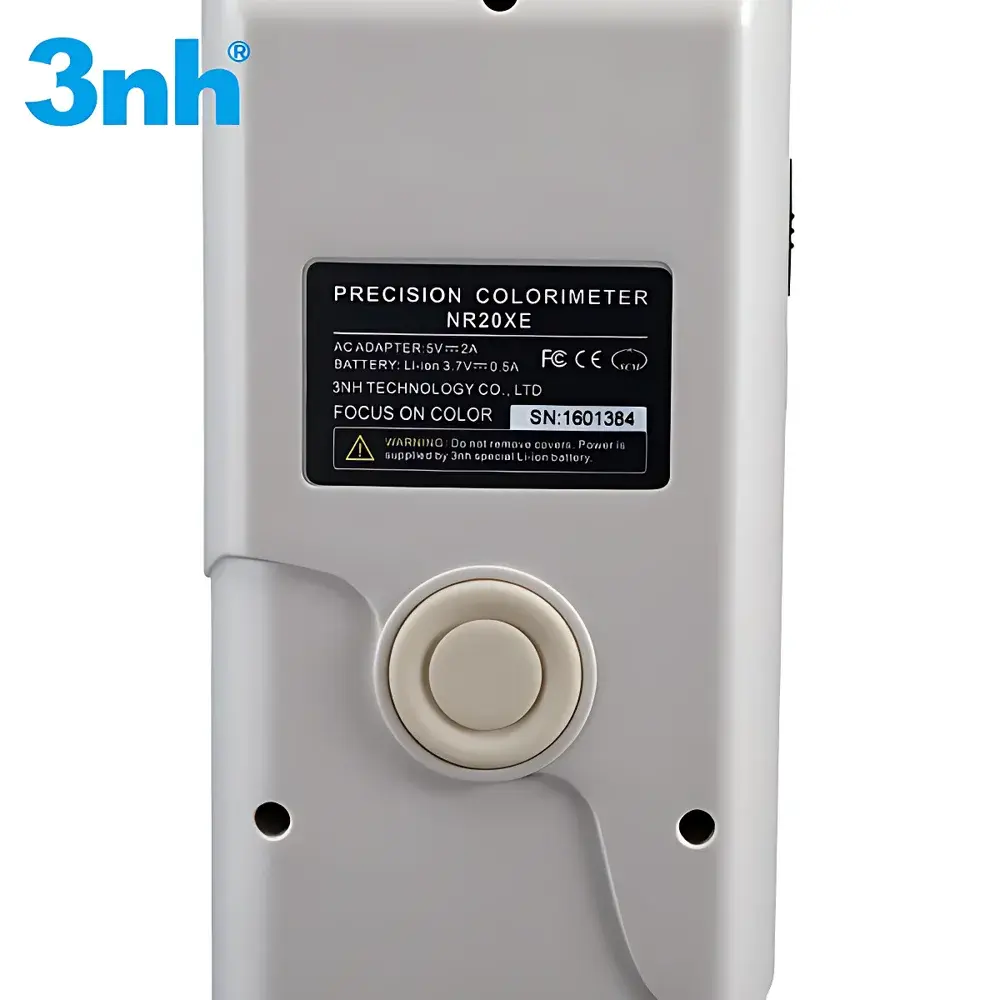
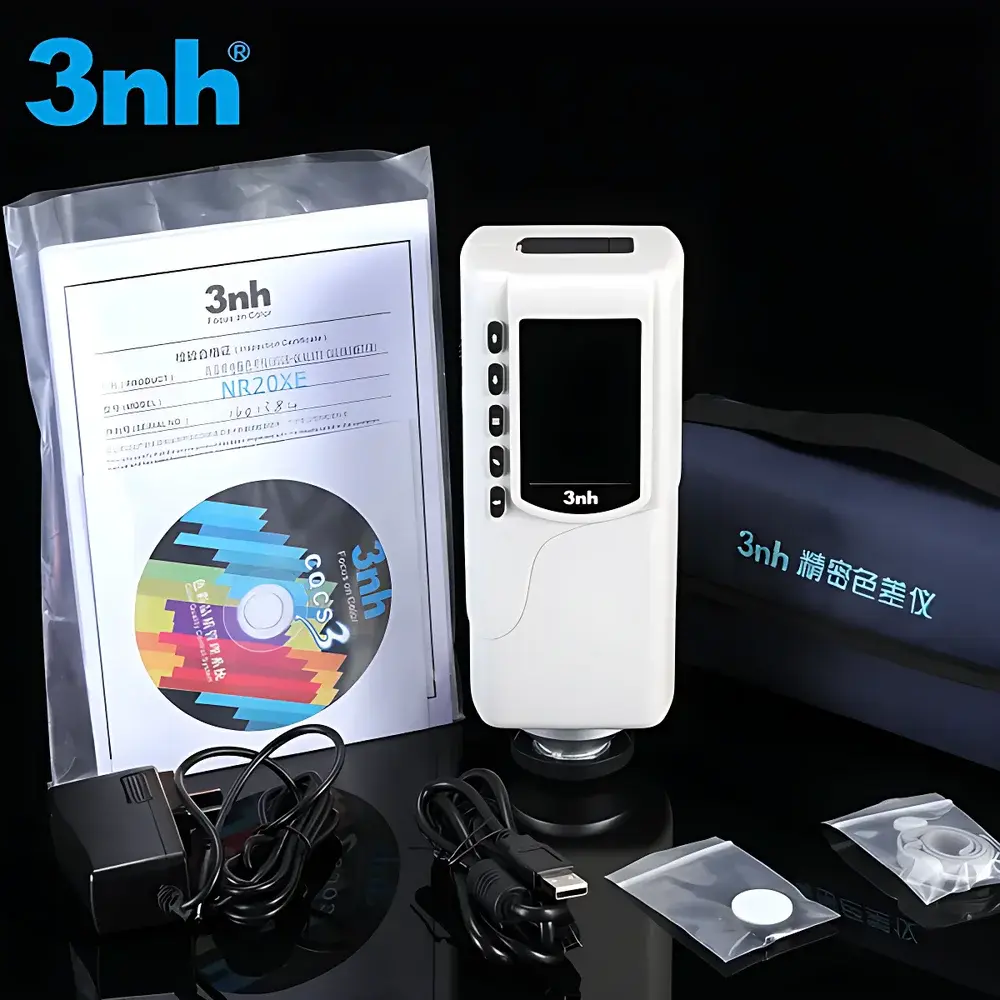
3nh NR20XE 20mm Aperture Precision Color Difference Meter
| Brand | 3nh |
|---|---|
| Origin | Shenzhen, China |
| Manufacturer Type | Direct Manufacturer |
| Product Category | Domestic |
| Model | NR20XE |
| Price | ¥4,800 |
| Instrument Type | Portable Spectrophotometric Colorimeter |
| Optical Geometry | 45°/0° (45-degree annular illumination, 0-degree viewing) |
| Light Source | LED with Blue Chip Excitation |
| Spectral Range | 400–800 nm |
| Repeatability | ΔE*ab ≤ 0.08 |
Overview
The 3nh NR20XE is a portable spectrophotometric color difference meter engineered for high-precision, non-contact color measurement under industrial quality control conditions. It operates on the 45°/0° optical geometry—where annular 45° illumination eliminates directional bias from surface texture, and a coaxial 0° detector captures diffuse reflectance without specular interference. This configuration closely emulates human visual perception under standardized D65 illuminant and 10° observer conditions, while delivering reproducibility far exceeding subjective assessment. Unlike traditional 8°/d (diffuse/8°) instruments, the NR20XE’s fixed-angle illumination minimizes sensitivity to micro-topography, making it especially suitable for textured, uneven, or semi-moist surfaces such as fresh meat, wet textiles, or granular polymers. Its 20 mm measurement aperture—the largest in 3nh’s portable 45°/0° platform—ensures stable signal integration over heterogeneous areas, reducing sampling variance in bulk materials and coated substrates.
Key Features
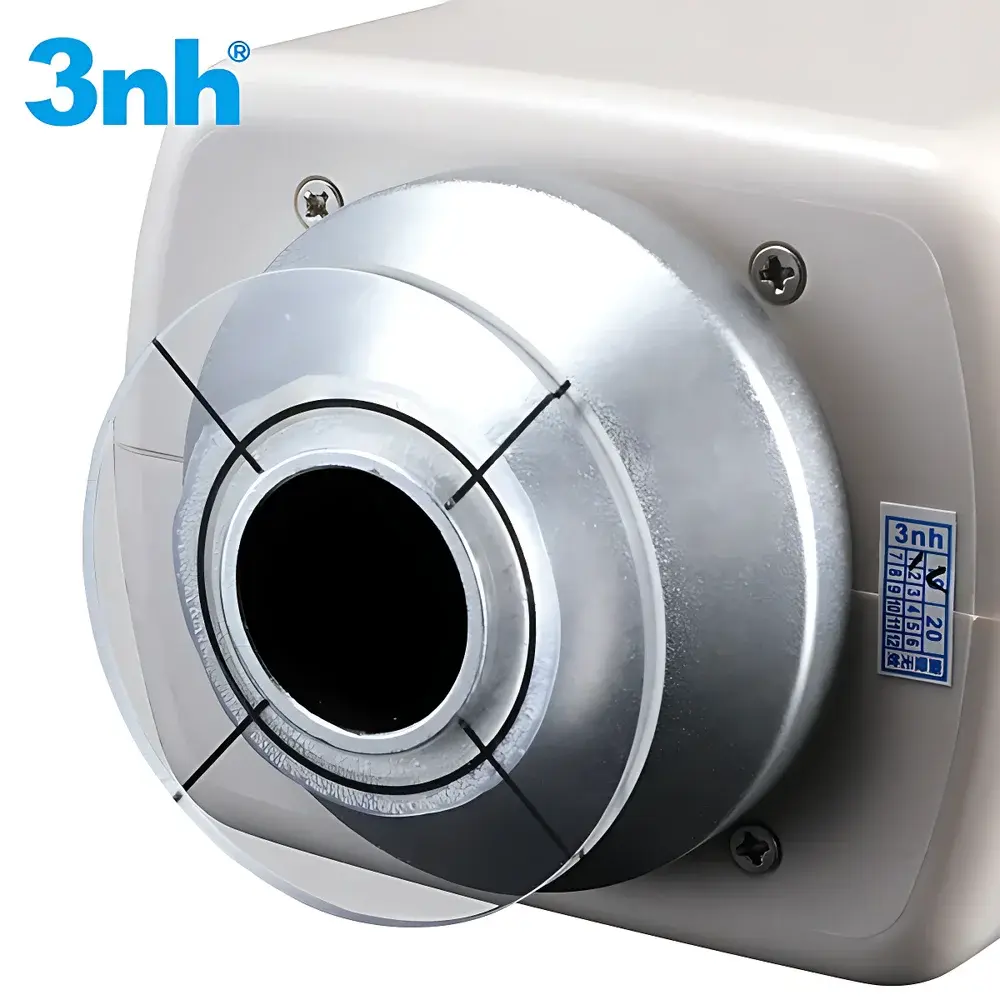
- 20 mm large-aperture optical port with precision-machined stainless-steel contact ring for consistent standoff distance and mechanical stability during measurement
- LED-based light source with blue-chip excitation and integrated thermal stabilization, ensuring spectral output consistency across ambient temperatures (10–30°C)
- Full-spectrum acquisition from 400 nm to 800 nm at 10 nm intervals, enabling CIE L*a*b*, L*C*h, ΔE*ab, ΔE00, Yxy, and Munsell color space calculations
- Vertical stand-up design isolates the main housing from sample contact—preventing cross-contamination, liquid ingress, and sensor contamination during measurement of viscous, damp, or particulate samples
- Internal calibration verification using built-in white ceramic tile; optional external calibration with NIST-traceable standards
- IP54-rated enclosure for resistance to dust and incidental water splashes, supporting use in production-floor environments
Sample Compatibility & Compliance
The NR20XE accommodates a broad range of industrial substrates—including PET, PE, PP, ABS, EVA pellets and powders; coated steel sheets; textile fabrics (denim, nonwovens, dyed cotton); pharmaceutical tablets and capsules; food products (fresh meat, baked goods, confectionery); and architectural coatings. Its 45°/0° geometry complies with ASTM E308-22 (computing tristimulus values from spectral data), ISO/CIE 11664-4:2019 (CIE colorimetric observers), and aligns with the optical requirements outlined in ISO 7724-1 for reflectance color measurement. While not FDA 21 CFR Part 11–certified out-of-the-box, its data export functionality supports integration into validated QC workflows compliant with GLP and GMP documentation requirements when paired with audit-trail-enabled LIMS or MES platforms.
Software & Data Management
The instrument interfaces via USB-C or Bluetooth 5.0 with PC-based 3nh ColorExpert software (Windows 10/11 compatible), offering real-time spectral visualization, batch statistical analysis (CPK, X-bar R charts), pass/fail tolerance mapping against master standards, and multi-instrument fleet calibration tracking. All measurements are timestamped, geotagged (when enabled), and stored with full metadata—including operator ID, sample ID, environmental temperature/humidity (if connected to optional external sensors), and instrument serial number. Raw spectral data (.spc) and processed reports (.csv, .pdf) are exportable without proprietary lock-in. Software updates maintain backward compatibility with historical measurement archives.
Applications
- Color consistency validation in plastic pellet extrusion lines, where surface gloss and crystallinity variations affect visual acceptability
- QC screening of printed packaging films—detecting metamerism and batch-to-batch hue shifts under multiple illuminants (D65, F2, A)
- Pharmaceutical coating uniformity assessment, particularly for film-coated tablets where subtle chromatic deviation indicates incomplete coverage
- Food processing QA—quantifying browning index in baked products or freshness-related chroma loss in chilled proteins
- Textile dye lot matching for denim mills, where indigo reduction profiles and mechanical abrasion create complex surface-light interactions
- Architectural coating formulation development, supporting correlation between lab-scale drawdowns and field-applied finishes
FAQ
What does “45°/0°” mean in this context?
It denotes an illumination/viewing geometry where light is delivered at 45° in an annular pattern around the viewing axis, and reflected light is collected at 0° (normal incidence). This setup reduces sensitivity to surface directionality and specular highlights.
Can the NR20XE measure fluorescent or phosphorescent materials?
Yes—the 400–800 nm spectral range includes UV-A excitation bands, and the instrument supports fluorescence correction mode when used with calibrated fluorescent standards.
Is the 20 mm aperture fixed, or are smaller apertures available?
The NR20XE features a single, fixed 20 mm aperture. For applications requiring smaller spot sizes, 3nh offers the NR14XE (14 mm) and NR11XE (11 mm) models within the same 45°/0° platform.
How often does the instrument require recalibration?
Daily verification against the included white calibration tile is recommended. Full recalibration by an accredited service lab is advised every 12 months—or after any impact event or exposure to extreme thermal cycling.
Does the device support industry-specific color tolerances (e.g., AATCC, ISO 105-J03)?
Yes—ColorExpert software includes preloaded tolerance sets for AATCC Evaluation Procedure 1, ISO 105-J03, DIN 6174, and customer-defined ΔE limits with weighted components (L*, a*, b*, C*, h*).





