
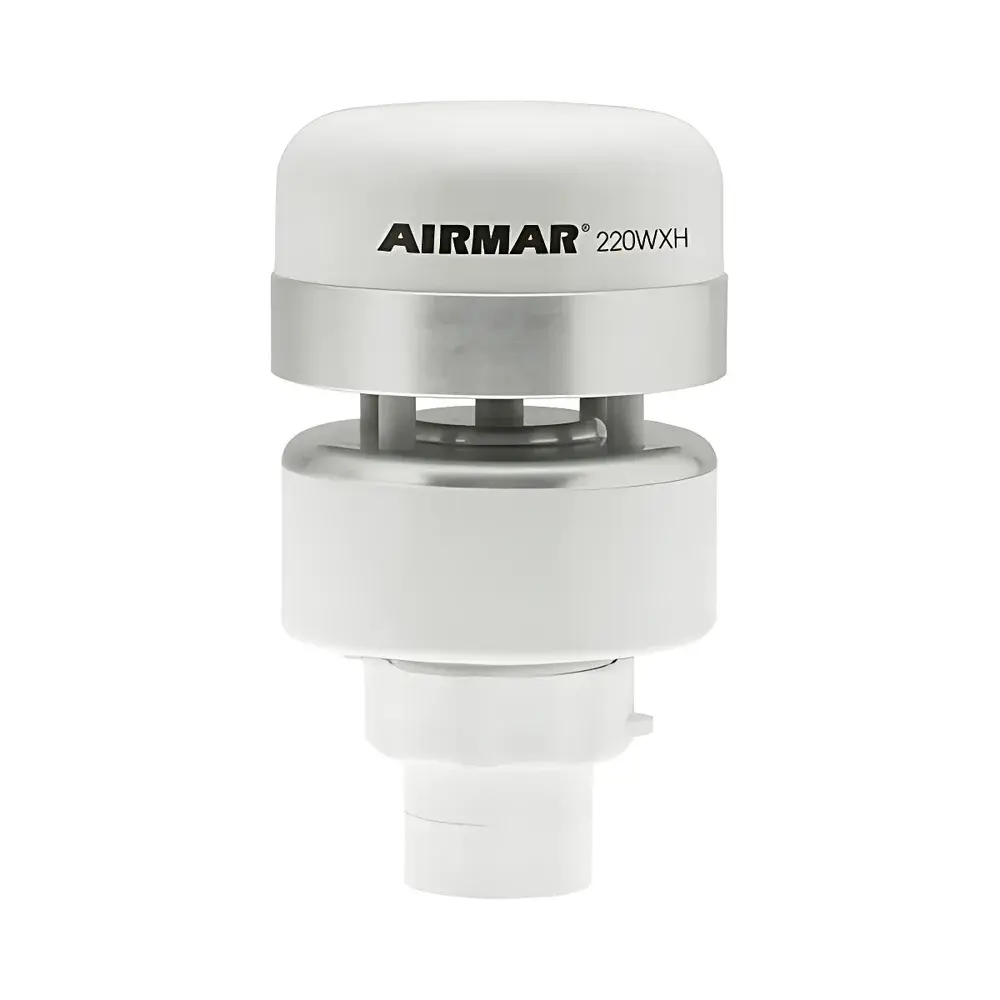
Airmar 220WXH Ultrasonic Weather Station
| Brand | Airmar |
|---|---|
| Origin | USA |
| Model | 220WXH |
| Instrument Type | Portable Weather Station |
| Enclosure Rating | IPX6 |
| Wind Measurement Principle | Ultrasonic Anemometry |
| GPS Update Rate | 10 Hz |
| Heading Accuracy | <1° (dynamic stabilized) |
| Power | 12–36 VDC |
| Output Protocols | NMEA 0183 (RS422/RS232) |
| Heating System | Integrated thermostatically controlled heater |
| Operating Temperature Range (heated) | –30°C to +55°C |
| Dimensions | 203 × 127 mm (diameter × height) |
| Weight | 1.36 kg |
Overview
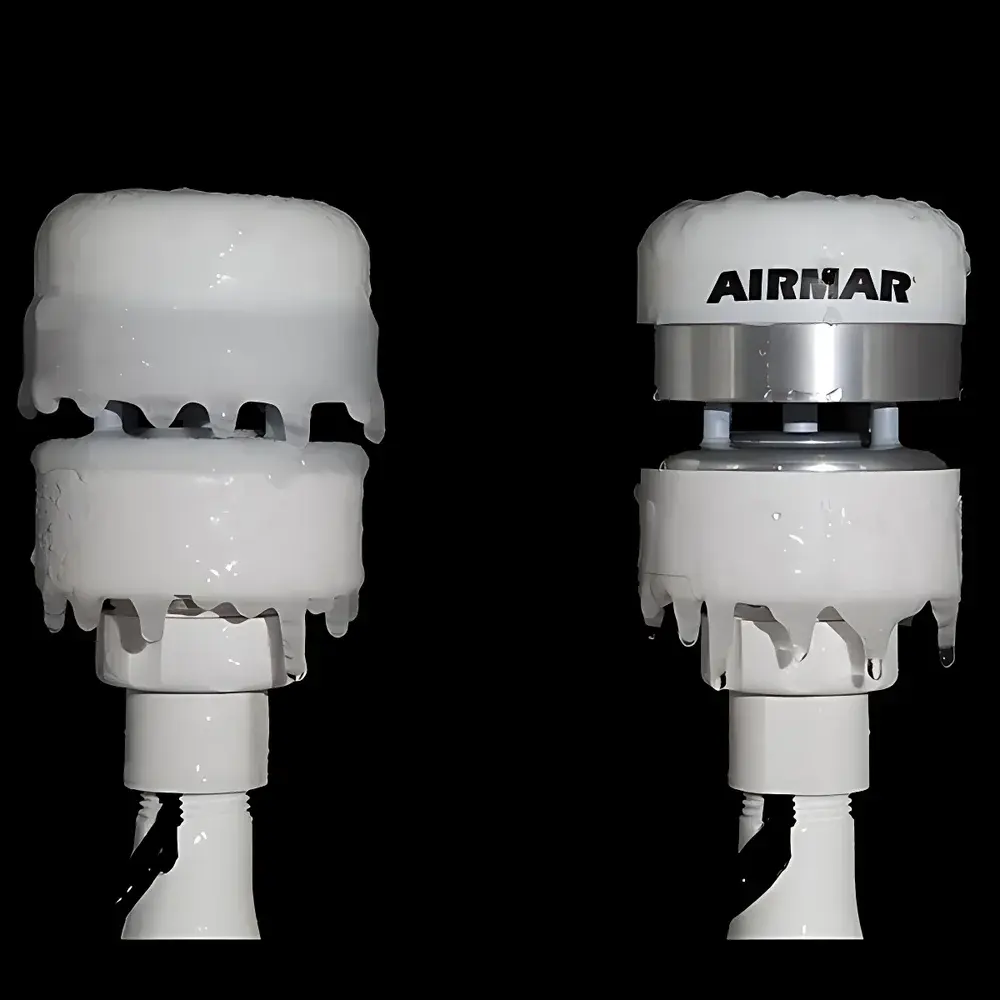
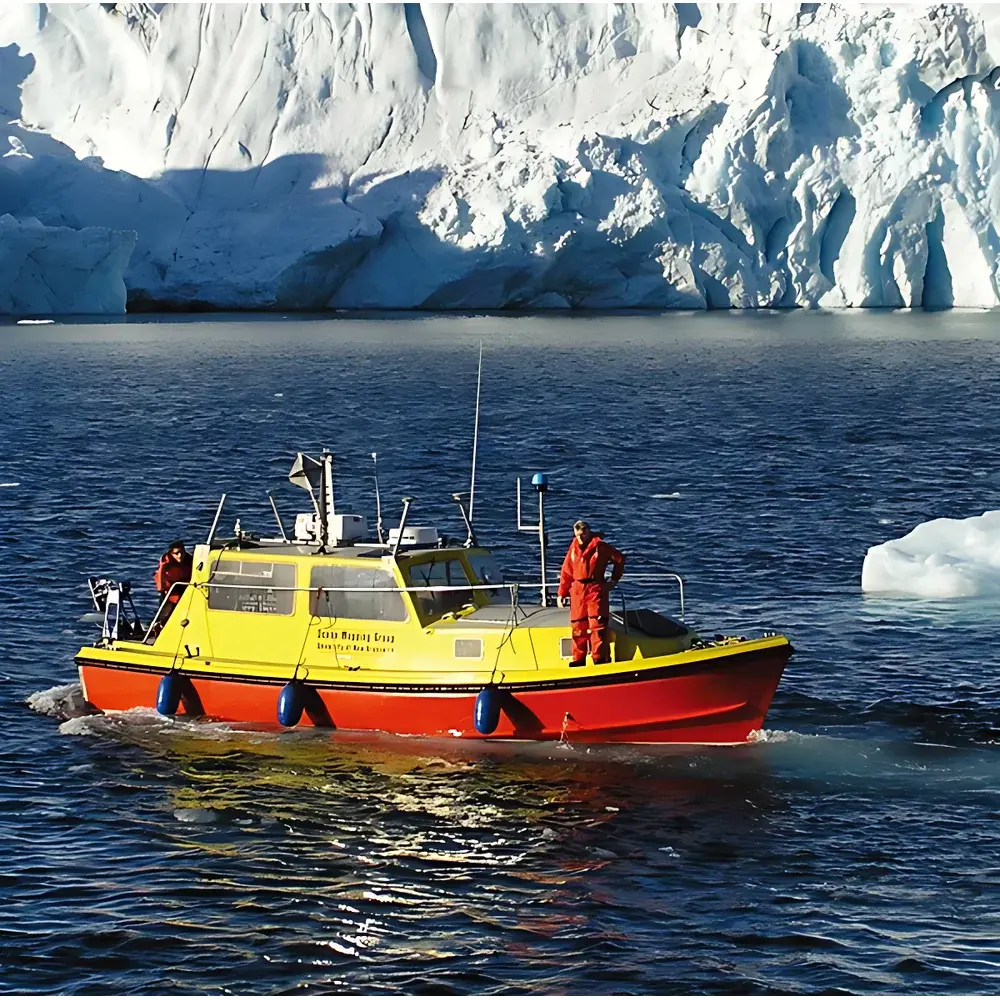
The Airmar 220WXH Ultrasonic Weather Station is an engineered solution for continuous, high-integrity environmental monitoring in harsh, ice-prone maritime and remote terrestrial environments. Unlike mechanical cup-and-vane anemometers, the 220WXH employs time-of-flight ultrasonic anemometry to measure horizontal wind speed and direction with no moving parts—eliminating mechanical wear, inertia lag, and icing-related failure modes. Its patented thermostatically controlled heating system maintains sensor surface temperature above freezing during sub-zero operation, ensuring uninterrupted wind data acquisition in arctic conditions, offshore platforms, and high-altitude meteorological installations. The integrated 10 Hz GPS module delivers precise position, course-over-ground (COG), speed-over-ground (SOG), and UTC time-stamped metadata—critical for motion-compensated true wind vector calculation. Coupled with a triaxial gyroscope and dynamic-stabilized 3D electronic compass, the unit computes heading with <1° RMS accuracy under severe roll/pitch motion, enabling reliable navigation-grade wind correction on vessels and floating structures.
Key Features
- Ultrasonic wind sensing: Measures apparent wind speed and direction at 10 Hz sampling rate; zero mechanical wear and immunity to icing-induced drift.
- Integrated thermostatic heater: Maintains transducer surface temperature above 0°C during operation down to –30°C ambient; automatically deactivates when ambient exceeds +5°C to prevent thermal interference with air temperature measurement.
- IPX6-rated enclosure: Sealed against powerful water jets; corrosion-resistant marine-grade housing suitable for salt-spray environments.
- 10 Hz GPS receiver: Provides real-time latitude/longitude, COG, SOG, and synchronized UTC timestamps—essential for motion compensation algorithms.
- Dynamic-stabilized 3D compass: Compensated by real-time angular rate data from onboard triaxial gyroscopes; achieves <1° heading accuracy under ±30° roll and ±15° pitch.
- Multi-parameter output: Simultaneous streaming of wind vectors, air temperature (with wind chill index), barometric pressure, GPS-derived motion metrics, and magnetic heading via NMEA 0183.
Sample Compatibility & Compliance
The 220WXH is designed for deployment on mobile and fixed platforms where long-term reliability and environmental resilience are mission-critical—including commercial fishing vessels, offshore oil & gas platforms, coastal buoy networks, and alpine weather observatories. It complies with IEC 60945 (Maritime Navigation and Radiocommunication Equipment), meets EMC requirements per EN 60945 and FCC Part 15 Subpart B, and conforms to NMEA 0183 v4.10 specification for data framing and sentence structure. While not certified for use in Class I Div 1 hazardous locations, its sealed construction supports operation in non-intrinsically safe industrial zones per UL 61010-1. Note: Relative humidity sensing is omitted due to heater-induced thermal gradients; users requiring RH must integrate a separate calibrated probe compliant with ISO 7726 or ASTM D5025.
Software & Data Management
The 220WXH outputs ASCII-formatted NMEA 0183 sentences—including $WIMWV (wind speed/direction), $GPGGA (position), $GPVTG (track/motion), $WIMDA (barometer/temperature), and $HEHDT (heading)—enabling seamless integration with vessel management systems (VMS), SCADA platforms, and third-party meteorological dashboards. When connected to compatible chartplotters or data loggers supporting NMEA 2000 bridging, raw 10 Hz wind vectors can be time-aligned with GPS and inertial data for post-processing. Firmware updates are performed via serial interface using Airmar’s proprietary configuration utility, which supports parameter calibration, heater enable/disable scheduling, and NMEA sentence filtering. Audit-ready timestamping satisfies GLP-aligned data logging requirements where traceable environmental records are mandated.
Applications
- Commercial fishing fleets: Real-time true wind estimation for optimized net deployment and fuel-efficient routing in dynamic sea states.
- Offshore energy infrastructure: Continuous wind profiling for crane operations, helicopter landing safety assessments, and turbine wake modeling.
- High-elevation meteorological stations: Unattended operation in glacial or tundra environments where mechanical sensor maintenance is logistically prohibitive.
- Research vessels: Synchronized wind/GPS/inertial datasets for boundary layer turbulence studies and air–sea interaction modeling.
- Coastal hazard monitoring: Integration into early-warning systems for storm surge prediction and gale-force wind alerts.
FAQ
Why does the air temperature reading become invalid when the heater is active?
The integrated heater raises transducer surface temperature to prevent ice accumulation, introducing localized thermal gradients that compromise the accuracy of the thermistor-based air temperature measurement. Therefore, temperature reporting is automatically disabled during heater operation per Airmar’s firmware logic.
Can the 220WXH calculate true wind without external vessel motion data?
Yes—the unit internally fuses GPS-derived SOG/COG with its own 3D heading and apparent wind vectors to compute true wind speed and direction without requiring external vessel speed log or gyro input.
Is relative humidity supported?
No. Due to thermal interference from the heating system and absence of a dedicated capacitive RH sensor, relative humidity is not measured or reported by the 220WXH.
What cable options are required for installation?
NMEA 0183 interface cables (RS422 or RS232) must be purchased separately; Airmar recommends shielded twisted-pair marine-grade cabling with proper grounding to minimize EMI in electrically noisy environments.
Does the unit support NMEA 2000 output natively?
No—it outputs NMEA 0183 only; NMEA 2000 compatibility requires an external protocol converter certified to NMEA 2000 Gateway standards.
Related Products







