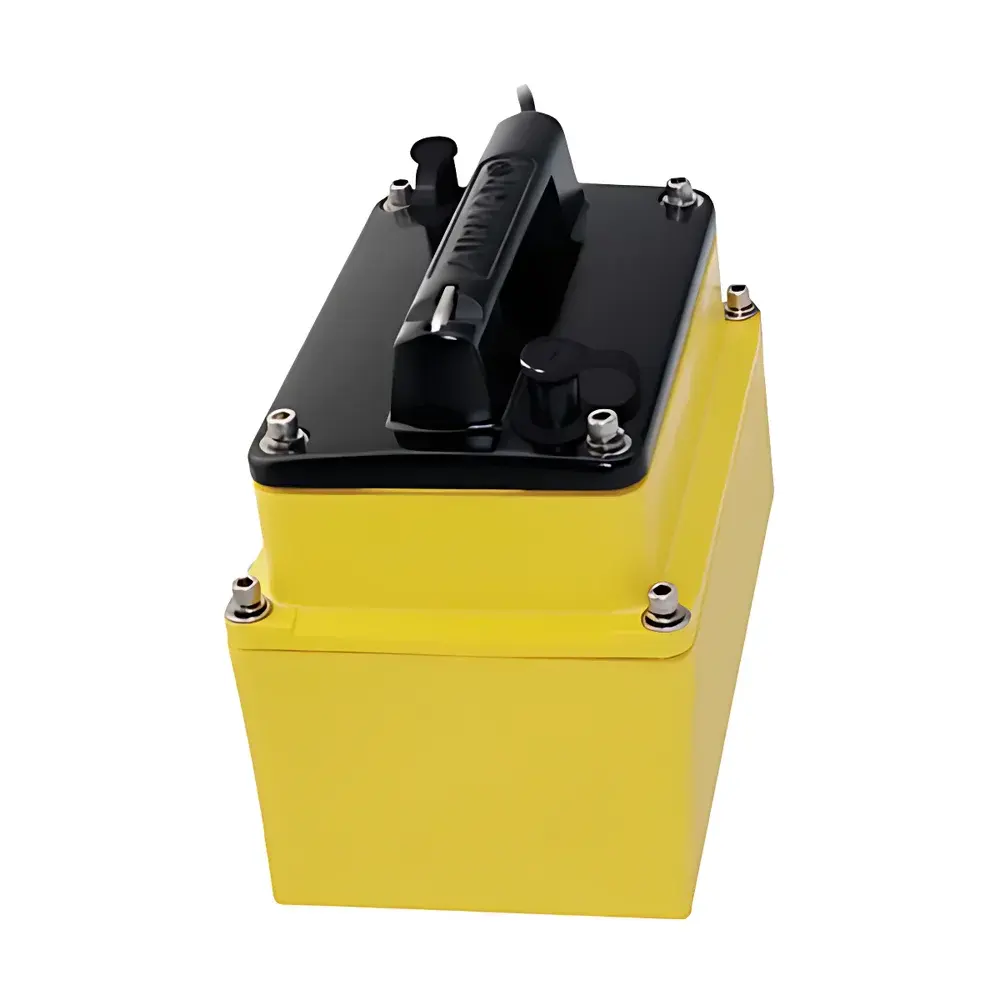
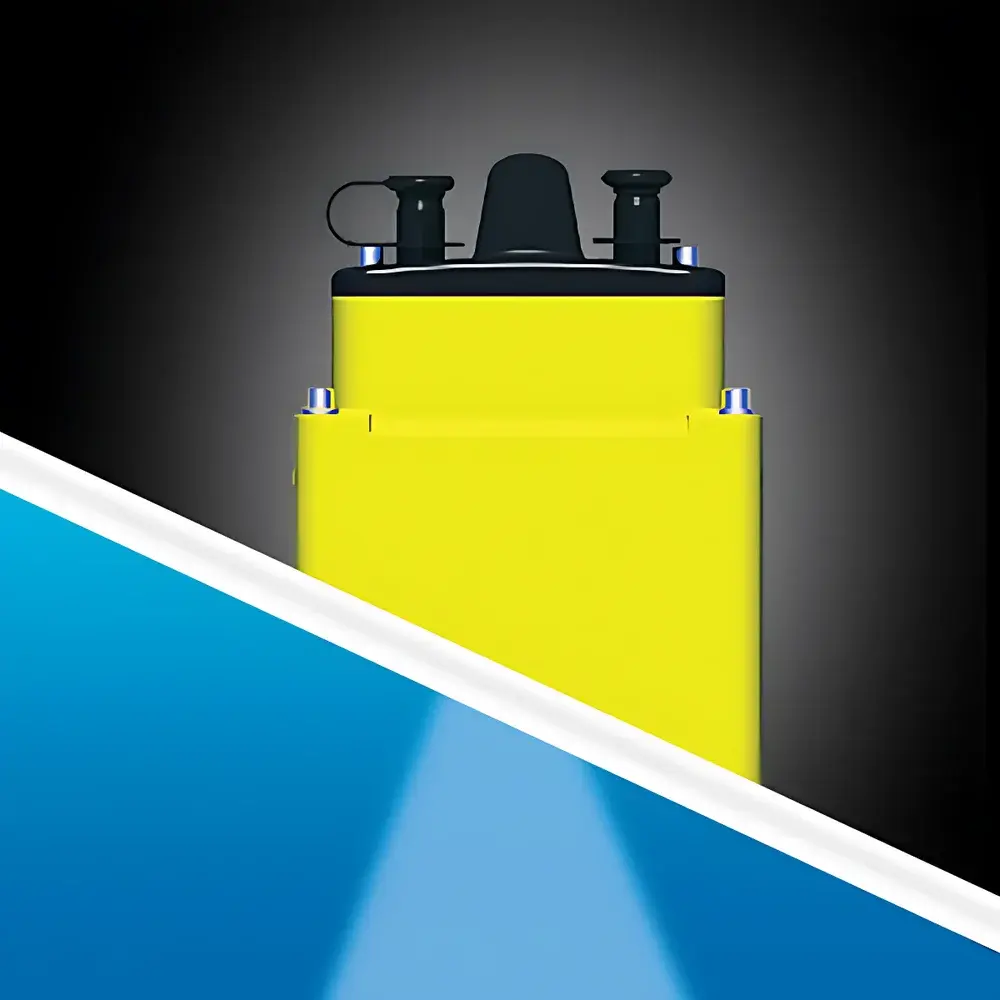
Airmar M260 In-Hull Depth Sounder Transducer
| Brand | Airmar |
|---|---|
| Origin | USA |
| Model | M260 |
| Power Output | 1000 W |
| Operating Frequencies | 50 kHz / 200 kHz |
| Beamwidth | 19° @ 50 kHz / 6° @ 200 kHz |
| Installation Type | In-hull (through-hull cavity mount) |
| Housing Material | Polyurethane & plastic |
| Porthole Diameter | 30 mm |
| Mounting Stub Length | 121 mm |
| Cable Length | 10 m |
| Weight | 6.2 kg |
| Hull Tilt Compensation Range | 0–30° |
| Transducer Window Material | Polyurethane |
| Temperature Sensor | Not integrated |
| Compatible Hull Types | Fiberglass only |
| Minimum Vessel Length | 8 m |
| Proprietary Technology | XducerID® |
Overview
The Airmar M260 is a high-performance, in-hull mounted depth sounder transducer engineered for precision hydrographic measurement and real-time underwater profiling on medium- to large-sized fiberglass vessels. Unlike traditional through-hull or transom-mounted units, the M260 operates within a sealed, liquid-filled cavity bonded directly to the interior hull surface—eliminating flow-induced noise, cavitation, and turbulence that degrade signal integrity at speed. Its dual-frequency architecture (50 kHz and 200 kHz) leverages fundamental acoustic principles: lower frequency provides deeper penetration and broader bottom detection (ideal for bathymetric mapping and deep-water fish finding), while higher frequency delivers superior resolution of seafloor texture, structure, and near-bottom targets (e.g., submerged vegetation, wrecks, or rock formations). The transducer complies with IEC 62237-2:2019 for marine echosounder transducer performance testing and is designed to interface with industry-standard NMEA 2000 and analog echo sounder systems operating at 600 W or 1000 W peak power.
Key Features
- Dual-band operation at 50 kHz (19° beamwidth) and 200 kHz (6° beamwidth) enables simultaneous wide-area coverage and high-resolution imaging
- In-hull installation eliminates external drag, preserves hull integrity, and ensures stable acoustic coupling across vessel speeds up to 20 knots (≈37 km/h)
- Patented XducerID® technology allows automatic transducer identification and parameter configuration by compatible display units—reducing setup time and minimizing configuration errors
- Optimized for fiberglass hulls ≥8 meters in length; uses non-toxic propylene glycol as coupling fluid to prevent freezing and maintain acoustic impedance match
- Structurally reinforced polyurethane acoustic window resists impact, UV degradation, and long-term immersion without delamination or signal attenuation
- Modular mounting stub (121 mm length) accommodates variable hull thicknesses and curvature; 30 mm porthole diameter simplifies retrofit installation
Sample Compatibility & Compliance
The M260 is certified for use on monohull fiberglass vessels with smooth, non-metallic hull sections. It is incompatible with aluminum, steel, wood, or cored composite hulls due to acoustic impedance mismatch and signal attenuation. The transducer meets RoHS Directive 2011/65/EU for hazardous substance restrictions and carries CE marking under Marine Equipment Directive (MED) 2014/90/EU Annex II conformity assessment module B+D. Its mechanical design adheres to ISO 8846:2018 for marine electrical equipment safety, and its pressure housing withstands static head pressures equivalent to depths exceeding 150 m—ensuring reliability in coastal, offshore, and inland waterway applications.
Software & Data Management
While the M260 itself is a passive acoustic sensor without embedded firmware or onboard storage, it supports full integration into digital marine networks via NMEA 2000 (IEC 61162-3) and analog CHIRP-ready echo sounder interfaces. When paired with compliant chartplotters—including Furuno, Garmin, Lowrance, Raymarine, and Simrad—the XducerID® protocol enables automatic transmission of calibrated frequency response curves, beam pattern metadata, and thermal derating thresholds. All raw echo data is timestamped and synchronized to vessel position (via NMEA 0183 GGA or RMC sentences), supporting post-mission analysis in GIS-compatible formats (e.g., .kmz, .gpx, or vendor-specific .sdcard archives). Audit trails for calibration events and transducer replacement are maintained per GLP-aligned marine survey workflows.
Applications
- Commercial and recreational fisheries: Real-time detection of pelagic and demersal fish schools at depths up to 600 m (50 kHz mode) and structural discrimination of benthic habitats at sub-meter resolution (200 kHz mode)
- Hydrographic survey support: Integration into multi-beam auxiliary systems for cross-validation of depth contours and sediment classification
- Underwater infrastructure inspection: Identification of pipeline routes, cable burial status, and scour patterns around pilings or mooring anchors
- Nautical chart updating: High-reproducibility depth logging for NOAA, UKHO, or IHO S-44 Special Order surveys when deployed from calibrated survey platforms
- Scientific limnology: Long-term water column profiling in lakes and reservoirs where hull-mounted deployment avoids disturbance to sensitive benthic ecosystems
FAQ
Can the M260 be installed on aluminum or wooden hulls?
No. Acoustic impedance mismatch and internal reflections in metal or porous wood hulls severely attenuate signal return and compromise depth accuracy. Only solid, uncored fiberglass hulls are supported.
Is temperature compensation available?
The M260 does not include an integrated temperature sensor. For applications requiring sound velocity correction, external CTD sensors must be interfaced via NMEA 2000 or analog voltage input on the host display unit.
What is the maximum operational depth range?
At 50 kHz, typical maximum usable depth is 600 m in low-noise seawater conditions; at 200 kHz, effective range is limited to ≈120 m due to absorption losses—both values assume standard sound speed profiles and clean transducer windows.
Does the M260 require periodic recalibration?
Transducer sensitivity remains stable over time due to solid-state polyurethane window construction. However, annual verification against a traceable depth standard (e.g., ASTM D5123-17) is recommended for survey-grade deployments.
How is the coupling fluid maintained?
Propylene glycol fill volume should be inspected annually. Refills must use USP-grade propylene glycol (≥99.5% purity) to avoid air bubble formation and ensure consistent acoustic impedance matching across temperature gradients.