
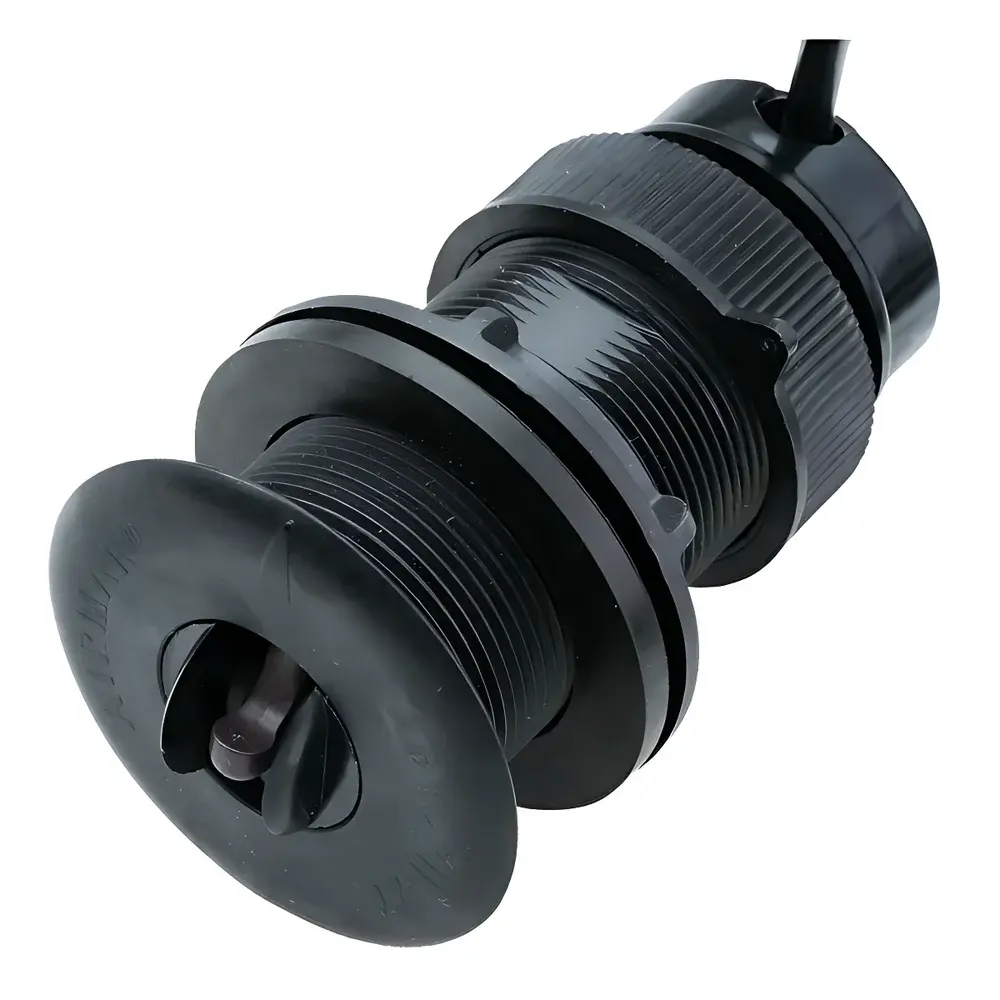
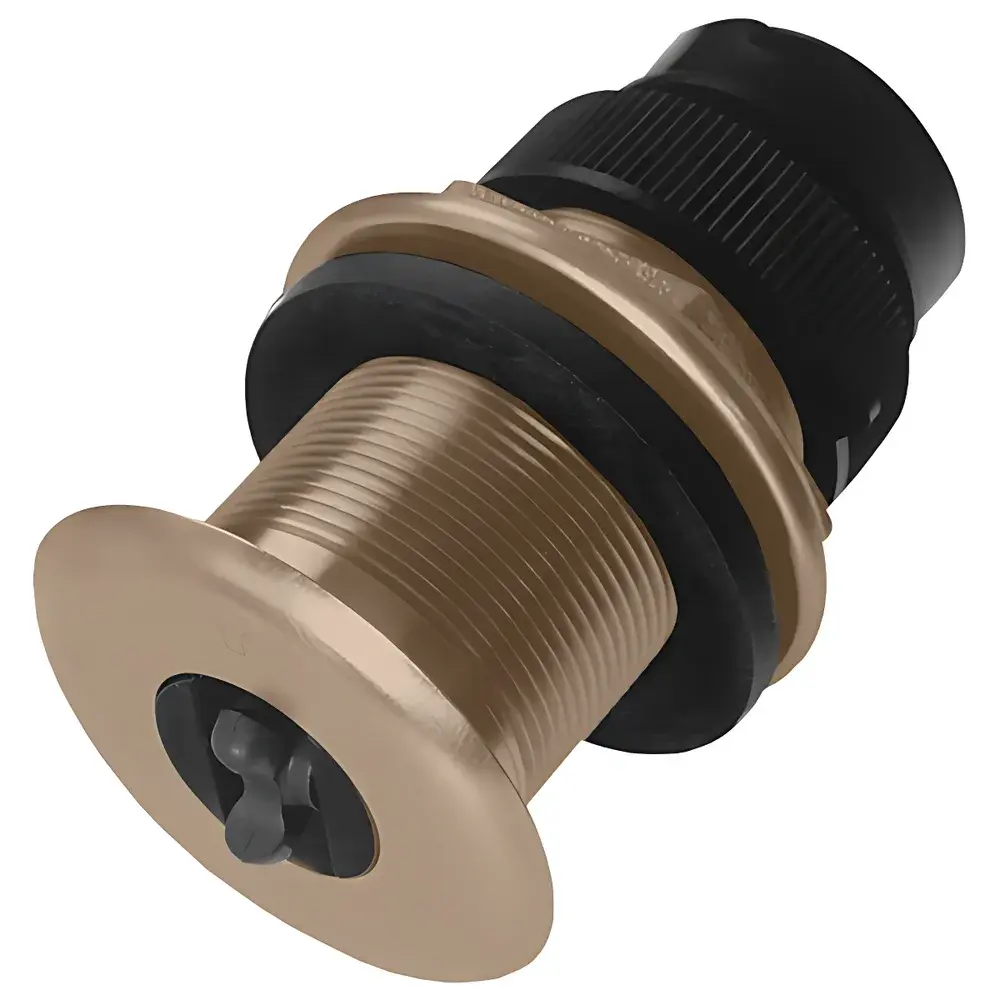
AirMar ST800 Submersible Speed and Temperature Sensor
| Brand | Airmar |
|---|---|
| Origin | USA |
| Model | ST800 |
| Output | NMEA 2000® or Analog (optional) |
| Speed Range | 2–45 knots (2–52 MPH) |
| Temperature Accuracy | ±0.5°C |
| Operating Temperature | −10°C to +40°C |
| Housing Options | Plastic (P217/P314), Bronze (B119/B21), Stainless Steel |
| Hull Tilt Limit | ≤22° |
| Sampling Interval | 1 s |
| Pressure Rating | 3 m |
| Pulse Frequency | 17,000 p/nm (4.8 Hz per knot) |
| Supply Voltage | 9–16 VDC |
| Current Draw | <200 mA |
| NMEA 2000 LEN | 2 |
| Compliance | IEC 60945 |
Overview
The AirMar ST800 is a submersible Doppler-based speed and temperature sensor engineered for high-accuracy vessel speed-through-water (STW) measurement in marine environments. Unlike paddlewheel or pitot-static systems, the ST800 employs coherent Doppler shift analysis of acoustic backscatter from suspended particles in the water column—enabling true vector velocity measurement independent of hull fouling, propeller wash, or flow distortion. Its integrated microprocessor performs real-time signal conditioning, filtering, and temperature compensation directly within the transducer housing, minimizing analog noise and latency. Designed for seamless integration into modern NMEA 2000® networks, the ST800 delivers calibrated speed and temperature data to compatible chartplotters, radar displays, autopilots, and onboard data loggers without requiring external signal converters or calibration modules.
Key Features
- Doppler-acoustic speed sensing with embedded digital signal processing (DSP) for stable, low-drift output across dynamic sea states
- Simultaneous high-resolution temperature measurement using a factory-calibrated thermistor with ±0.5°C accuracy over −10°C to +40°C
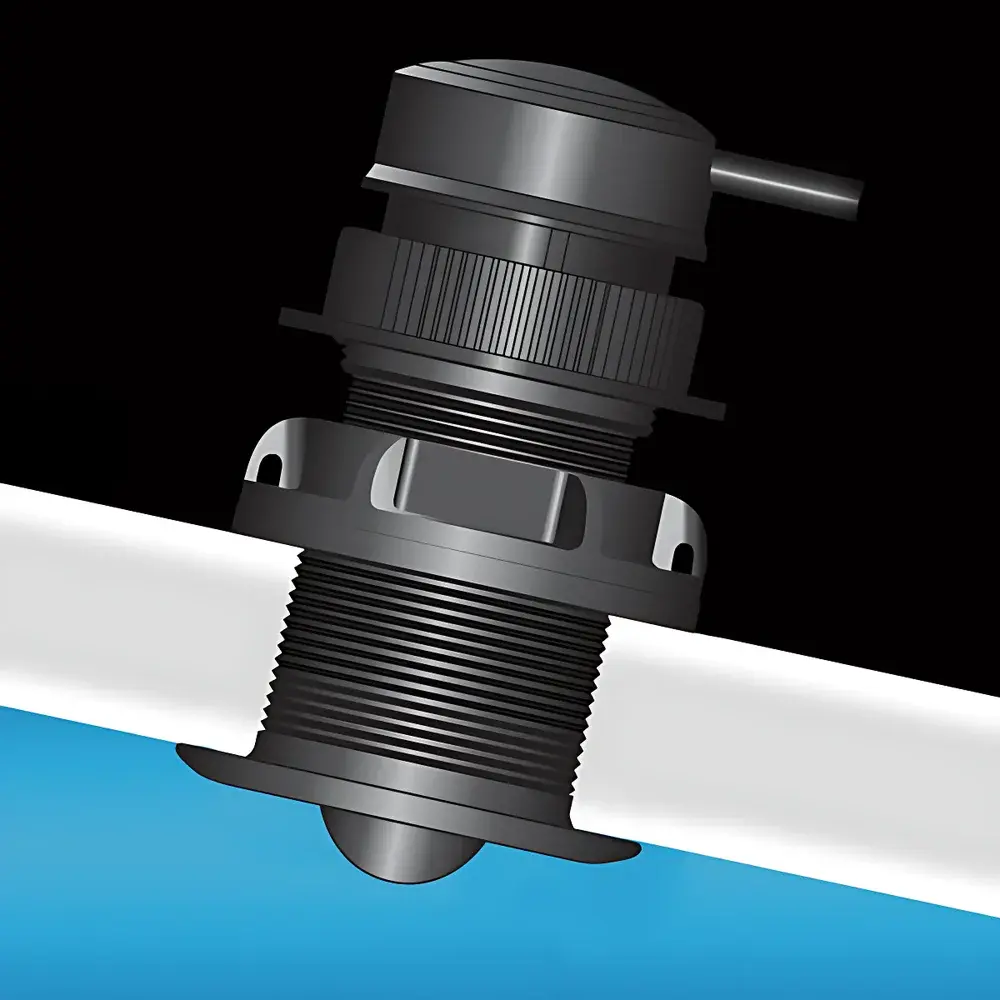
- Low-profile through-hull mounting options—including flush-mount plastic (P217), bronze (B119), and stainless steel housings—projecting only 5 mm beyond the hull surface to minimize hydrodynamic drag and turbulence interference
- Patented Smart™ Sensor architecture enabling plug-and-play interoperability with NMEA 2000® networks (LEN = 2) and optional analog voltage output (0–5 V or 0–10 V)
- Configurable pulse-per-nautical-mile output (17,000 p/nm) for legacy instrumentation compatibility
- Robust pressure-rated design (3 m static depth rating) suitable for planing hulls, racing sailboats, and high-speed powercraft operating at sustained speeds up to 45 knots
- Wide input voltage range (9–16 VDC) and low current draw (<200 mA) ensure compatibility with standard marine electrical systems
Sample Compatibility & Compliance
The ST800 is validated for installation on fiberglass, aluminum, and wood hulls with maximum keel-to-sensor tilt angles of 22°. Its urethane acoustic window provides optimal acoustic coupling across varying water temperatures and salinities while resisting biofouling adhesion. The sensor complies with IEC 60945:2022 for maritime navigation and radio communication equipment, including electromagnetic compatibility (EMC), environmental stress, and safety requirements. It supports GLP-aligned data traceability when integrated with NMEA 2000®-compliant logging systems that maintain timestamped, tamper-evident records per ISO/IEC 17025 guidance. No FDA or USP classification applies, as the device is not intended for biomedical or pharmaceutical process monitoring.
Software & Data Management
The ST800 operates autonomously without host software dependencies; all signal processing occurs internally. When connected to an NMEA 2000® network, it publishes PGN 128259 (Water Speed and Temperature) and PGN 127250 (Fluid Level) at user-configurable update intervals (default: 1 Hz). Data is accessible via standard marine MFD interfaces or third-party NMEA analyzers such as Actisense NGT-1 or Maretron USB100. For integration into custom SCADA or vessel performance monitoring platforms, raw CAN frames can be decoded using publicly documented NMEA 2000 PGN definitions. Audit-ready data export requires downstream systems supporting NMEA 2000® message logging with UTC timestamps and source ID tagging—consistent with ISO 19901-7 for offshore asset performance verification.
Applications
- Real-time speed-through-water input for adaptive autopilot control and fuel efficiency optimization on commercial fishing vessels and ferries
- Performance benchmarking and drag coefficient validation during naval architecture trials and yacht racing campaigns
- Integration into electronic logbook systems for regulatory compliance reporting under IMO Resolution MSC.333(90)
- Temperature-corrected speed referencing in coastal hydrographic survey support craft
- Redundant STW sensing in dual-sensor configurations for Class-approved navigation systems (DNV-RU-SHIP Pt.6 Ch.7)
FAQ
What mounting configurations are supported?
The ST800 supports through-hull installation with four housing variants: plastic P217 (flush), plastic P314 (beveled), bronze B119 (flush), and bronze B21 (beveled). Stainless steel housings are available upon request for corrosion-prone environments.
Is calibration required after installation?
No field recalibration is needed. The sensor is factory-calibrated against traceable NIST standards for both speed and temperature. Periodic verification against known reference conditions (e.g., GPS-derived SOG in calm water) is recommended annually per ISO 8217 Annex D.
Can the ST800 operate in freshwater?
Yes. The Doppler principle remains valid across salinity gradients. However, signal strength may decrease in ultra-low-turbidity freshwater (e.g., glacial lakes); empirical validation is advised for critical applications.
Does the ST800 meet IMO or classification society requirements?
While not individually type-approved, the ST800 complies with IEC 60945 and is widely accepted by ABS, LR, and DNV as a compliant component within approved speed-measuring subsystems when installed per manufacturer guidelines.
What is the expected service life under continuous operation?
Based on accelerated lifecycle testing per MIL-STD-810H Method 507.6, the ST800 demonstrates >50,000 hours MTBF when operated within specified voltage, temperature, and pressure limits.
Related Products







