Anton Paar L-Dens 2300 OEM Liquid Density Sensor
| Brand | Anton Paar |
|---|---|
| Origin | Austria |
| Manufacturer Type | Manufacturer |
| Origin Category | Imported |
| Model | L-Dens 2300 |
| Price | Upon Request |
| Measurement Principle | Oscillating U-tube (Digital Density Measurement) |
| Accuracy | ±1 kg/m³ |
| Density Range | 500–2000 kg/m³ |
| Temperature Range (Process) | –10 °C to +60 °C (up to +95 °C for 30 min, GLS FCM version) |
| Pressure Rating (Absolute) | Up to 6 bar (GLS), up to 16 bar (GLS FCM) |
| Recommended Flow Rate | 10–80 L/h |
| Wetted Materials | Borosilicate glass / PVDF / Kalrez (GLS) |
| Communication Interface | RS-232 |
| Process Connection | G 1/8" female thread or flange adapters |
| Dimensions (L×W×H) | 88×38×48 mm (GLS), 126×56×46 mm (GLS FCM), 99×34×38 mm (GLS PP), 134×64×64 mm (SST E) |
Overview
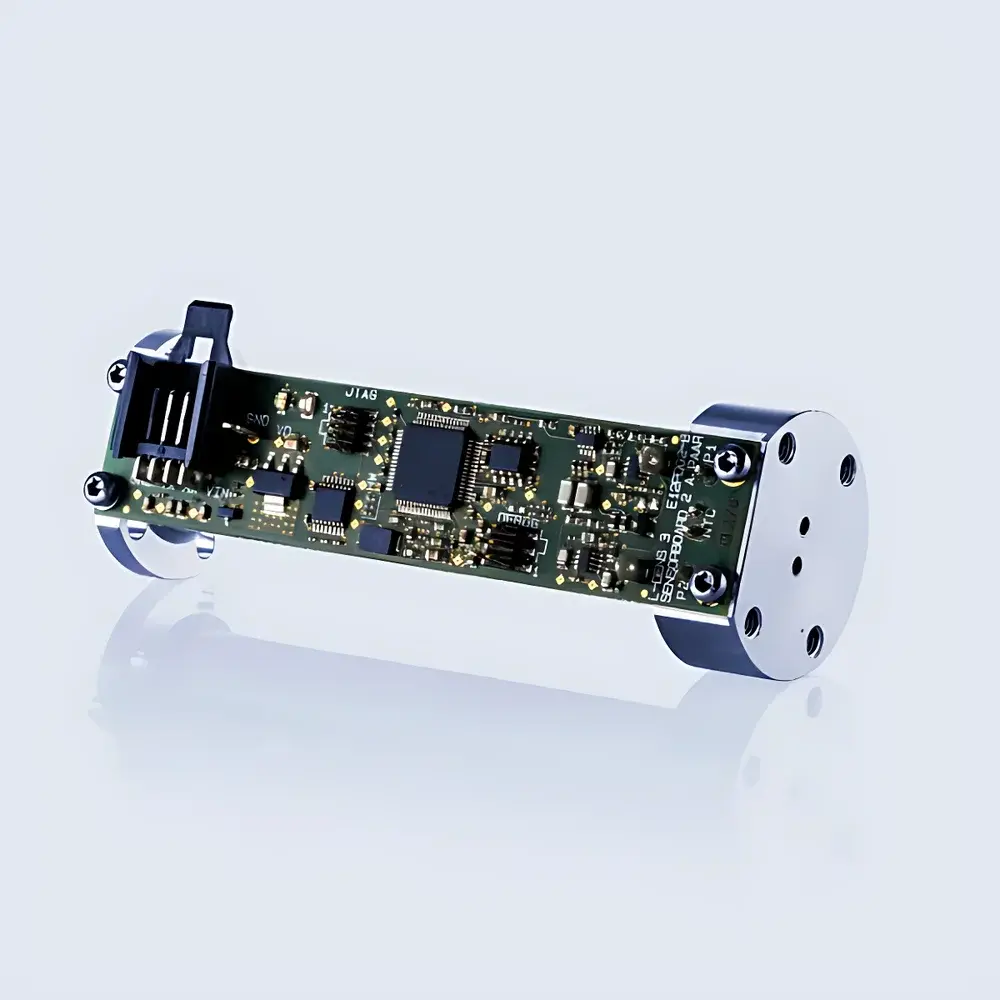
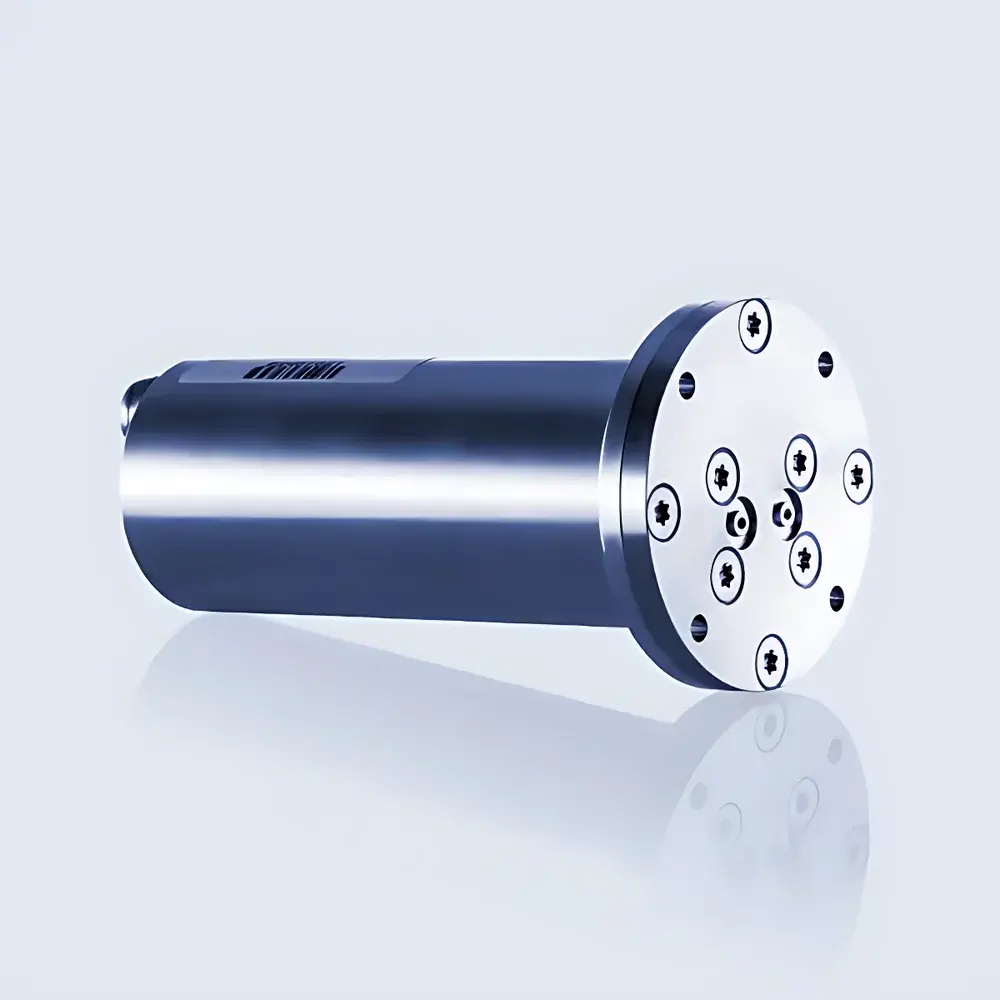
The Anton Paar L-Dens 2300 is a compact, high-stability OEM liquid density sensor engineered for continuous in-line density measurement in industrial process control environments. Based on the well-established oscillating U-tube principle—where the resonant frequency of a precisely machined, temperature-controlled U-shaped tube correlates directly with the density of the fluid passing through it—the L-Dens 2300 delivers traceable, repeatable density data with ±1 kg/m³ accuracy across a broad operational range (500–2000 kg/m³). Designed specifically for low-to-moderate flow applications (10–80 L/h), its minimal internal volume (2 mm bore U-tube) ensures rapid response time and compatibility with suspensions containing particles up to 0.7 mm in diameter. As part of Anton Paar’s L-Dens product family, the L-Dens 2300 reflects over four decades of expertise in digital density metrology, incorporating rigorous thermal compensation algorithms and long-term drift mitigation strategies validated against ISO 12086 and ASTM D4052 reference methodologies.
Key Features
- Modular OEM design optimized for seamless integration into third-party analyzers, blending systems, or PLC-controlled process skids.
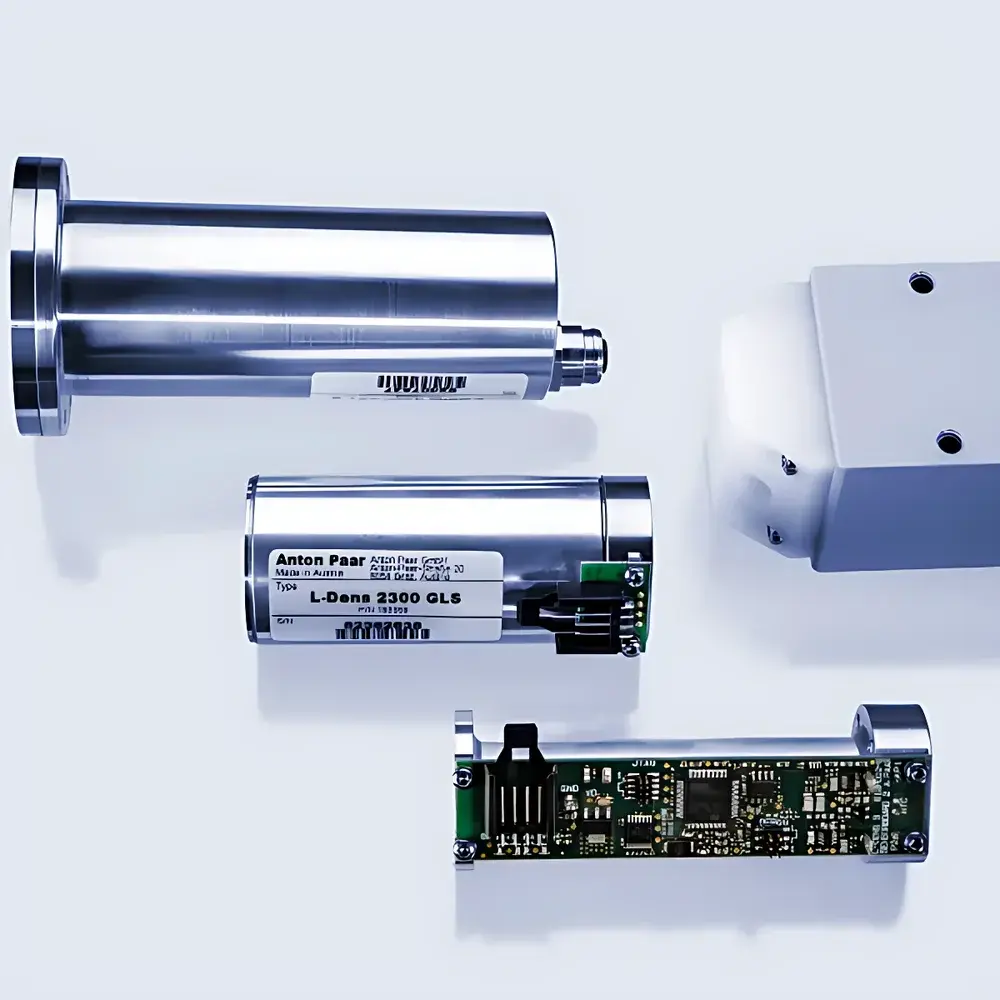
- Two primary oscillator variants: borosilicate glass (GLS) for aggressive media including concentrated sulfuric acid, caustics, and organic solvents; and 1.4571/1.4404 stainless steel (SST) for non-corrosive hydrocarbons, fuels, and alcohols.
- Multiple material-certified configurations: GLS FCM (FDA-compliant PAS-PVDF housing and EPDM seals), GLS PP (polypropylene outer casing for enhanced chemical resistance), and SST E (extended electronics with reinforced enclosure for harsh ambient conditions).
- Robust thermal management supporting process temperatures from –10 °C to +60 °C standard, with short-term tolerance up to +95 °C (GLS FCM), and ambient operating limits of –10 °C to +50 °C (non-explosion-proof versions).
- Pressure-rated construction: up to 6 bar absolute (standard GLS/SST), extended to 16 bar absolute (GLS FCM variant), enabling deployment in pressurized pipelines without external pressure regulation.
- RS-232 serial interface for real-time density and temperature output at configurable update intervals (default: 1 Hz), compatible with SCADA, DCS, and MES platforms via standard ASCII protocol.
Sample Compatibility & Compliance
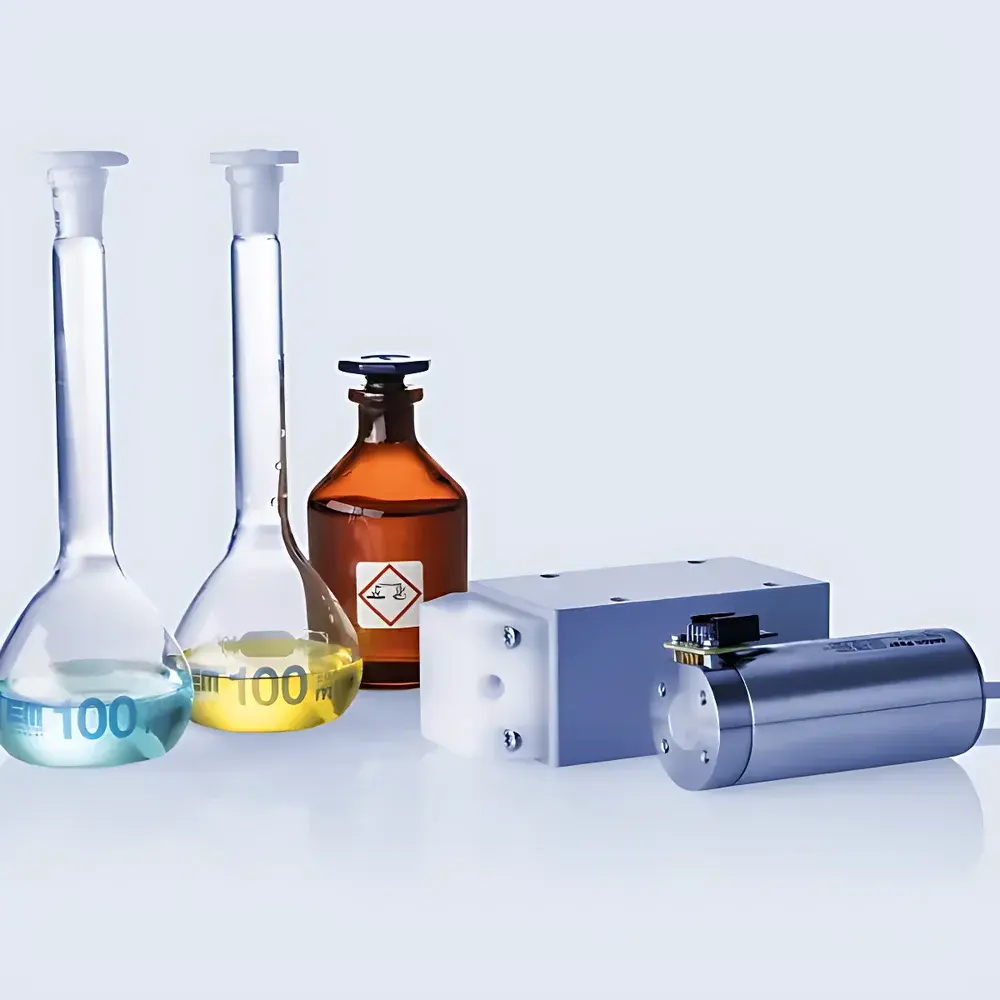
The L-Dens 2300 accommodates a wide spectrum of industrial liquids—from low-viscosity fuels and ethanol blends to viscous emulsions, dialysis concentrates, and highly corrosive process streams such as H₂SO₄, NaOH, and HNO₃ solutions. Its wetted materials are selected per configuration to meet stringent regulatory requirements: GLS FCM variants comply with FDA 21 CFR Part 177 for food-contact polymers and USP Class VI biocompatibility standards; GLS PP units satisfy EN 14531-1 for pharmaceutical water system monitoring; SST E models feature ATEX/IECEx-ready enclosures (optional) and conform to IEC 61000-6-2/6-4 for electromagnetic compatibility. All versions support GLP/GMP-aligned operation through stable calibration traceability to NIST-traceable density standards and documented thermal drift performance (<0.002 kg/m³/°C).
Software & Data Management
While the L-Dens 2300 operates as a standalone sensor module, its RS-232 output enables direct integration with Anton Paar’s optional PC-based configuration utility (L-Dens ConfigTool) for field calibration, zero-point adjustment, and temperature coefficient tuning. Raw density and temperature values are transmitted in ASCII format (e.g., “D=876.43 T=25.12”) for straightforward parsing into custom HMI logic or historian databases. For enterprise-scale deployments, the sensor supports time-synchronized data logging when paired with Anton Paar’s mPDS (modular Process Data Server) gateway—enabling audit-trail generation, electronic signature compliance (21 CFR Part 11), and automated calibration verification reports aligned with ISO/IEC 17025 quality management frameworks.
Applications
- Fuel blending control: Real-time density feedback for precise gasoline, diesel, and biofuel formulation in refinery off-gas lines and terminal loading racks.
- Chemical manufacturing: In-line concentration monitoring of H₂SO₄, HCl, NaOH, and NH₃ solutions during neutralization, dilution, or crystallization steps.
- Pharmaceutical production: Continuous density verification of dialysate concentrates, buffer solutions, and API suspension homogeneity prior to filtration.
- Food & beverage: Ethanol content estimation in spirits, sugar concentration tracking in syrup lines, and milk fat standardization via density deviation analysis.
- Water treatment: Monitoring polymer dosing consistency and sludge density in dewatering centrifuges and membrane bioreactors.
FAQ
What is the minimum required flow rate to ensure stable oscillation and accurate density measurement?
A sustained flow rate of ≥10 L/h is recommended to maintain laminar flow through the U-tube and suppress air entrapment; lower flows may be used with pulse dampening or backpressure regulation.
Can the L-Dens 2300 be calibrated in situ without removing it from the pipeline?
Yes—zero calibration using dry air or nitrogen, and span calibration using certified reference fluids (e.g., water, sodium chloride solutions) can be performed online via the RS-232 interface and ConfigTool software.
Is temperature compensation automatic, and how is it implemented?
Yes—integrated Pt100 RTD measures fluid temperature within the U-tube with ±0.1 °C accuracy; density values are automatically corrected using Anton Paar’s proprietary polynomial algorithm derived from >10,000 reference measurements across 200+ fluid types.
Does the sensor require periodic maintenance or cleaning?
No scheduled maintenance is required under normal operation; however, routine inspection of the inlet filter (if installed upstream) and visual verification of oscillator integrity are advised per ISO 5725-2 intermediate precision guidelines.
How does the L-Dens 2300 handle particulate-laden fluids?
Its 2 mm internal diameter U-tube and smooth borosilicate glass or electropolished stainless steel surface resist fouling; particles ≤0.7 mm pass freely without clogging, provided flow velocity remains above sedimentation threshold (≥0.3 m/s).
Related Products