
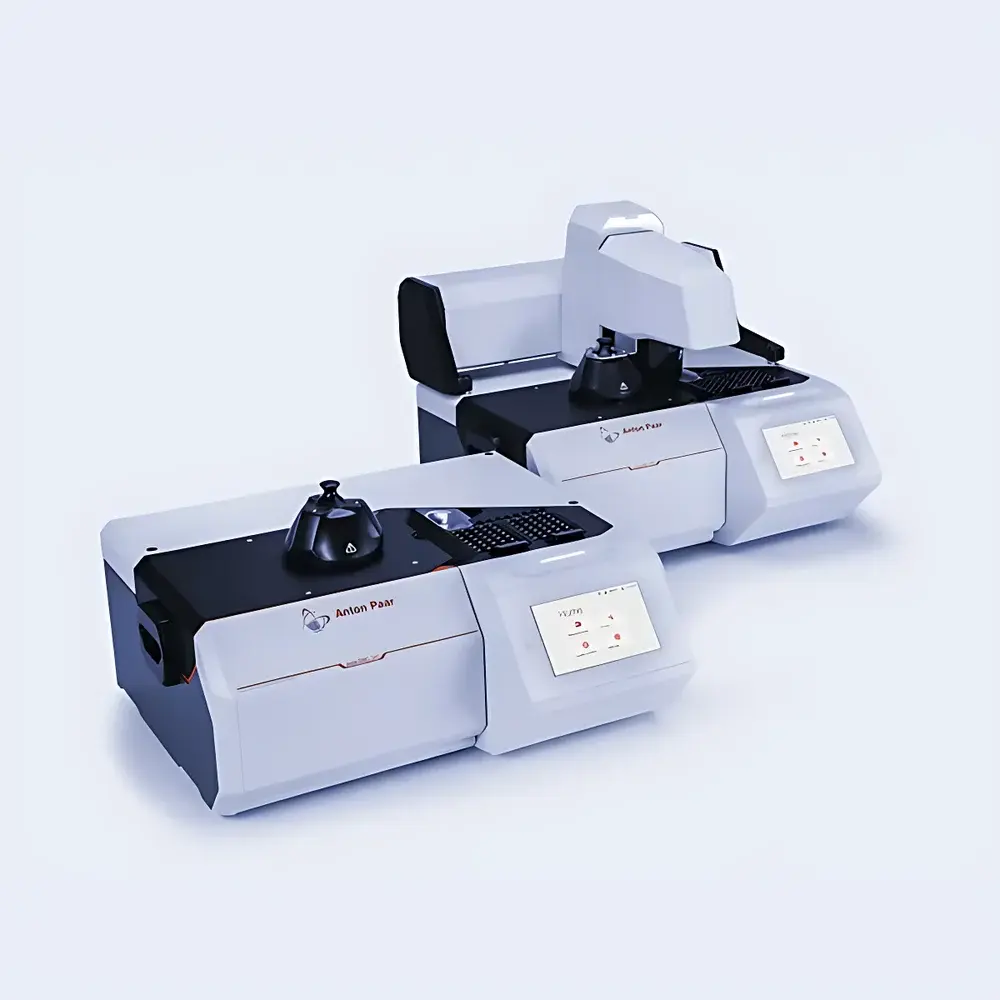
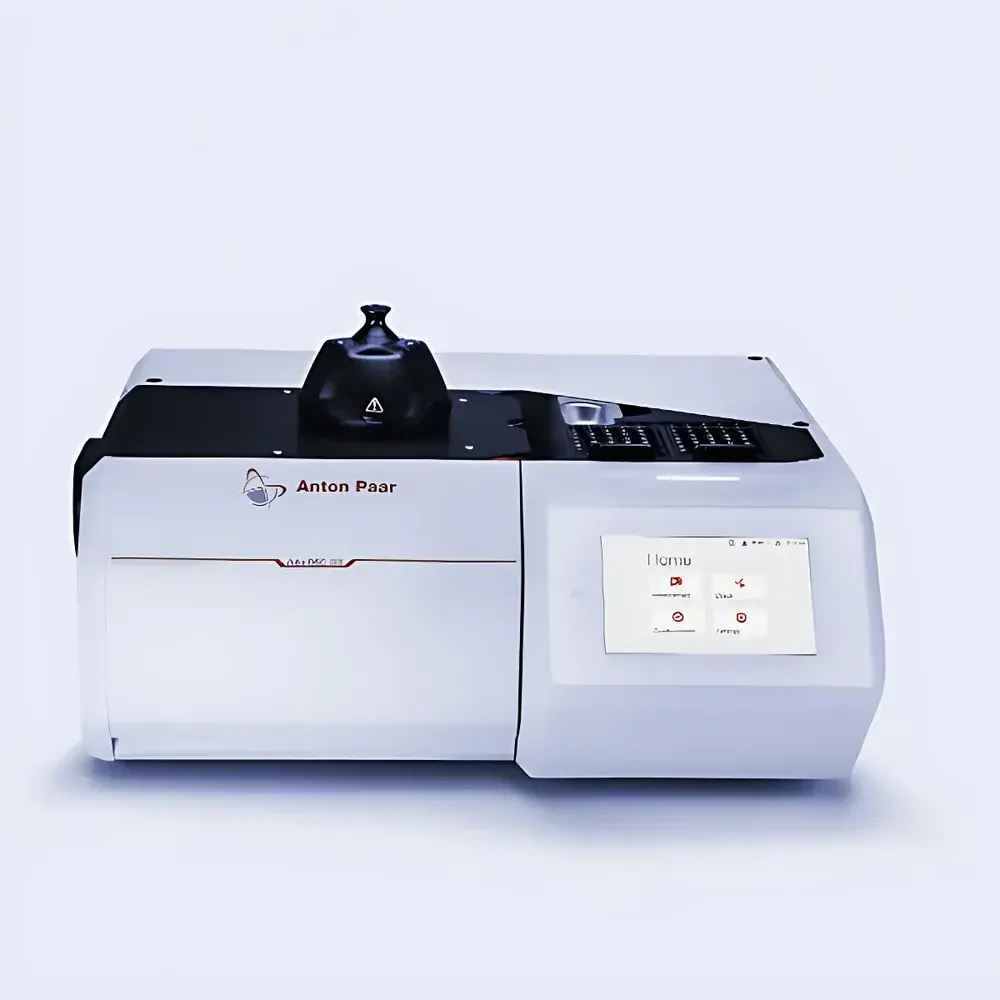
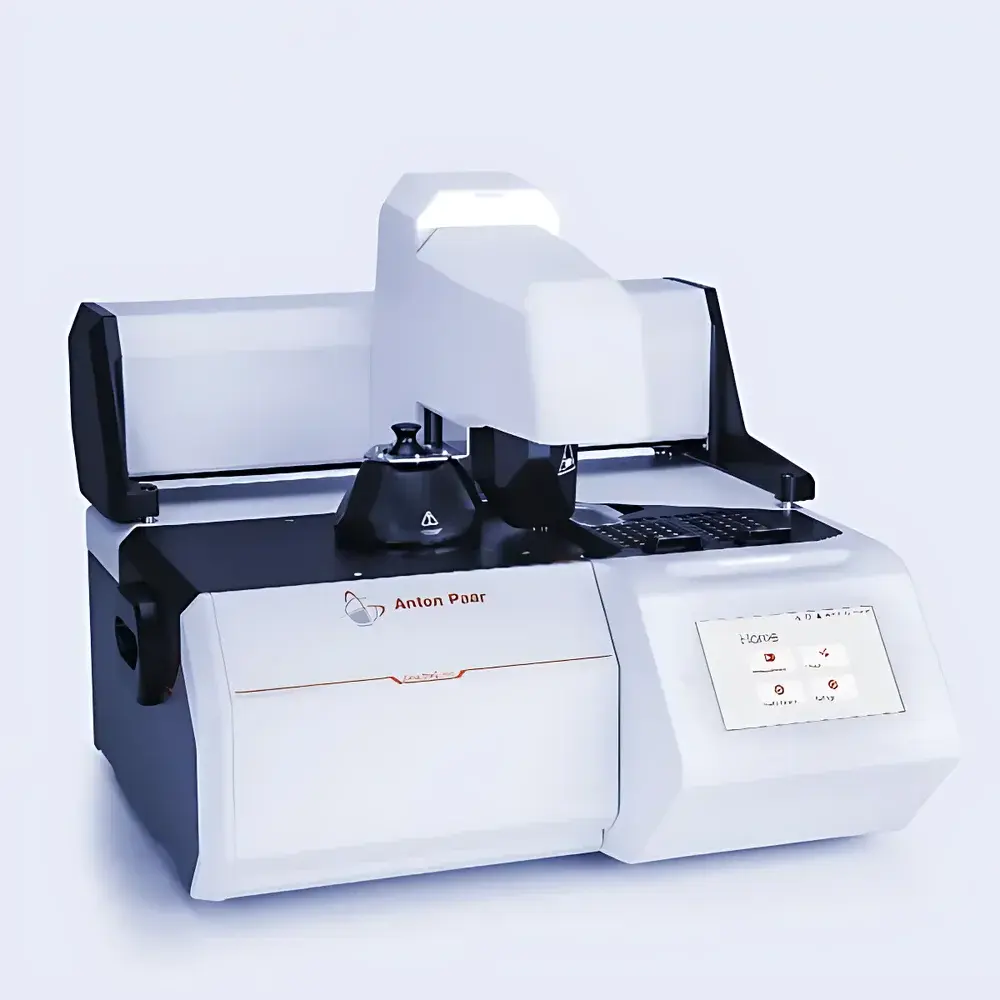
Anton Paar Julia DSC 300/500 Differential Scanning Calorimeter
| Brand | Anton Paar |
|---|---|
| Origin | Austria |
| Manufacturer Type | Original Equipment Manufacturer (OEM) |
| Product Category | Imported Instrument |
| Model | Julia DSC 300/500 |
| Instrument Type | Heat-Flux DSC |
| Special Function | Modulated DSC (MDSC®-compatible operation) |
| Simultaneous Sample Capacity | Up to 70 samples (with auto-sampler) |
| Temperature Range | –170 °C to 700 °C |
| Programmable Temperature Control | Dynamic and Isothermal modes |
| Temperature Accuracy | <0.1 K |
| Temperature Precision | 0.01 °C |
| Heating Rate | 0–300 K/min |
| Cooling Rate | 0–200 K/min |
| DSC Signal Range | ±2500 mW |
| Temperature Stability | ±0.1 °C (peak-to-peak, over 30 min) |
Overview
The Anton Paar Julia DSC 300/500 is a high-performance heat-flux differential scanning calorimeter engineered for precision thermal characterization across demanding industrial, pharmaceutical, and academic research environments. Based on the fundamental principle of heat-flux DSC—measuring the differential heat flow between a sample and an inert reference as both are subjected to identical, precisely controlled temperature programs—the Julia platform delivers exceptional sensitivity, reproducibility, and operational robustness. Its modular architecture supports three distinct cooling configurations: Air-Cooled Module (ACM), Mechanical Refrigeration Module (MRM), and Liquid Nitrogen Cryogenic Module (NCM), enabling seamless transition from routine quality control at ambient conditions to ultra-low-temperature transitions down to –170 °C. The instrument’s core design emphasizes metrological integrity: certified temperature accuracy better than 0.1 K, enthalpy accuracy <1%, and signal resolution within ±0.1 µW ensure compliance with ISO 11357, ASTM E794, and USP <1163> for thermal analysis validation.
Key Features
- Modular cooling system: Selectable ACM (–35 °C), MRM (–90 °C), or NCM (–170 °C) without hardware reconfiguration—swap modules in under 5 minutes.
- Ultra-fast thermal response: Achieves 300 °C → 25 °C in ≤7 minutes using air-cooled configuration; ramp rates up to 300 K/min (heating) and 200 K/min (cooling) enable kinetic studies and rapid screening.
- Julia Suite software: Intuitive, workflow-driven interface with guided calibration, one-click method setup, and embedded QC templates compliant with GLP/GMP documentation requirements.
- Integrated auto-sampler: 70-position sample carousel with 8 dedicated reference positions; supports unattended weekend operation and automated baseline correction.
- Thermal contact optimization system: Includes crucible sealing press, filling funnels, compaction rods, and micro-sealing pens—ensuring consistent sample geometry, minimal thermal resistance, and hermetic containment for volatile or reactive materials.
- Real-time performance monitoring: Built-in sensor diagnostics, drift compensation algorithms, and traceable calibration history logs support FDA 21 CFR Part 11 audit readiness.
Sample Compatibility & Compliance
The Julia DSC 300/500 accommodates standard aluminum, gold, platinum, and high-purity graphite crucibles (including hermetically sealed variants), supporting solids, powders, gels, thin films, fibers, and small-volume liquids (≥1 mg). Its broad temperature range and high signal fidelity make it suitable for polymer crystallinity assessment (Tm, Tc, ΔHf), pharmaceutical polymorph screening, curing kinetics of thermosets, glass transition (Tg) analysis under modulated conditions, and oxidative induction time (OIT) per ASTM D3895. All configurations meet ISO/IEC 17025 traceability requirements; optional IQ/OQ/PQ protocols align with pharmaceutical validation frameworks (ICH Q5E, Q7) and materials certification standards (e.g., EN 13231-1 for composites).
Software & Data Management
Julia Suite provides native support for secure, role-based data handling—including electronic signatures, audit trails, and encrypted raw-data storage compliant with 21 CFR Part 11. The software features automatic peak integration with baseline correction, multi-step kinetic modeling (e.g., Ozawa-Flynn-Wall), and MDSC deconvolution for reversing/non-reversing heat flow separation. Export formats include ASTM E1447-compliant .qdx files, CSV, PDF reports, and direct LIMS integration via OPC UA. Historical calibration records, instrument usage logs, and environmental condition metadata (ambient T/RH) are automatically appended to each measurement file.
Applications
- Pharmaceutical development: Polymorphic stability mapping, excipient compatibility screening, lyophilization cycle optimization, and amorphous content quantification.
- Advanced materials R&D: Cure monitoring of epoxy resins, thermal degradation onset of carbon fiber composites, latent heat storage capacity of PCMs, and nano-additive dispersion effects.
- Quality assurance: Batch-to-batch consistency verification for polyolefins, rubber vulcanization profiling, and metal alloy phase transformation validation.
- Academic research: Low-temperature relaxation phenomena in metallic glasses, hydration/dehydration thermodynamics of clays, and calorimetric detection of enzymatic activity.
FAQ
What cooling options are available—and how do they affect measurement throughput?
Three modules are supported: ACM (–35 °C), MRM (–90 °C), and NCM (–170 °C). ACM enables fastest cooldown (≤7 min from 300 °C to RT), maximizing daily sample count; NCM extends low-T capability but requires LN2 logistics and slightly longer equilibration.
Is modulated DSC (MDSC) functionality built-in or add-on?
MDSC-compatible operation is natively enabled via Julia Suite’s proprietary temperature modulation algorithm—no hardware upgrade required. Users define period, amplitude, and underlying heating rate to resolve overlapping transitions.
How does the system ensure long-term calibration stability?
Each module includes dual-point In and Zn reference calibrants; automated calibration routines verify temperature, enthalpy, and baseline linearity before every sequence. Drift-compensated sensors and active furnace thermal shielding minimize environmental influence.
Can the auto-sampler handle non-standard crucible types?
Yes—the carousel accepts all ISO-standard crucibles (5–10 mm OD); custom adapters are available for specialized geometries including high-pressure and magnetic susceptibility cells.
What regulatory documentation is provided for GxP environments?
Standard delivery includes full IQ/OQ documentation, calibration certificates traceable to NIST standards, and a 21 CFR Part 11 compliance package with electronic signature templates and audit trail configuration guides.
Related Products



