
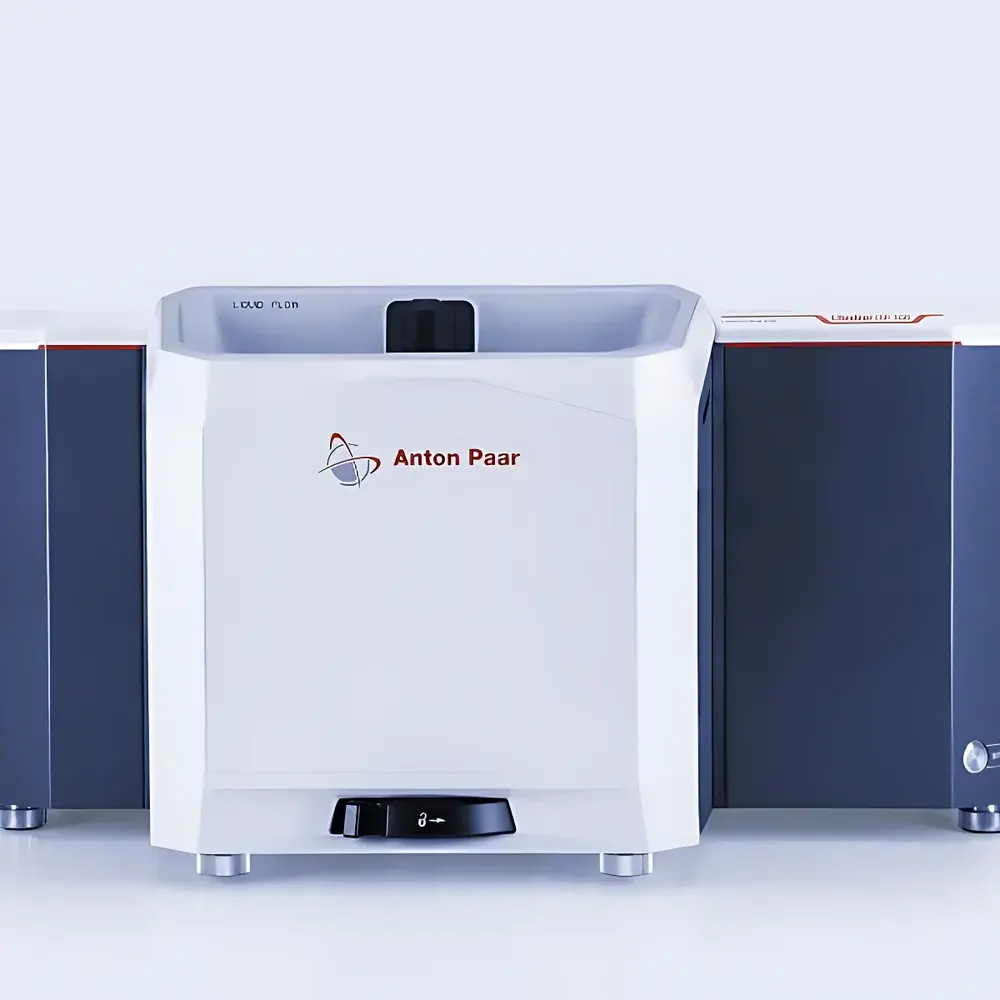
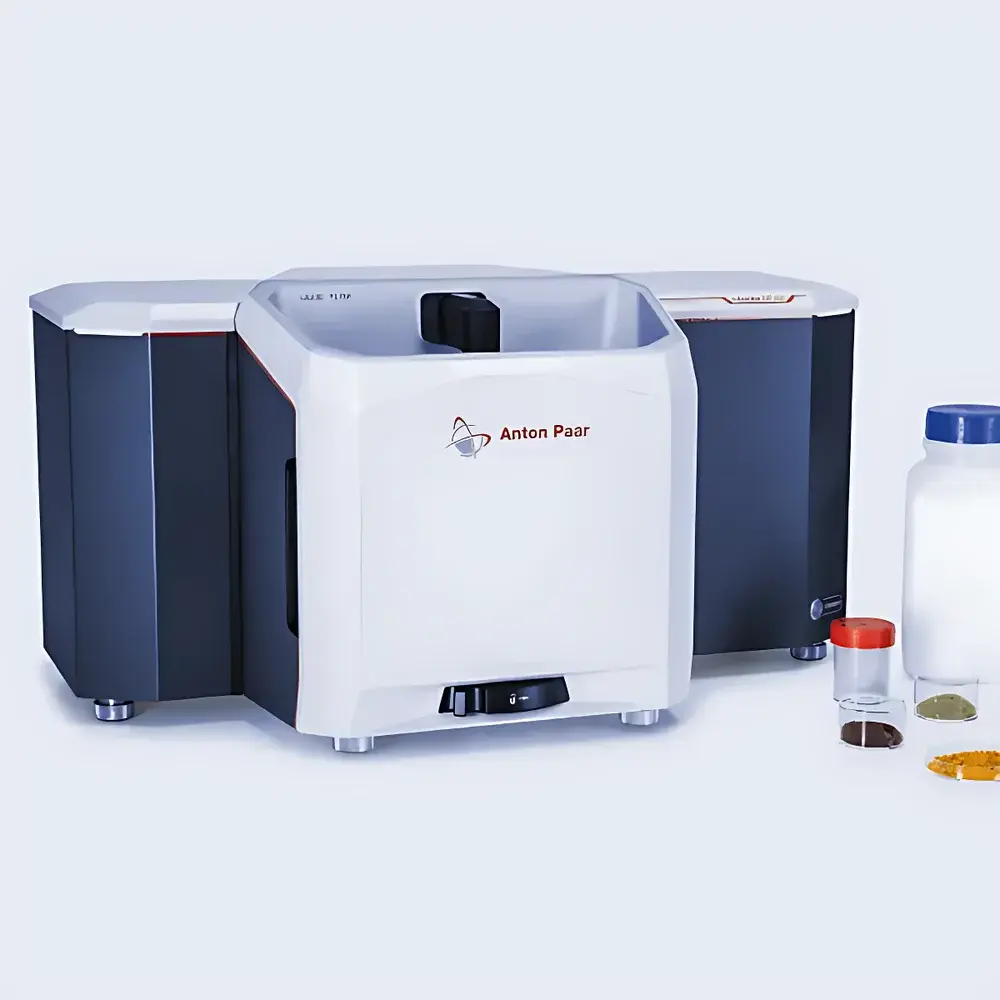
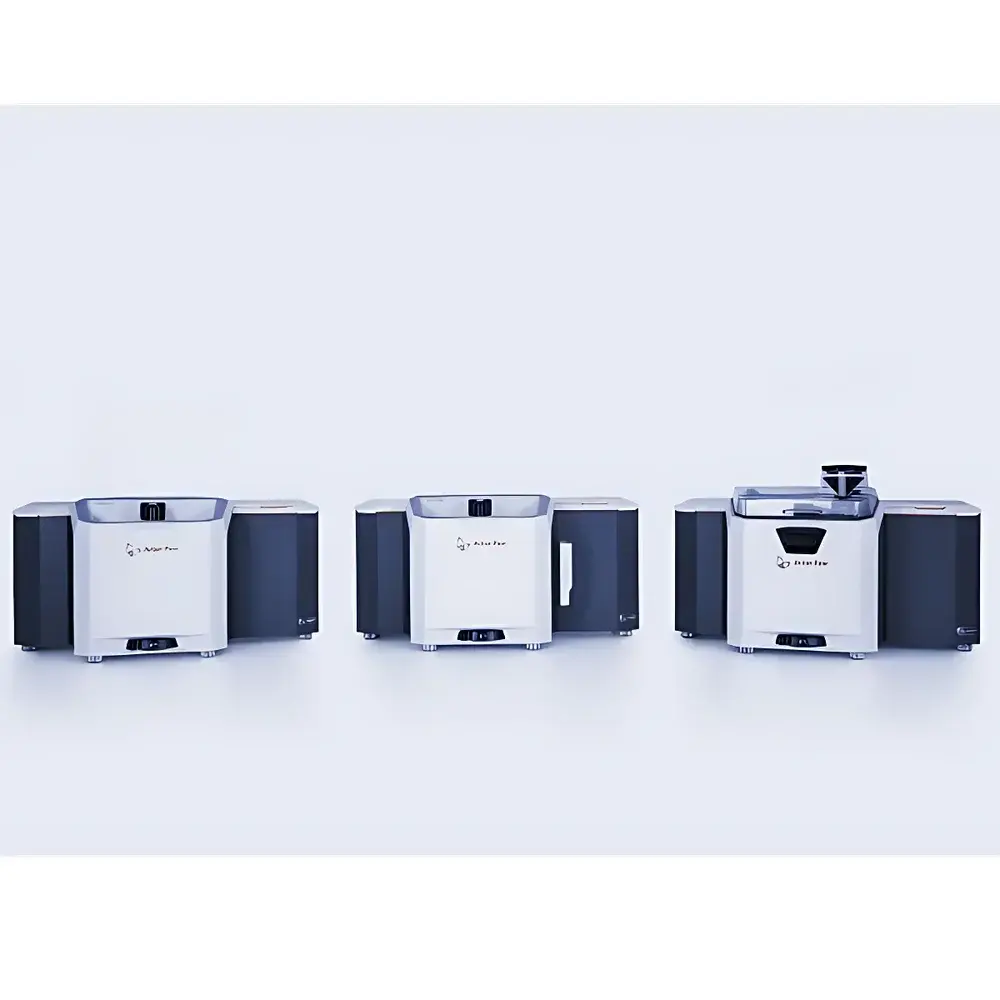
Anton Paar Litesizer DIF500 Laser Diffraction Particle Size Analyzer
| Brand | Anton Paar |
|---|---|
| Origin | Austria |
| Manufacturer Type | Original Equipment Manufacturer (OEM) |
| Product Origin | Imported |
| Model | DIF500 |
| Dispersion Method | Dry & Wet Dispersion |
| Instrument Type | Laboratory Laser Diffraction Analyzer |
| Measurement Range | 0.01–3500 µm |
| Repeatability | < ±0.5% |
| Measurement Time | < 10 s |
Overview
The Anton Paar Litesizer DIF500 is a high-precision laboratory laser diffraction particle size analyzer engineered for robust, reproducible, and standards-compliant measurements across an exceptionally broad dynamic range—from 10 nm to 3.5 mm. It implements first-principles Mie scattering theory (with Fraunhofer approximation support for coarse particles) to deliver quantitative size distribution data based on angular intensity profiles of scattered laser light. Its dual-wavelength optical architecture—featuring independently stabilized 830 nm (10 mW, Class 1) and 450 nm (25 mW, Class 1) fiber-coupled solid-state lasers—enables optimized detection sensitivity for both submicron nanoparticles and coarse agglomerates. The instrument’s 0.01°–170° logarithmically spaced photodiode array, combined with side- and back-scatter detection diodes and a 300 mm focal length collimated beam path, ensures high-resolution capture of forward, intermediate, and wide-angle scattering signatures. This optical design directly supports compliance with ISO 13320:2020, USP , ASTM B822–20, ASTM D4464–15(2020), and ASTM E2316–14(2019), making it suitable for regulated environments including pharmaceutical development, advanced materials R&D, and quality control laboratories operating under GLP or GMP frameworks.
Key Features
- Dual-laser optical system: 830 nm red (10 mW) and 450 nm blue (25 mW), both Class 1 per IEC 60825-1, enabling enhanced resolution for polydisperse samples spanning nanoscale to millimeter ranges
- Ultra-wide angular detection: 0.01°–170° coverage with log-spaced photodiode array and dedicated side/backscatter diodes for complete scattering pattern fidelity
- Quick-Click modular dispersion interface: Tool-free, auto-sensing connection for wet and dry dispersion units—electrical, pneumatic, and fluidic interfaces engage simultaneously in <1 second
- Integrated real-time obscuration monitoring: Visual feedback during sample introduction ensures optimal loading concentration prior to measurement initiation
- IP41-rated metal enclosure with vibration-isolated optical bench: Designed for stable operation in non-climate-controlled industrial labs, cleanrooms, or mobile analytical setups
- Interchangeable dispersion modules fully compatible with Anton Paar’s DIA dynamic image analyzers—ensuring identical dispersion conditions for orthogonal method verification
Sample Compatibility & Compliance
The Litesizer DIF500 accommodates diverse sample states—including aqueous suspensions, organic dispersions, emulsions, dry powders, and aerosols—via its field-replaceable wet and dry dispersion units. Each module incorporates safety-first engineering: the dry dispersion unit integrates suction flow verification and a sealed dust containment shroud to minimize operator exposure; the wet dispersion unit performs automated liquid-level sensing prior to ultrasonication, preventing transducer overheating and cavitation damage. All measurements adhere to ISO 13320:2020 requirements for instrument validation, including reference material calibration using NIST-traceable polystyrene latex standards. Data integrity is reinforced by full audit trail functionality within Kalliope software, supporting FDA 21 CFR Part 11 readiness when configured with electronic signatures and role-based access controls.
Software & Data Management
Kalliope software provides a streamlined, workflow-driven interface designed for minimal operator training—measurements initiate in three clicks without parameter reconfiguration. It supports user-defined particle size classes (up to 144 bins), customizable reporting templates (PDF, CSV, XML), and batch processing for multi-sample campaigns. Raw scattering patterns are stored in vendor-neutral HDF5 format, preserving full angular intensity arrays for retrospective reanalysis. Advanced features include automatic refractive index selection from embedded material libraries, Mie inversion with complex RI input, and statistical comparison tools for inter-instrument or inter-lot variance assessment. All data exports include metadata such as instrument ID, calibration timestamp, dispersion settings, and environmental logs (temperature/humidity), ensuring traceability for regulatory submissions.
Applications
The Litesizer DIF500 serves critical roles across multiple sectors: in pharmaceutical formulation, it characterizes active pharmaceutical ingredient (API) crystallinity, excipient particle blends, and inhalation aerosol droplet distributions per USP ; in battery materials R&D, it quantifies cathode/anode powder morphology shifts after milling or coating processes; in catalyst manufacturing, it monitors nanoparticle aggregation kinetics under shear and thermal stress; in food science, it verifies starch granule swelling behavior and dairy protein micelle stability; and in environmental testing, it profiles sediment grain-size distributions in soil and slurry samples per ASTM D4464. Its ability to maintain repeatability < ±0.5% and reproducibility < ±1% across operators and instruments enables cross-site method transfer and long-term stability studies.
FAQ
What optical principles does the Litesizer DIF500 use for particle sizing?
It applies Mie scattering theory for particles comparable to or smaller than the incident wavelength, and Fraunhofer diffraction for larger particles—both validated against ISO 13320:2020.
Can the DIF500 be integrated into a regulated QA/QC environment?
Yes—when deployed with Kalliope’s audit trail, electronic signature, and password-protected user roles, it meets foundational requirements for FDA 21 CFR Part 11 and EU Annex 11 compliance.
Is the dry dispersion unit suitable for hazardous or toxic powders?
Its enclosed design, integrated vacuum interlock, and dust containment shroud reduce airborne exposure; however, users must conduct site-specific risk assessments per OSHA or local occupational health regulations.
How does the instrument handle highly polydisperse samples spanning >6 orders of magnitude?
Dual-wavelength illumination and extended angular detection enable simultaneous resolution of nanoscale nuclei and micron-scale aggregates without dilution or fractionation.
Does the system support automated cleaning protocols between samples?
Wet dispersion modules include programmable rinse cycles with configurable solvent volume, dwell time, and flow rate—fully logged in measurement history.
Related Products



