
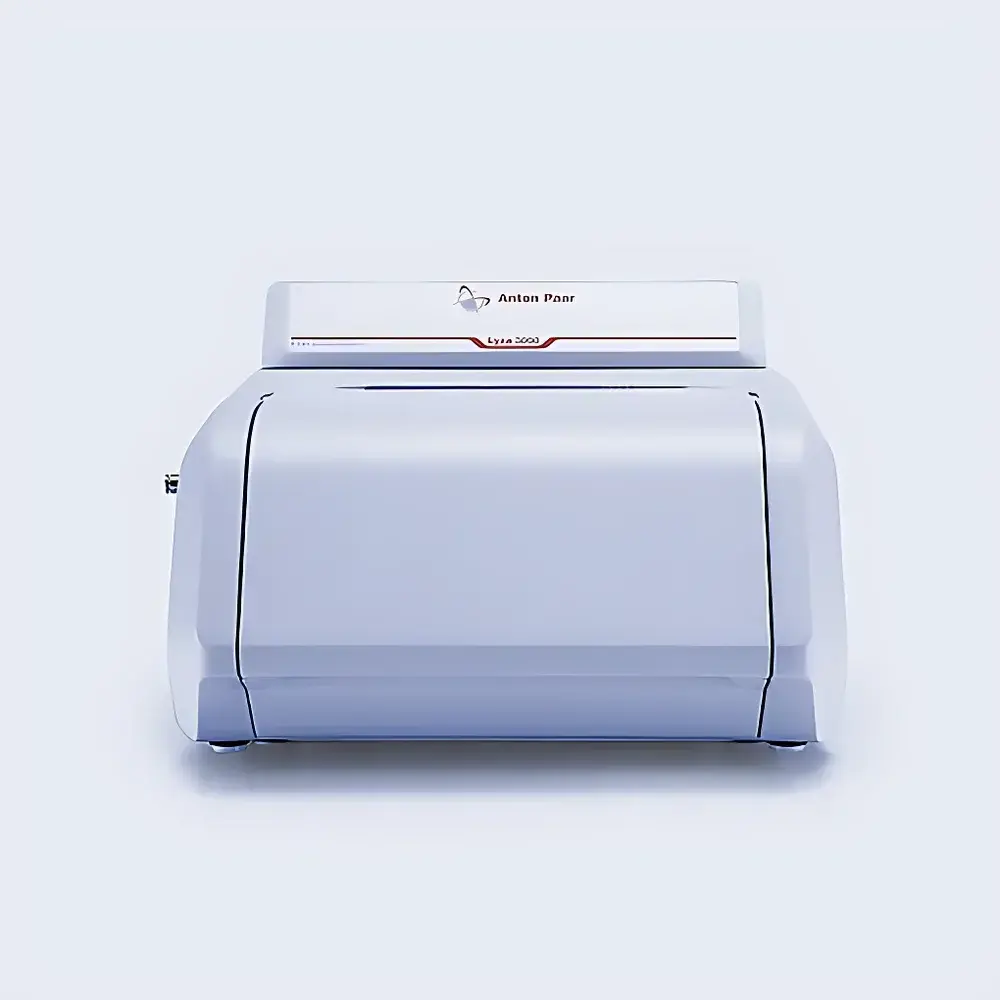
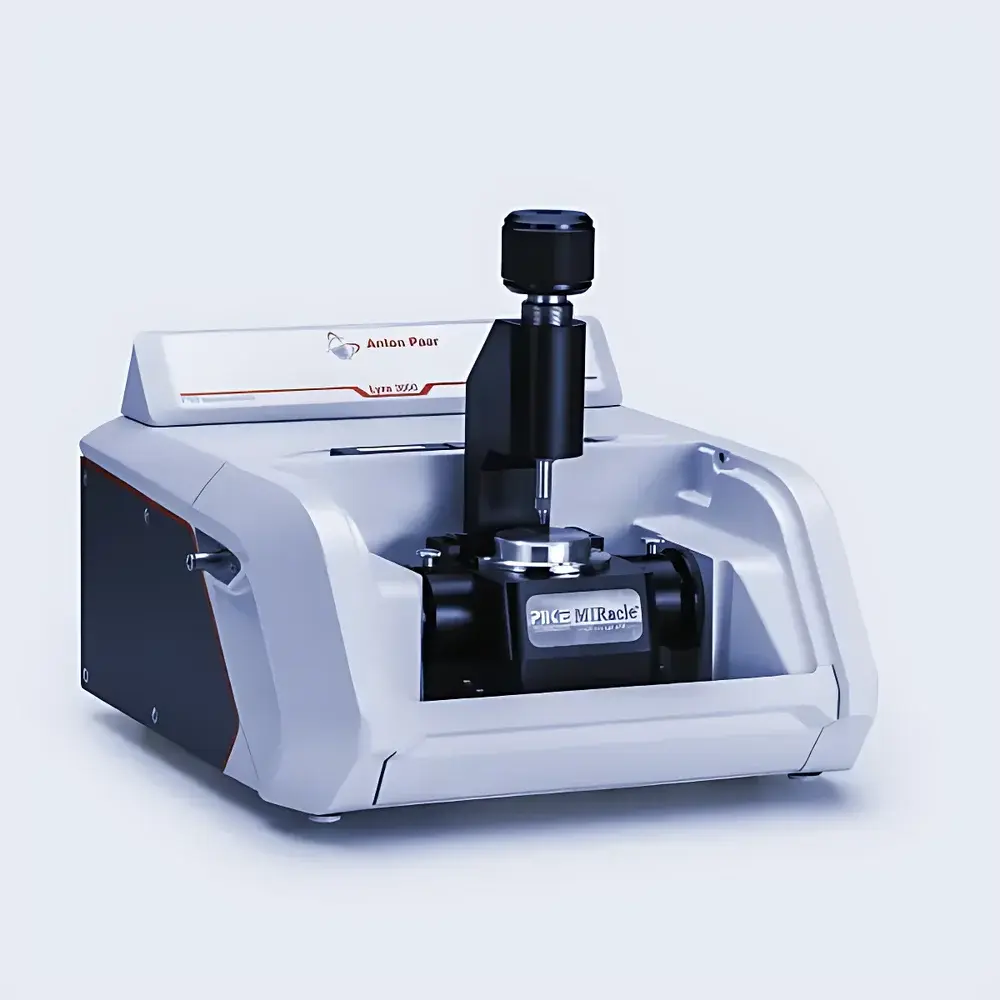
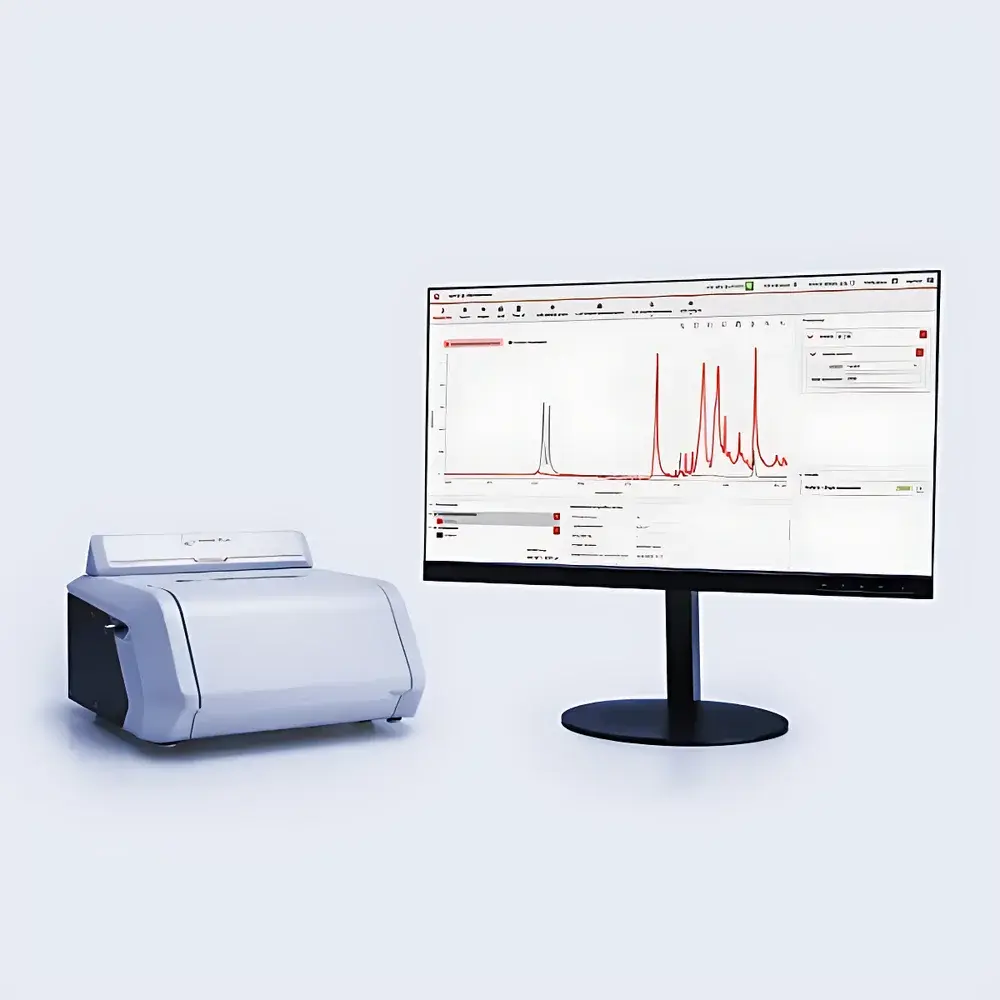
Anton Paar Lyza 3000 Fourier Transform Infrared (FTIR) Spectrometer
| Brand | Anton Paar |
|---|---|
| Origin | Germany |
| Manufacturer Type | Original Equipment Manufacturer (OEM) |
| Origin Category | Imported |
| Model | Lyza 3000 |
| Instrument Type | Laboratory FTIR Spectrometer |
| Wavenumber Range | 350–7500 cm⁻¹ |
| Spectral Resolution | <1.4 cm⁻¹ (0.7 cm⁻¹ optional) |
| Scan Speed | <30 seconds per spectrum |
| Signal-to-Noise Ratio (S/N) | 55,000:1 (at 4 cm⁻¹, 16 scans, DTGS detector) |
| Wavenumber Accuracy | <0.05 cm⁻¹ |
Overview
The Anton Paar Lyza 3000 is a high-performance, benchtop Fourier Transform Infrared (FTIR) spectrometer engineered for precision molecular identification and quantitative analysis in regulated laboratory environments. Based on Michelson interferometry with a permanently aligned, vibration-compensated optical path, the Lyza 3000 eliminates routine alignment procedures and delivers long-term spectral stability without manual intervention. Its robust architecture integrates a high-luminosity infrared source, a dynamically balanced moving mirror interferometer, and a thermoelectrically cooled deuterated triglycine sulfate (DTGS) detector — all optimized for reproducible, low-noise spectral acquisition across the full mid-IR range (350–7500 cm⁻¹). Designed specifically for QC/QA, R&D, and compliance-driven applications, the instrument meets the physical and functional requirements of modern analytical laboratories seeking traceable, auditable, and operationally efficient IR spectroscopy.
Key Features
- Vibration-compensated, permanently aligned optical bench — no collimation or realignment required during lifetime operation
- High-stability interferometer with dynamic mirror balancing for consistent spectral fidelity under ambient lab conditions
- Energy-efficient operational modes that extend service life of IR source and beam splitter components
- Integrated environmental monitoring (temperature, humidity) to support spectral drift correction and measurement traceability
- Modular sample interface platform supporting standardized ATR accessories (ZnSe, diamond, Ge), transmission cells (fixed- and variable-path), gas cells, and custom holder configurations
- Compliance-ready hardware design: sealed optics, tamper-evident firmware, and secure boot sequence aligned with data integrity principles
Sample Compatibility & Compliance
The Lyza 3000 accommodates a broad spectrum of sample forms — including solids (pellets, films, powders), liquids (neat, solutions, emulsions), and gases — via interchangeable, ISO/IEC 17025-compatible sampling modules. Its universal ATR stage accepts commercially available single-bounce and multi-bounce crystals without recalibration. All optical paths conform to ASTM E1421 and ISO 18380 standards for FTIR performance verification. The system is preconfigured to meet regulatory expectations outlined in FDA 21 CFR Part 11, EU GMP Annex 11, and ICH Q5A(Q2(R2)) guidelines, featuring electronic signatures, audit trails, role-based access control, and immutable data storage protocols within the Spectroscopy Suite software environment.
Software & Data Management
Controlled exclusively through Anton Paar’s Spectroscopy Suite — a validated, Windows-based application — the Lyza 3000 supports end-to-end workflow automation: from method-driven acquisition and real-time spectral preprocessing (baseline correction, vector normalization, derivative calculation) to multivariate analysis (PCA, PLS), library searching (built-in polymer, pharmaceutical, and contaminant libraries), and report generation. All raw interferograms and processed spectra are stored in vendor-neutral, self-documenting HDF5 format with embedded metadata (instrument ID, operator, timestamp, environmental logs). Audit trail records capture every user action, parameter change, and result export event with cryptographic hashing for integrity verification — fully compliant with GLP/GMP documentation requirements.
Applications
- Pharmaceutical raw material identification and polymorph screening per USP and Ph. Eur. 2.2.24
- Quality control of excipients, APIs, and finished dosage forms using quantitative FTIR with peak-area ratio or chemometric calibration
- Polymer characterization: additive quantification, degradation assessment, and copolymer composition analysis
- Contaminant identification in packaging materials and medical devices (e.g., silicone residues, lubricants, mold release agents)
- Failure analysis in electronics and automotive sectors — detection of organic residues, oxidation products, and outgassing compounds
- Environmental monitoring: microplastic identification in water filtration studies and airborne particulate analysis
FAQ
Does the Lyza 3000 require routine optical alignment?
No. Its monolithic, vibration-damped optical bench uses passive compensation and factory-permanent alignment — eliminating user-initiated collimation throughout its service life.
Is the instrument compatible with third-party ATR accessories?
Yes. It supports standard-threaded (M27×1.0) and DIN-compliant ATR stages, enabling integration with ZnSe, diamond, and germanium crystals from major accessory vendors.
Can spectral data be exported in formats acceptable for regulatory submission?
Yes. Spectra are exportable as ASCII (.csv), JCAMP-DX (.jdx), and HDF5 (.h5) — all containing mandatory metadata fields required by FDA eCTD and EMA CTD submissions.
What validation documentation is provided with the system?
Anton Paar supplies IQ/OQ documentation packages, URS templates, and a Factory Acceptance Test (FAT) report. Optional PQ support and 21 CFR Part 11 configuration services are available upon request.
How is detector performance maintained over time?
The DTGS detector operates at stabilized thermoelectric cooling (±0.1 °C), and its response is periodically verified using NIST-traceable polystyrene film standards — integrated into scheduled performance qualification routines.
Related Products






