
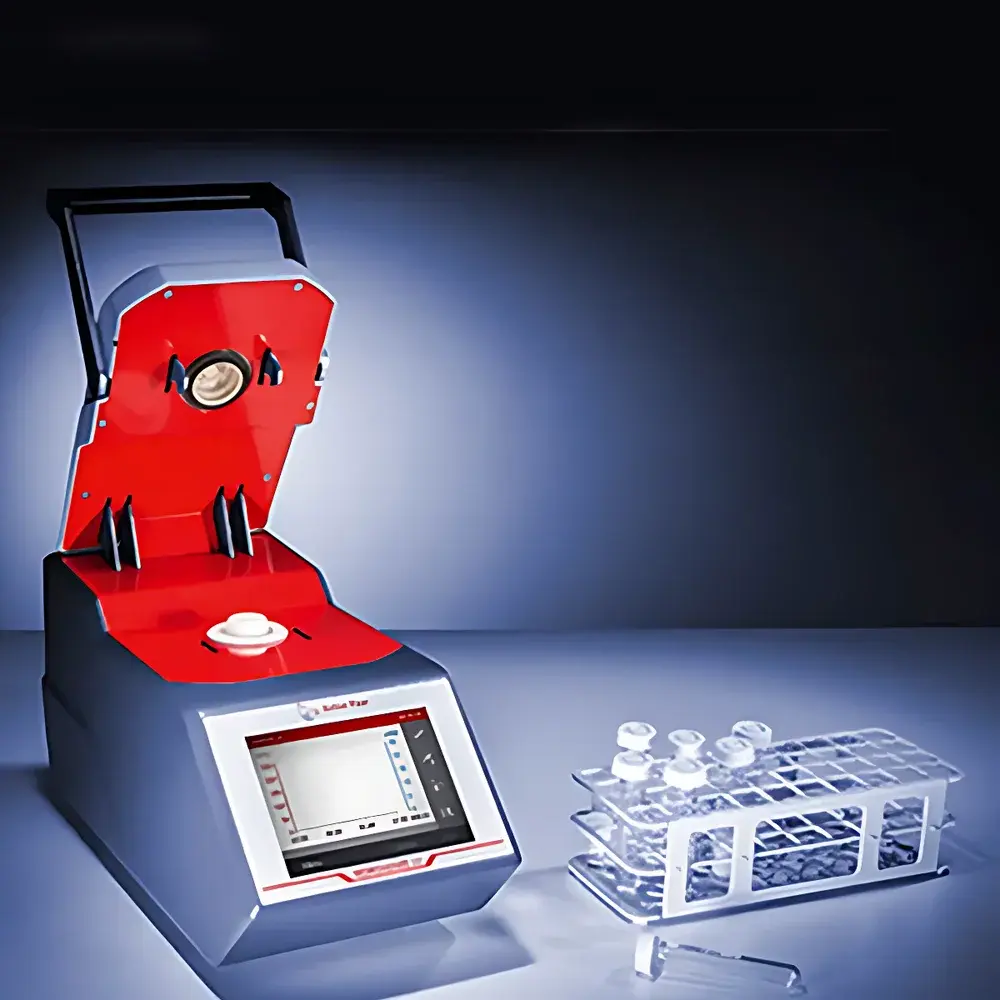
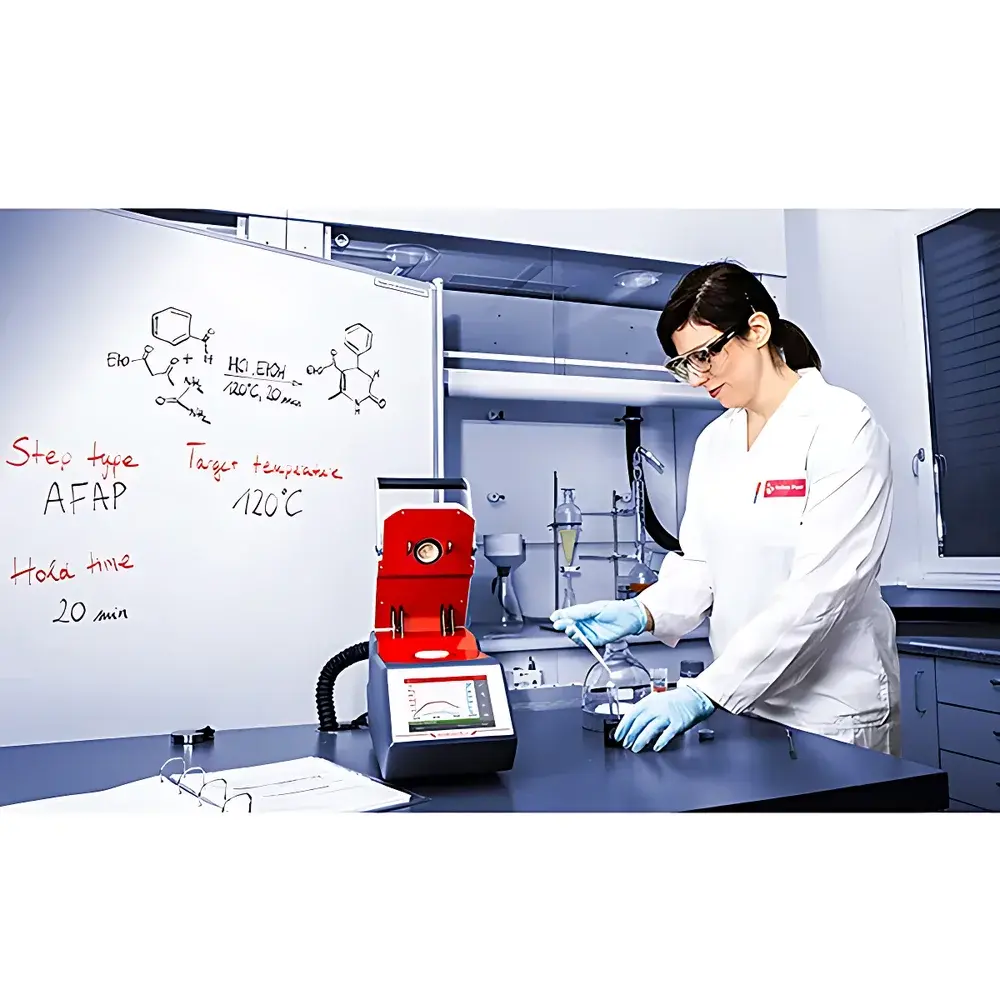
Anton Paar Monowave 50 Conventional Heating Synthesis Reactor
| Brand | Anton Paar |
|---|---|
| Origin | Austria |
| Model | Monowave 50 |
| Temperature Range | Ambient to 250 °C |
| Temperature Control Accuracy | ±0.1 °C |
| Reaction Vessel Capacity | 10 mL |
| Maximum Operating Pressure | 20 bar |
| Maximum Power Input | 315 W |
| Vessel Material | Borosilicate Glass |
| Lid Sealing Material | PTFE |
| Safety Locking Mechanism | Mechanical Interlock |
| Dimensions | 20 cm × 40 cm footprint |
| Weight | 8.5 kg |
Overview
The Anton Paar Monowave 50 is a precision-engineered conventional heating synthesis reactor designed for reproducible, safe, and methodologically transferable chemical synthesis under controlled temperature and pressure conditions. Unlike microwave-assisted systems, the Monowave 50 employs resistive heating combined with active pressure monitoring and mechanical containment—enabling closed-vessel reactions without electromagnetic energy input. This architecture delivers accelerated reaction kinetics over standard oil-bath or hotplate setups while maintaining full compatibility with established laboratory glassware handling protocols. Its core function is to support sealed, high-temperature/pressure reactions (up to 250 °C and 20 bar) in borosilicate glass vessels, facilitating rapid optimization of synthetic routes in academic teaching labs, QC environments, and early-stage process development. The system’s design philosophy centers on operational simplicity, intrinsic safety, and seamless method scalability—ensuring that protocols developed on the Monowave 50 can be directly transposed to Anton Paar’s microwave platforms (e.g., Monowave 60, Synthos 3000) without revalidation.
Key Features
- Resistive heating system with PID-controlled thermal regulation, achieving ±0.1 °C accuracy across the full 20–250 °C operating range.
- Integrated mechanical safety interlock: chamber automatically locks during pressurization and remains secured until pressure fully dissipates post-reaction.
- Real-time dual-parameter monitoring: simultaneous digital readout of internal vessel temperature (via immersed Pt100 sensor) and absolute pressure (piezoresistive transducer).
- Intuitive 7-inch capacitive touchscreen interface with preloaded method templates, drag-and-drop time/temperature/pressure profiling, and on-device data visualization.
- Reusable borosilicate glass reaction vessels (10 mL nominal volume) with PTFE-sealed stainless-steel lids—designed for ≥50 autoclave-compatible cycles without performance degradation.
- Compact footprint (20 × 40 cm) and low mass (8.5 kg) enable benchtop deployment outside fume hoods, inside gloveboxes, or portable transport between teaching laboratories.
- Automatic overpressure venting via calibrated rupture disc and passive cooling path; all pressure-bearing components housed within reinforced stainless-steel containment sleeve.
Sample Compatibility & Compliance
The Monowave 50 accommodates standard 10 mL borosilicate glass vials with conical bases and PTFE-faced silicone gaskets—compatible with common organic solvents (e.g., DMF, DMSO, acetonitrile, toluene), aqueous media, and air-sensitive reagents when purged prior to sealing. Vessel geometry supports efficient heat transfer and minimizes thermal gradients during exothermic events. From a regulatory standpoint, the instrument meets IEC 61010-1:2010 (Safety Requirements for Electrical Equipment for Measurement, Control, and Laboratory Use) and carries CE marking for the European Economic Area. While not certified for GMP production environments, its audit-ready data logging (timestamped temperature/pressure traces, method parameters, user ID) supports GLP-compliant documentation per OECD Principles of Good Laboratory Practice. USB-exported CSV files are structured for traceability in LIMS integration and satisfy basic FDA 21 CFR Part 11 requirements for electronic records when paired with institutional procedural controls.
Software & Data Management
The embedded firmware provides full experimental control without external PC dependency. Each run generates a timestamped dataset including setpoints, actual temperature/pressure profiles, power consumption, and event markers (e.g., “lid locked”, “vent initiated”). Data is stored internally (≥1,000 runs) and exportable via USB 2.0 to standard spreadsheet formats. No proprietary software installation is required—raw CSV files open natively in Excel, Origin, or Python-based analysis pipelines. Method libraries support version-controlled naming conventions and user-level access restrictions. All parameter changes during runtime are logged with operator ID and timestamp, enabling retrospective root-cause analysis in case of deviation. Firmware updates are delivered as signed .bin files via USB, preserving cryptographic integrity.
Applications
- Undergraduate and graduate organic chemistry laboratories: esterifications, condensations, heterocycle formations, and nucleophilic substitutions under accelerated thermal conditions.
- Method scouting for pharmaceutical intermediates where microwave scalability is anticipated but initial screening must occur without specialized RF infrastructure.
- Inorganic coordination chemistry: synthesis of metal–organic frameworks (MOFs) and transition-metal complexes requiring inert-atmosphere, elevated-T/P conditions.
- Polymerization kinetics studies: step-growth polycondensations monitored via real-time viscosity proxies (e.g., reflux rate correlation).
- Green chemistry evaluation: solvent-free reactions, catalyst recycling studies, and energy-efficiency benchmarking against conventional reflux setups.
FAQ
Can Monowave 50 operate without a fume hood?
Yes—its sealed architecture and mechanical pressure containment eliminate volatile emissions during operation. Only routine ventilation (e.g., lab ambient airflow) is required.
Is the reaction vessel compatible with strong acids like HNO₃ or HF?
Borosilicate glass is resistant to most mineral acids except hydrofluoric acid (HF) and hot concentrated phosphoric acid. HF exposure will etch the vessel and invalidate warranty.
How is temperature measured inside the vessel?
A Pt100 resistance thermometer is immersed directly into the reaction mixture through a dedicated port in the lid, ensuring measurement at the reaction zone—not the vessel wall.
What happens if pressure exceeds 20 bar?
The integrated rupture disc activates at 22 ± 1 bar, diverting gas through a dedicated vent channel into the containment sleeve. Simultaneously, heating ceases and audible/visual alarms trigger.
Can I use third-party glassware?
No—only Anton Paar-certified 10 mL vessels and lids are validated for pressure integrity and thermal expansion matching. Non-OEM parts void safety certification and warranty.



