
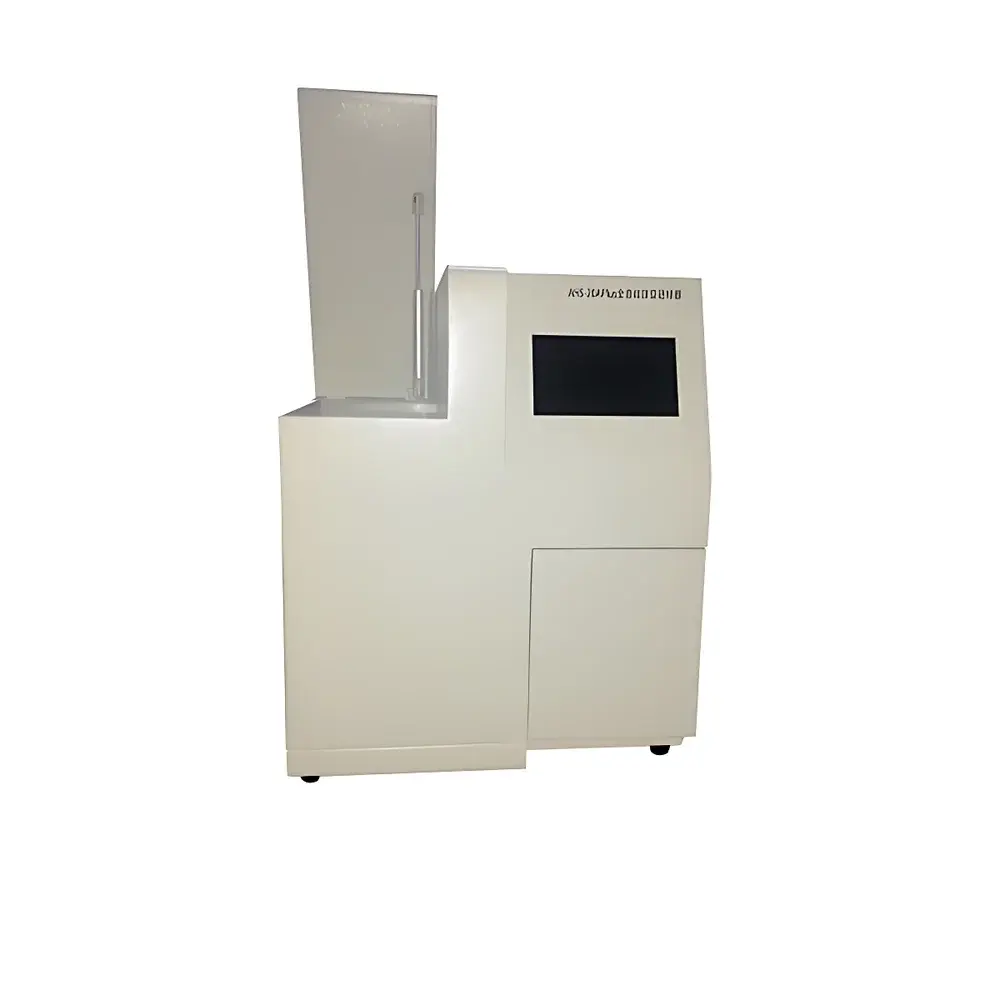
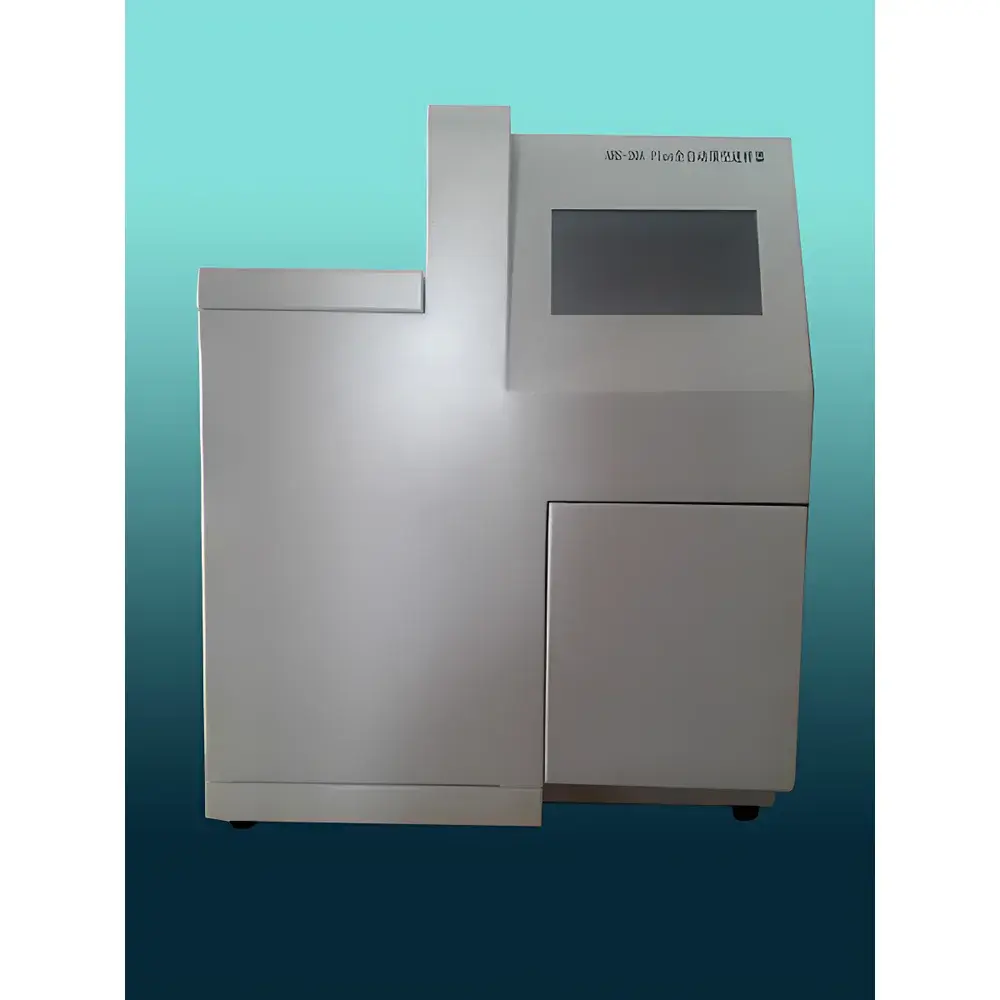
Beifen Sanpu AHS-20B Fully Automated Static Headspace Sampler
| Brand | Beifen Sanpu |
|---|---|
| Origin | Beijing, China |
| Manufacturer Type | Direct Manufacturer |
| Instrument Type | Static Headspace Sampler |
| Automation Level | Fully Automated |
| Sample Vial Heating Range | 40–220 °C |
| Valve Heating Range | 40–220 °C |
| Quantitative Loop Volume | 1 mL (customizable: 0.5, 2, or 5 mL) |
| Vial Capacity | 20 positions |
| Vial Size Compatibility | 10 mL or 20 mL (customizable up to 100 mL) |
| Temperature Stability | < ±0.5 °C |
| RSD | < 1.0% (for 100 ppm ethanol in water) |
| Pressure Control Range | 0–0.25 MPa (continuously adjustable) |
| Sampling Time | 0–30 min |
| Injection Time | 0–999 s |
| Purge/Flush Flow Rate | 0–100 mL/min (adjustable) |
| Communication Interface | USB |
Overview
The Beifen Sanpu AHS-20B Fully Automated Static Headspace Sampler is a precision-engineered sample introduction system designed for routine and regulated gas chromatography (GC) analysis of volatile and semi-volatile organic compounds (VOCs/SVOCs) in complex matrices. It operates on the principle of static headspace equilibrium: sealed sample vials are thermostatically heated to promote partitioning of analytes from the liquid or solid phase into the vapor phase above the sample (the “headspace”). Once equilibrium is achieved, a precise volume of headspace gas is withdrawn via a pressurized, temperature-controlled sampling loop and transferred directly to the GC injector—without solvent or matrix interference. This method eliminates derivatization, minimizes column contamination, and delivers high reproducibility for quantitative applications in environmental testing, pharmaceutical residual solvents analysis (per ICH Q2(R2) and USP ), food flavor profiling, forensic toxicology, and polymer off-gassing studies.
Key Features
- Fully automated 20-position carousel with intelligent vial detection: automatically skips empty or misaligned positions to prevent mechanical collision and ensure uninterrupted batch processing.
- Triple-zone independent temperature control: sample vial oven (40–220 °C), six-port valve housing (40–220 °C), and transfer line (40–220 °C), all maintained within ±0.5 °C stability to eliminate cold spots and preserve analyte integrity.
- High-inertness fluidic path: all internal tubing, quantitative loops, and sampling needles are constructed from de-activated fused silica or SilcoNert®-treated stainless steel, minimizing adsorption, carryover, and cross-contamination (RSD < 1.0% verified with 100 ppm ethanol/water standard).
- Positive-pressure headspace sampling: enables robust analysis of both aqueous solutions and heterogeneous solids (e.g., soils, polymers, tablets) without vacuum-induced fractionation or baseline drift.
- Motor-driven actuation system: eliminates reliance on external compressed air or nitrogen, reducing infrastructure requirements and improving operational safety in laboratory environments.
- Configurable injection protocols: supports single-vial multiple injections, single-vial single injection, and multi-vial sequential injection modes—ideal for method development, calibration curve generation, and QC verification.
- Integrated EPC-ready architecture (optional): compatible with electronic pressure control modules for enhanced retention time stability and method transferability across GC platforms.
Sample Compatibility & Compliance
The AHS-20B accommodates standard 10 mL and 20 mL crimp-top or screw-cap headspace vials (ASTM D3699, ISO 11843-2 compliant), with optional support for 50 mL and 100 mL formats for low-concentration or high-viscosity samples. Its thermal and mechanical design meets essential requirements for GLP and GMP environments: full audit trail capability via USB-connected PC logging, parameter change history with timestamped user ID, and hardware-level fault diagnostics—including vial position verification, heater circuit monitoring, and motion encoder validation. The system supports 21 CFR Part 11–compliant data acquisition when paired with validated chromatography data systems (CDS), and its performance aligns with EPA Method 502.2, 524.4, and 8260D for environmental VOC analysis.
Software & Data Management
Control and method configuration are executed via intuitive USB-linked software featuring a responsive GUI with real-time status visualization (temperature ramping progress, valve actuation sequence, pressure profile). All parameters—including equilibration time, pressurization duration, sampling delay, loop fill volume, and purge flow rate—are programmable with millisecond resolution (down to 1 ms). Methods are saved as encrypted binary files with version control and digital signature support. Raw event logs (including error codes, sensor readings, and motor step counts) are exportable in CSV format for QA review. Remote start/stop synchronization with major GC platforms (Agilent, Thermo Fisher, Shimadzu, PerkinElmer) is implemented via TTL-level trigger signals or Ethernet-based protocol handshaking.
Applications
- Pharmaceutical quality control: residual solvents in APIs and finished dosage forms (ICH Q3C, USP ).
- Environmental monitoring: BTEX, chlorinated hydrocarbons, and pesticides in groundwater and soil extracts.
- Food & beverage safety: ethanol quantification, spoilage marker detection (e.g., acetaldehyde, diacetyl), and packaging migration studies.
- Chemical manufacturing: monomer purity assessment, catalyst residue screening, and reaction mixture headspace profiling.
- Forensic science: blood alcohol concentration (BAC) determination and ignitable liquid residue (ILR) identification per ASTM E1618.
FAQ
Is the AHS-20B compatible with non-Beifen Sanpu gas chromatographs?
Yes—it features universal TTL triggering and analog/digital I/O ports, enabling seamless integration with Agilent 7890/8890, Thermo ISQ, Shimadzu GC-2030, and other third-party GC systems.
Can the quantitative loop volume be changed without hardware modification?
No—loop volume is fixed per installed module; however, users may order factory-installed alternatives (0.5 mL, 2 mL, or 5 mL) at time of purchase.
Does the system support method validation per ISO/IEC 17025 requirements?
Yes—the instrument provides traceable temperature calibration certificates, documented RSD performance data, and full electronic records required for accredited laboratory audits.
What maintenance intervals are recommended for long-term reliability?
Vial tray alignment verification every 6 months; quantitative loop and valve seal replacement every 12 months under typical usage (2000 injections/year); inert liner inspection prior to high-temperature (>200 °C) methods.
Is remote monitoring or networked operation supported?
USB-hosted control is standard; Ethernet connectivity and SNMP-based device management are available as OEM-customized options.



