
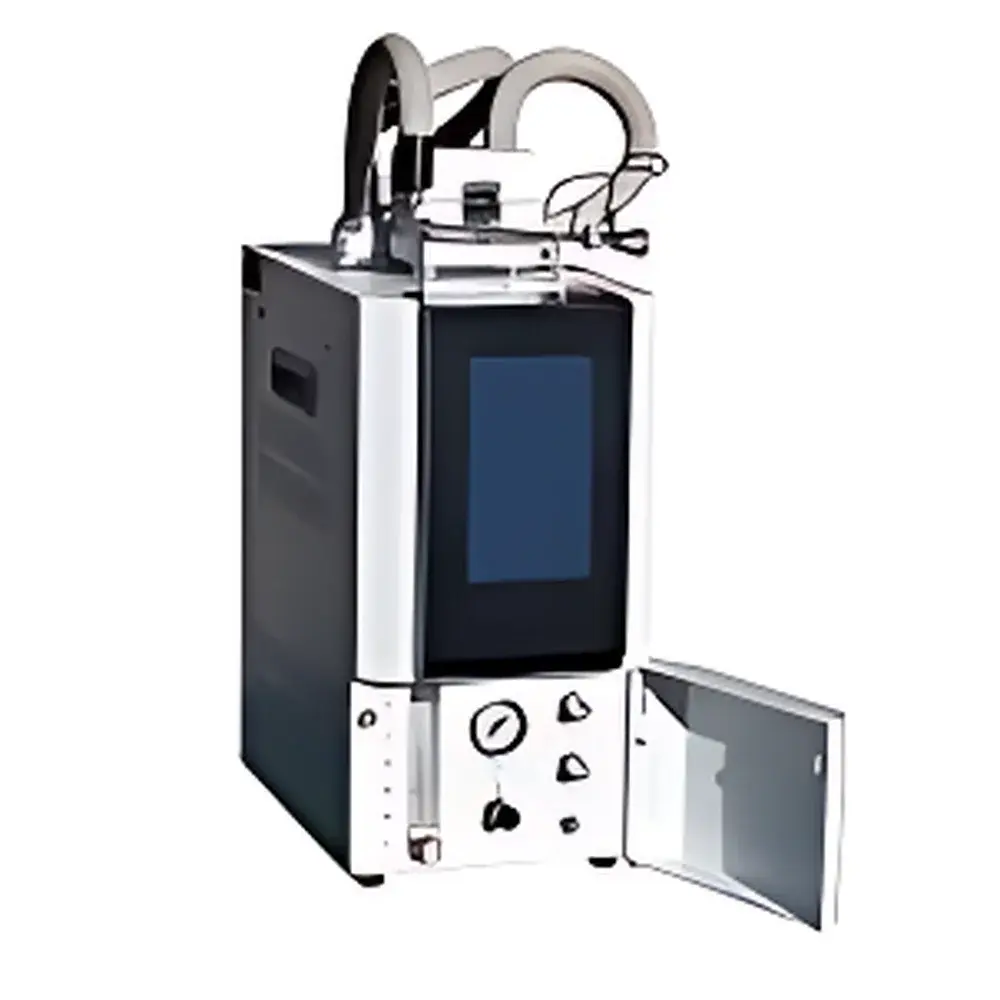
Beifen Sanpu ATDS-3430 Dual-Stage Thermal Desorber with Cryo-Focusing
| Brand | Beifen Sanpu |
|---|---|
| Origin | Beijing, China |
| Manufacturer Type | Direct Manufacturer |
| Model | ATDS-3430 |
| Instrument Type | Dual-Stage Thermal Desorber |
| Desorption Temperature Range | Ambient to 450 °C |
| Cryo-Focusing Trap Temperature Range | −35 °C to Ambient |
| Desorption Recovery Rate | >99% (compound-dependent) |
| Sample Position Capacity | 1 tube |
| Dimensions | 380 × 220 × 410 mm |
| Weight | ~15 kg |
| Power Consumption | 500 W |
| Temperature Control Accuracy | < ±0.5 °C |
| RSD | ≤2.5% (for 0.05 μg benzene in methanol) |
| Second-Stage Heating Rate | >3000 °C/min |
| Peak Width | <3 s |
| Sample Tube Compatibility | OD ≤6.5 mm, L ≥150 mm |
Overview
The Beifen Sanpu ATDS-3430 Dual-Stage Thermal Desorber with Cryo-Focusing is an engineered solution for trace-level volatile organic compound (VOC) and semi-volatile organic compound (SVOC) analysis in environmental, industrial hygiene, and materials testing laboratories. It operates on the principle of two-stage thermal desorption: first, analytes are thermally released from sorbent tubes under controlled inert gas flow; second, they are refocused onto a cryogenically cooled trap (−35 °C minimum), followed by rapid thermal desorption (>3000 °C/min) into the GC or GC–MS inlet. This dual-stage architecture—combined with precise temperature zoning across the desorption furnace, valve oven, transfer line, and cold trap—ensures high analyte recovery (>99%), minimal band broadening (<3 s peak width), and exceptional reproducibility (RSD ≤2.5%). Designed for full compatibility with domestic and international gas chromatographs—including Agilent, Thermo Fisher, Shimadzu, and PerkinElmer platforms—the ATDS-3430 meets methodological requirements specified in key regulatory standards such as HJ 644–2013, HJ 583–2010, HJ 734–2014, GB/T 18883–2002, and GB 50325–2020.
Key Features
- Four independently programmable temperature zones: primary desorption furnace (ambient–450 °C), secondary desorption zone (ambient–450 °C), valve oven (ambient–260 °C), and transfer line (ambient–260 °C), all with ±0.5 °C stability.
- Integrated Peltier-based cryo-focusing trap capable of reaching −35 °C, eliminating reliance on liquid nitrogen or mechanical refrigeration systems.
- High-inertness sample pathway: entire transport line constructed from de-activated fused silica and electropolished stainless steel tubing to prevent adsorption, carryover, or catalytic degradation.
- Motor-driven high-temperature six-port valve (rated to 240 °C), fully housed within a thermally insulated oven to eliminate cold spots and preserve analyte integrity during transfer.
- Automated sequence control via embedded microprocessor: programmable timing for desorption, purge, re-desorption, injection, and post-run backflush (0–100 mL/min, continuously adjustable).
- Dedicated simulation sampling mode enables direct calibration curve generation using standard gas or liquid spiking without external hardware.
- 7-inch full-color LCD touchscreen interface with intuitive Chinese/English bilingual navigation and real-time graphical status monitoring.
- GC synchronization capability: supports TTL trigger output for automatic GC start and data system handshake (e.g., Chromeleon, OpenLab, Empower).
Sample Compatibility & Compliance
The ATDS-3430 accommodates standard 6-mm OD sorbent tubes (length ≥150 mm), including Tenax TA, Carbopack B/C, Carboxen, and multi-bed configurations. Its design adheres to ISO 16000-6:2011 (indoor air VOC analysis), ASTM D6196–22 (selection of sorbents), and EPA TO-17 (determination of VOCs in air). The instrument’s performance validation—verified using benzene in methanol at 0.05 μg level—meets data quality objectives outlined in HJ 644–2013 and GB 50325–2020 for residential and commercial indoor air assessment. All thermal zones maintain traceable temperature calibration, and the system supports audit-ready operation under GLP-compliant workflows when paired with 21 CFR Part 11–enabled chromatography data systems.
Software & Data Management
Control firmware includes non-volatile method storage (≥100 methods), time-based event programming, and password-protected user access levels. Method parameters—including ramp rates, hold times, valve actuation sequences, and backflush flow profiles—are saved in human-readable ASCII format for version control and lab-wide deployment. Raw temperature logs and run timestamps are embedded in each data file header, enabling retrospective traceability. While the ATDS-3430 does not include proprietary acquisition software, its TTL and RS-232 interfaces ensure seamless integration with third-party CDS platforms. Optional CSV export functionality allows direct import into LIMS environments for automated reporting and QA/QC trending.
Applications
This thermal desorber serves critical roles in regulatory and research-driven VOC profiling: quantification of benzene, toluene, ethylbenzene, xylenes (BTEX), aldehydes, and C2–C12 hydrocarbons in ambient air, workplace breathing zones, vehicle cabin air, and building materials per HJ/T 400–2007 and GB/T 18883–2002; analysis of residual solvents in pharmaceutical packaging and polymer films; screening of off-gassing emissions from carpets, adhesives, and composite panels; and compliance testing for formaldehyde and TVOC in civil construction projects (GB 50325–2020). Its narrow peak focusing capability also enhances sensitivity for low-concentration SVOCs (e.g., phthalates, flame retardants) in GC–MS applications.
FAQ
Does the ATDS-3430 support unattended batch analysis?
No—it is configured for single-tube operation (1 position) and intended for labs prioritizing method flexibility and precision over high-throughput automation.
Can the cold trap be operated at temperatures below −35 °C?
No—the Peltier cooling module is rated for a minimum of −35 °C; sub-ambient operation beyond this limit requires external cryogenic support not integrated into this model.
Is the instrument compliant with FDA 21 CFR Part 11 requirements?
The ATDS-3430 itself does not include electronic signatures or audit trail functionality; however, it generates timestamped, method-linked output compatible with validated CDS platforms that implement Part 11 controls.
What maintenance intervals are recommended for the six-port valve and transfer lines?
Valve rotor seals should be inspected every 500 runs; transfer lines require annual passivation verification using blank tube tests per ISO 16000-6 protocol.
Does the system support internal standard addition during desorption?
Not natively—the ATDS-3430 lacks integrated liquid or gas standard spiking; users must introduce internal standards prior to tube packing or via separate injection into the GC inlet.





