
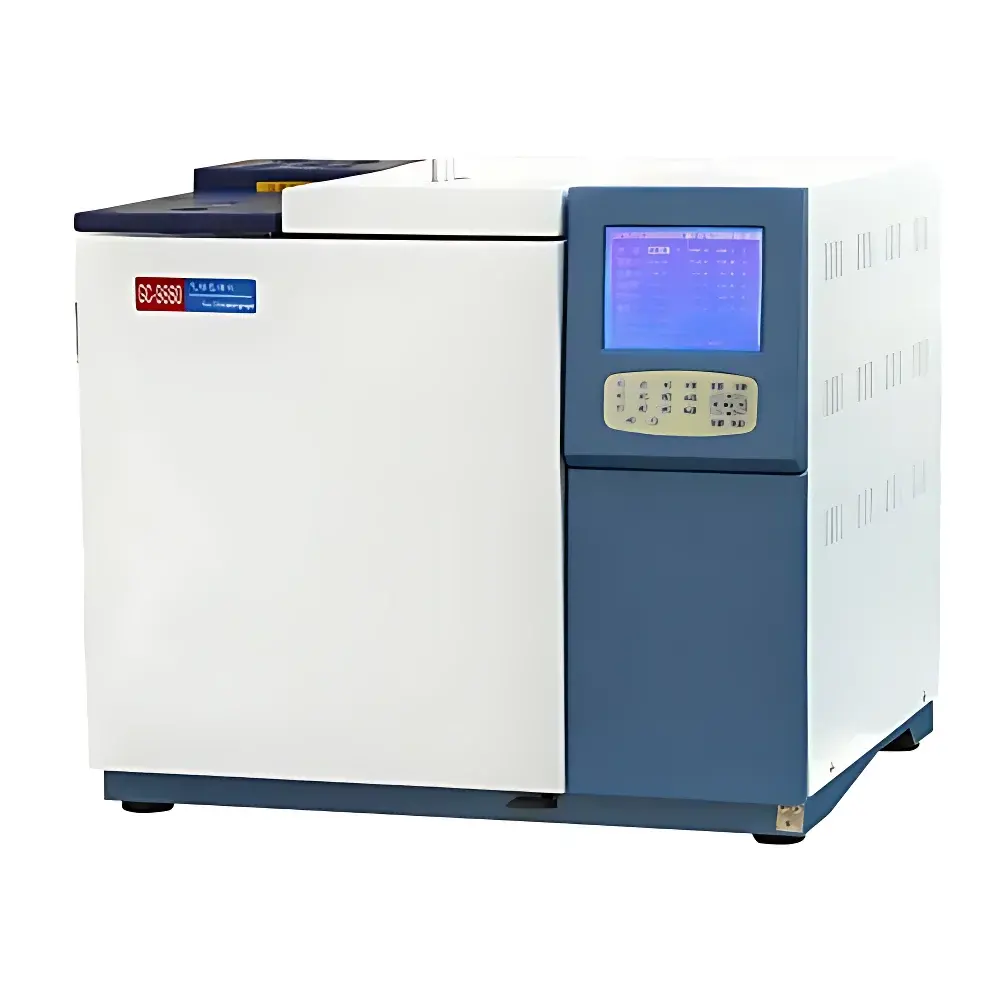
Beifen Sanpu GC-9860 Dedicated Gas Chromatograph for Liquefied Petroleum Gas (LPG) and Dimethyl Ether (DME) Analysis
| Brand | Beifen Sanpu |
|---|---|
| Origin | Beijing, China |
| Manufacturer Type | OEM Manufacturer |
| Instrument Type | Laboratory Gas Chromatograph |
| Model | GC-9860 |
| Price Range | USD 7,000–14,000 |
| Application Scope | Universal (Optimized for LPG & DME) |
| Oven Temperature Range | 100–350 °C |
| Ramp Rate | 0.1–40 °C/min |
| Cool-down Time | ~6 min (from 350 °C to 100 °C) |
| Carrier Gas Flow Range & Control | 0–1200 mL/min |
| Carrier Gas Pressure Range & Control | 0–970 kPa |
| Injector Maximum Operating Temperature | 100–350 °C |
| Injector Pressure Setting Range | 0–970 kPa |
| Injector Total Flow Setting Range | 0–1000 mL/min |
Overview
The Beifen Sanpu GC-9860 is a purpose-engineered laboratory gas chromatograph designed specifically for the quantitative analysis of liquefied petroleum gas (LPG) and dimethyl ether (DME) in commercial and regulatory testing environments. Built upon a robust dual-channel platform with integrated thermal conductivity detection (TCD), the system employs a high-precision six-port switching valve for reproducible gas-phase injection and optimized separation of C1–C5 hydrocarbons—including methane, ethane, propane, propylene, isobutane, n-butane, and butenes—alongside DME and methanol. Unlike general-purpose GC systems, the GC-9860 features dedicated hardware calibration and column selection validated against GB/T 10410.3–1989, ensuring compliance with Chinese national standards for LPG composition verification and adulteration screening. Its micro-TCD detector delivers stable baseline performance under continuous operation, while the independently controlled oven and injector modules enable precise thermal management critical for volatile compound resolution and retention time reproducibility.
Key Features
- Micro-thermal conductivity detector (micro-TCD) with enhanced sensitivity and long-term signal stability for permanent gas and light organic vapor analysis
- High-accuracy six-port gas sampling valve with pneumatically actuated sealing, minimizing carryover and dead volume
- Programmable oven with ±0.1 °C temperature uniformity across the 100–350 °C range and ramp rates adjustable from 0.1 to 40 °C/min
- Dual independent temperature zones: injector and detector each feature fully configurable setpoints (injector: 100–350 °C; TCD: up to 80 °C)
- Digital carrier gas pressure and flow control via integrated electronic pneumatic control (EPC) modules
- Fully localized Chinese-language keypad and software interface—designed for rapid operator onboarding in regional QC labs
- Comprehensive self-diagnostic suite with real-time error logging, fault code display, and automated system status reporting
- Sequence-based batch analysis capability supporting unattended overnight runs with auto-shutdown and data archiving
Sample Compatibility & Compliance
The GC-9860 is validated for direct analysis of pressurized LPG samples (vapor phase only) and certified reference gas mixtures containing DME, methanol, and C1–C5 hydrocarbons. It excludes acetylenic compounds per method scope definition in GB/T 10410.3–1989. Sample introduction is performed via stainless-steel 4-L sampling cylinder with brass valve and septum-sealed inlet adapter. The system supports both area normalization and external standard quantification protocols, with traceability to NIST-traceable calibration gases. While not pre-certified for FDA 21 CFR Part 11 or ISO/IEC 17025, its architecture supports audit-ready data handling when paired with BF-2002 chromatography data system (CDS) featuring electronic signature, user access levels, and immutable audit trail generation—enabling alignment with GLP and GMP-aligned laboratory practices.
Software & Data Management
Control and data acquisition are managed through the BF-2002 chromatography workstation, a Windows-based CDS offering full instrument parameter configuration, real-time chromatogram visualization, peak integration using tangent skim and valley-to-valley algorithms, and customizable report templates compliant with internal QA documentation requirements. Raw data files (.DAT) are stored in vendor-neutral ASCII format for third-party reprocessing. The software supports export to CSV, PDF, and XML formats and includes built-in tools for calibration curve generation (linear, quadratic, or multi-point weighted), limit-of-detection (LOD) estimation, and precision assessment (RSD % across replicate injections). Audit trail functionality records all user actions—including method edits, integration changes, and report approvals—with timestamps and operator IDs, satisfying basic regulatory traceability needs.
Applications
- Quantitative determination of DME adulteration in commercial LPG supplies (detection range: 0.1–30 vol%)
- Batch release testing of LPG feedstock at refining terminals and bottling plants
- Verification of blending ratios in seasonal LPG–DME mixtures (e.g., winter 1:5–1:6, summer 1:3–1:4 v/v)
- Purity assessment of incoming DME raw material (≥99.5% typical specification)
- Monitoring of combustion-relevant components (e.g., ethane/ethylene ratio, butane isomer distribution) for fuel performance modeling
- Supporting regulatory compliance audits under China’s Market Supervision Administration (SAMR) guidelines for bottled gas quality
FAQ
What detection method does the GC-9860 use for LPG and DME analysis?
It utilizes a micro-thermal conductivity detector (micro-TCD), optimized for high-sensitivity, drift-free response to permanent gases and low-boiling organics without requiring hydrogen or air supply.
Can the system analyze acetylene or other alkynes?
No—this method explicitly excludes acetylenic compounds per GB/T 10410.3–1989 scope. A PLOT column with different selectivity would be required for such analytes.
Is the BF-2002 software compliant with 21 CFR Part 11?
Out-of-the-box, it provides audit trail and user authentication features; however, formal Part 11 validation requires site-specific IQ/OQ/PQ documentation and procedural controls implemented by the end user.
What is the typical analysis time per LPG sample?
Under standard conditions (90 °C isothermal oven, H2 carrier at 1.2 MPa), total run time is ≤8 minutes, including column equilibration and post-run cooling.
Does the system support automatic calibration verification?
Yes—the BF-2002 software allows scheduled calibration checks using predefined standard sequences, with pass/fail criteria based on retention time shift (<±0.2 min) and peak area RSD (<3%).
Related Products





