
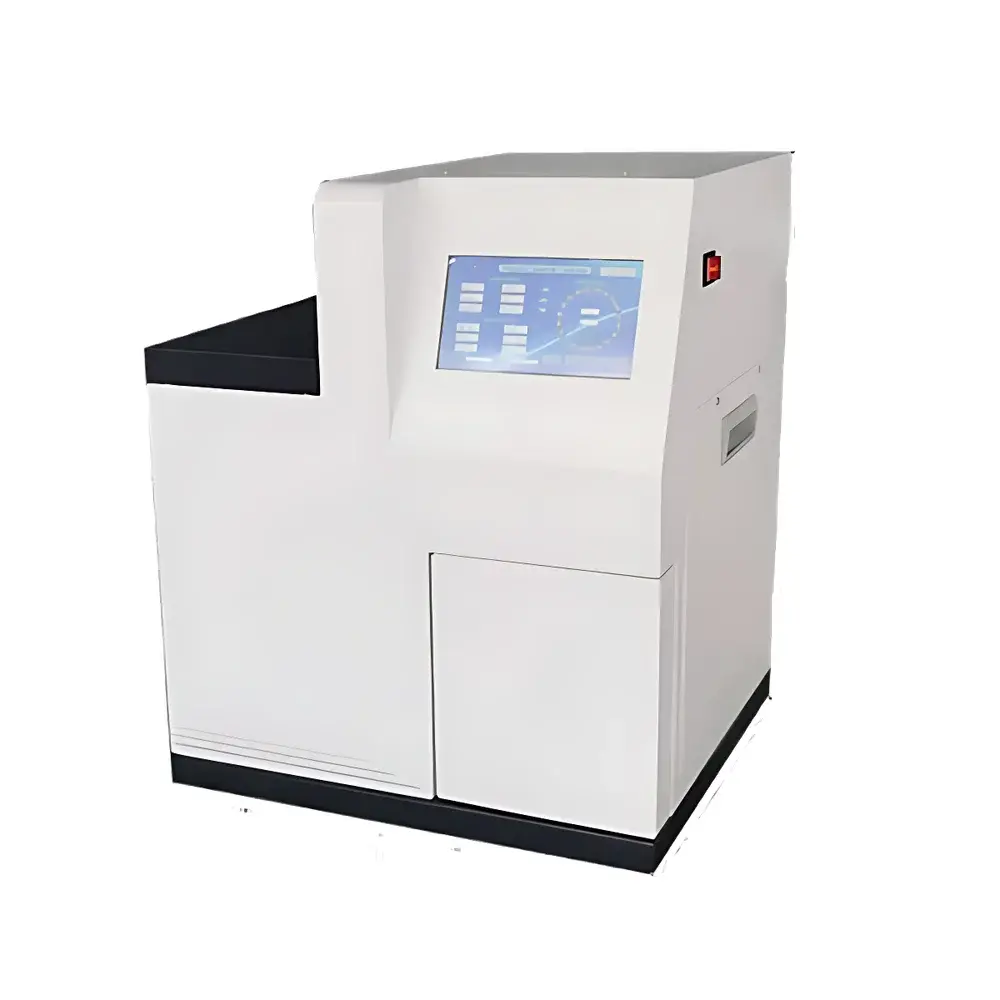
Beifen Sanpu PAH2S-20A Plus 20-Position Fully Automated Headspace Sampler
| [Brand | Beifen Sanpu |
|---|---|
| Origin | Hebei, China |
| Manufacturer Type | OEM Manufacturer |
| Model | PAH2S-20A Plus |
| Sample Capacity | 20 positions |
| Vial Sizes Supported | 10 mL and 20 mL (customizable up to 100 mL) |
| Oven Temperature Range | 40–220 °C (optional extension to 300 °C) |
| Valve & Transfer Line Temp Range | 40–220 °C (optional to 300 °C) |
| Temperature Accuracy | ±0.5 °C |
| Temperature Stability | < ±0.5 °C |
| Pressurization Time | 0–999 s |
| Sampling Time | 0–30 min |
| Injection Time | 0–999 s |
| Bake-out/Clean Time | 0–30 min |
| Minimum Time Resolution | 1 ms |
| Pressure Control Range | 0–0.25 MPa (continuously adjustable) |
| Loop Volume | 1 mL (0.5/2/5 mL optional) |
| RSD | <1.0% (for 100 ppm ethanol in water) |
| Purge Flow Rate | 0–100 mL/min (adjustable) |
| Communication Interface | USB |
| Control Modes | Front-panel keypad + PC software |
| Valve Configuration | High-inertness 6-port valve with heated connection point |
| Sample Introduction | Positive-pressure headspace sampling |
| Actuation | Motor-driven (no external gas required) |
| EPC Support | Optional electronic pressure control] |
Overview
The Beifen Sanpu PAH2S-20A Plus is a fully automated, 20-position headspace sampler engineered for precision, reproducibility, and seamless integration into regulated GC laboratories. It operates on the principle of equilibrium headspace analysis—where volatile organic compounds (VOCs) partition between a solid or liquid sample matrix and its overlying gas phase under controlled thermal conditions. Upon thermal equilibration, the vapor phase is pressurized and transferred quantitatively via a high-inertness 6-port valve and heated transfer line directly into the injection port of a gas chromatograph. This method eliminates solvent handling, reduces matrix interference, and ensures robust detection of trace-level volatiles—including residual solvents, environmental contaminants, flavor/aroma compounds, and degradation products—in pharmaceuticals, food, environmental, and forensic applications.
Key Features
- Motor-driven mechanical architecture—no external carrier gas or pneumatic lines required, enhancing operational safety and simplifying lab infrastructure.
- Triple-zone independent temperature control: sample oven, valve block, and transfer line—all heated to 220 °C standard (extendable to 300 °C), eliminating cold spots and preserving analyte integrity during transport.
- High-inertness fluidic path: all internal tubing, quantitative loops (1 mL standard), and valve surfaces are passivated using proprietary deactivation technology to prevent adsorption, carryover, or catalytic degradation of reactive analytes.
- Intelligent vial positioning system with auto-detection of empty slots; motion logic avoids physical collision and automatically skips unoccupied positions—ensuring uninterrupted batch processing.
- Real-time parameter monitoring and logging: temperature profiles, pressure traces, timing sequences, and system status are timestamped and stored locally for audit readiness.
- Flexible sampling protocols: supports single-vial multi-injection, single-vial single-injection, and multi-vial sequential injection modes—configurable per method to optimize throughput or sensitivity.
- Integrated EPC (Electronic Pressure Control) option enables precise, software-controlled pressurization and purge flow regulation—critical for method transfer consistency and compliance with ISO 17025/GLP requirements.
Sample Compatibility & Compliance
The PAH2S-20A Plus accommodates standard 10 mL and 20 mL crimp-top headspace vials, with mechanical adaptability for custom formats (e.g., 50 mL and 100 mL). It handles heterogeneous matrices—including aqueous solutions, polymers, soils, pharmaceutical tablets, and packaged foods—without derivatization or extraction. The instrument meets functional requirements aligned with ASTM D7217 (residual solvents in pharmaceuticals), USP <467>, and ICH Q3C guidelines. Its firmware supports user-accessible audit trails, electronic signatures (when paired with compliant LIMS/GC software), and full traceability of method parameters—facilitating FDA 21 CFR Part 11 readiness when deployed within validated workflows.
Software & Data Management
Control is implemented via a dedicated Windows-based application accessible through USB 2.0 interface. The software provides full parameter definition (equilibration time, pressurization pressure, loop fill volume, injection duration, bake-out cycle), real-time status visualization, and automated report generation (CSV/PDF). All method files include metadata (user ID, date/time stamp, instrument serial number) and support version control. Raw timing logs and temperature histories are exportable for root-cause analysis during OOS investigations. Remote diagnostics and firmware updates are supported without hardware intervention.
Applications
- Residual solvent analysis in active pharmaceutical ingredients (APIs) and excipients per ICH Q3C.
- Volatile impurity profiling in polymer packaging materials (e.g., ethylene oxide, formaldehyde, toluene).
- Environmental VOC screening in soil and water samples (EPA Method 502.2, 524.4 compatible).
- Flavor and fragrance release kinetics in beverages and dairy products.
- Forensic toxicology—detection of ethanol, acetone, and other volatiles in biological specimens.
- Quality control of raw materials and finished goods where headspace GC is specified in internal SOPs or pharmacopoeial monographs.
FAQ
Is the PAH2S-20A Plus compatible with third-party GC systems?
Yes—it features universal analog/digital trigger outputs and TTL-compatible start signals, enabling synchronization with Agilent, Thermo Fisher, Shimadzu, PerkinElmer, and other major GC platforms.
Can the instrument be validated for GMP environments?
The hardware design supports IQ/OQ documentation packages. When combined with compliant chromatography data systems (e.g., OpenLab CDS, Chromeleon, Empower), it fulfills core requirements for analytical instrument qualification under Annex 11 and USP <1058>.
What maintenance intervals are recommended?
Valve seal replacement every 10,000 injections; quantitative loop cleaning every 500 runs; annual calibration verification of temperature and pressure sensors using NIST-traceable standards.
Does the system support method translation from manual headspace setups?
Yes—timing parameters (equilibration, pressurization, injection) and thermal profiles are fully decoupled and adjustable, allowing direct migration of legacy methods with minimal re-optimization.
Is remote operation possible?
Local USB control is standard; Ethernet or Wi-Fi connectivity requires optional industrial gateway integration—not natively embedded but achievable via Modbus TCP or OPC UA middleware in enterprise deployments.




