
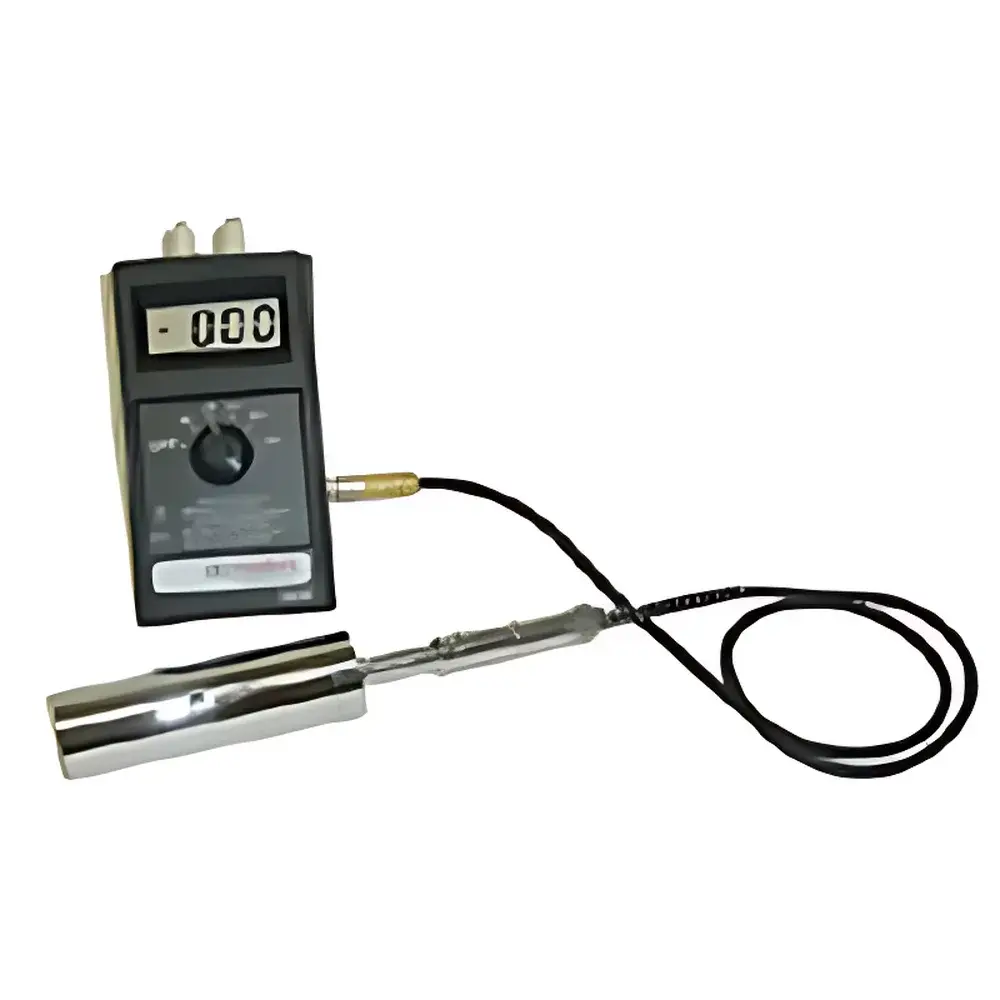
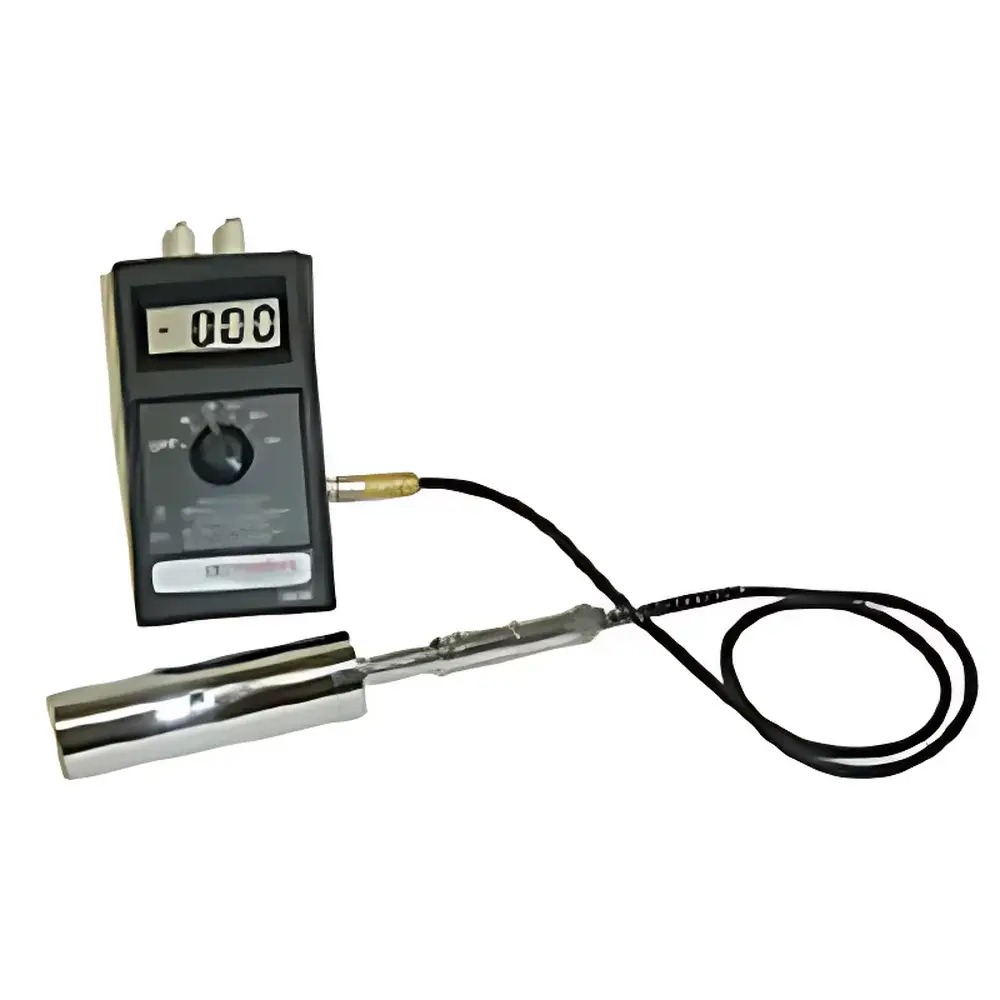
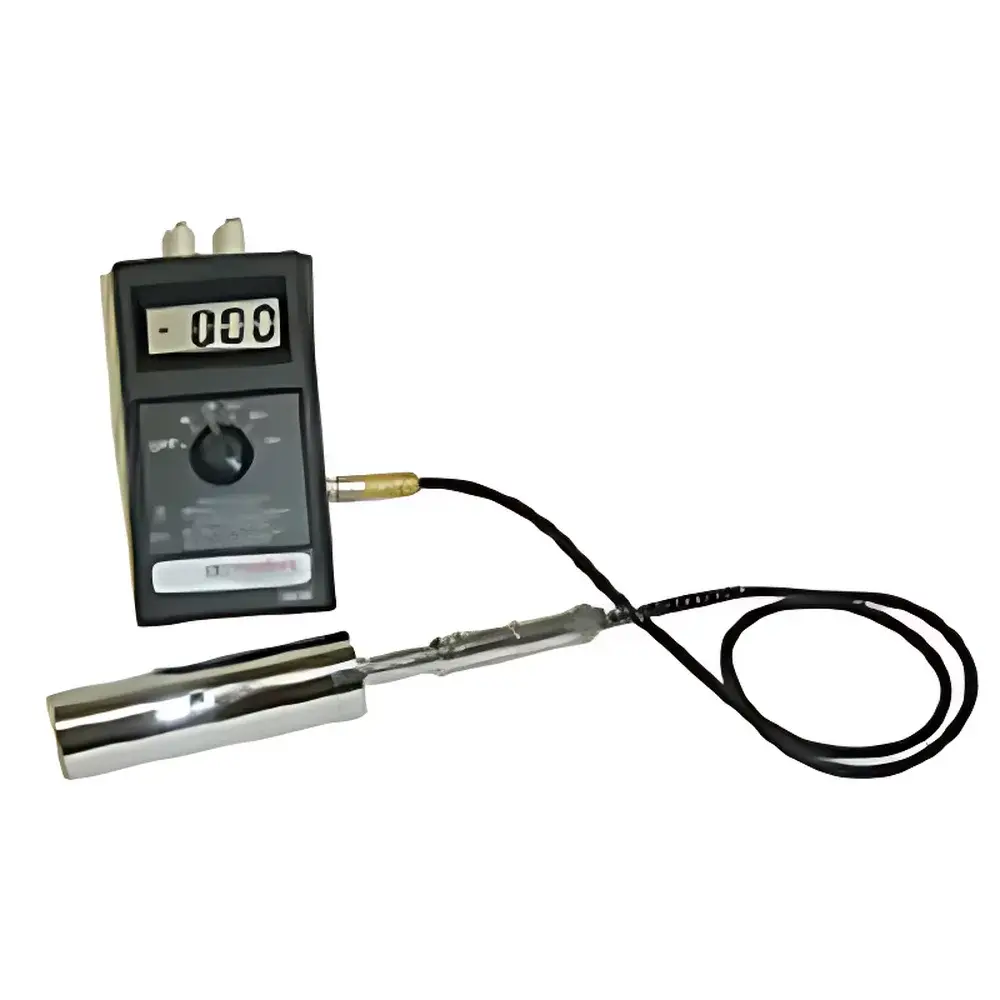
Brookfield 76652-03 Paint-Specific Conductivity & Resistivity Meter
| Origin | USA |
|---|---|
| Manufacturer Type | Authorized Distributor |
| Origin Category | Imported |
| Model | 76652-03 |
| Pricing | Available Upon Request |
| Compliance | ASTM D5682 |
| Measurement Parameters | Volume Resistivity (1–1999 kΩ, 0–199.9 MΩ, 0–19.99 GΩ), Short-Circuit Current (0–250 µA, with optional gun output terminal), Static Voltage (0–199.9 kV, with optional HV test terminal) |
| Display | Direct digital readout |
| Electrode | Stainless steel tubular 4-ring probe |
| Probe Dimensions | Φ42 mm × 250 mm |
Overview
The Brookfield 76652-03 Paint-Specific Conductivity & Resistivity Meter is an engineered electrochemical measurement system designed explicitly for the quantitative evaluation of electrical transport properties in conductive and semi-conductive liquid coatings—including solvent-based paints, waterborne formulations, UV-curable inks, and electrodeposition primers. Operating on the principle of four-terminal (Kelvin) resistivity measurement, it eliminates lead resistance and contact potential errors inherent in two-electrode systems—ensuring traceable, repeatable volume resistivity (ρ) data across six decades of dynamic range (1 kΩ to 19.99 GΩ). Its core architecture complies strictly with ASTM D5682, “Standard Test Method for Electrical Resistivity of Liquid Coatings Used in Electrostatic Spraying,” making it a validated instrument for process qualification, formulation benchmarking, and electrostatic spray transfer efficiency optimization in industrial finishing lines.
Key Features
- Stainless steel tubular 4-ring probe (Φ42 mm × 250 mm) engineered for long-term chemical resistance against aggressive organic solvents (e.g., xylene, MEK, glycol ethers) and acidic/basic paint media—eliminating electrode degradation and calibration drift.
- Four-ring electrode geometry maintains stable, factory-calibrated cell constant (K = 1.0 cm⁻¹) over extended use; no recalibration required between routine measurements.
- Three-range manual switching for volume resistivity: 1–1999 kΩ, 0–199.9 MΩ, and 0–19.99 GΩ—enabling high-resolution quantification from low-conductivity clearcoats to highly conductive primer surfacers.
- Integrated dual-function capability: simultaneous or independent measurement of short-circuit current (0–250 µA, via optional gun-output interface) and static voltage (0–199.9 kV, via HV test terminal) for full electrostatic spray diagnostics.
- Smooth-surface probe design minimizes residue adhesion and enables rapid cleaning with standard lab solvents—critical for cross-formulation testing without carryover artifacts.
- Modular probe interface supports future expansion with application-specific electrodes (e.g., immersion cells for viscosity-correlated conductivity mapping, or guarded electrodes for high-resistivity powder coating slurries).
Sample Compatibility & Compliance
The 76652-03 is validated for non-aqueous, low-to-intermediate ionic strength liquid coatings where conventional aqueous conductivity meters fail due to polarization, electrode fouling, or insufficient range. It accommodates Newtonian and mildly shear-thinning paint systems at ambient temperature (15–30 °C), with sample volumes ≥500 mL recommended for stable field homogeneity. All measurements adhere to ASTM D5682 procedural requirements—including specified electrode immersion depth (≥150 mm), dwell time (≥30 s), and environmental controls (RH < 60%, no airflow drafts). The instrument’s analog signal path and digital conversion meet IEC 61000-4-3 EMC immunity standards, ensuring stable operation in production-floor environments adjacent to HV spray booths and curing ovens.
Software & Data Management
While the 76652-03 operates as a standalone benchtop meter with direct digital display, its analog outputs (0–5 V DC proportional to log₁₀(ρ)) are compatible with third-party data acquisition systems (e.g., LabVIEW, MATLAB, or SCADA platforms) for automated logging, SPC charting, and batch traceability. When integrated into regulated manufacturing environments, users may configure external software to enforce audit trails, electronic signatures, and user-level access control—supporting alignment with FDA 21 CFR Part 11 and ISO/IEC 17025 documentation requirements. Calibration records (including date, technician ID, and standard reference values) are maintained externally per GLP/GMP practices; no onboard memory or firmware-based data storage is present, minimizing validation burden.
Applications
- Formulation development: Correlating resin solids content, pigment dispersion stability, and charge-control additive concentration with volume resistivity trends.
- Electrostatic spray process validation: Verifying resistivity thresholds (typically 0.1–100 MΩ·cm) required for optimal wrap-around deposition and Faraday cage penetration.
- Quality control: In-process verification of batch-to-batch resistivity consistency prior to canning or line feed.
- Troubleshooting: Diagnosing poor transfer efficiency or back-ionization defects by cross-referencing measured ρ, SCI, and static voltage under identical atomization conditions.
- Regulatory submission support: Generating ASTM D5682-compliant datasets for OEM coating approval packages and automotive Tier-1 supplier audits.
FAQ
Does the 76652-03 require calibration before each use?
No—its stainless steel 4-ring probe has a fixed, NIST-traceable cell constant. A single annual verification using certified resistivity standards (e.g., 10⁶ Ω·cm and 10⁹ Ω·cm silicone oils) satisfies ISO/IEC 17025 metrological requirements.
Can this meter measure conductivity instead of resistivity?
Yes—conductivity (σ) is calculated in real time as σ = 1/ρ and displayed alongside resistivity on the same screen; units auto-switch between S/m, mS/cm, and µS/cm based on selected range.
Is the probe suitable for high-viscosity pastes or thixotropic gels?
It is optimized for low-to-medium viscosity liquids (< 500 cP); for thixotropic systems, pre-shear conditioning and temperature stabilization are required to ensure representative bulk resistivity measurement.
How is compliance with ASTM D5682 verified during operation?
The instrument’s hardware design (electrode geometry, spacing, material), range selection logic, and timing circuitry are pre-validated against Annex A1 of ASTM D5682; users must follow the standard’s sampling, conditioning, and measurement sequence protocol.
What safety certifications apply to the high-voltage measurement function?
The optional HV test terminal meets UL 61010-1 and IEC 61010-1 CAT II 2000 V rating; all HV connections require insulated test leads and operator training per ANSI/ESD S20.20.







