
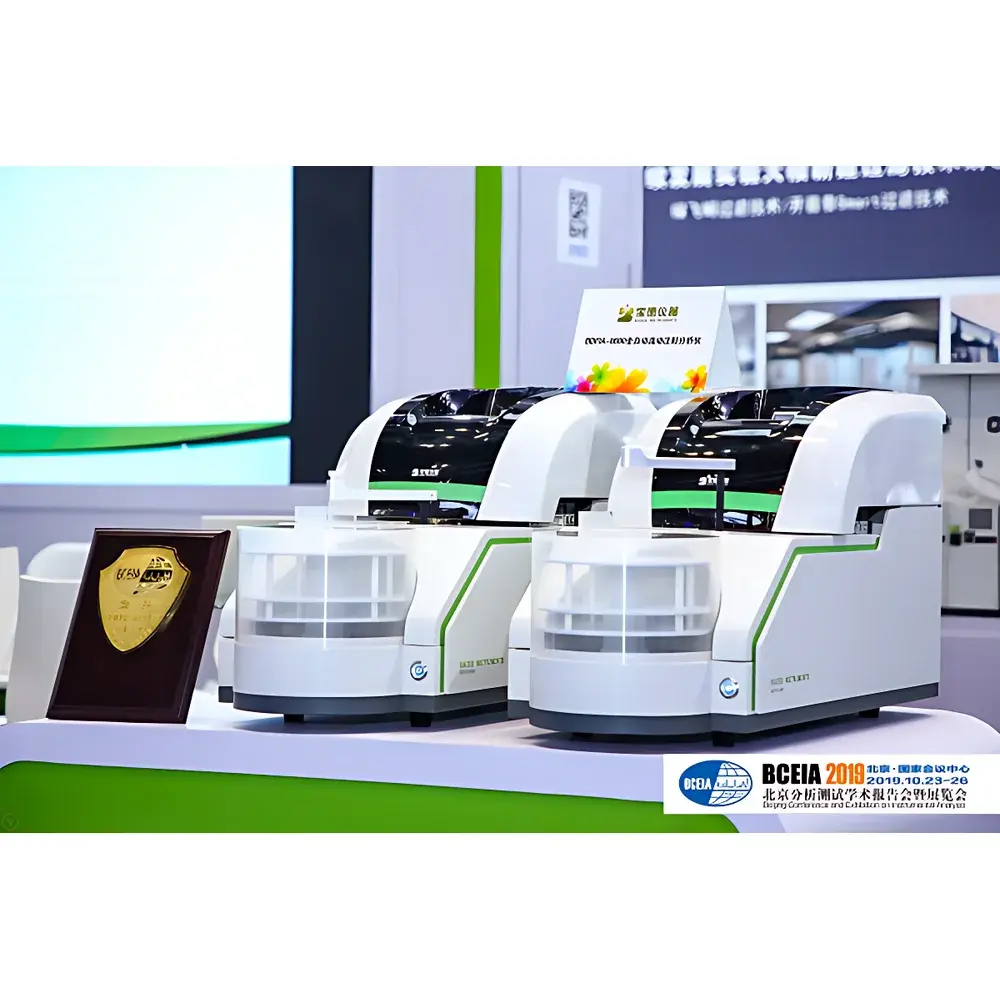
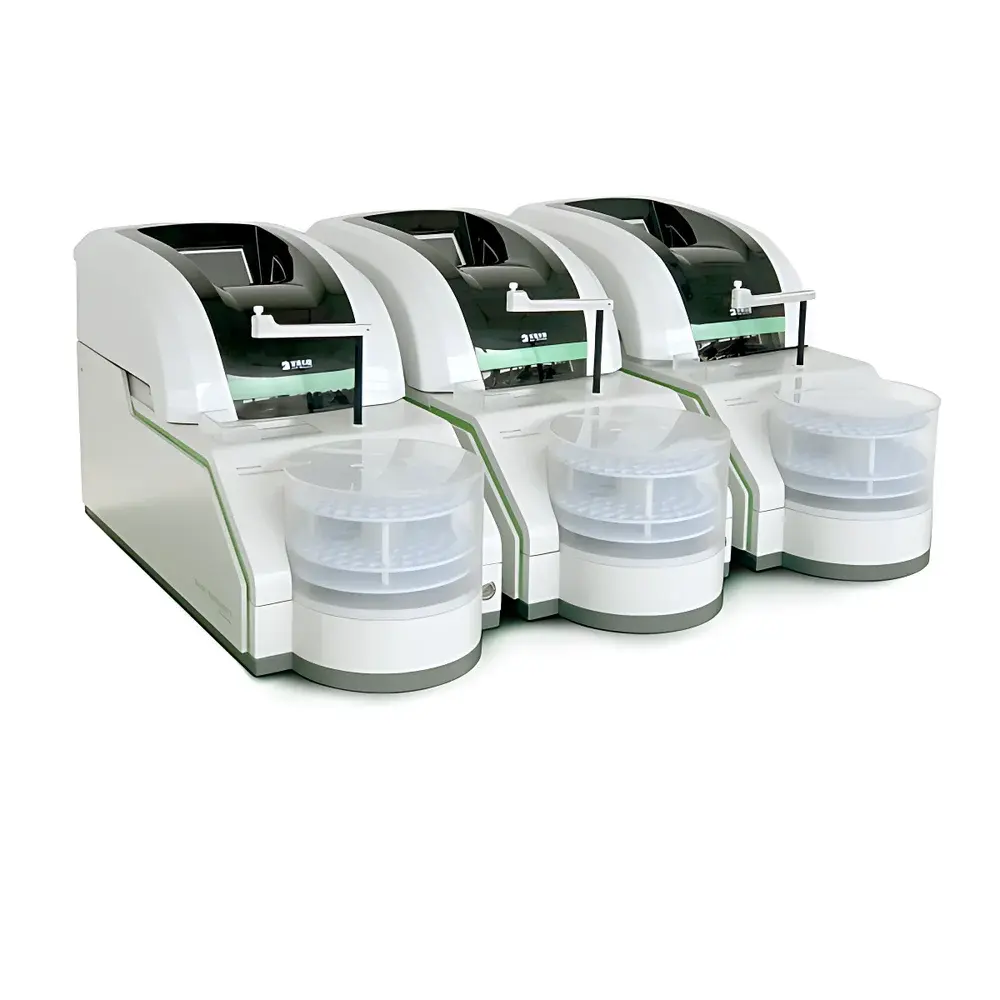
Brookfield BDFIA-8600/C Flow Injection Analyzer
| Brand | Brookfield |
|---|---|
| Origin | Beijing, China |
| Manufacturer Type | Original Equipment Manufacturer (OEM) |
| Product Category | Domestic |
| Model | BDFIA-8600/C |
| Product Type | Flow Injection Analyzer |
| Design | Integrated Channel-Based FIA System |
| Detection Principle | Coupled Online Sample Pretreatment + UV-Vis Spectrophotometry |
| Automation Level | Fully Automated, Computer-Controlled Sequential Analysis |
| Safety Features | Real-time Leak Detection, Waste Container Overflow Alarm, Liquid-Level Tracking Sensors |
| Compliance Context | Designed to support ASTM D3370, ISO 15681-2, EPA Method 354.1, and GB/T 5750–2023 workflows |
Overview
The Brookfield BDFIA-8600/C Flow Injection Analyzer is a fully integrated, channel-based analytical platform engineered for high-throughput, multi-parameter determination of inorganic and low-molecular-weight organic analytes in environmental, food, agricultural, and industrial matrices. It operates on the fundamental principles of flow injection analysis (FIA), where discrete sample zones are introduced into a continuous, carrier-stream-driven manifold, enabling precise temporal control over reaction kinetics, mixing efficiency, and dispersion characteristics. Unlike segmented-flow or continuous-flow systems, the BDFIA-8600/C employs programmable flow programming and zone-controlled reagent delivery to achieve reproducible reaction times—critical for spectrophotometric detection of labile species such as cyanide, phenol, and nitrite. The system integrates online pretreatment modules—including temperature-controlled digestion, steam distillation, liquid–liquid extraction, chemical reduction (e.g., Cr(VI) → Cr(III)), and condensation—directly within the fluidic path, eliminating manual intervention and minimizing contamination risk. Its modular architecture supports up to eight independent analytical channels, each configurable for distinct chemistries, wavelengths, and calibration protocols.
Key Features
- Fully automated, computer-controlled operation from sampling through data reporting—no manual dilution, reagent addition, or post-run cleaning required.
- Integrated pretreatment suite: Peltier-heated reaction coils (up to 120 °C), micro-distillation units with reflux condensers, membrane-based phase separation cells, and gas-diffusion modules for volatile analyte isolation.
- Dual-beam UV-Vis photometer (190–1100 nm) with thermoelectrically stabilized optics and <1 nm spectral bandwidth; absorbance range: 0–3.0 AU with <±0.002 AU baseline stability over 8 h.
- Real-time fluidic integrity monitoring: capacitive leak sensors at all critical junctions; optical liquid-level tracking in waste reservoirs; automatic shutdown upon overflow or pressure anomaly.
- Modular channel design: each channel includes independent peristaltic pump heads, solenoid valves, reaction coils, and flow cells—enabling simultaneous, non-interfering analysis of up to eight parameters per sample batch.
- Compliance-ready firmware: audit trail logging (user actions, method changes, calibration events), electronic signature support, and time-stamped raw data export aligned with GLP/GMP documentation requirements.
Sample Compatibility & Compliance
The BDFIA-8600/C accepts liquid samples (aqueous extracts, digests, filtrates) across a wide pH (2–12) and turbidity range (<50 NTU). Solid matrices—including soils, sediments, plant tissues, and food homogenates—are accommodated via standardized extraction protocols (e.g., EPA 3050B, ISO 11466) performed offline prior to injection. The system meets functional equivalency criteria for multiple regulatory methods: ASTM D7511-21 (cyanide), ISO 15681-2:2022 (phosphate), EPA Method 354.1 (nitrate/nitrite), and Chinese national standards GB/T 5750.5–2023 (phenols), GB/T 5750.6–2023 (chromium VI). All chemistries are validated per ICH Q2(R2) guidelines for specificity, linearity (r² ≥ 0.999), LOD/LOQ (e.g., 0.2 µg/L CN⁻, 0.5 µg/L Cr(VI)), and intermediate precision (RSD < 3.5% across 3 days, 3 operators).
Software & Data Management
Control and data acquisition are managed via FIAStudio v4.2—a Windows-based application compliant with FDA 21 CFR Part 11 requirements. The software provides method editor with drag-and-drop protocol builder, real-time chromatogram visualization, peak integration using tangent skim or Gaussian deconvolution, and customizable report templates (PDF, CSV, Excel). All raw signal files (.fia) are stored with embedded metadata (instrument ID, operator login, environmental sensor logs). Audit trails are immutable and exportable in XML format for third-party LIMS integration. Optional modules include statistical process control (SPC) dashboards and remote diagnostics via TLS-encrypted cloud gateway.
Applications
- Water quality monitoring: quantification of NH₄⁺, NO₂⁻, NO₃⁻, PO₄³⁻, SiO₂, SO₄²⁻, Cr(VI), CN⁻, phenol, and surfactants in drinking water, wastewater effluents, and groundwater per ISO 5667 series.
- Soil and plant analysis: determination of extractable boron, fluoride, sulfate, and orthophosphate following ISO 11267 and ISO 11268 protocols.
- Food and beverage testing: rapid screening of nitrite in cured meats, sulfite in wines, formaldehyde in seafood, and total alkalinity in dairy products.
- Agricultural inputs: nutrient profiling (NPK) in fertilizers and compost leachates using colorimetric ammonium, phosphate, and potassium assays.
- Industrial process control: real-time monitoring of cooling tower water hardness, boiler feedwater silica, and electroplating bath chromium concentration.
FAQ
What regulatory standards does the BDFIA-8600/C support out-of-the-box?
Pre-configured methods align with EPA, ASTM, ISO, and GB/T standards for over 25 analytes—including cyanide, phenol, nitrate, phosphate, and hexavalent chromium—with full validation documentation provided.
Can the system handle turbid or particulate-laden samples?
Samples must be filtered (0.45 µm) or centrifuged prior to analysis; optional inline filtration modules (not standard) can be integrated for semi-automated clarification.
Is method development supported for custom chemistries?
Yes—the open-platform fluidic controller and scriptable software allow users to define custom flow rates, heating profiles, reagent sequences, and detection algorithms.
How is calibration traceability maintained?
Each calibration run records reference standard lot numbers, preparation dates, and certified concentrations; calibration curves are digitally signed and archived with instrument metadata.
What maintenance intervals are recommended?
Peristaltic pump tubing replacement every 3 months (or 500 hours); photometer lamp recalibration annually; full system performance verification quarterly per manufacturer SOP-MAINT-8600.






