
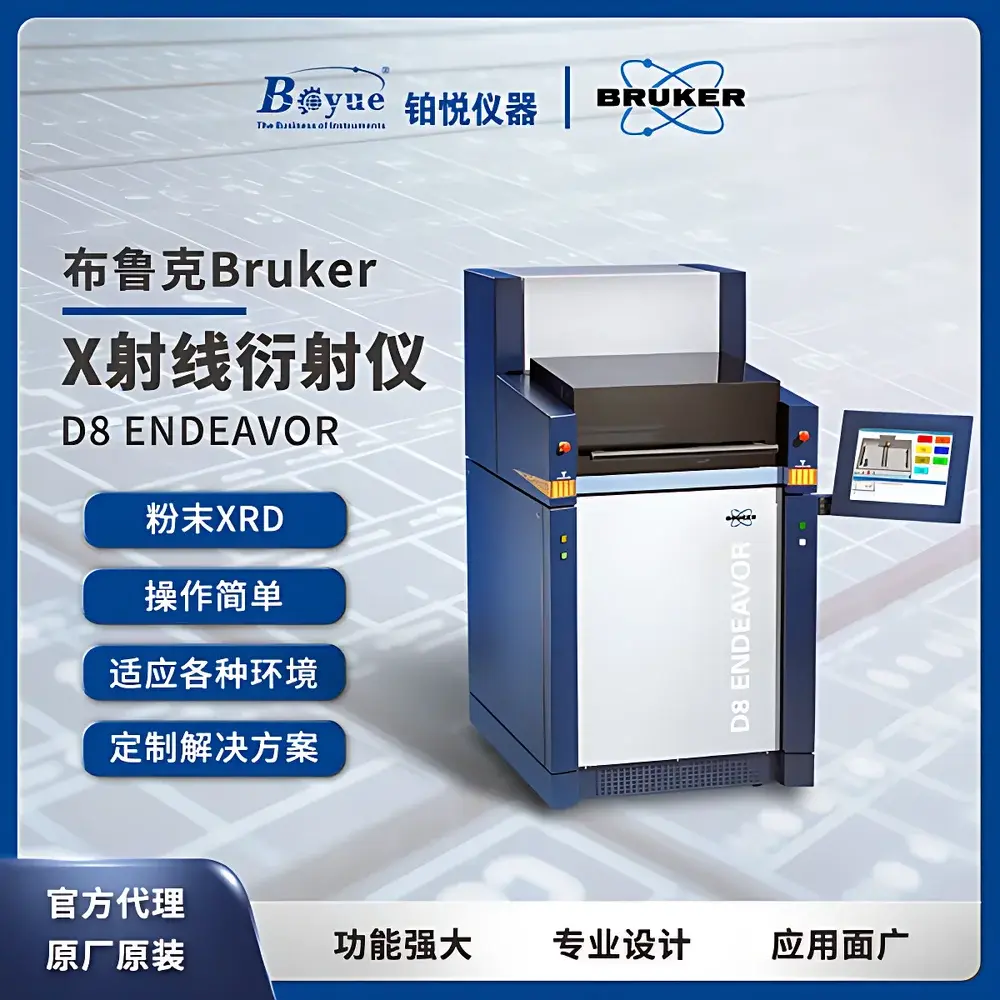
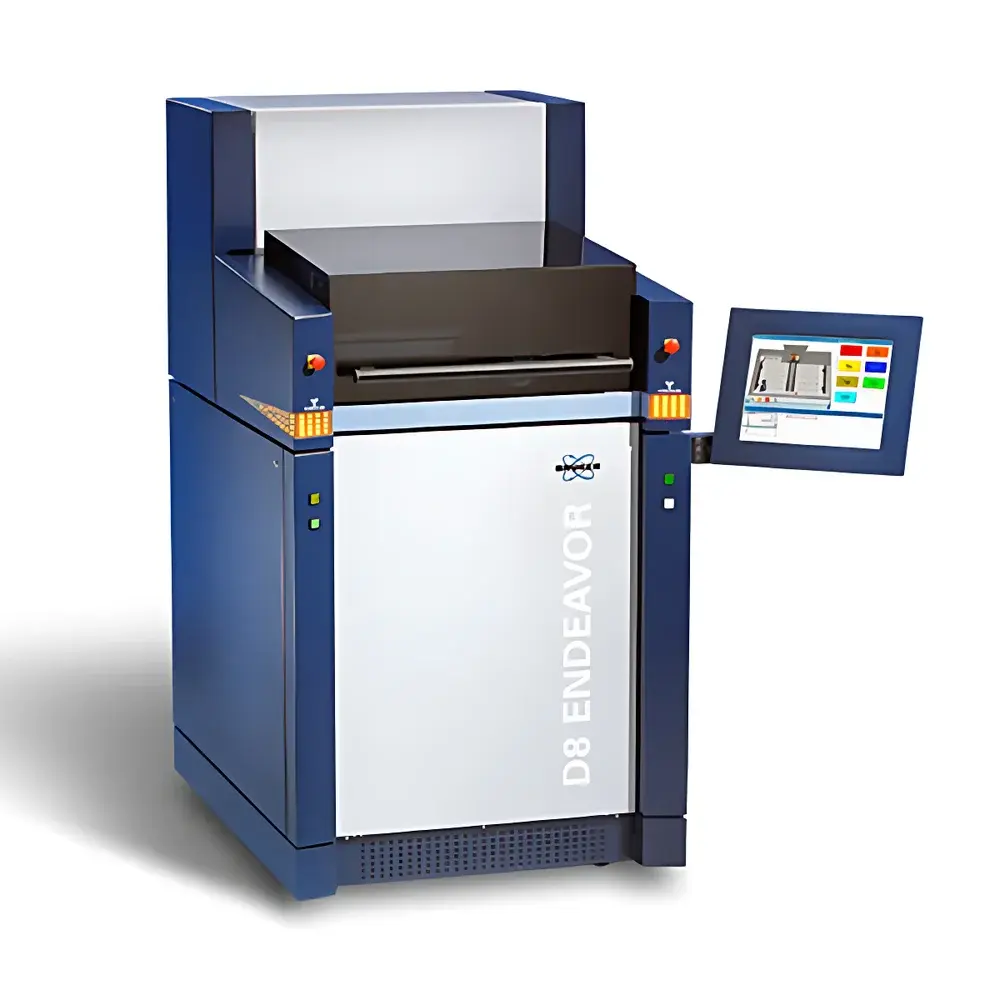
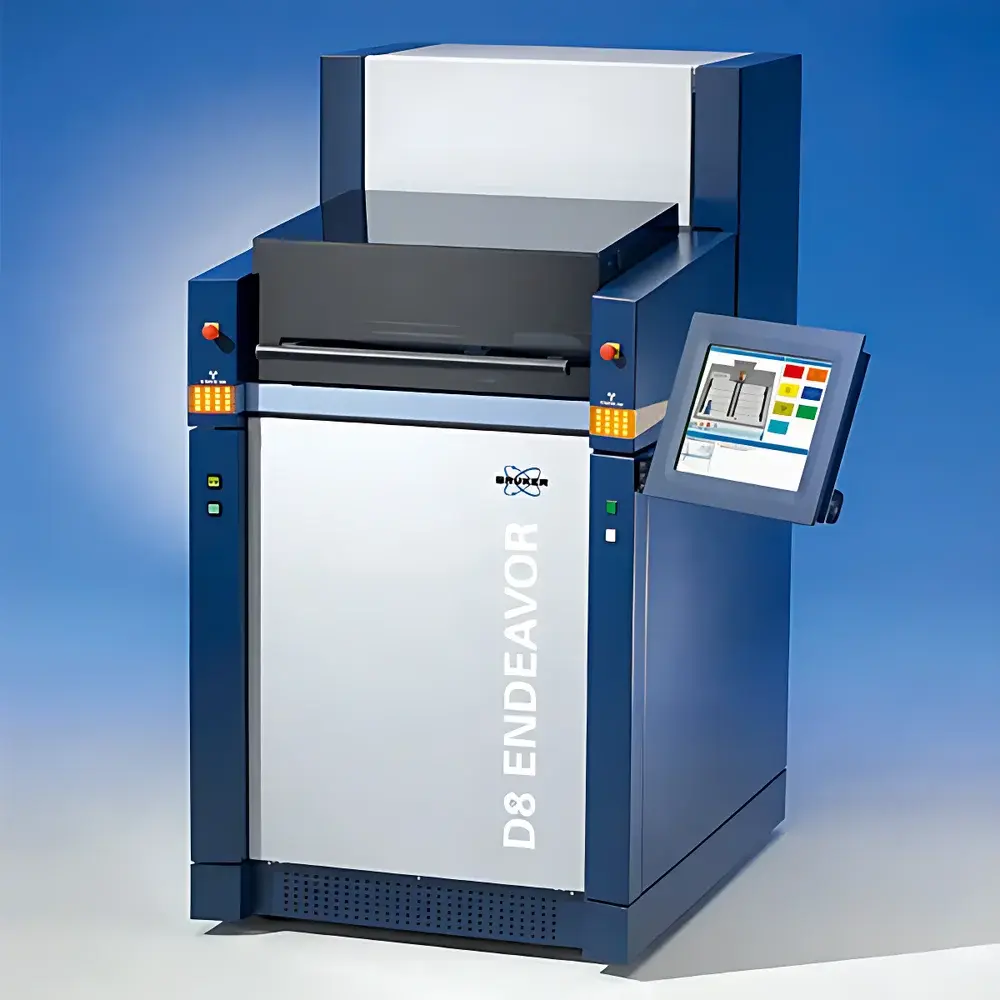
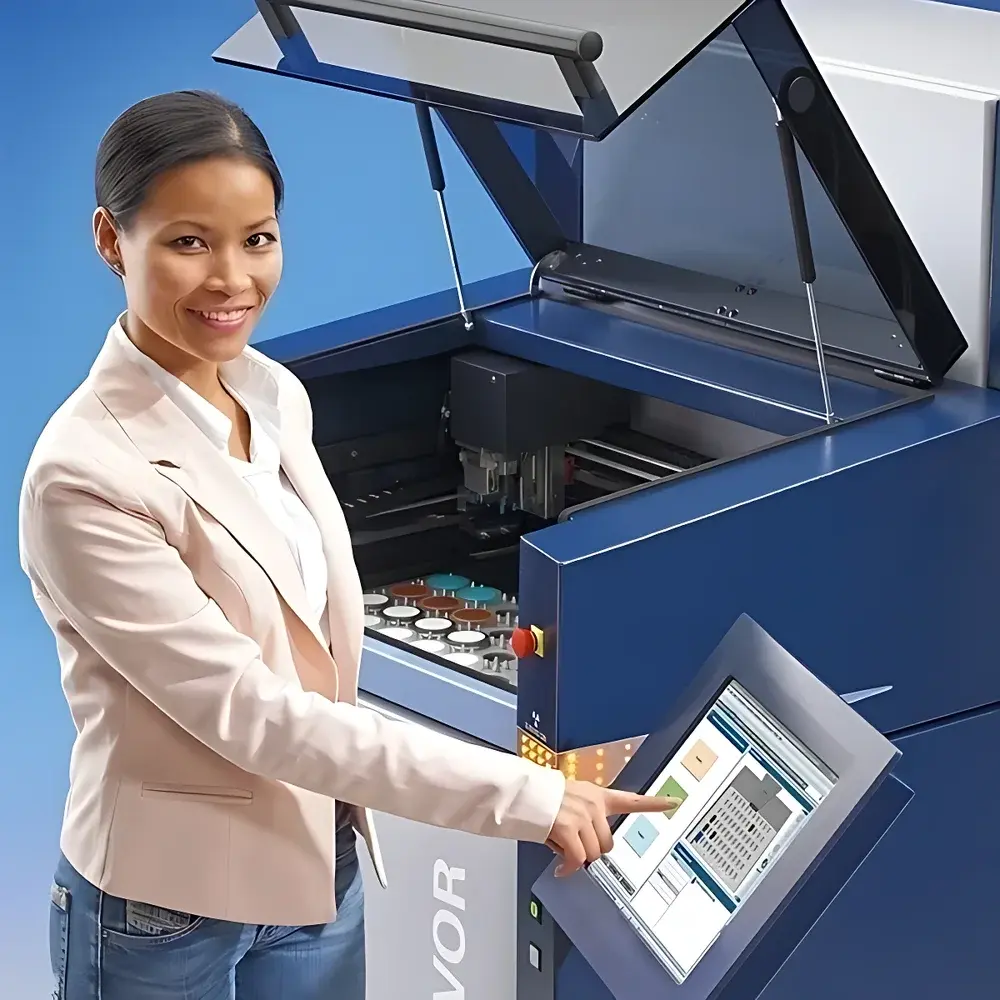
Bruker D8 ENDEAVOR High-Resolution X-ray Diffractometer
| Brand | Bruker |
|---|---|
| Origin | Germany |
| Model | D8 ENDEAVOR |
| Instrument Type | High-Resolution X-ray Diffractometer |
| Configuration | Floor-Standing |
| Power Options | 1 kW (ECO) / 3 kW |
| Angular Accuracy | ±0.01° |
| Angular Resolution | 0.01° |
Overview
The Bruker D8 ENDEAVOR is a high-resolution, floor-standing X-ray diffractometer engineered for precision powder X-ray diffraction (XRD) analysis across industrial, academic, and research laboratories. Based on Bragg’s law and utilizing Cu Kα radiation (λ = 1.5418 Å), the system delivers quantitative phase identification, crystallite size determination, lattice parameter refinement, and amorphous content analysis via Rietveld full-pattern fitting. Its modular architecture supports both routine QC workflows and advanced structural characterization, with optimized beam geometry, high-flux optics, and energy-resolving detection enabling robust performance under variable environmental and throughput demands. Designed for multi-user environments, the D8 ENDEAVOR integrates seamlessly into automated analytical workflows—supporting walk-up operation, 24/7 unattended runs, and compliance-critical data integrity requirements.
Key Features
- Dynamic Beam Optimization (DBO): Motorized optical components automatically reconfigure the incident beam path—including divergence slits, monochromators, and Soller collimators—to match sample-specific measurement conditions without manual intervention.
- LYNXEYE XE-T Energy-Resolving Detector: Delivers >95% fluorescence suppression and <0.1% white-beam residual without primary β-filters or secondary monochromators; achieves angular resolution ≤0.01° and count rates up to 10⁶ cps.
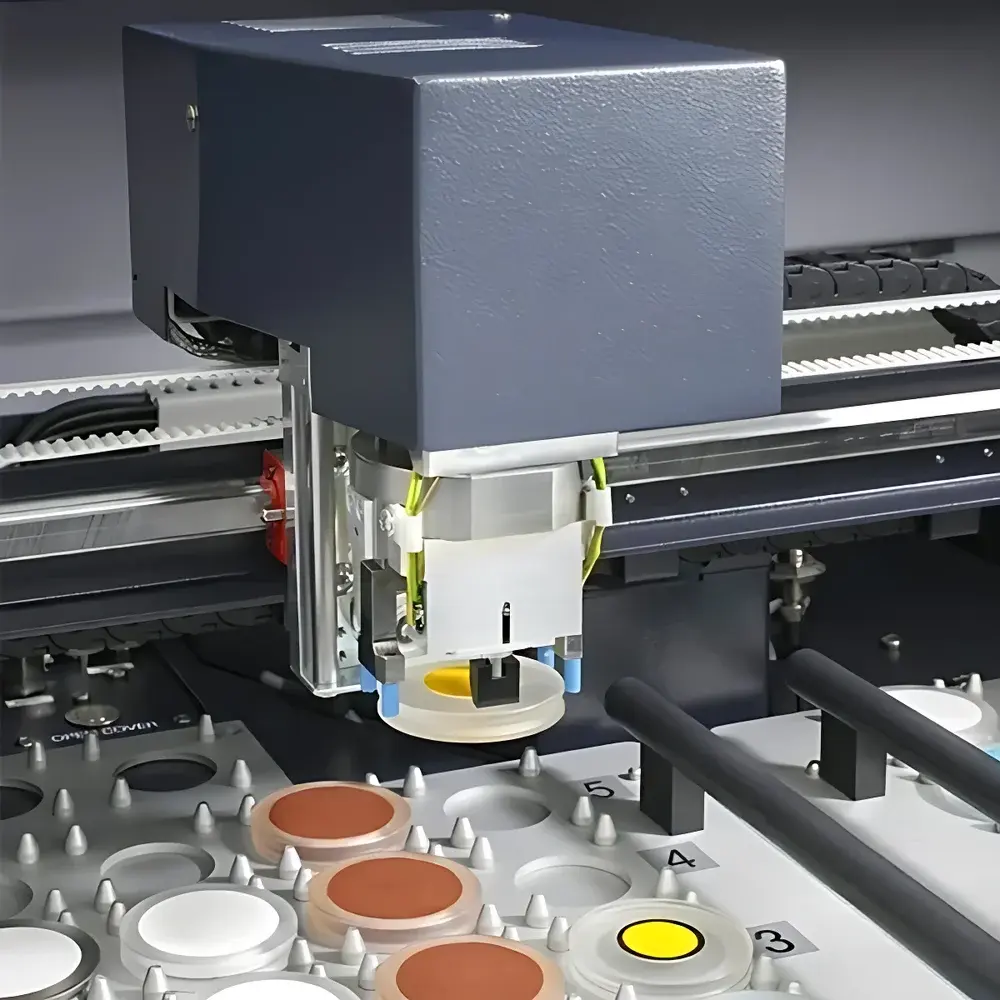
- Walk-Up Sample Handling: Dual large-capacity sample trays (51.5 mm and 40 mm diameter) accommodate diverse sample forms—powders, filters, thin films, clays, and air-sensitive materials—with automatic height compensation and back-loading options to minimize preferred orientation.
- Modular Power & Environmental Configurations: Available in 1 kW ECO variant (single-phase, air-cooled, no external chiller) and 3 kW high-flux version; optional high-altitude (≥4000 m) and harsh-environment (high-temp/humidity/dust) packages ensure operational reliability across global deployment sites.
- TouchControl & Loader Software Interface: Graphical method assignment to sample positions eliminates syntax-based programming; preconfigured button templates embed end-to-end workflows—from auto-loading and measurement to DIFFRAC.EVA evaluation and RESULTS MANAGER reporting.
Sample Compatibility & Compliance
The D8 ENDEAVOR accepts standard sample holders compliant with ISO 13126 and ASTM E1361, including low-background silicon, zero-diffraction glass, and specialized mounts for respirable crystalline silica (RCS) filters per NIOSH Method 7500. Sample preparation flexibility extends to capillary, transmission, and grazing-incidence geometries. All hardware and software modules are designed to meet GLP/GMP principles and FDA 21 CFR Part 11 requirements—including electronic signatures, audit trails, role-based access control, and secure data archiving. System validation documentation (IQ/OQ/PQ) is available upon request and aligns with ISO/IEC 17025 and ICH Q2(R2) guidelines for analytical instrument qualification.
Software & Data Management
The DIFFRAC.SUITE software platform provides unified control, acquisition, and evaluation across all D8 ENDEAVOR configurations. DIFFRAC.MEASURE enables method-driven automation; DIFFRAC.EVA supports rapid phase identification using the Crystallography Open Database (COD) and cluster analysis for high-throughput geological or pharmaceutical screening. For quantitative analysis, DIFFRAC.TOPAS implements Rietveld refinement with PONKCS correction for amorphous quantification and Alite polymorph (M1/M3) differentiation in cement matrices. DIFFRAC.DQUANT delivers regulatory-grade reporting aligned with ASTM C1365, ISO 21068, and USP . All databases operate in file- or server-based modes, with RESULTS MANAGER generating customizable multi-sample reports, trend charts, and time-series dashboards exportable to LIMS or ERP systems.
Applications
- Cement & Building Materials: Real-time quantification of alite, belite, aluminate, ferrite, and free lime in raw meals, clinker, and finished cement; certified compliance with EN 196-2 and ASTM C150 via TOPAS BBQ black-box analysis.
- Minerals & Geosciences: Automated mineralogical mapping of drill core samples using cluster analysis; quantitative assessment of clay swelling potential, ore grade estimation, and alteration mineral assemblages.
- Metals & Ferrous Alloys: Direct FeO quantification in iron ores and sinter feeds to optimize blast furnace efficiency and reduce CO₂ emissions; phase analysis of scale, slag, and refractory wear products.
- Aluminum Industry: High-throughput analysis of Bayer process residues, red mud, and smelter anode butts; real-time monitoring of gibbsite, boehmite, and corundum ratios for electrolytic cell stability.
- Occupational Health & Safety: NIOSH 7500-compliant RCS monitoring in mining, construction, and foundry environments using validated DIFFRAC.DQUANT methods and low-background filter holders.
FAQ
What power supply requirements does the D8 ENDEAVOR have?
The 1 kW ECO version operates on standard single-phase 230 V AC; the 3 kW configuration requires three-phase 400 V AC with dedicated cooling infrastructure.
Is the D8 ENDEAVOR compatible with existing laboratory automation systems?
Yes—it supports RS-232, Ethernet/IP, and OPC UA protocols for integration with robotic sample handlers, LIMS, and MES platforms.
Can the system perform in-situ or non-ambient measurements?
Optional stages for heating (up to 1200 °C), cooling (down to −180 °C), humidity control, and stress/strain loading are available and fully supported by DIFFRAC.SUITE.
How is data integrity ensured during long-term unattended operation?
All acquisitions include timestamped metadata, checksum-verified raw data files, and immutable audit logs meeting 21 CFR Part 11 Annex 11 and ALCOA+ principles.
Does Bruker provide industry-specific application support?
Yes—turnkey solutions include pre-validated methods, application-specific training, and dedicated support contracts for cement, minerals, pharma, metals, and aluminum sectors.





