
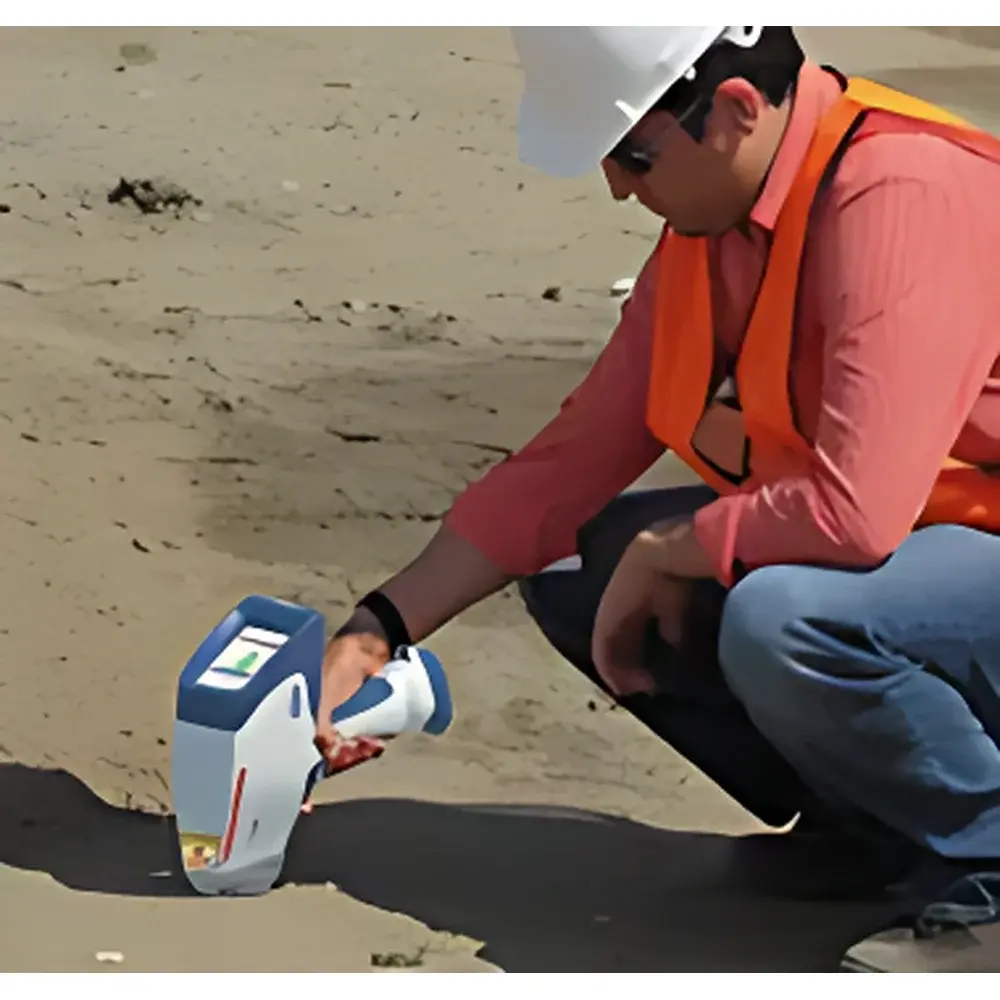
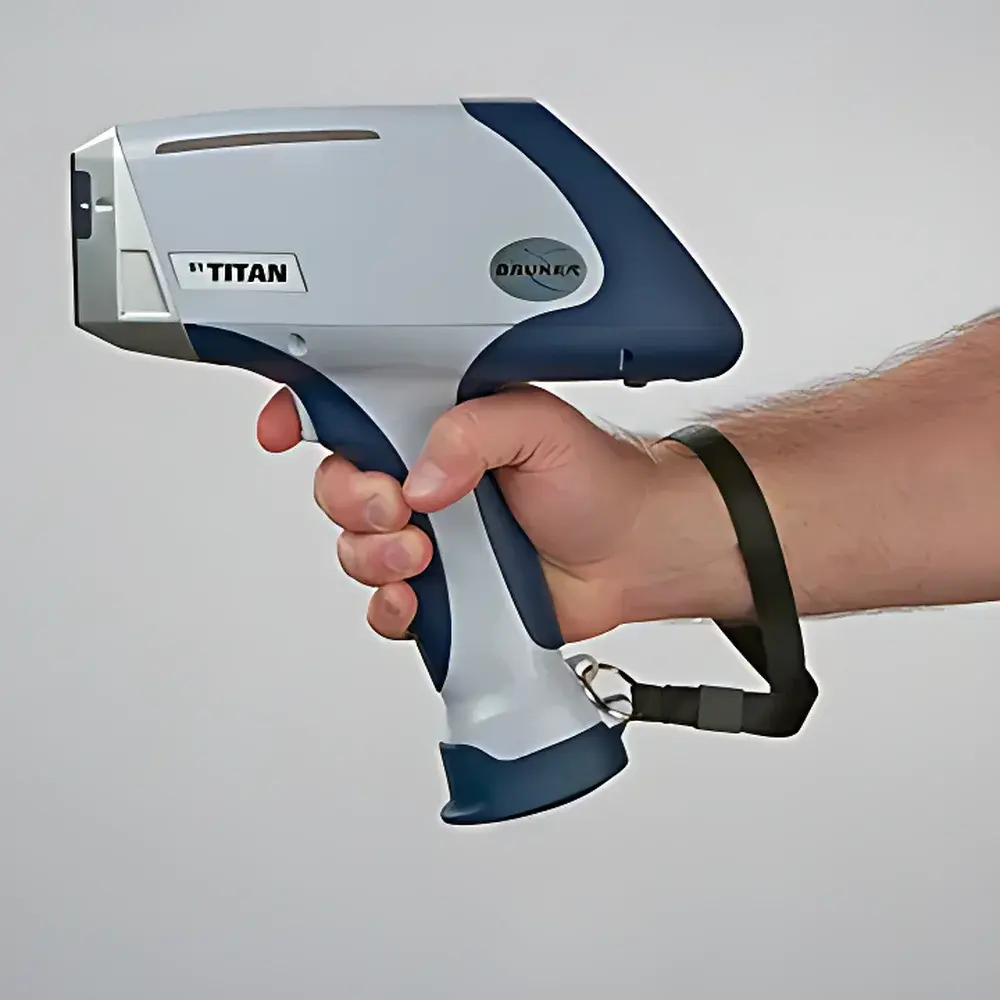
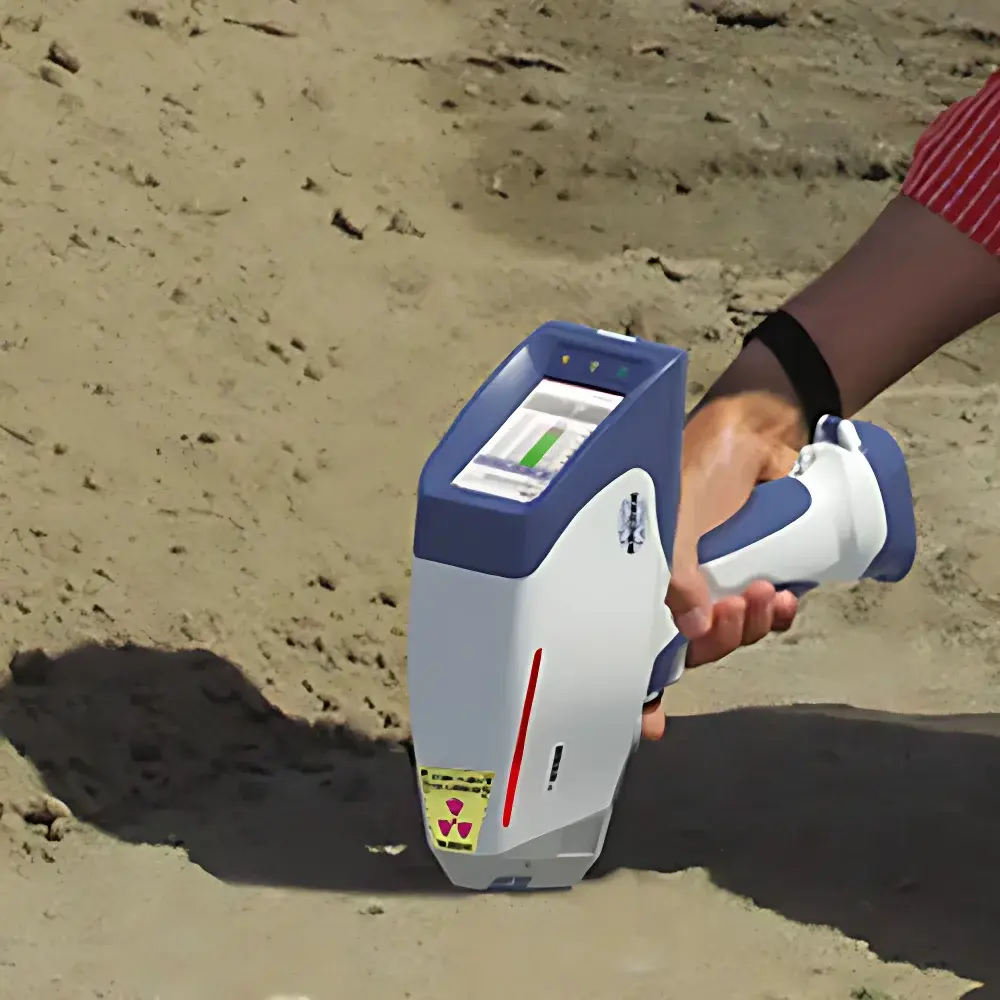
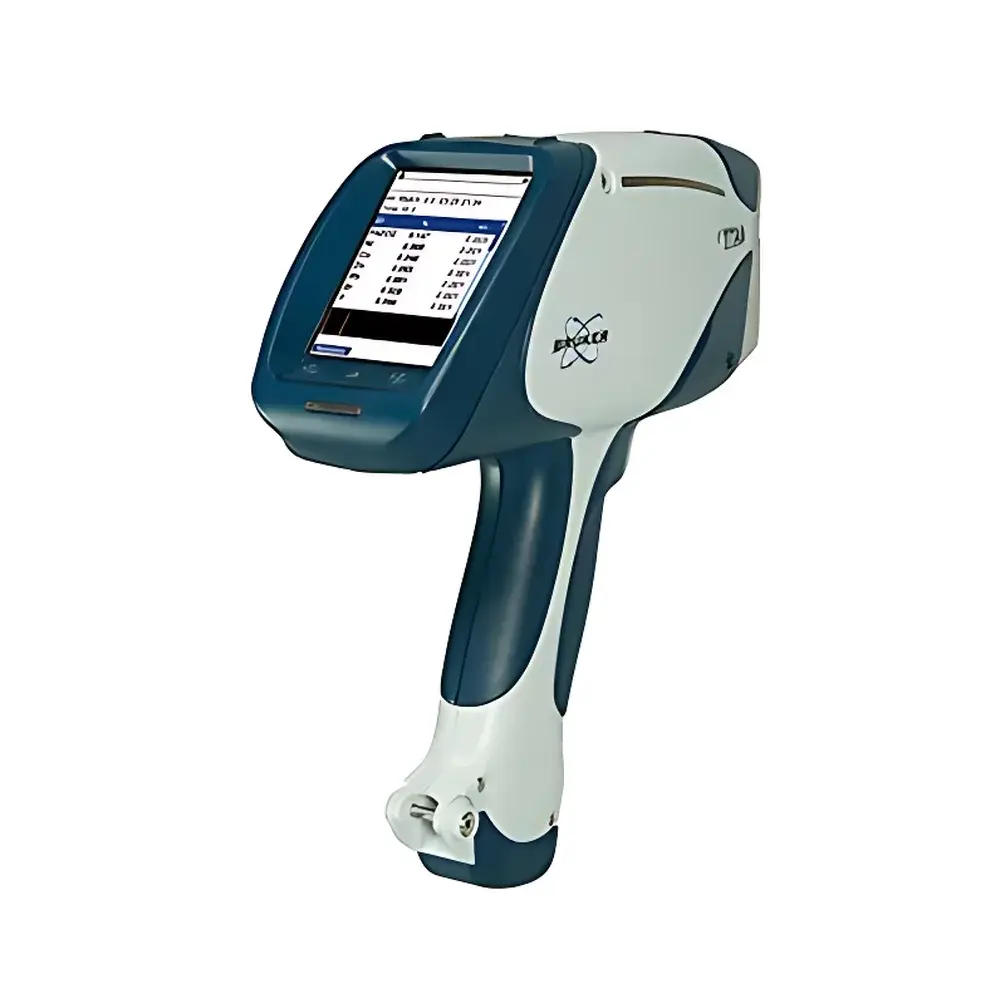
Bruker S1TITAN Soil Handheld Energy Dispersive X-Ray Fluorescence Spectrometer
| Brand | Bruker |
|---|---|
| Origin | Germany |
| Manufacturer Type | Authorized Distributor |
| Origin Category | Imported |
| Model | S1TITAN Soil |
| Application | Handheld/Portable |
| Industry-Specific Use | Soil and Atmospheric Environmental Monitoring |
| Elemental Analysis Range | Mg to U |
| Quantification Range | 1 ppm – 99.99% |
| Energy Resolution | <140 eV (Mn Kα) |
| Repeatability | XRF-based statistical repeatability per ASTM E2783 |
| Detector | Silicon Drift Detector (SDD) |
Overview
The Bruker S1TITAN Soil is a field-deployable, handheld energy dispersive X-ray fluorescence (ED-XRF) spectrometer engineered for rapid, non-destructive elemental analysis of soil and environmental solid matrices. Based on fundamental XRF physics—where primary X-rays excite atoms in the sample, inducing characteristic secondary (fluorescent) X-ray emission—the instrument delivers quantitative and semi-quantitative data for elements from magnesium (Mg, Z=12) to uranium (U, Z=92). Its optimized excitation geometry, high-efficiency SDD detector, and real-time spectrum deconvolution algorithms ensure reliable detection of regulated heavy metals—including Pb, As, Cd, Hg, Cr, Ni, Cu, and Zn—at sub-ppm levels in heterogeneous field-collected soils. Designed for regulatory-grade screening, the S1TITAN Soil supports Tier 1 site assessment workflows aligned with EPA Method 6200 and ISO 18553:2016, enabling immediate decision-making during environmental site investigations, brownfield characterization, and post-remediation verification.
Key Features
- Lightweight, ergonomic design (≤1.5 kg) with IP54-rated enclosure for dust and splash resistance in outdoor conditions
- High-performance silicon drift detector (SDD) delivering <140 eV Mn Kα resolution at 100,000 cps count rate, ensuring precise peak separation for overlapping transitions (e.g., As Kα/Pb Lα, Cd Kα/Sn Kα)
- Optimized Rh anode X-ray tube with selectable kV/mA settings (up to 50 kV / 40 µA) for enhanced light-element sensitivity (Mg–P) and heavy-element excitation (Pb–U)
- Onboard calibrations pre-loaded for soil matrices, including certified reference materials (CRMs) such as NIST SRM 2710a, GBW07401, and IAEA-Soil-7
- Real-time spectral processing with fundamental parameters (FP) quantification and matrix correction algorithms (e.g., Compton normalization, grain-size compensation)
- Battery-operated (rechargeable Li-ion, ≥8 hours continuous operation) with hot-swappable battery option for extended field campaigns
Sample Compatibility & Compliance
The S1TITAN Soil accommodates unprepared or minimally prepared samples: air-dried soils, sediments, sludges, dust filters, particulate matter on membranes, and solid waste composites. No pelletization or fusion is required—analysis occurs directly on pressed or loose bulk samples (minimum 5 g, particle size <2 mm recommended). The system complies with international standards governing field-portable XRF use in environmental monitoring, including ASTM D7212 (standard test method for low-Z elements in polymeric materials), ISO 12847 (soil quality — determination of elements by portable XRF), and EU Council Directive 2004/35/EC (Environmental Liability Directive). All measurement protocols support GLP-compliant documentation, with audit-trail enabled data logging traceable to ISO/IEC 17025 requirements.
Software & Data Management
Powered by Bruker’s proprietary S1PX software, the instrument provides intuitive touchscreen operation, customizable reporting templates (PDF/CSV/XLSX), and integrated GPS tagging for georeferenced data mapping. Data export supports direct integration with GIS platforms (ArcGIS, QGIS) and LIMS environments via ODBC or API interfaces. Firmware updates include enhanced spectral library matching against >120 soil-specific CRMs and machine-learning-assisted interference correction. All analytical sessions are timestamped, user-authenticated, and stored with full spectral archives—ensuring compliance with FDA 21 CFR Part 11 for electronic records and signatures where applicable.
Applications
- Rapid screening of contaminated sites (e.g., former smelters, mining tailings, industrial corridors) for priority pollutants under national soil risk control standards (e.g., China’s GB 15618-2018, US EPA Regional Screening Levels)
- Field validation of remediation endpoints and verification of excavation cut-off concentrations
- Monitoring of agricultural soils for bioavailability-critical elements (e.g., Cd in rice paddies, As in orchard soils)
- Emergency response deployment during chemical spills or illegal dumping incidents requiring immediate hazard identification
- Long-term trend analysis in ecological monitoring networks using standardized measurement protocols across multiple operators and seasons
FAQ
Does the S1TITAN Soil require sample homogenization or grinding before analysis?
Minimal preparation is required: air-drying and sieving to <2 mm is recommended for improved precision; however, in-situ analysis of undisturbed soil cores or surface scrapings is supported for reconnaissance-level surveys.
How does the instrument handle moisture content variation in field soils?
Built-in moisture correction algorithms utilize Compton scatter intensity ratios and empirical calibration curves derived from CRM series with controlled water content (5–30 wt%), reducing bias in quantification for wet or clay-rich matrices.
Is method validation documentation available for regulatory submissions?
Yes—Bruker provides a comprehensive Method Validation Kit including detection limit studies (IDL/MDL), precision/repeatability reports per ISO 11843-2, and inter-laboratory comparison data compliant with ISO 5725-2.
Can the S1TITAN Soil be used for regulatory compliance reporting?
While primarily designed for screening and triage, its performance meets criteria for Tier 1 data acceptance under EPA Region 9’s Field Portable XRF Guidance and analogous frameworks in the EU and APAC regions when operated under validated SOPs and QA/QC protocols.
What training and certification options are offered for operators?
Bruker-certified training includes 2-day hands-on courses covering instrument operation, calibration maintenance, spectral interpretation, and report generation—culminating in a competency assessment aligned with ISO/IEC 17025 personnel qualification requirements.
Related Products







