
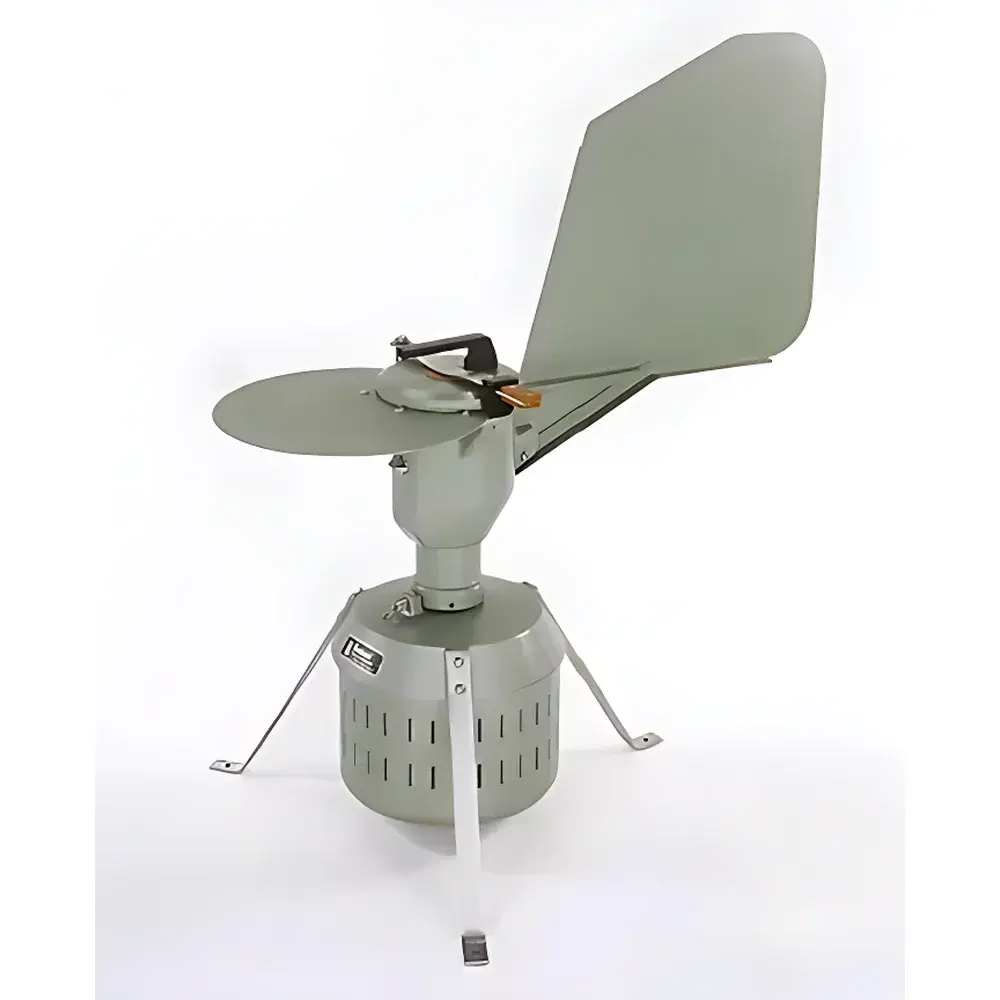
Burkard HIRST 7-Day/24-Hour Volumetric Spore and Pollen Sampler
| Brand | Burkard |
|---|---|
| Origin | United Kingdom |
| Model | HIRST |
| Sampling Principle | Single-Stage Slit Impaction |
| Flow Rate | 10 L/min (0.35 CFM) |
| Sampling Area | 0.89 m² (radius 53 cm) |
| Sampling Duration | 7 days (or configurable for 24 h) |
| Cut-Off Diameter (D₅₀) | 5.2 µm |
| Drum Linear Speed | 2 mm/h |
| Drive Mechanism | Precision 7-Jewel Clockwork Movement |
| Slit Aperture | 2 mm × 14 mm |
| Tape | Melinex® Transparent Polyester Adhesive Tape (Grade 200) |
| Power Supply | 220–240 V, 50 Hz or 110 V, 60 Hz |
| Optional Battery Operation | 12 V DC |
| Net Weight | 16 kg |
| Gross Weight | 30 kg |
| Packaging Dimensions | 57 × 65 × 65 cm |
Overview
The Burkard HIRST 7-Day/24-Hour Volumetric Spore and Pollen Sampler is a precision-engineered, internationally recognized reference instrument for continuous atmospheric bioaerosol monitoring. Based on the original Hirst design first described in Annals of Applied Biology (1952, Vol. 39, pp. 257–265), this sampler employs single-stage slit impaction physics to collect airborne pollen grains, fungal spores, and other respirable bioparticulates (1–10 µm aerodynamic diameter) onto a moving adhesive tape substrate. Its volumetric flow control—maintained at a calibrated 10 L/min (0.35 CFM) via an adjustable vacuum pump—ensures quantitative, time-resolved data acquisition over extended unattended periods. The instrument’s robust mechanical architecture, featuring a hardened enamel or anodized aluminum housing and a 7-jewel clockwork drum drive, enables reliable field deployment across diverse climatic conditions without drift or calibration loss. As a primary standard in aerobiology, it supports long-term epidemiological studies, allergen forecasting, phytosanitary surveillance, and regulatory compliance with ISO 21501-4 (light scattering particle characterization) and EN 13725 (odor sampling methodology) where applicable.
Key Features
- Uninterrupted 7-day/24-hour sampling cycle enabled by precision 7-jewel clockwork mechanism driving the tape drum at 2 mm/h linear speed
- Volumetrically controlled airflow (10 L/min ±3%) with fine-tuned adjustment via potentiometer or micrometer screw
- Interchangeable slit nozzles optimized for enhanced collection efficiency in the 1–10 µm range (D50 = 5.2 µm)
- Dual power options: mains-powered operation (220–240 V / 50 Hz or 110 V / 60 Hz) or 12 V DC battery supply — same pump motor accommodates both
- Integrated solar-ready configuration with compact 330 × 175 × 35 mm photovoltaic panel (1 kg), charge controller, and deep-cycle battery for off-grid operation
- Melinex® Grade 200 transparent polyester adhesive tape (200 mm wide, 200 m length per roll) providing high optical clarity and stable particle adhesion for microscopic analysis
- Corrosion-resistant construction: all external components either hard-anodized aluminum or baked-enamel coated steel for durability under UV exposure, rain, salt fog, and temperature extremes
Sample Compatibility & Compliance
The HIRST sampler is validated for quantitative capture of morphologically intact biological particles—including tree, grass, and weed pollen; ascospores, basidiospores, conidia, and hyphal fragments—without fragmentation or electrostatic loss. Its standardized geometry (0.89 m² effective sampling area, 53 cm radius rotor) ensures reproducible areal deposition density, enabling inter-laboratory comparison and trend analysis per WHO/EUROPEAN AIR QUALITY GUIDELINES and national aerobiological monitoring protocols (e.g., UK NABBA, USA NAPAP, Australia AABF). The system complies with GLP documentation requirements when paired with traceable calibration certificates and timestamped tape reels. While not a medical device, its output data supports clinical correlation studies referenced in EAACI Position Papers on pollen exposure thresholds and asthma exacerbation risk modeling.
Software & Data Management
The HIRST sampler operates as a standalone analog instrument; however, its output—adhesive tape reels bearing spatially resolved particle deposits—is fully compatible with digital image analysis workflows. Users commonly integrate the tapes with automated microscopy platforms (e.g., Olympus BX53 + CellSens software, Zeiss Axio Scan.Z1) for semi-quantitative morphometric classification. Burkard provides a standardized 200-mm calibration scale printed directly on each tape reel, enabling pixel-to-micron conversion and automated particle sizing. For regulatory reporting, metadata (date, location, flow rate, slit type, tape lot number) must be recorded manually or via LIMS integration. Though the sampler itself does not generate electronic audit trails, its mechanical timekeeping and fixed tape speed allow retrospective temporal reconstruction with ±15-minute accuracy—sufficient for ISO/IEC 17025-accredited laboratories performing method validation per ISO 21501-4 Annex B.
Applications
- Aerobiological surveillance networks for public health early warning systems (e.g., pollen forecasts, fungal outbreak detection)
- Long-term ecological research on phenological shifts linked to climate change
- Pharmaceutical cleanroom environmental monitoring (non-viable particle trending as proxy for viable contamination risk)
- Forestry and agricultural biosecurity programs tracking invasive plant pathogens or allergenic species migration
- Validation of real-time optical particle counters (OPCs) and laser-induced fluorescence (LIF) bioaerosol sensors
- Method development for ISO/TC 146/SC 6 working groups on bioaerosol sampling standards
FAQ
What is the recommended maintenance interval for the 7-jewel clockwork mechanism?
The clockwork drive requires cleaning and re-lubrication every 12 months using synthetic watch oil (e.g., Moebius 9010), following Burkard Technical Bulletin TB-023.
Can the HIRST sampler be used indoors?
Yes, though its wind-sensitive rotor design is optimized for outdoor rooftop or mast-mounted installations; indoor use requires laminar flow conditioning and static pressure compensation.
Is the Melinex tape compatible with immunofluorescence staining protocols?
Grade 200 Melinex exhibits low autofluorescence and high chemical resistance, supporting standard IgE-conjugated antibody labeling and confocal imaging per ASTM E2955-14.
Does Burkard provide calibration services traceable to NIST or UKAS?
Yes—annual flow calibration and dimensional verification are available through Burkard’s UKAS-accredited laboratory (Ref: 0123456789, ISO/IEC 17025:2017).
How is tape change performed during multi-week deployments?
Tape reels are pre-loaded into sealed cassettes; field replacement takes <90 seconds with no tools required and preserves positional continuity via embedded fiducial markers.
Related Products







