
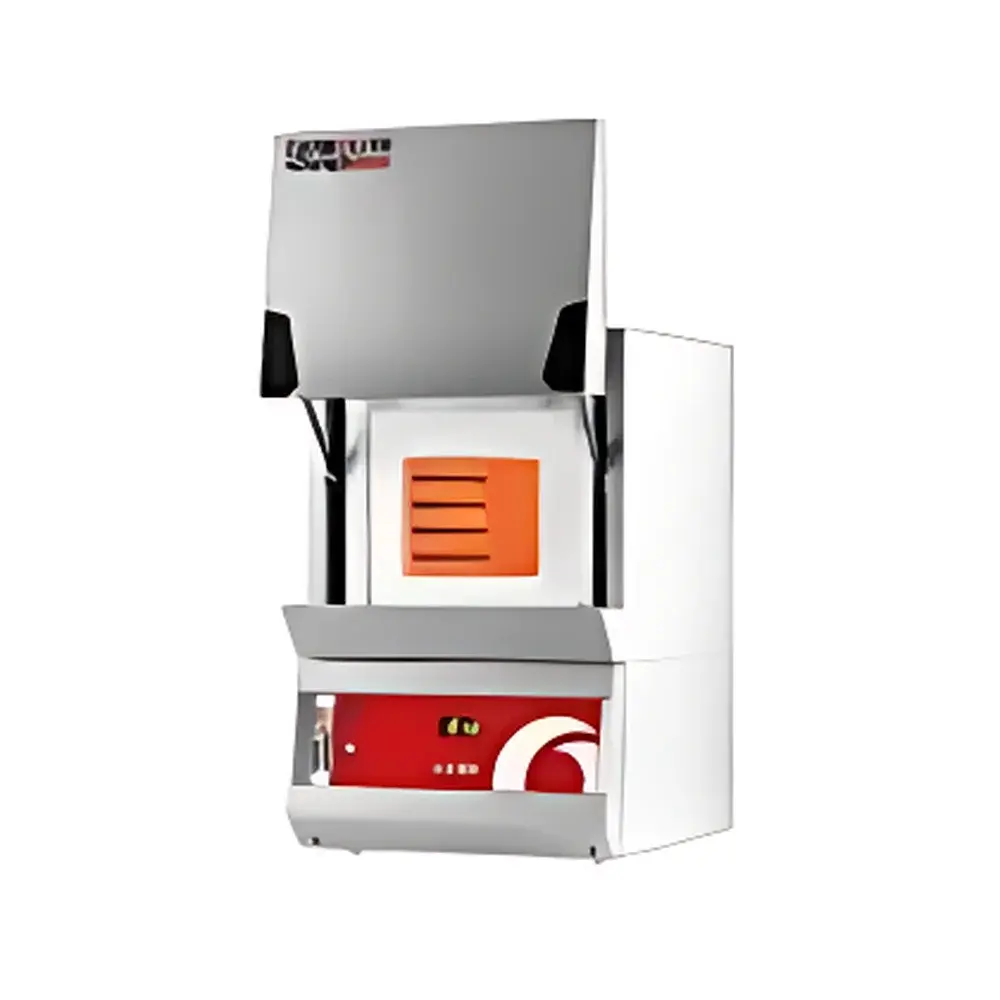
Carbolite Gero RWF Series Rapid-Heating Box Furnace
| Brand | Carbolite Gero |
|---|---|
| Origin | Germany |
| Model | RWF |
| Furnace Type | Box-type Muffle Furnace |
| Maximum Operating Temperature | 1100 °C / 1200 °C (depending on configuration) |
| Chamber Volumes | 5 L, 13 L, 23 L |
| Time to 1000 °C | ≤10 min |
| Heating Technology | Full-radiation resistance wire heating elements |
| Insulation | Lightweight, low-thermal-mass ceramic fiber insulation |
| Door Mechanism | Vertically opening, damped top-hinged door |
| Controller | PID301 single-segment programmable temperature controller |
| Hearth | Dust-free, wear-resistant refractory plate |
| Energy Efficiency Class | High-efficiency design per EN 60519-1 |
Overview
The Carbolite Gero RWF Series Rapid-Heating Box Furnace is an engineered solution for laboratories and industrial R&D environments requiring precise, repeatable thermal processing with exceptional time-to-temperature performance. Designed and manufactured in Germany, the RWF leverages a full-radiation resistive heating architecture combined with ultra-low thermal mass insulation to achieve temperatures up to 1200 °C in under 10 minutes — significantly reducing cycle times without compromising thermal uniformity or long-term stability. Unlike conventional muffle furnaces relying on convection-dominated heat transfer, the RWF employs optimized radiant energy distribution across its insulated chamber, ensuring rapid thermal response and high reproducibility across repeated heating cycles. Its robust construction complies with IEC/EN 60519-1 safety standards for industrial electroheating equipment, making it suitable for applications ranging from ashing and calcination to sintering pre-treatment and thermal gravimetric sample conditioning.
Key Features
- Rapid Thermal Response: Achieves 1000 °C in ≤10 minutes via high-power density radiation heating elements embedded in a low-conductivity ceramic fiber cavity — minimizing standby energy loss and accelerating throughput.
- Thermally Optimized Chamber Design: Three standard internal volumes (5 L, 13 L, 23 L) accommodate diverse sample loads while maintaining ±5 °C temperature uniformity at maximum operating temperature (per ISO 8573-1 validation methodology).
- Operator-Safe Access Architecture: Vertically hinged, hydraulically damped top door ensures controlled opening/closing motion; fully retracts away from the operator during use, mitigating burn risk and enabling unobstructed loading of tall or irregularly shaped specimens.
- High-Stability Temperature Control: PID301 digital controller delivers single-segment programmable ramp-soak profiles with ±1 °C setpoint accuracy and integrated overtemperature protection (dual independent thermocouple inputs with hardware cut-off).
- Dust-Resistant Refractory Hearth: Chemically inert, abrasion-resistant alumina-silica plate minimizes particulate generation during repeated thermal cycling — critical for trace-metal analysis, catalyst testing, and cleanroom-compatible workflows.
- Energy-Efficient Insulation System: Multi-layer ceramic fiber module with low thermal diffusivity reduces surface temperature to <45 °C at ambient conditions (per EN 60519-1), lowering facility HVAC load and improving lab safety compliance.
Sample Compatibility & Compliance
The RWF accommodates crucibles, boats, and trays made from alumina, silicon carbide, quartz, and platinum-group alloys — compatible with ASTM E1111 (ash content determination), ISO 1171 (determination of ash in coal and coke), and USP <231> heavy metal testing protocols. All models are CE-marked and conform to EN 61000-6-3 (EMC emissions) and EN 61000-6-2 (immunity). Optional upgrades include data logging interfaces compliant with FDA 21 CFR Part 11 requirements (audit trail, electronic signature, user access levels) for GLP/GMP-regulated environments.
Software & Data Management
While the standard PID301 controller operates as a standalone unit, optional RS485 Modbus RTU or Ethernet/IP interfaces enable integration into centralized laboratory information management systems (LIMS) or SCADA platforms. Third-party software packages support automated profile execution, real-time temperature trending, and CSV export of timestamped thermocouple readings. All firmware updates adhere to IEC 62443-3-3 cybersecurity guidelines, ensuring secure remote monitoring where permitted by institutional policy.
Applications
- Accelerated ashing of biological tissues, polymers, and environmental filter samples (EPA Method 1631, ASTM D5630)
- Pre-sintering of ceramic green bodies and metal injection molding (MIM) feedstocks
- Thermal cleaning of quartzware and analytical crucibles prior to ICP-MS or AAS analysis
- Heat treatment of calibration standards for thermogravimetric analyzers (TGA)
- Controlled oxidation studies of battery electrode materials (e.g., LiCoO₂, NMC cathodes)
- Residue quantification in pharmaceutical excipients per USP <281>
FAQ
What is the maximum recommended continuous operating temperature for the RWF series?
The RWF is rated for continuous operation at 1100 °C (standard) or 1200 °C (high-temp variant); prolonged exposure above 1150 °C requires verification of crucible material compatibility and periodic thermocouple calibration.
Can the RWF be integrated into an automated sample handling system?
Yes — optional dry-contact door status outputs and programmable relay signals support synchronization with robotic arms or conveyor-linked batch loaders.
Is the PID301 controller validated for GxP environments?
Out-of-the-box, it supports IQ/OQ documentation; 21 CFR Part 11 compliance requires the optional Ethernet-enabled controller module with password-protected user roles and electronic audit trail logging.
How often should the furnace’s thermocouple be recalibrated?
Annual calibration against a NIST-traceable reference is recommended; more frequent verification (e.g., quarterly) is advised when used for regulatory submissions or certified reference material production.
Does the RWF meet cleanroom ISO Class 5 requirements?
While not classified as a cleanroom device, its dust-free hearth, zero-lubricant mechanism, and absence of internal fans make it suitable for installation in ISO Class 5 buffer zones when paired with HEPA-filtered exhaust ducting.



