
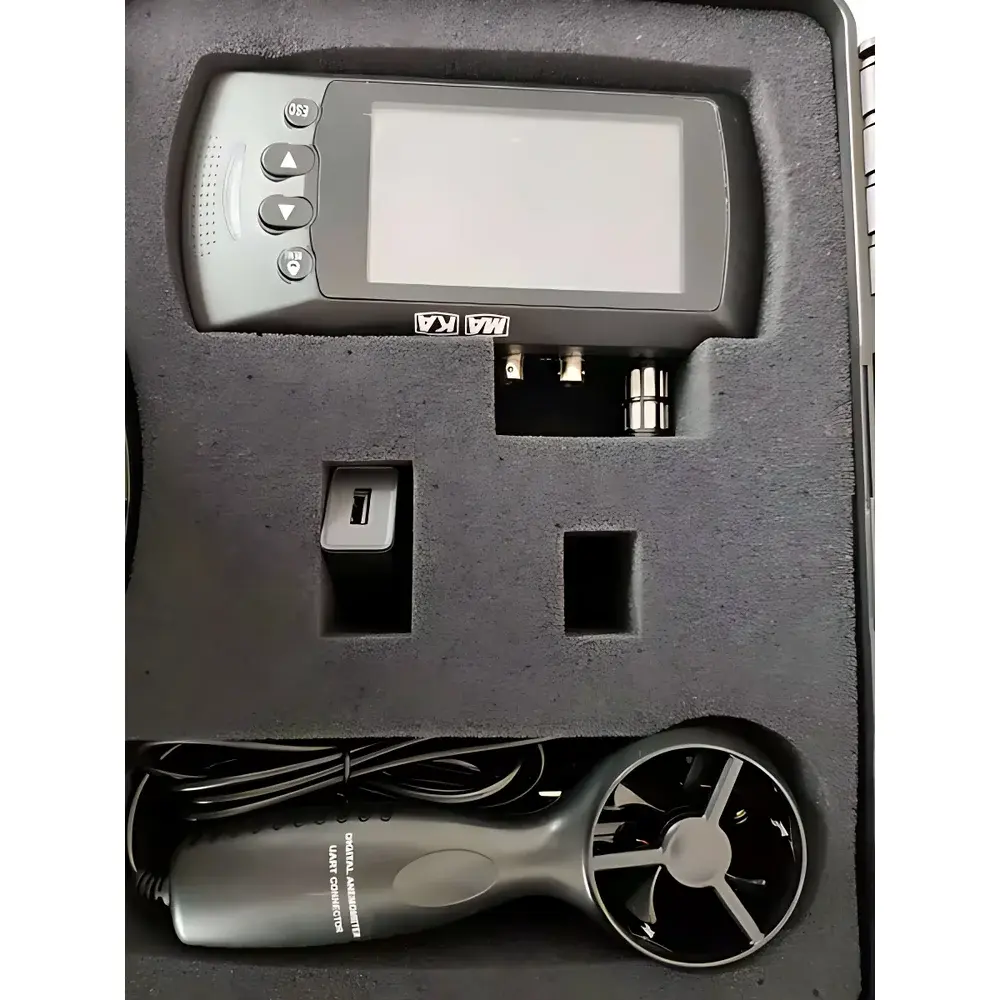
CD10 Intrinsically Safe Multi-Gas Detector for Mining Applications
| Origin | Beijing, China |
|---|---|
| Manufacturer Type | Authorized Distributor |
| Regional Origin | Domestic (China) |
| Model | CD10 |
| Pricing | Available Upon Request |
Overview
The CD10 Intrinsically Safe Multi-Gas Detector is a certified portable gas monitoring instrument engineered for continuous, real-time detection of hazardous and ambient gases in underground coal mines, tunneling operations, confined space entry, and other Class I, Division 1 hazardous locations. Designed in strict compliance with Chinese national standards for mine safety equipment (AQ 6207–2019, MT 703–2008), the device employs a modular sensor architecture to simultaneously measure up to seven target gases—CH₄ (methane), O₂ (oxygen), CO (carbon monoxide), CO₂ (carbon dioxide), SO₂ (sulfur dioxide), H₂S (hydrogen sulfide), and NO₂ (nitrogen dioxide)—alongside environmental parameters including temperature, relative humidity, differential pressure (in hPa), and air velocity. Its measurement principles vary by gas: catalytic bead sensors for combustible CH₄, electrochemical cells for toxic gases (CO, H₂S, SO₂, NO₂), non-dispersive infrared (NDIR) for CO₂ and CH₄ (dual-range), and paramagnetic or galvanic cell technology for O₂. All readings are automatically compensated for ambient temperature and pressure drift, ensuring metrological stability across operational conditions from –10 °C to +40 °C.
Key Features
- Intrinsically safe design certified to Exib I Mb (IEC 60079-0, IEC 60079-11), suitable for use in gassy coal mines per GB 3836.1–2021 and AQ 1048–2007.
- Integrated sampling pump with adjustable flow rate enables remote aspiration up to 2 meters, supporting measurements in inaccessible or high-risk zones without operator proximity.
- 4.3-inch high-resolution color TFT display with anti-glare coating and backlighting ensures legibility under low-light mining conditions; UI supports multi-language menu navigation (English interface standard).
- Dual-power operation: rechargeable 3.7 V / 3000 mAh Li-ion battery (≥10 hours continuous runtime) with MINI-USB charging port; optional AC adapter input for extended stationary use.
- Configurable dual-stage audible/visual alarm system: ≥80 dB sound pressure level at 30 cm; high-intensity LED strobe synchronized with alarm activation; user-defined threshold levels across full measurement ranges.
- Modular sensor cartridge system allows field-swappable probes—no recalibration required when changing between IR, electrochemical, or catalytic combustion sensor types—reducing downtime and lifecycle maintenance cost.
- Robust housing constructed from ESD-resistant, impact-absorbing ABS engineering plastic; IP54 ingress protection rating (dust-protected, splash-resistant); dimensions 180 × 50 × 90 mm; mass ≤1.0 kg.
Sample Compatibility & Compliance
The CD10 is validated for direct sampling of ambient air, ventilation ducts, boreholes, and sealed-off areas in underground mining environments. It meets mandatory certification requirements for coal mine safety instruments in the People’s Republic of China, including MA (Mine Safety Approval) marking, explosion-proof certification (Exib I Mb), and third-party verification reports issued by state-accredited testing institutes (e.g., China National Institute of Standardization, NIOSH-equivalent CNIS). While not CE-marked or ATEX-certified for EU deployment, its sensor technologies align with ISO 10156 (gas detection performance), ISO 4037 (radiation safety for calibration sources, where applicable), and OSHA 1910.120 guidelines for confined space atmospheric monitoring. Data logging integrity adheres to internal audit trail protocols compatible with GLP-aligned record retention practices.
Software & Data Management
Data acquisition and configuration are managed via an embedded real-time operating system supporting time-stamped logging (with integrated RTC accuracy ±1 s/month). Measurement records—including gas concentrations, environmental parameters, alarm events, and battery status—are stored on a removable 4 GB microSD card (expandable to 8 GB), formatted in FAT32 with timestamped .CSV files for traceability. Optional communication interfaces include RS232, RS485, and CAN bus (configurable per order), enabling integration into centralized mine monitoring systems (e.g., KJ90, KJ70N). USB connectivity facilitates firmware updates and offline data export. No cloud-based telemetry or proprietary software is required; raw output is fully interoperable with industry-standard data analysis platforms (e.g., MATLAB, Python pandas, Excel). Audit logs retain all parameter changes, calibration timestamps, and user login events—supporting internal QA/QC documentation requirements.
Applications
- Pre-shift and continuous methane (CH₄) concentration monitoring in longwall faces, headings, and return airways.
- O₂ deficiency and CO accumulation detection during fire suppression, spontaneous combustion surveillance, or post-blast ventilation assessment.
- H₂S and SO₂ exposure monitoring near sulfur-bearing strata or acid mine drainage zones.
- Multi-parameter environmental profiling for ventilation efficiency evaluation (air velocity, static pressure differential, RH, ambient T).
- Confined space entry clearance verification prior to maintenance in silos, chutes, or sumps.
- Calibration verification and bump testing using certified span gases traceable to NIM (National Institute of Metrology, China).
FAQ
What certifications does the CD10 hold for underground coal mine use?
It carries the mandatory MA safety mark, Exib I Mb explosion-proof certification, and full compliance documentation per AQ 6207–2019 and MT 703–2008.
Can sensor modules be replaced in the field without factory recalibration?
Yes—the modular probe design supports hot-swap replacement of IR, electrochemical, and catalytic sensors; auto-zero and span adjustment routines are accessible via service menu.
Is the device suitable for continuous unattended operation?
While optimized for handheld survey use, it supports >10 hours of continuous logging on battery; external power input enables extended fixed-location deployment with periodic manual review.
What is the expected service life of each sensor type?
Infrared sensors: ≥5 years; electrochemical sensors: ≥2 years; catalytic bead sensors: ≥1 year—subject to exposure history and storage conditions per manufacturer’s maintenance schedule.
Does the CD10 support regulatory reporting formats required for mine safety audits?
Yes—CSV log files include UTC timestamps, sensor IDs, raw ADC values, compensated concentrations, and alarm flags, satisfying traceability requirements under China’s Coal Mine Safety Regulations (Order No. 87).
Related Products







