
Cell Culture Units Inhalation Exposure System by TSE Systems
| Brand | TSE Systems |
|---|---|
| Origin | Germany |
| Model | Cell Culture Units |
| Application | In Vitro Air-Liquid Interface (ALI) Inhalation Toxicity Testing |
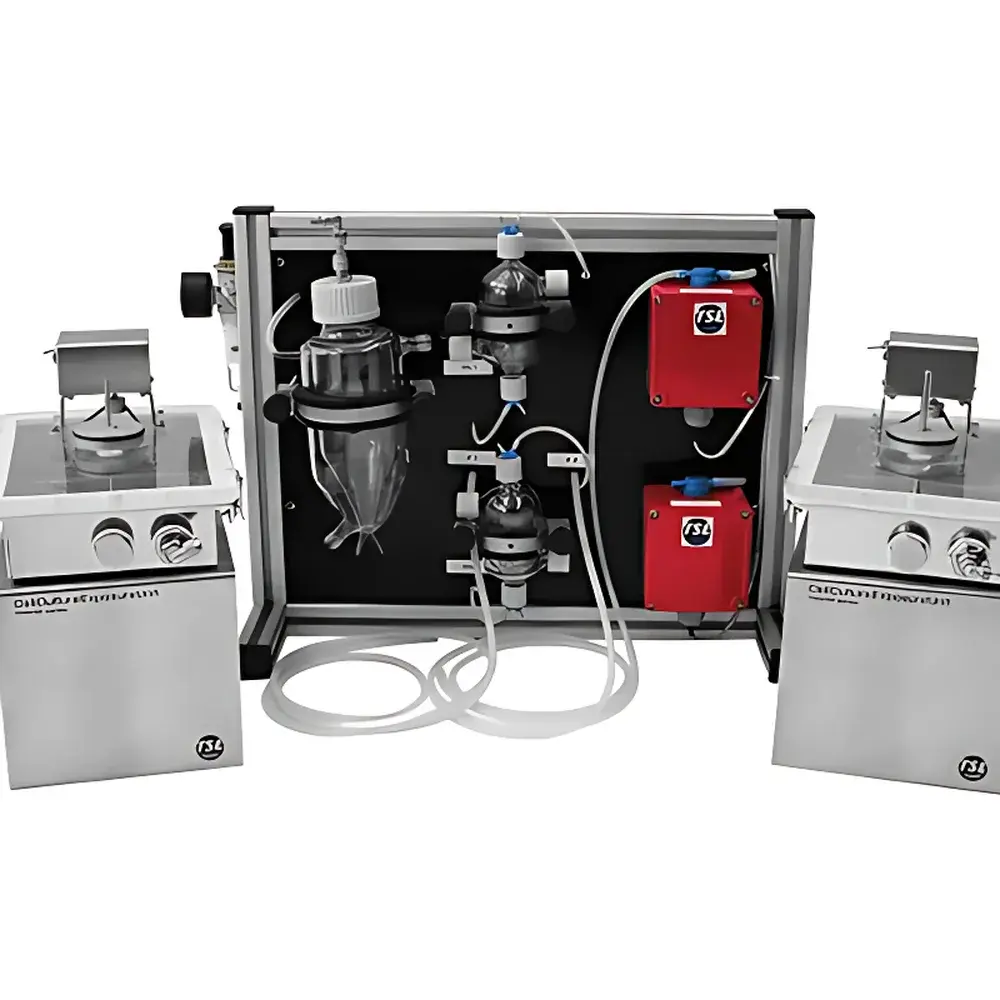
| Construction | Stainless Steel Exposure Chambers, Borosilicate Glass Mixing/Dilution Modules |
| Aerosol Compatibility | Liquid aerosols, dry powder aerosols, vapors, cigarette smoke |
| Flow Control | Mass flow controllers (MFCs) with real-time monitoring |
| Software | DACO Inhalation Control Software (customized version) |
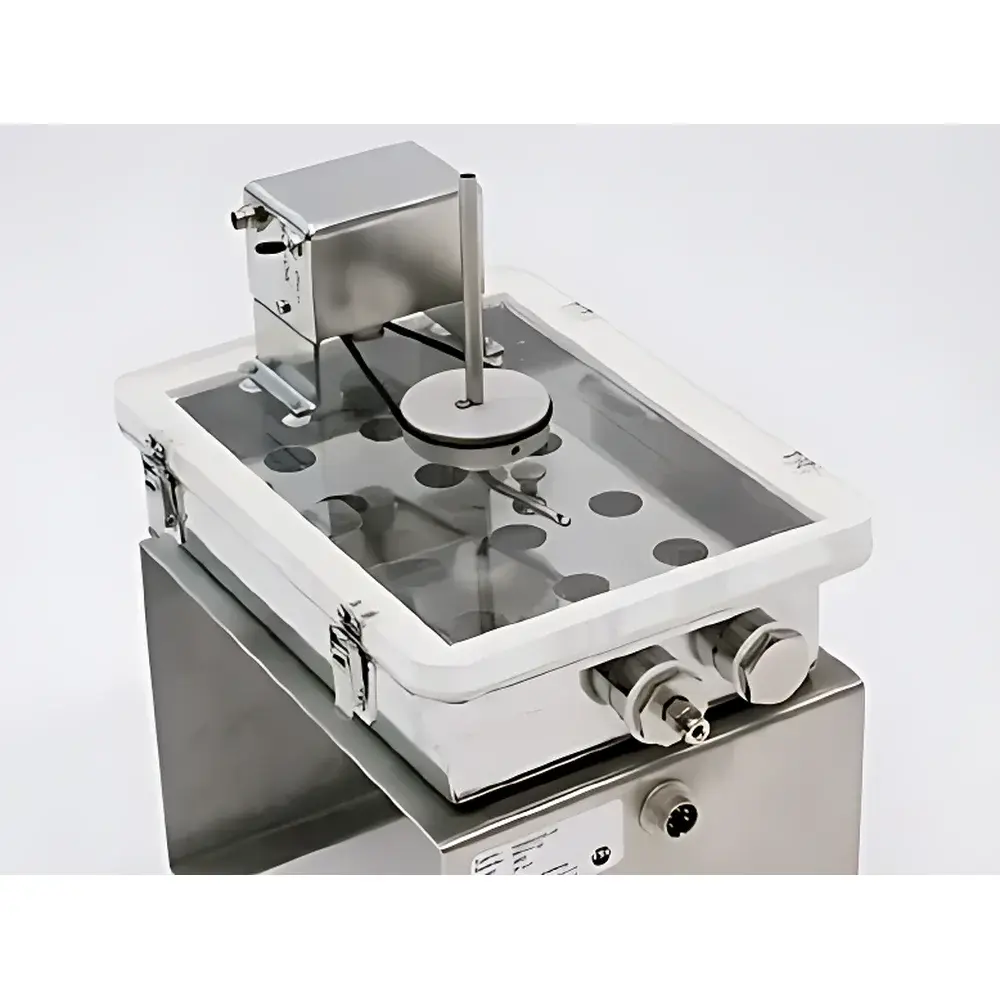
| Capacity | Up to 48 Transwell® inserts per exposure unit |
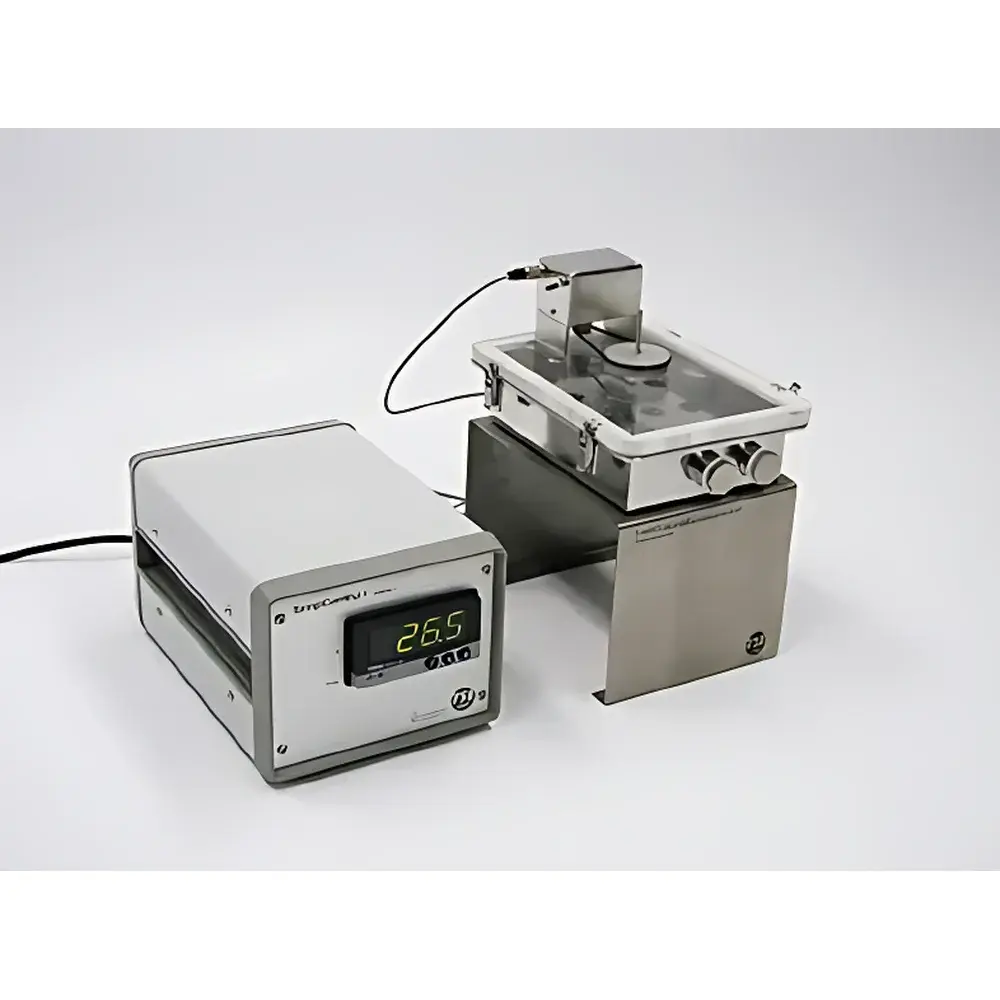
| Temperature Control | Integrated heating system for long-term ALI culture maintenance |
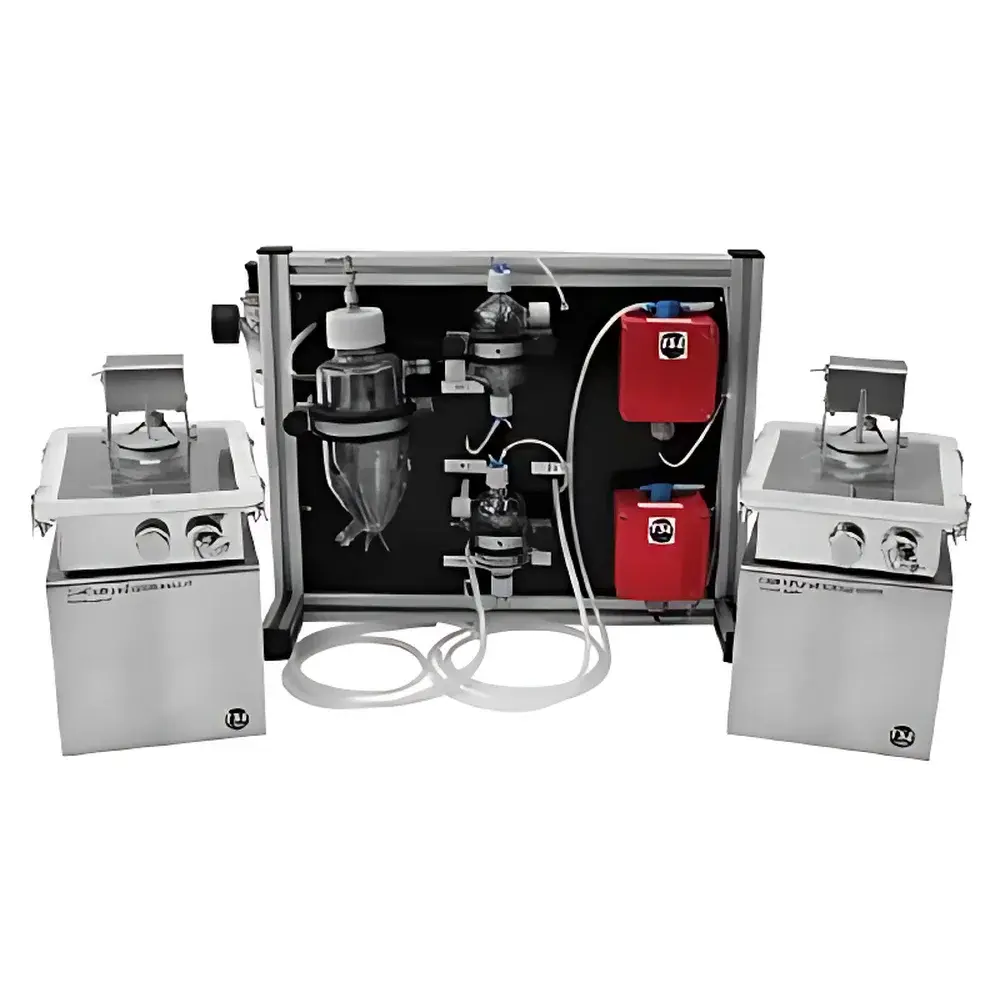
| Aerosol Delivery | Dual independent exposure chambers with shared or separate aerosol generation |
| Uniformity | Internal flow distribution plate ensures homogeneous aerosol deposition across insert membranes |
| Compliance | Designed for GLP-compliant in vitro inhalation studies |
Overview
The Cell Culture Units Inhalation Exposure System by TSE Systems is a precision-engineered platform for in vitro air-liquid interface (ALI) exposure studies. It enables physiologically relevant delivery of airborne test agents—including liquid aerosols, dry powders, volatile organic compounds, and mainstream sidestream cigarette smoke—to human or animal-derived epithelial cell cultures grown on porous membrane inserts (e.g., Transwell®). Unlike submerged culture exposure methods, this system maintains cells under true ALI conditions, preserving barrier integrity, ciliary function, mucus production, and metabolic activity—critical parameters for predictive toxicological assessment of inhaled substances. The system operates on laminar, controlled airflow principles, integrating calibrated mass flow control, inertial impaction minimization, and uniform aerosol distribution via an internal flow conditioning plate. Its modular architecture supports both single- and dual-chamber configurations, allowing parallel testing of two independent concentration gradients or distinct aerosol types under identical environmental conditions.
Key Features
- Dual independent exposure chambers—each accommodating up to 48 Transwell® inserts—enabling comparative dose-response or cross-comparative agent studies without cross-contamination.
- Modular aerosol generation interface: compatible with TSE’s certified liquid/dry powder aerosol generators, vaporizers, and dedicated cigarette smoke exposure modules (ISO 3308-compliant smoking machines optional).
- Multi-stage dilution and mixing unit constructed from borosilicate glass to ensure chemical inertness and optical clarity for process verification.
- Precision mass flow controllers (MFCs) with integrated digital readout and closed-loop feedback for stable, reproducible flow rates across 0.1–10 L/min range (calibrated per ISO 6145-7).
- Integrated heating system (37 °C ± 0.3 °C) with humidity control (≥95% RH) to sustain long-term ALI cultures during multi-hour or multi-day exposures.
- DACO Inhalation Software (TSE-customized): provides automated protocol sequencing, real-time flow/aerosol parameter logging, user-accessible audit trails, and 21 CFR Part 11–ready electronic signatures for regulated environments.
Sample Compatibility & Compliance
The system supports primary human bronchial/tracheal epithelial cells, Calu-3, BEAS-2B, A549, and other ALI-differentiated models cultured on polyester or collagen-coated membranes (0.4 µm or 3.0 µm pore size). All wetted components comply with USP Class VI and ISO 10993-1 biocompatibility standards. Stainless steel chambers meet EN 10088-1 for corrosion resistance against acidic/oxidizing aerosols. The design adheres to OECD Test Guideline 487 (in vitro mammalian cell micronucleus test) and ISO 10993-12 (sample preparation and reference materials) requirements for inhalation toxicity endpoints. Full traceability of exposure parameters—including total aerosol mass concentration (µg/L), particle size distribution (via optional SMPS integration), and deposited dose (calculated using VITROCELL®-validated deposition models)—is maintained for regulatory submissions.
Software & Data Management
DACO Inhalation Software serves as the central control and documentation hub. It supports method-based exposure programming (e.g., stepwise concentration ramping, pulsed exposure, continuous dosing), synchronized data acquisition from MFCs, temperature/humidity sensors, and optional aerosol monitors (e.g., CPC, APS). All raw and processed data are stored in structured .csv and .sqlite formats with immutable timestamps. Audit trail functionality records operator actions, parameter changes, and system events—fully compliant with GLP and GMP documentation requirements. Export modules support direct integration into LIMS platforms and statistical analysis suites (e.g., R, Python pandas) via standardized APIs.
Applications
- Inhalation toxicology screening of nanomaterials, pharmaceutical aerosols, e-cigarette condensates, and occupational dusts.
- ADME studies of inhaled therapeutics under physiologically accurate deposition kinetics.
- Mechanistic investigation of oxidative stress, tight junction disruption, cytokine release, and DNA damage following aerosol challenge.
- Validation of computational lung deposition models using empirical, insert-level dose quantification.
- Regulatory submission support for REACH dossiers, FDA IND-enabling studies, and PMTA applications.
FAQ
Can the system be validated for GxP compliance?
Yes—the hardware design, software architecture (DACO v3.2+), and operational protocols align with FDA 21 CFR Part 11, EU Annex 11, and OECD GLP Principles. IQ/OQ documentation packages and calibration certificates for all MFCs and environmental sensors are available upon request.
What particle size ranges can be delivered and measured?
The system delivers aerosols across 20 nm–10 µm aerodynamic diameter. For size-resolved characterization, it integrates seamlessly with scanning mobility particle sizers (SMPS) or aerodynamic particle sizers (APS) via standardized sampling ports.
Is custom chamber geometry supported?
TSE offers application-specific chamber modifications—including tapered inserts for enhanced deposition efficiency and low-volume chambers for precious compound sparing—under engineering collaboration agreements.
How is deposited dose quantified per insert?
Dose is calculated using real-time aerosol concentration, flow rate, exposure duration, and empirically derived deposition fractions based on insert geometry and aerosol properties—consistent with the Multiple-Path Particle Dosimetry (MPPD) model framework.







