
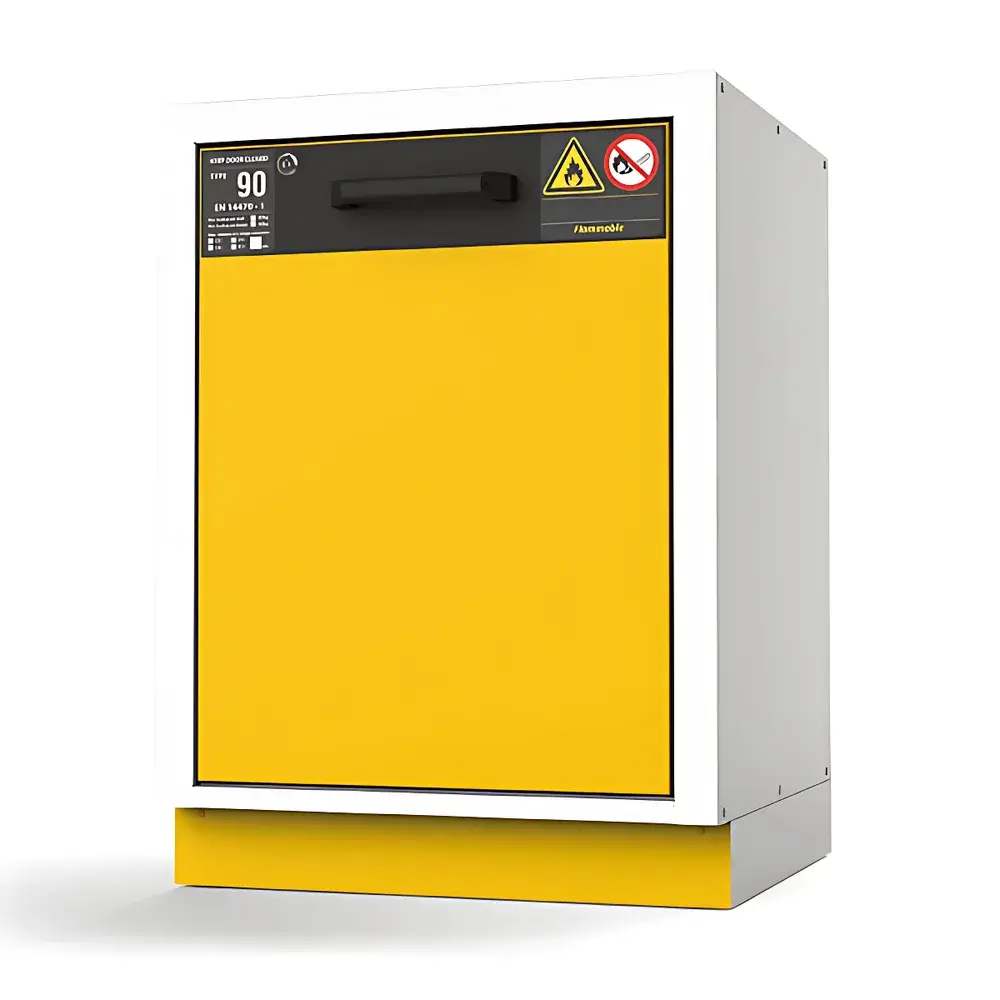
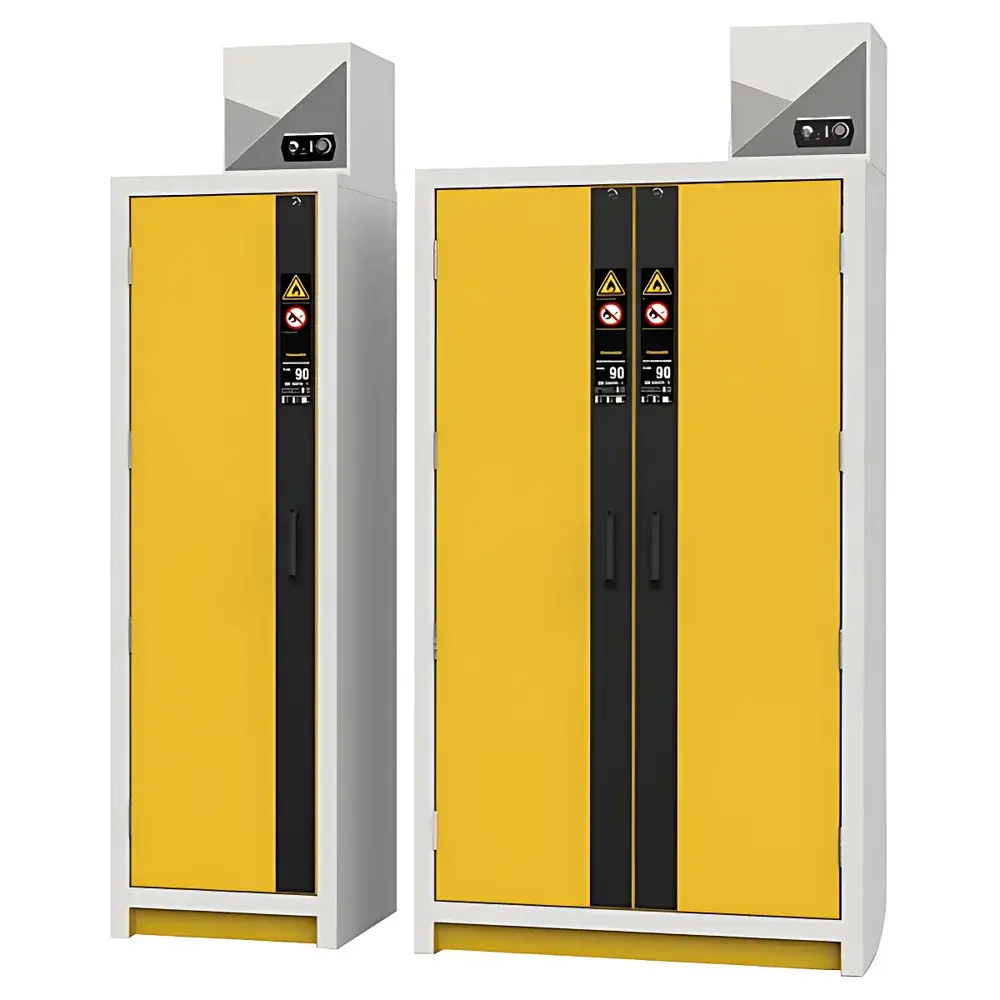
ChemTron SC2-60F-0806D1-CL Horizontal Fire-Resistant Safety Cabinet
| Brand | ChemTron |
|---|---|
| Origin | Germany |
| Model | SC2-60F-0806D1-CL |
| Compliance | EN 14470-1:2004, EN 1363-1 |
| Fire Resistance Rating | 60 min |
| Max Internal Temp Rise Limit | ≤180 °C |
| Auto-Closure Trigger Temp | 50 °C (door), 70–100 °C (vents) |
| Load Capacity per Shelf | 80 kg |
| Shelf Thickness | 30 mm |
| Internal Volume | 89 L |
| Internal Dimensions (W×D×H) | 505 × 419 × 422 mm |
| External Dimensions (W×D×H) | 600 × 610 × 820 mm |
| Weight | 106 kg |
| Shelf Material Options | PP, stainless steel, corrosion-resistant coated steel |
Overview
The ChemTron SC2-60F-0806D1-CL is a horizontally oriented, CE-marked fire-resistant safety cabinet engineered for the secure storage of flammable liquids and hazardous chemicals in laboratory, industrial, and pharmaceutical environments. Designed and manufactured in Germany, this cabinet conforms rigorously to EN 14470-1:2004 — the European standard governing fire protection performance for safety cabinets storing dangerous substances. Its core function is passive fire containment: during exposure to external fire conditions, the cabinet maintains structural integrity and limits internal temperature rise to ≤180 °C for a certified duration of 60 minutes, as validated under EN 1363-1 fire resistance testing protocols. The cabinet employs a dual-stage thermal response system: at 50 °C, self-latching doors automatically close to isolate contents; at 70–100 °C, intumescent vent seals expand to hermetically seal ventilation openings, preventing flame ingress and heat transfer. This engineering approach ensures compliance with critical risk mitigation requirements in GLP, GMP, and ISO 17025-accredited facilities where documented fire safety performance is integral to audit readiness.
Key Features
- 60-minute fire resistance rating verified per EN 1363-1 and EN 14470-1:2004, with internal temperature rise capped at ≤180 °C throughout the test cycle
- Thermally actuated dual-closure mechanism: doors self-close at 50 °C; ventilation apertures seal automatically between 70 °C and 100 °C via intumescent gaskets
- Robust double-walled steel construction with 30 mm reinforced safety隔板 (shelves), each rated for static loads up to 80 kg
- Corrosion-resistant interior finish compatible with common solvents, acids, and bases — available with polypropylene (PP), stainless steel (AISI 304), or epoxy-coated steel shelves
- Modular footprint: side-wall abutment capability and optional height-adjustable base (EM-33, 350 mm) for ergonomic integration into tiered lab layouts
- CE-certified design with full traceability documentation, including factory test reports and conformity declarations aligned with EU Machinery Directive 2006/42/EC
Sample Compatibility & Compliance
The SC2-60F-0806D1-CL is intended for storage of Class I–III flammable liquids (e.g., acetone, ethanol, xylene, ethyl acetate) and other UN-rated hazardous substances requiring thermal isolation during fire events. It supports both volatile organic compound (VOC) containment and secondary spill retention when used with integrated drip trays (sold separately). All materials in direct contact with stored substances — including shelf surfaces, liner coatings, and door gaskets — are selected for chemical resistance per DIN 51130 and tested against ASTM D1308 (chemical resistance of coatings). The cabinet meets mandatory requirements for laboratories operating under EU CLP Regulation (EC) No. 1272/2008 and aligns with OSHA 29 CFR 1910.106 and NFPA 30 storage guidelines for flammable liquid handling. Documentation includes full EN 14470-1 test certificates, CE DoC, and material safety data sheets (MSDS) for all structural components.
Software & Data Management
As a passive mechanical safety device, the SC2-60F-0806D1-CL does not incorporate embedded electronics, firmware, or software interfaces. Its operational reliability derives entirely from thermomechanical actuation principles — eliminating single points of failure associated with power-dependent systems. However, it is fully compatible with digital asset management workflows: each unit carries a unique serial number engraved on the rear panel, enabling seamless integration into CMMS (Computerized Maintenance Management Systems) such as IBM Maximo or Fiix. Audit-ready documentation packages include fire test reports, CE technical files, and calibration-free verification records suitable for FDA 21 CFR Part 11-compliant electronic record retention when scanned and indexed. Optional accessories — including the EM-33 filtration module (F1536) — support integration with centralized exhaust monitoring systems via standard 100 mm ducting interfaces.
Applications
This cabinet serves critical roles across regulated research and production settings: long-term storage of solvent stocks in analytical chemistry labs; intermediate holding of reagents prior to HPLC or GC sample preparation; secure staging of flammables near fume hoods or synthesis workstations; and compliant storage of Category 1–3 hazardous materials in pharmaceutical cleanrooms (ISO Class 5–8). Its horizontal orientation optimizes floor space utilization in narrow corridors or under counter installations, while the 89 L internal volume accommodates standard 1 L and 2.5 L solvent bottles with adequate headspace for vapor expansion. The cabinet is routinely deployed in academic institutions maintaining AAALAC-accredited animal facilities, contract development and manufacturing organizations (CDMOs) adhering to ICH Q7, and biotech labs requiring alignment with EU GMP Annex 1 environmental control expectations.
FAQ
Does this cabinet require electrical power or maintenance of moving parts?
No — all safety functions are purely thermomechanical and require zero power, lubrication, or scheduled servicing.
Can it be installed adjacent to walls on both left and right sides?
Yes — its symmetrical frame design permits flush mounting against either side wall without compromising ventilation or access.
Is the internal coating resistant to hydrochloric acid or nitric acid exposure?
The standard epoxy-coated interior resists incidental splashes of diluted acids; for sustained exposure to strong mineral acids, stainless steel shelving (AISI 304) is recommended and available as an option.
What documentation is provided for regulatory audits?
Full EN 14470-1 test certification, CE Declaration of Conformity, material traceability reports, and factory-issued fire resistance validation records are supplied with each unit.
How is compliance with local fire codes verified during installation?
Installation must follow national building codes (e.g., German MBO, UK Fire Safety Order 2005, or US IFC Chapter 57); final acceptance requires third-party inspection verifying clearances, anchoring, and vent routing per EN 14470-1 Annex B.



