
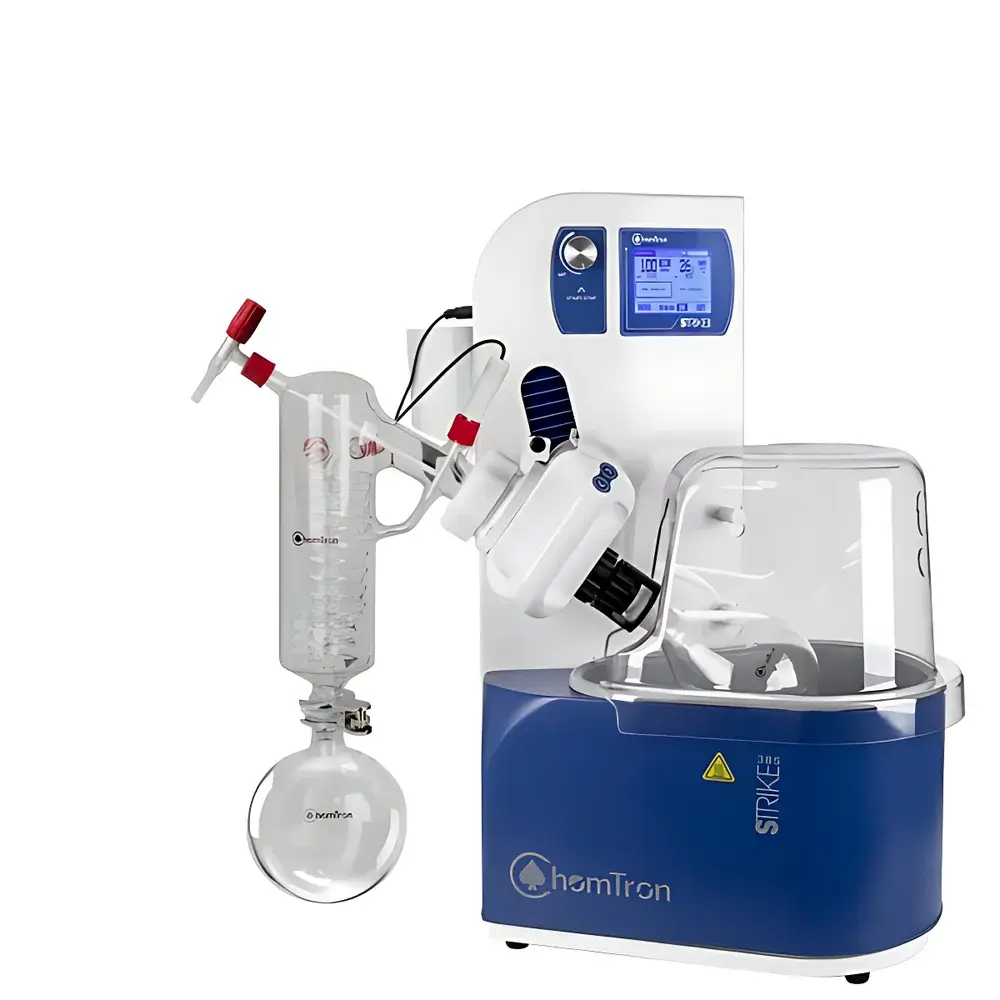
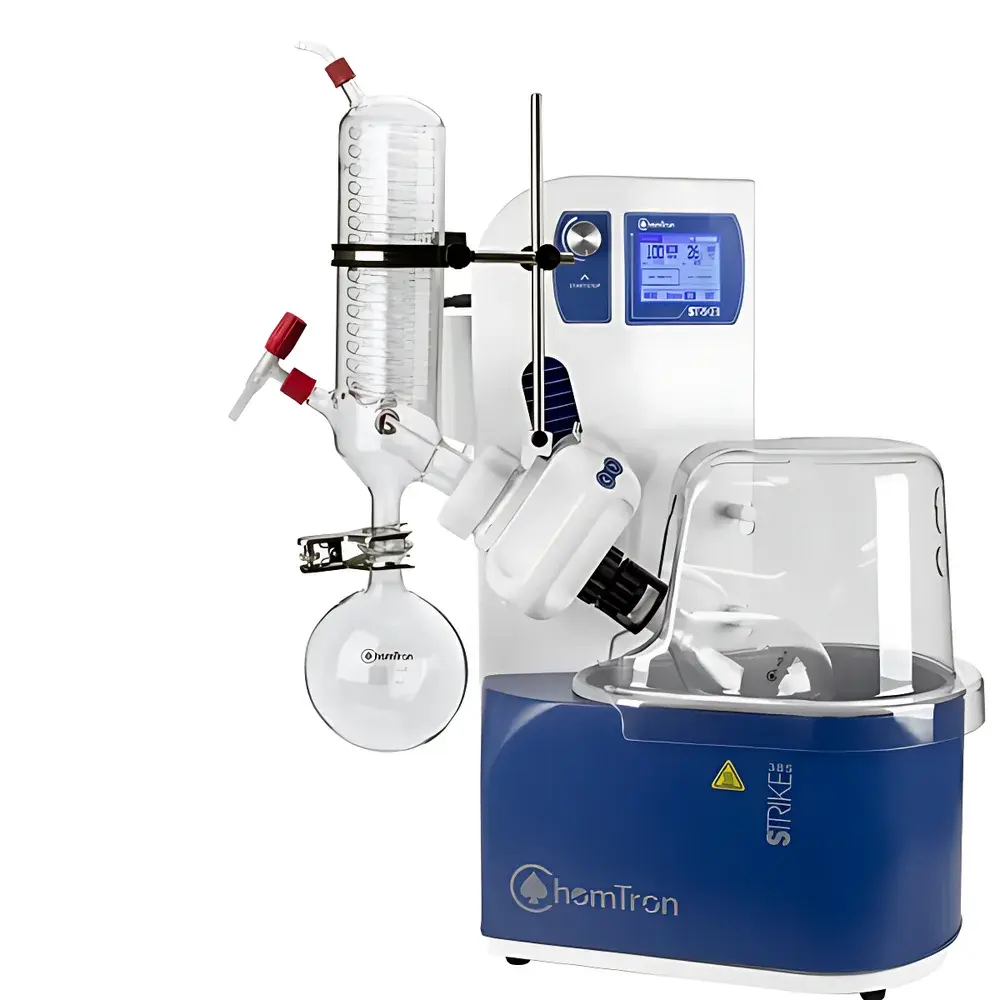
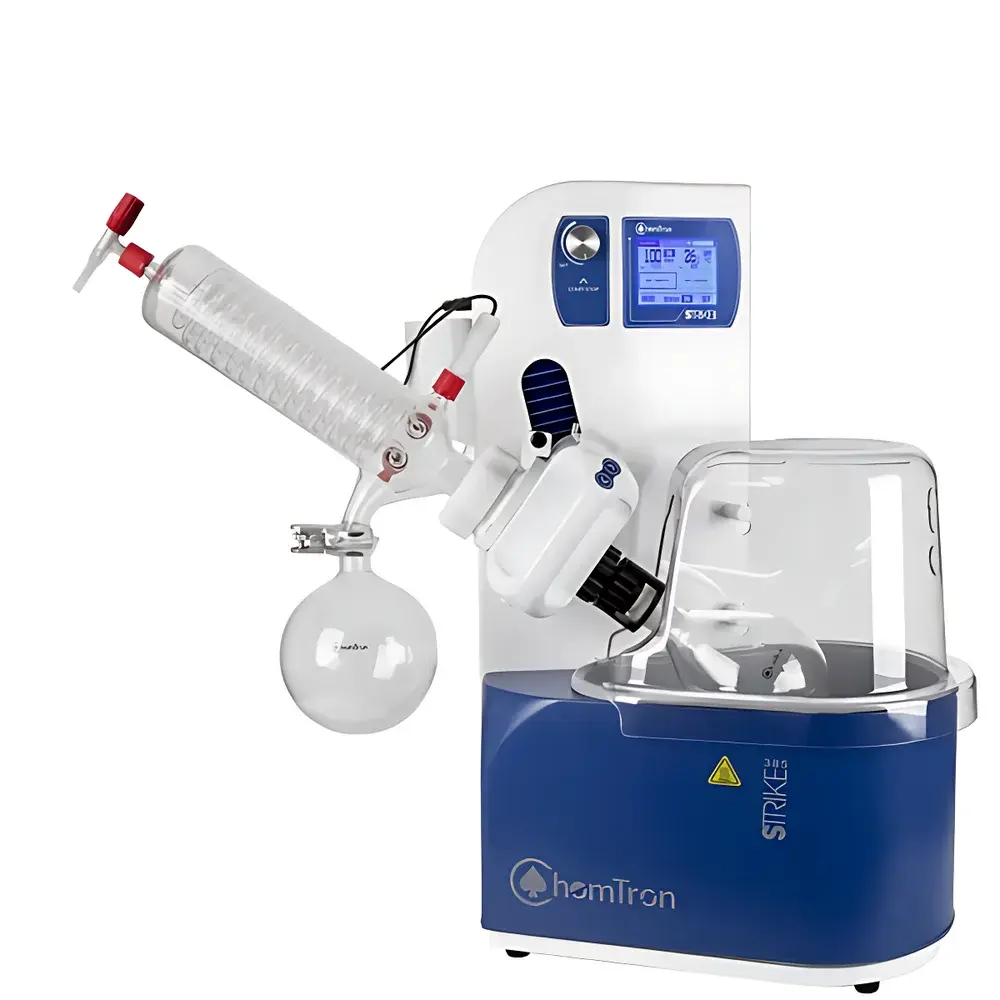
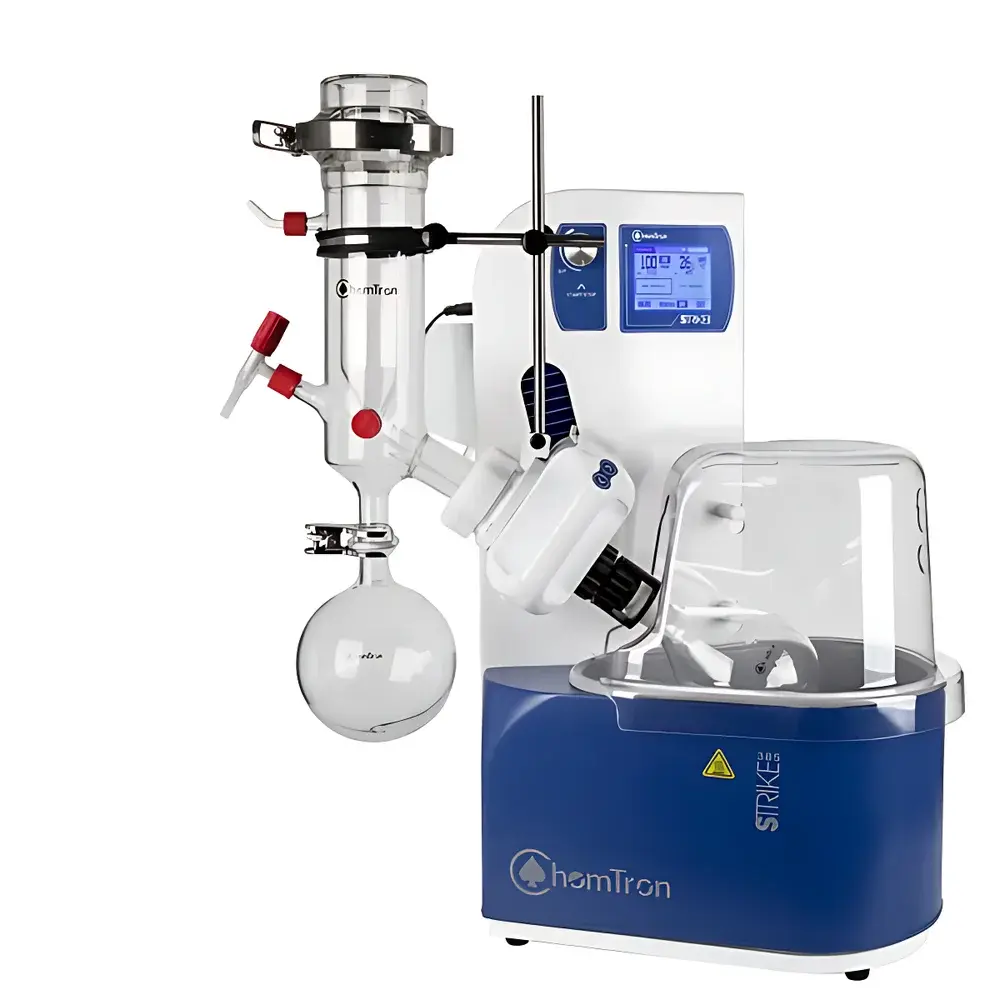
ChemTron STRIKE 385 Rotary Evaporator
| Brand | JULABO-Chemtron |
|---|---|
| Origin | Italy |
| Model | STRIKE 385 |
| Capacity | 5 L |
| Ultimate Vacuum | 399.9 Pa (3 mmHg) |
| Rotation Speed | 20–300 rpm |
| Temperature Control Range | 5–40 °C |
| Temperature Accuracy | ±1 °C |
| Condenser Surface Area | 1500 cm² |
Overview
The ChemTron STRIKE 385 Rotary Evaporator is an advanced, modular benchtop system engineered for high-efficiency solvent removal, concentration, and purification under reduced pressure. Based on the fundamental principle of rotary evaporation—where a rotating flask increases surface area and promotes uniform thin-film formation while controlled heating and vacuum accelerate solvent volatilization—the STRIKE 385 integrates precision thermal management, programmable motion control, and robust mechanical architecture to deliver reproducible results across diverse sample matrices. Designed and manufactured in Italy under JULABO-Chemtron’s quality assurance framework, the system complies with IEC 61010-1 safety standards for laboratory electrical equipment and supports GLP-compliant workflows through traceable parameter logging and hardware-level interlocks.
Key Features
- Modular condenser configurations: Available in inclined, vertical ascending, vertical descending, and dry-ice-cooled variants—enabling optimization for volatility profiles, lab footprint constraints, and low-boiling-point solvents.
- High-precision digital temperature control: PTFE-coated 5 L thermostatic bath with ±0.2 °C stability (water) and ±0.5 °C (oil), programmable from ambient +5 °C to 185 °C (oil) or 85 °C (water).
- Intelligent rotation drive: 150 W brushless motor delivering smooth, vibration-damped rotation from 20 to 300 rpm; adjustable tilt angle (0–15°) and vertical travel (13 cm) with position-hold functionality.
- Enhanced sealing integrity: Dual-material PTFE/carbon fiber shaft seals combined with standard ground-glass joints (ISO 297/24/40) ensure long-term vacuum integrity at ≤399.9 Pa (3 mmHg).
- Integrated safety architecture: Automatic lift-on-power-loss, overtemperature cutoff, real-time steam temperature monitoring (optional sensor), and removable polycarbonate safety shield that fully encloses the rotating assembly during operation.
- Human-centered interface: 3.5-inch multicolor LCD touchscreen with intuitive menu navigation, quick-start toggle, and parameter recall for up to 10 user-defined methods.
Sample Compatibility & Compliance
The STRIKE 385 accommodates evaporation flasks ranging from 50 mL to 2000 mL (standard 1000 mL supplied) and collection flasks from 250 mL to 2000 mL (standard 1000 mL). Its borosilicate glass components (DIN/ISO 3585 compliant) resist thermal shock and chemical corrosion from common organic solvents, acids, and bases. Optional plastic-coated glass variants provide additional mechanical protection and light-sensitive sample handling capability. The system meets CE marking requirements and aligns with ISO/IEC 17025 documentation practices for method validation. When integrated with certified vacuum controllers and temperature sensors, it supports audit-ready data generation compliant with FDA 21 CFR Part 11 (when paired with validated software platforms) and EU Annex 11 expectations for electronic records.
Software & Data Management
While the STRIKE 385 operates as a standalone instrument via its embedded controller, it features analog and digital I/O ports (0–10 V, RS-232, optional Ethernet) for integration into centralized lab automation networks. Optional accessories—including steam temperature probes, cooling water inlet/outlet sensors, and vacuum transducers—enable real-time environmental feedback loops. All operational parameters (rotation speed, bath temperature, vacuum setpoint, runtime) are timestamped and stored internally for ≥1000 cycles. Exportable logs (CSV format) support retrospective analysis, trend reporting, and regulatory submission packages. Firmware updates are delivered via USB and maintain backward compatibility with existing configuration files.
Applications
- Solvent recovery and concentrate preparation in pharmaceutical R&D (e.g., API isolation post-extraction, lyophilization pre-concentration).
- Removal of low-boiling solvents (e.g., dichloromethane, ethyl acetate, hexane) from natural product extracts without thermal degradation.
- Concentration of aqueous fractions in environmental testing labs (e.g., EPA Method 505, 525.3) prior to GC-MS or LC-MS analysis.
- Parallel evaporation workflows using multi-position adapters (sold separately), supporting throughput scaling in QC/QA environments.
- Teaching laboratories requiring robust, intuitive instrumentation for undergraduate chemistry and chemical engineering curricula.
FAQ
What vacuum level can the STRIKE 385 achieve, and how is it maintained?
The system achieves a base pressure of ≤399.9 Pa (3 mmHg) using high-integrity PTFE/carbon fiber seals and standardized ground-glass interfaces. Sustained performance requires compatible vacuum sources (e.g., diaphragm or oil-free scroll pumps) and periodic seal inspection per manufacturer maintenance guidelines.
Is the STRIKE 385 compatible with corrosive solvents such as concentrated HCl or HF?
Borosilicate glass components are resistant to most organic solvents and dilute mineral acids; however, hydrofluoric acid (HF) and hot concentrated phosphoric or sulfuric acids are not recommended. Plastic-coated glass kits offer supplementary protection for mildly aggressive media.
Can the STRIKE 385 be operated unattended overnight?
Yes—provided appropriate risk assessment is performed. The system includes automatic lift-on-power-failure, overtemperature shutdown, and configurable runtime limits. For GLP/GMP environments, integration with external monitoring systems (e.g., LabVIEW or custom SCADA) is recommended for full event logging.
What cooling options are supported beyond tap water?
The 1500 cm² condenser surface is compatible with recirculating chillers (−20 °C to +25 °C range), dry ice/acetone baths (via M7 configuration), or Peltier-cooled units. Cooling fluid flow rate should be ≥2 L/min for optimal condensation efficiency at high vapor loads.
How does the STRIKE 385 support method transfer between instruments?
All critical parameters—including rotation profile, bath ramp rate, vacuum ramping sequence, and hold times—are fully programmable and exportable. Configuration files can be duplicated across STRIKE-series units, ensuring consistent process execution across multiple labs or production sites.
Related Products



