CI-602 In-Vivo Plant Root Growth Monitoring System by CID Bio-Science
| Brand | CID Bio-Science |
|---|---|
| Origin | USA |
| Model | CI-602 |
| Operating Temperature | 0–50 °C |
| Relative Humidity | 0–100% RH (non-condensing) |
| Optical Resolution | 100 / 300 / 600 / 1200 dpi |
| Scan Area per Frame | 21.56 cm × 18.3 cm |
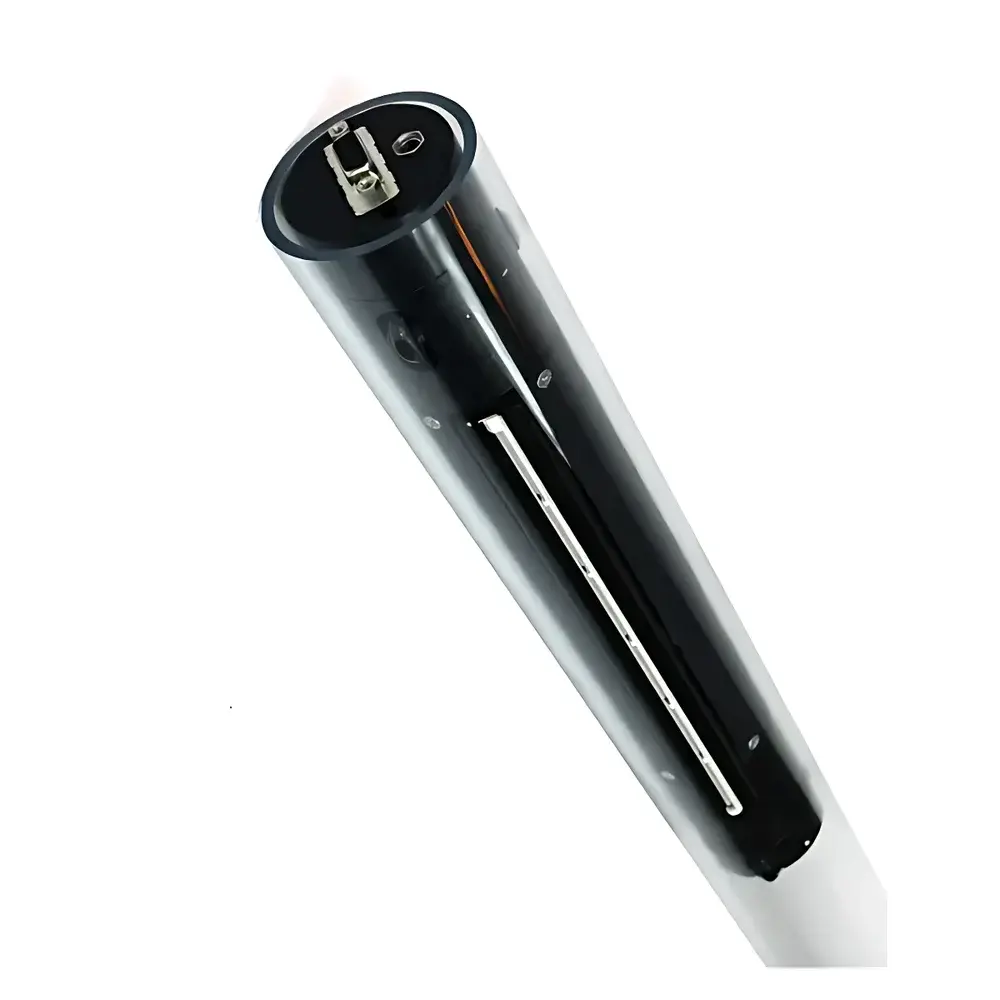
| Probe Dimensions | 35.9 cm (L) × 4.6 cm (Ø) |
| Probe Mass | 750 g |
| Root Tube ID | 5.0 cm |
| Root Tube OD | 5.7 cm |
| Tube Wall Thickness | 3.2 mm |
| Tube Length Options | 1 m or 2 m |
| Interface | USB / Wi-Fi / Bluetooth |
| Power Supply | UMPC terminal-powered |
| Data Storage | Direct to connected terminal |
| Scan Time | ≥30 seconds (resolution-dependent) |
| Image Formats | BMP, JPG, TIFF, PNG |
| Software Compatibility | ICAP-compliant metadata embedding |
Overview
The CI-602 In-Vivo Plant Root Growth Monitoring System is a non-invasive, high-resolution minirhizotron imaging platform engineered for longitudinal, in situ observation of root architecture and soil-root interface dynamics. Developed by CID Bio-Science (USA), the system employs linear optical scanning with precision photodiode-coupled illumination and 360° rotational symmetry to capture distortion-free, centimeter-scale cross-sectional images of roots within transparent acrylic root tubes embedded in soil. Unlike destructive excavation or time-lapse macro photography, the CI-602 delivers quantitative morphometric data from the same spatial location across multiple growing seasons—enabling rigorous temporal analysis of root elongation, branching, senescence, and response to edaphic stressors. Its design adheres to established minirhizotron methodology standards (e.g., ASTM D7928-17 for soil core imaging protocols) and supports GLP-aligned field deployment through traceable metadata tagging and audit-ready image acquisition logs.
Key Features
- 360° rotationally symmetric cylindrical probe ensures geometric fidelity and eliminates parallax-induced distortion during vertical scanning.
- Selectable optical resolution (100–1200 dpi) enables trade-off optimization between scan speed, file size, and sub-millimeter morphological detail—critical for distinguishing fine lateral roots (<0.2 mm diameter) from soil particulates.
- Adjustable LED illumination intensity and spectral profile accommodates variable soil matrix properties (e.g., clay vs. sandy loam reflectivity) without saturation or shadowing artifacts.
- Integrated UMPC-powered control architecture eliminates external battery dependency; real-time power management extends field operation beyond 8 hours on standard tablet platforms.
- Multi-interface connectivity (USB 2.0, Wi-Fi 802.11n, Bluetooth 4.2) permits both tethered acquisition and remote scheduling via secure local network or cellular-enabled gateways.
- ICAP (Image Capture and Annotation Protocol)-compliant metadata embedding ensures interoperability with third-party analysis pipelines and long-term archival systems compliant with FAIR (Findable, Accessible, Interoperable, Reusable) data principles.
Sample Compatibility & Compliance
The CI-602 is validated for use with standard 5.0 cm inner-diameter acrylic root tubes (ASTM D6913-compliant material specification), installed vertically or at ≤15° inclination in mineral soils, peat, or engineered substrates. It supports repeated insertion/retraction over multi-year deployments without mechanical wear degradation. All hardware components meet IP54 ingress protection ratings for outdoor environmental resilience. Image datasets comply with ISO/IEC 17025:2017 requirements for measurement traceability when paired with NIST-traceable calibration tubes (included). The system satisfies USDA ARS Field Research Standards for rhizosphere phenotyping and aligns with FAO’s Global Soil Partnership guidelines for sustainable root-zone monitoring.
Software & Data Management
Two primary software options are supported: CI-690 RootSnap and WinRHIZO Tron MF. RootSnap features a touch-optimized UI with gesture-based root tracing (“Snap to Root”), real-time curvature fitting, and six-second trajectory reconstruction—enabling rapid quantification of root length, surface area, volume, diameter distribution, branching angles, and tip counts (36+ parameters). All measurements are stored with ISO 8601 timestamps, GPS-tagged location metadata (when enabled), and user-defined experimental annotations. WinRHIZO Tron MF provides advanced batch processing, statistical trend modeling across time-series stacks, and export to CSV/Excel formats compatible with R, Python (scikit-image, OpenCV), and MATLAB workflows. Both platforms enforce FDA 21 CFR Part 11–compliant electronic signature logging and audit trail generation for regulated agricultural research.
Applications
The CI-602 serves as a foundational tool in agroecological research, forestry physiology, civil infrastructure bioengineering, and conservation science. It has been deployed in peer-reviewed studies tracking drought-adaptive root plasticity in maize hybrids (Crop Science, 2022), quantifying deep-root reinforcement of earthen dam slopes under hydrological loading (Journal of Geotechnical and Geoenvironmental Engineering), monitoring mycorrhizal colonization dynamics in ancient oak stands (Forest Ecology and Management), and evaluating native grass species establishment in post-mining reclamation sites (Ecological Engineering). Its capacity for season-long, non-destructive sampling makes it especially valuable for long-term ecological research (LTER) networks and climate change impact assessments requiring decadal-scale root phenology baselines.
FAQ
What depth range can the CI-602 effectively image?
The system scans the full length of installed root tubes (1 m or 2 m), with optimal resolution maintained across the entire vertical profile. Depth-specific ROI selection is supported in both RootSnap and WinRHIZO.
Is soil moisture a limiting factor for image quality?
No—variable LED intensity compensation and polarization filtering mitigate glare from wet surfaces; however, prolonged waterlogging (>72 h) may cause temporary tube fogging, which resolves upon drying.
Can the CI-602 be used in greenhouse or growth chamber environments?
Yes—its 0–50 °C operating range and absence of moving parts make it suitable for controlled-environment phenotyping facilities, including aeroponic and hydroponic root observation chambers.
How is calibration performed?
A NIST-traceable calibration tube with engraved reference grids is included; automated pixel-to-mm conversion is applied during import in RootSnap and WinRHIZO.
Does the system support automated time-series scheduling?
Via Wi-Fi-connected UMPC terminals running Linux-based scheduler daemons, users can define recurring scan intervals (e.g., daily at 10:00 UTC) with failover logging and email alert notifications.