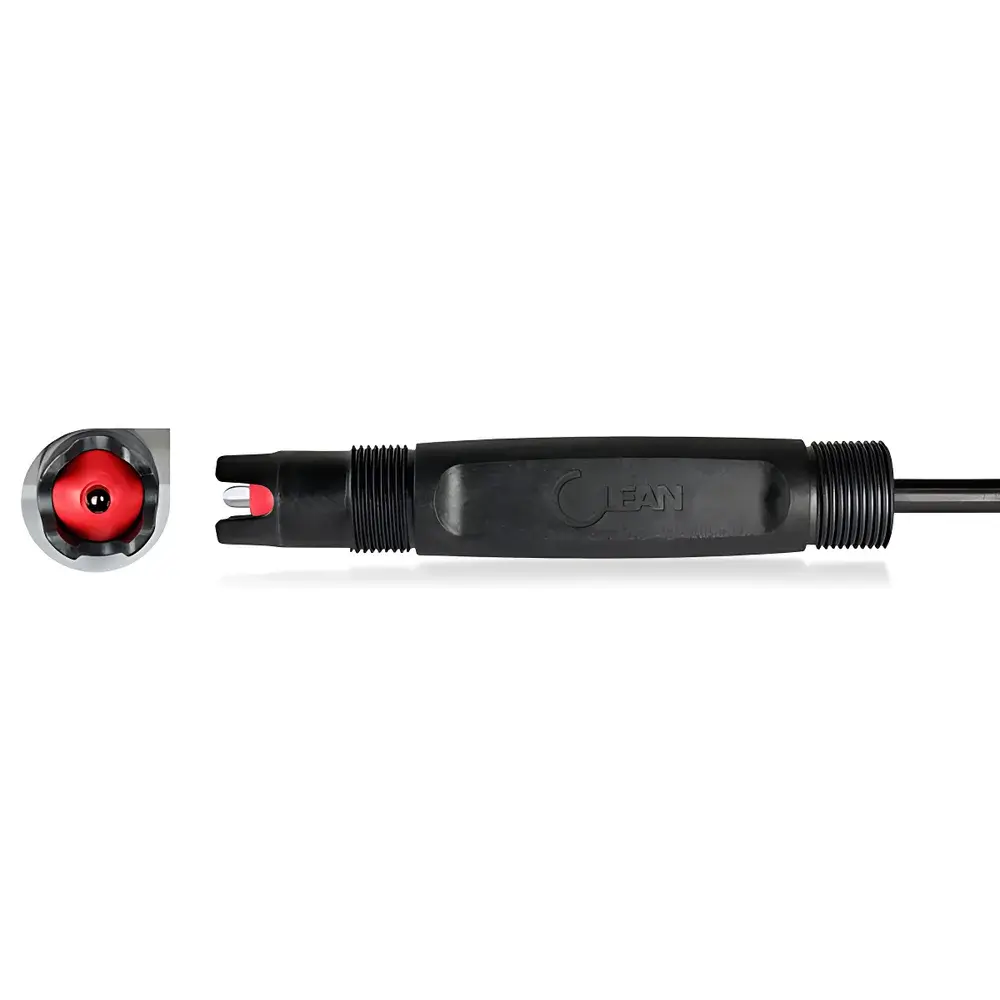
CLEAN CS1768-hp High-Pressure Inline pH Electrode
| Brand | CLEAN |
|---|---|
| Origin | Taiwan |
| Model | CS1768-hp |
| Pressure Rating | 0–20 bar (@ 50 °C) |
| pH Range | 0–14 |
| Temperature Range | 0–90 °C |
| Liquid Junction | SNEX Solid-State Ag/AgCl/KCl Reference System |
| Housing Material | PPS (Polyphenylene Sulfide) |
| Thread | NPT 3/4″ (wet end & dry end) |
| Cable | 5 m coaxial with BNC connector |
| Temperature Sensor Options | Pt1000 / Pt100 / NTC10K |
| Output | 4–20 mA (pH/ORP + temperature, two-wire, passive) |
| IP Rating | IP65 |
| Compliance | Designed for continuous industrial process monitoring per IEC 61508 functional safety principles (SIL2-capable when integrated with certified controllers) |
Overview
The CLEAN CS1768-hp is a high-integrity, high-pressure inline pH electrode engineered for continuous, stable measurement in demanding industrial process streams where conventional glass-bodied or gel-filled electrodes fail. It operates on the principle of potentiometric pH measurement using a composite sensing architecture: a robust, full-range pH-sensitive glass membrane coupled with a solid-state SNEX reference system. Unlike traditional liquid-junction electrodes—whose porous ceramic or fiber junctions are vulnerable to clogging, pressure-induced electrolyte backflow, and chemical infiltration—the CS1768-hp employs a proprietary large-area SNEX (Solid Non-Exchangeable eXtended-life) junction. This junction delivers consistent KCl electrolyte diffusion under sustained hydraulic load while physically isolating the internal reference chamber from process pressure and aggressive media. The result is thermally stable, drift-resistant potential generation across dynamic flow conditions up to 20 bar at 50 °C, enabling reliable pH control in pressurized pipelines without recalibration drift or premature failure.
Key Features
- SNEX solid-state reference system: Eliminates liquid junction migration, salt bridge interruption, and electrolyte dilution under pressure—ensuring long-term reference stability and reproducible mV output.
- Full-range pH-sensitive glass bulb: Chemically hardened for resistance to thermal shock, mechanical abrasion, and alkaline attack (e.g., concentrated NaOH/KOH), delivering accurate response from pH 0 to 14.
- PPS (polyphenylene sulfide) housing: Inherently corrosion-resistant, dimensionally stable at elevated temperatures, and rated for continuous operation up to 90 °C with zero moisture absorption or swelling.
- Dual NPT 3/4″ threaded ends: Enables direct insertion into pressurized piping systems with dual sealing capability—wet-end thread seals against process fluid; dry-end thread secures cable gland and maintains IP65 integrity.
- Integrated temperature sensor options: Field-selectable Pt1000, Pt100, or NTC10K elements provide real-time compensation per NIST-traceable algorithms compliant with ISO 17025 calibration practices.
- Two-wire 4–20 mA analog outputs: Simultaneous transmission of pH/ORP and temperature signals over a single shielded pair—compatible with DCS, PLC, and SCADA systems meeting IEC 61326-1 EMC requirements.
Sample Compatibility & Compliance
The CS1768-hp is validated for use in chemically aggressive, high-viscosity, and particulate-laden process streams including caustic soda (up to 50% w/w NaOH), seawater, brine, LNG condensate, hydrocarbon emulsions, protein-rich bioprocess liquors, and wastewater containing cyanide, chromate, or silicate ions. Its SNEX junction resists fouling by proteins, colloids, and suspended solids—critical for food & beverage, pharmaceutical (cGMP-aligned), and biotech applications. The electrode conforms to material compatibility standards per ASTM F2022 (for elastomer-free wetted parts) and meets electromagnetic immunity criteria per IEC 61000-4 series. When deployed with CLEAN PH3000 transmitters, the system supports audit-ready data logging aligned with FDA 21 CFR Part 11 requirements (electronic signatures, change tracking, and secure user access).
Software & Data Management
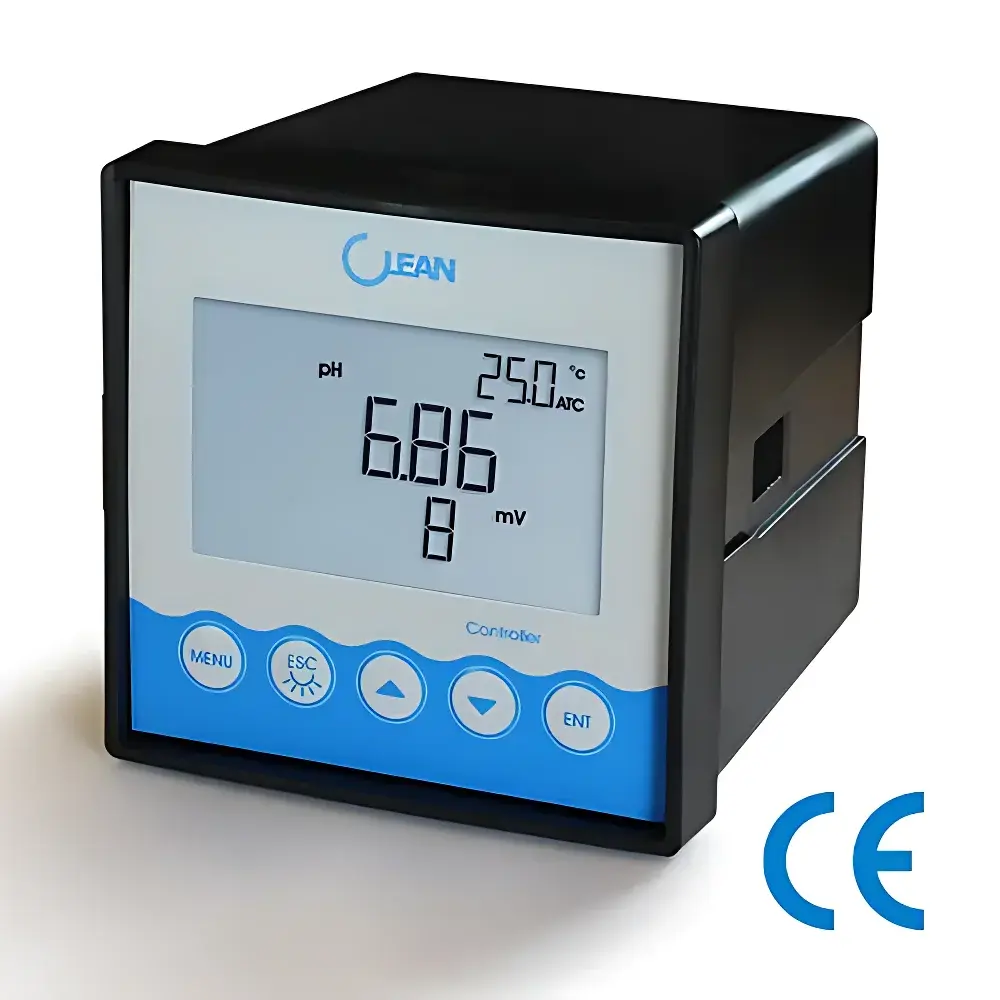
While the CS1768-hp itself is an analog sensor, its integration with CLEAN PH3000 or third-party pH transmitters enables full digital traceability. Transmitter firmware supports CU.CAL two-point free calibration with buffer recognition (US/EU/CN/JP sets), automatic temperature compensation (ATC) with configurable algorithms, and ORP offset correction. All calibration events, sensor diagnostics (e.g., asymmetry potential, slope deviation), and raw mV readings are timestamped and exportable via Modbus RTU or HART protocol. Data archives comply with GLP/GMP documentation standards—including retention of pre/post-calibration values, operator IDs, and environmental metadata—for regulatory review and process validation (e.g., Annex 11, USP ).
Applications
- Chemical manufacturing: pH control in pressurized chlor-alkali reactors, nitric acid synthesis loops, and polymerization vessels.
- Power generation: Continuous monitoring of boiler feedwater, condensate polishing, and flue gas desulfurization (FGD) slurry lines.
- Oil & gas: Downstream refining—alkaline wash units, amine regenerator overheads, and LNG dehydration beds.
- Food & beverage: In-line titratable acidity measurement during pasteurization, fermentation, and CIP cycle verification.
- Water treatment: Real-time pH feedback in high-pressure reverse osmosis (RO) arrays and membrane bioreactors (MBR).
FAQ
What maximum pressure can the CS1768-hp withstand continuously?
It is rated for continuous operation at 20 bar at 50 °C; derating applies above this temperature per ASME B31.4 guidelines.
Is the SNEX junction replaceable in the field?
No—the SNEX element is permanently sealed within the PPS body to maintain pressure integrity and eliminate maintenance-induced calibration drift.
Can this electrode be used in steam sterilization cycles?
It is not autoclavable; however, it supports SIP (steam-in-place) at ≤121 °C for ≤30 minutes with proper thermal ramping and pressure equalization protocols.
Does the electrode require periodic refilling or electrolyte replenishment?
No—it is a maintenance-free, solid-state design with no liquid electrolyte reservoir or refill port.
How does the CS1768-hp compare to traditional double-junction electrodes in high-chloride environments?
Unlike double-junction electrodes—which suffer from slow response and KNO₃ depletion in chloride-rich media—the SNEX system maintains stable junction potential without secondary electrolyte contamination or diffusion potential errors.
Related Products