
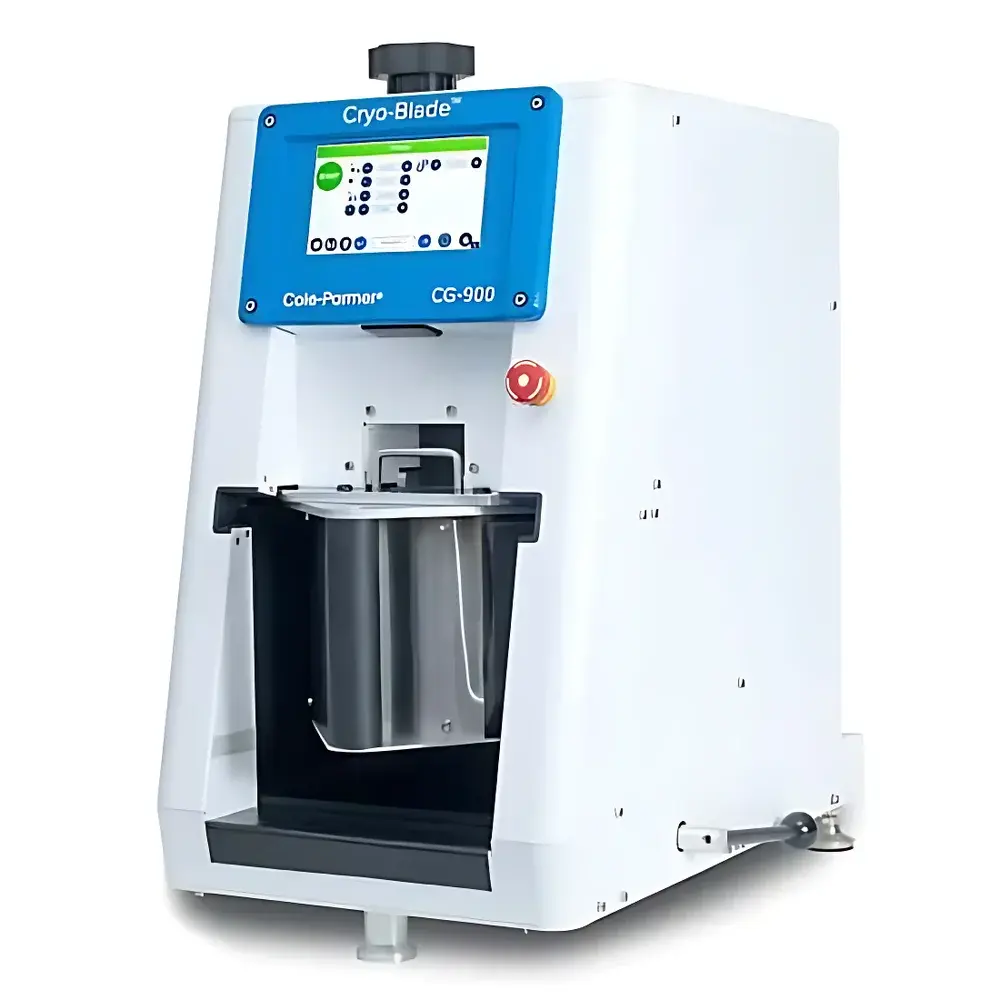
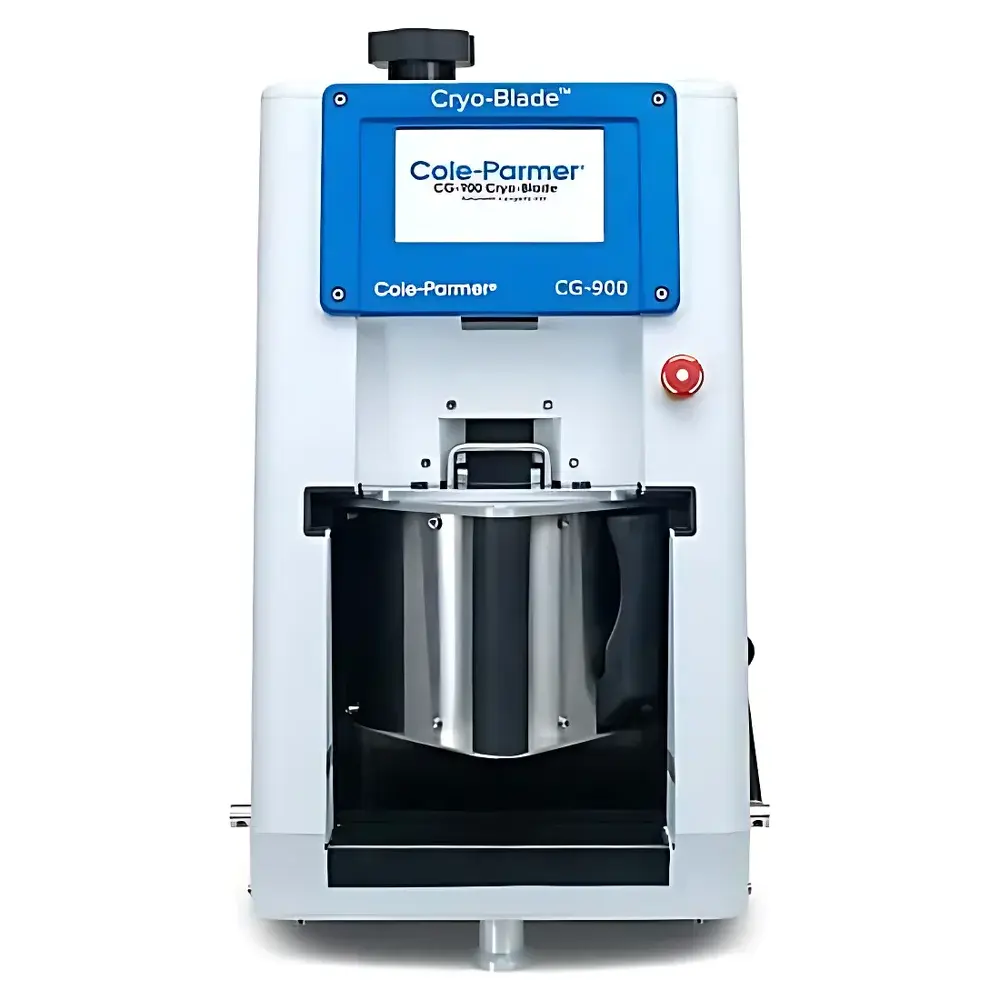
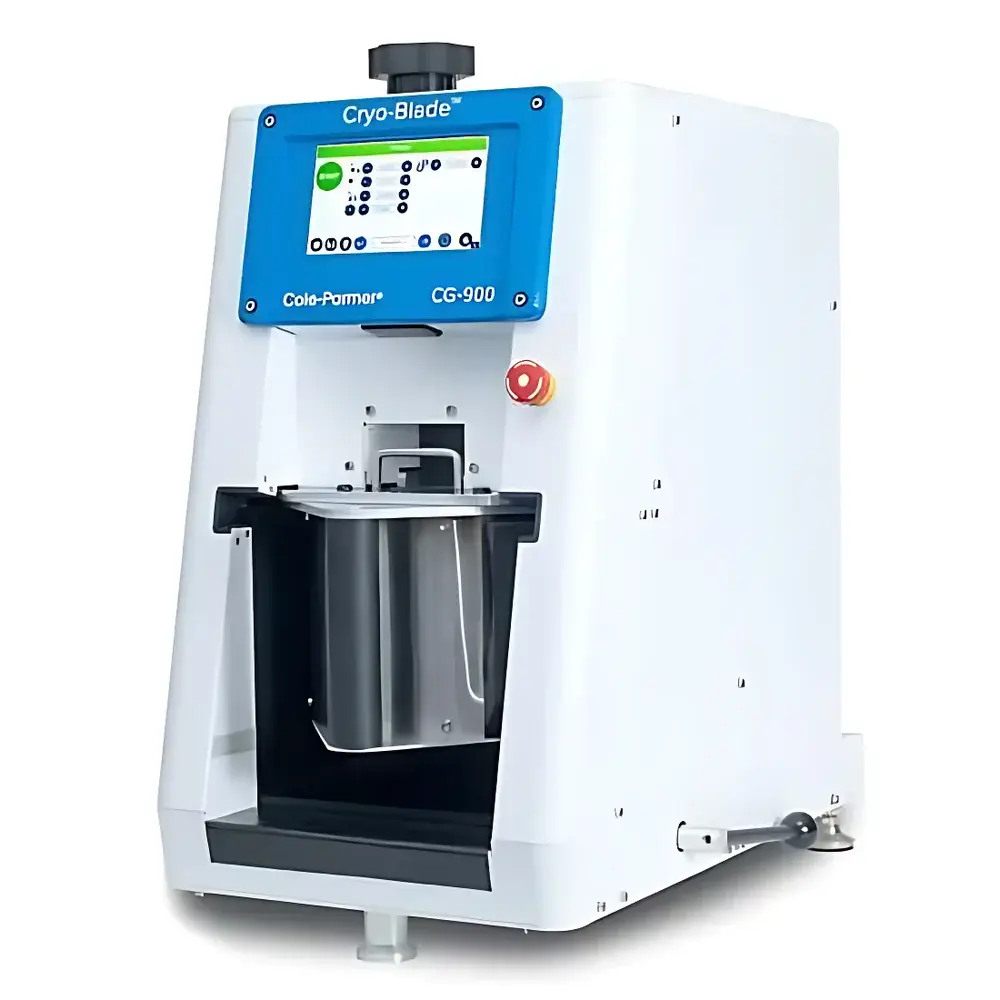
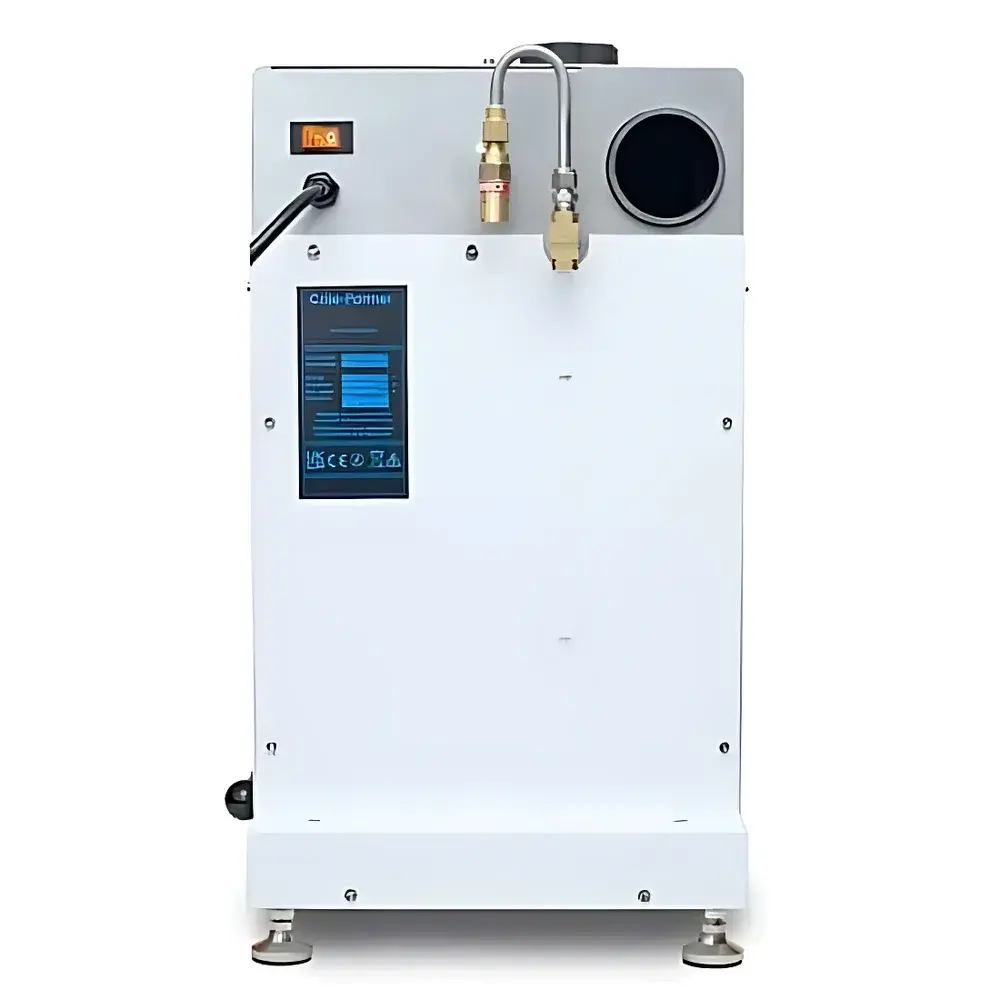
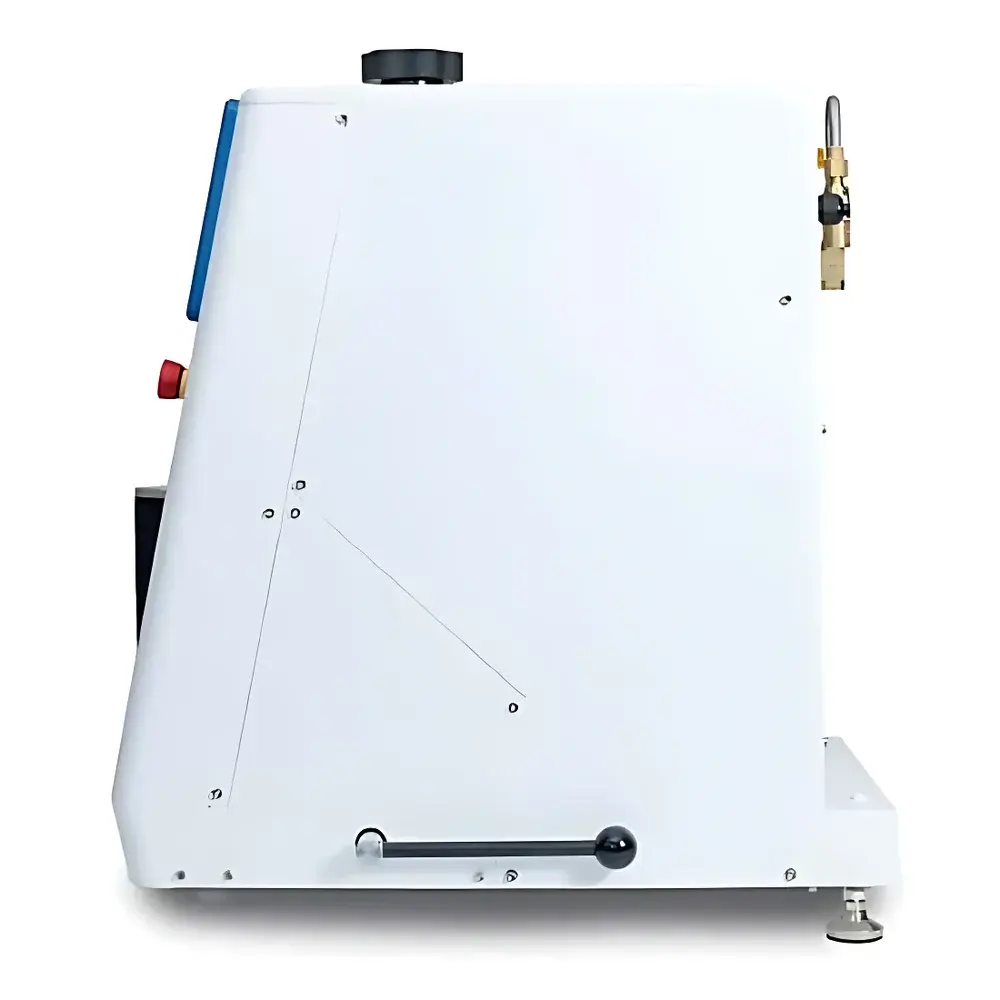
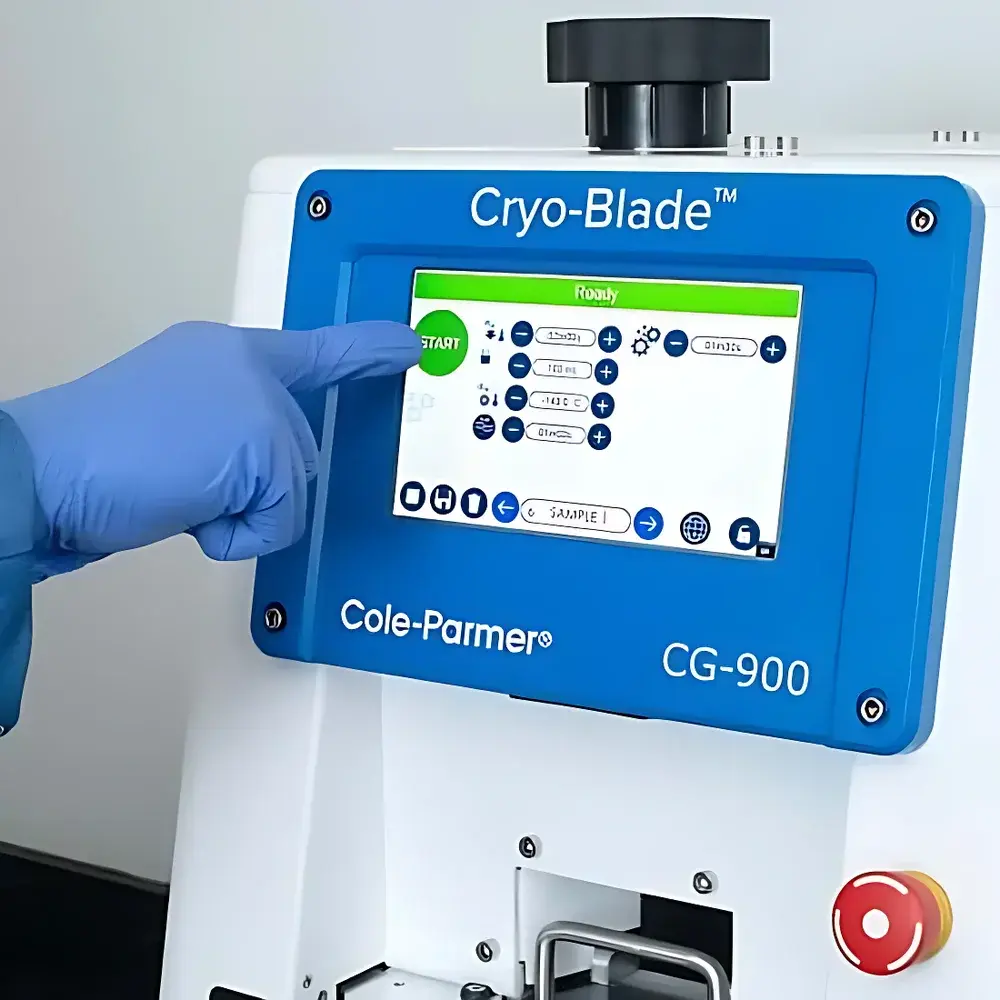
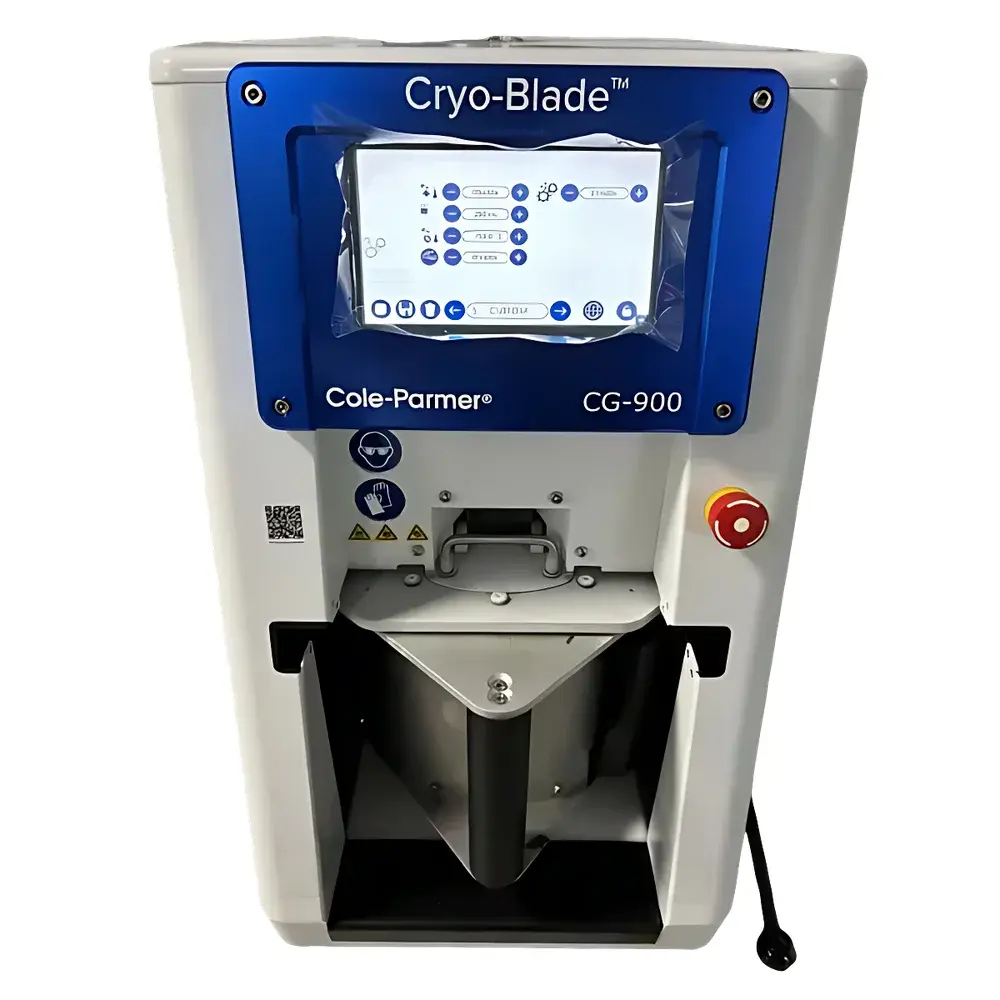
Cole-Parmer CG-900 Cryogenic Blade Grinder
| Brand | Cole-Parmer |
|---|---|
| Origin | USA |
| Model | CG-900 |
| Grinding Principle | Motor-driven rotary blade cutting under cryogenic conditions |
| Sample Capacity | 150 g – 1 kg |
| Cryogen | Liquid nitrogen or dry ice |
| Cryogenic Chamber Volume | 5 L |
| Blade Speed | 120–3600 rpm |
| Power Supply | 230 V, 50–60 Hz, 15 A |
| Net Weight (without chamber) | 50 kg |
| Dimensions (W × D × H) | 45 × 63 × 70 cm |
| Operating Temperature Range | 4–35 °C |
| Relative Humidity | 0–95% RH |
| Chamber & Blade Material | Stainless steel |
| Pre-programmed Methods | Up to 10 stored protocols |
| Language Support | Chinese and 11 other languages |
| Safety Features | Operator-isolated LN₂ handling, emergency stop button |
| Compliance | Designed for GLP/GMP-aligned workflows |
Overview
The Cole-Parmer CG-900 Cryogenic Blade Grinder is an industrial-grade, automated laboratory grinding system engineered for reproducible, low-temperature comminution of thermolabile and tough biological, botanical, and animal-derived samples. It operates on the principle of cryogenic embrittlement—using liquid nitrogen (LN₂) or dry ice to rapidly reduce sample temperature below their glass transition point—followed by high-speed mechanical shearing via a precision-engineered stainless-steel rotary blade assembly. This dual-phase process prevents thermal degradation, minimizes analyte loss or oxidation, and ensures uniform particle size distribution critical for downstream analytical techniques including LC-MS, GC-MS, and ICP-MS. Unlike mortar-and-pestle or bead-based mills, the CG-900 processes bulk samples intact—eliminating subsampling bias and preserving heterogeneity integrity in complex matrices such as whole fruits, fibrous roots, or frozen tissue blocks.
Key Features
- Automated cryogenic workflow: Integrated LN₂ auto-fill system synchronizes cooling, grinding, and homogenization phases within a single sealed chamber.
- Scalable throughput: Processes up to 1 kg of raw material per cycle—ideal for high-volume QA/QC labs and method validation studies.
- Precision blade dynamics: Variable-speed motor (120–3600 rpm) enables optimization for diverse sample rheologies—from soft berries to lignified stems—without manual intervention.
- Programmable operation: Stores up to 10 user-defined protocols with adjustable parameters including pre-cool duration, blade acceleration profile, grind time, and post-grind hold temperature.
- Operator safety architecture: Fully enclosed cryo-chamber with interlocked access door; LN₂ delivery path isolated from operator contact zone; certified emergency stop circuit compliant with IEC 60204-1.
- Material compatibility: 5 L stainless-steel grinding chamber and hardened alloy blades resist corrosion and cold-induced fatigue, supporting repeated sterilization and long-term stability.
Sample Compatibility & Compliance
The CG-900 accommodates heterogeneous, moisture-rich, or lipid-laden specimens without pre-drying or size reduction—including whole fruits (e.g., watermelon, strawberry), herbal materials (e.g., dried rhizomes, leaves), cereal grains (soybean, corn kernels), and fresh/frozen animal tissues (brain, cardiac muscle, lung). Its performance aligns with AOAC Official Method 2007.01 and EPA Method 8270D requirements for pesticide residue analysis, particularly when integrated into QuEChERS workflows. The instrument’s closed-system design mitigates cross-contamination risk and supports audit-ready documentation under GLP and ISO/IEC 17025 frameworks. All firmware logs—including timestamped run records, temperature profiles, and protocol execution history—are exportable for 21 CFR Part 11-compliant data integrity management.
Software & Data Management
The embedded control interface supports multilingual operation (Chinese, English, Spanish, German, French, Japanese, Korean, Portuguese, Russian, Italian, Polish, Turkish) and features intuitive touch-screen navigation. Each grinding cycle generates a digital log containing start/stop timestamps, actual LN₂ consumption, chamber temperature trajectory, blade RPM profile, and selected program ID. Logs are exportable via USB port in CSV format for integration with LIMS or ELN platforms. Firmware updates are delivered via secure HTTPS download; version history and checksum verification ensure traceability. No cloud dependency—the system operates fully offline, meeting data sovereignty requirements for government and pharmaceutical laboratories.
Applications
- Food safety testing: Enhances recovery of polar pesticides (e.g., spinosad, imidacloprid) from high-water-content produce prior to QuEChERS extraction.
- Pharmaceutical QC: Enables uniform micronization of herbal active ingredients for dissolution testing per USP <701>.
- Agricultural research: Facilitates DNA/RNA extraction from recalcitrant plant tissues by disrupting cell walls while suppressing nuclease activity.
- Environmental monitoring: Prepares soil-invertebrate composites for persistent organic pollutant (POP) screening using GC-HRMS.
- Clinical biobanking: Maintains proteome integrity during homogenization of frozen biopsy specimens for targeted proteomics.
FAQ
Does the CG-900 require external LN₂ pressure regulation?
No—the system is designed to interface directly with standard self-pressurizing dewars (22 psi output); no external regulator or compressor is needed.
Can dry ice be used interchangeably with liquid nitrogen?
Yes—dry ice may be manually loaded for applications requiring slower cooldown rates or where LN₂ logistics are constrained; however, maximum throughput and fine-particle consistency are achieved with LN₂.
Is the grinding chamber autoclavable?
The stainless-steel chamber is compatible with steam sterilization at 121 °C for 20 minutes; blade assemblies must be disassembled and cleaned separately per manufacturer guidelines.
What maintenance intervals are recommended?
Blade sharpening or replacement every 200–300 cycles (depending on sample abrasiveness); annual calibration of temperature sensors and torque verification of drive coupling.
How is method transfer supported between laboratories?
Protocol files (.cgp) are portable across CG-900 units; firmware version matching ensures identical thermal and mechanical execution—critical for multi-site regulatory submissions.



