
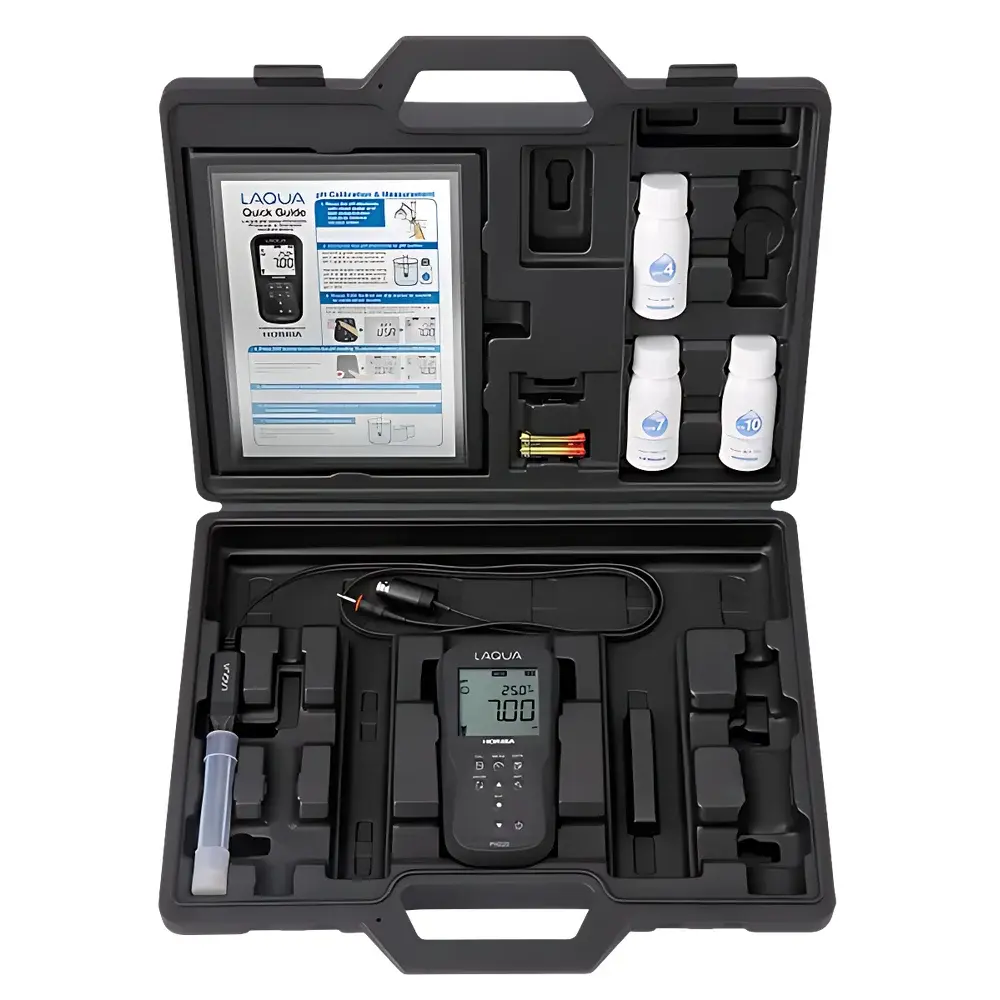
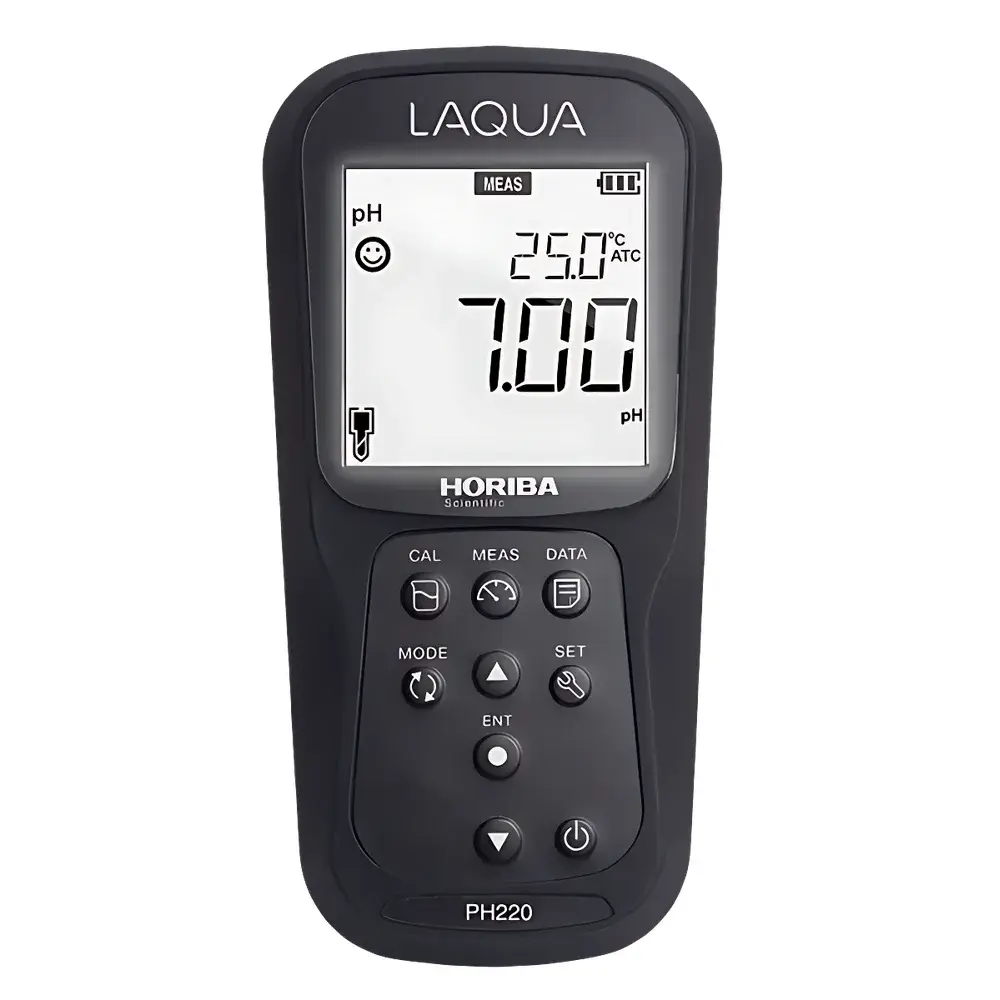
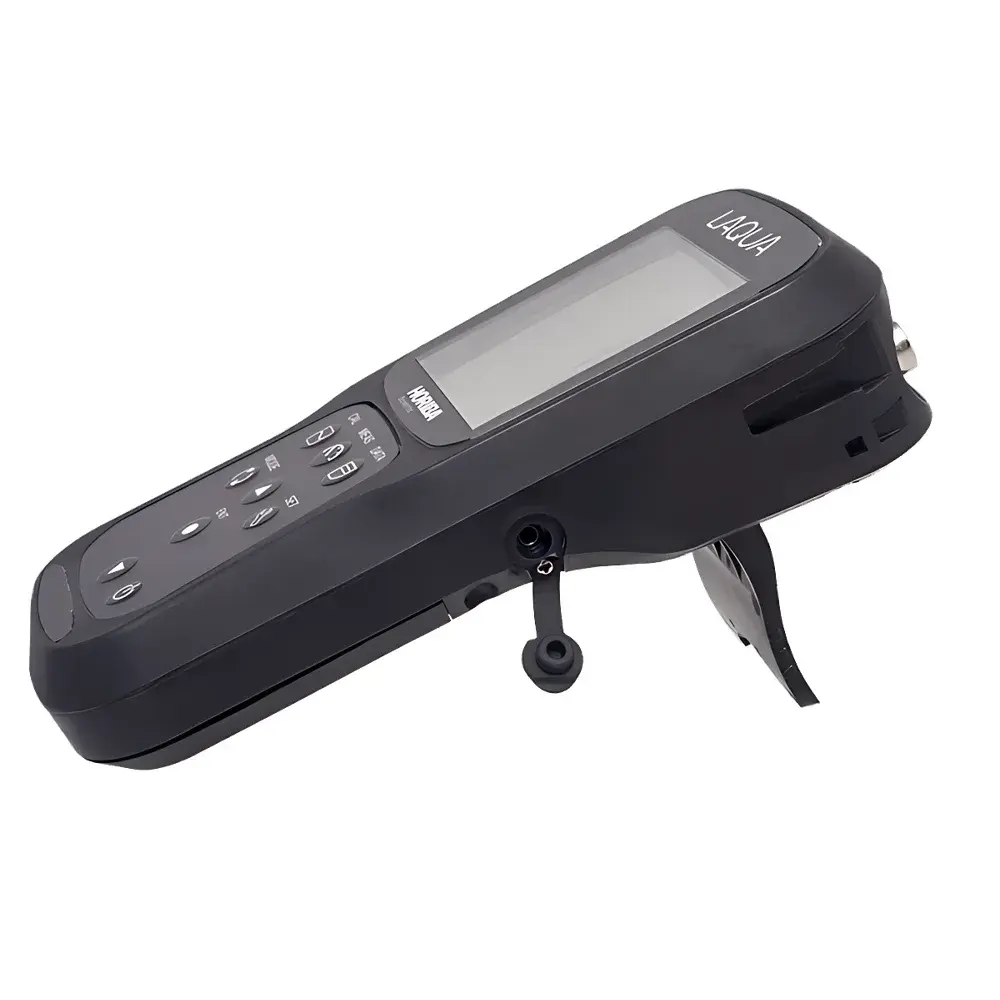
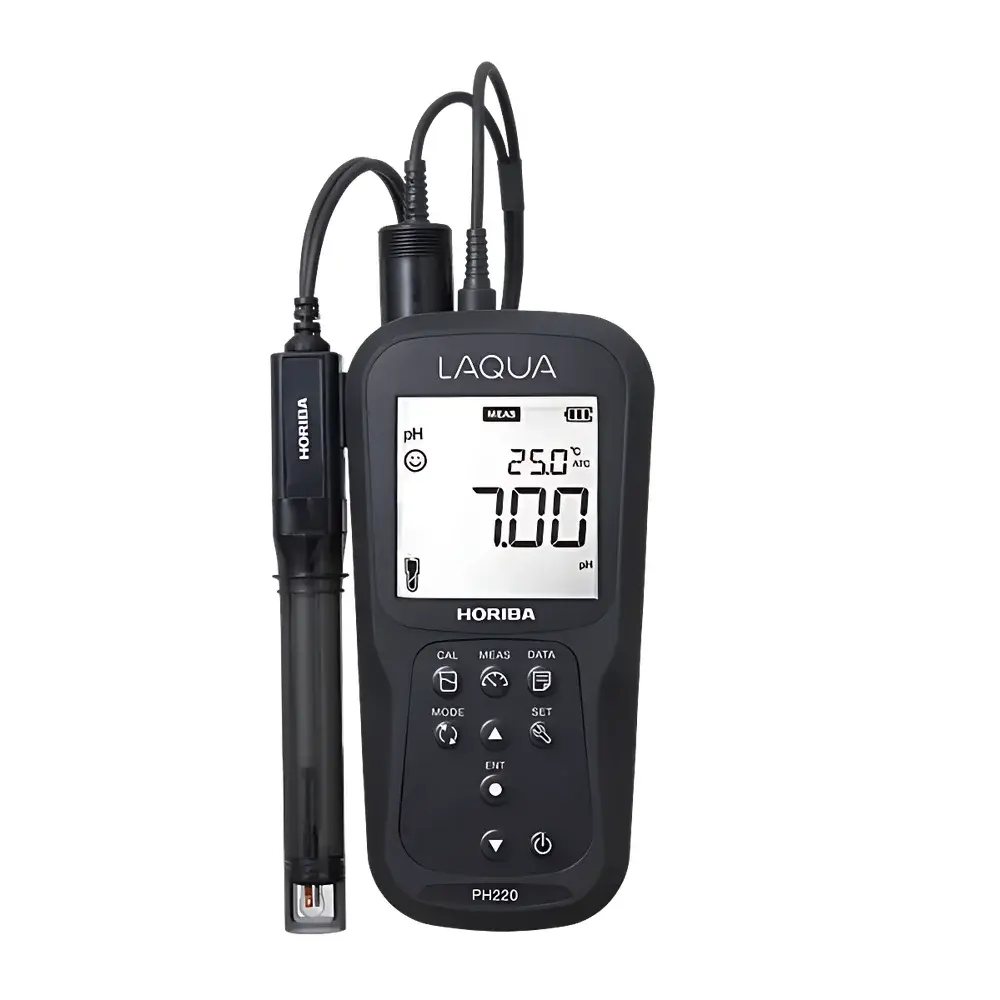
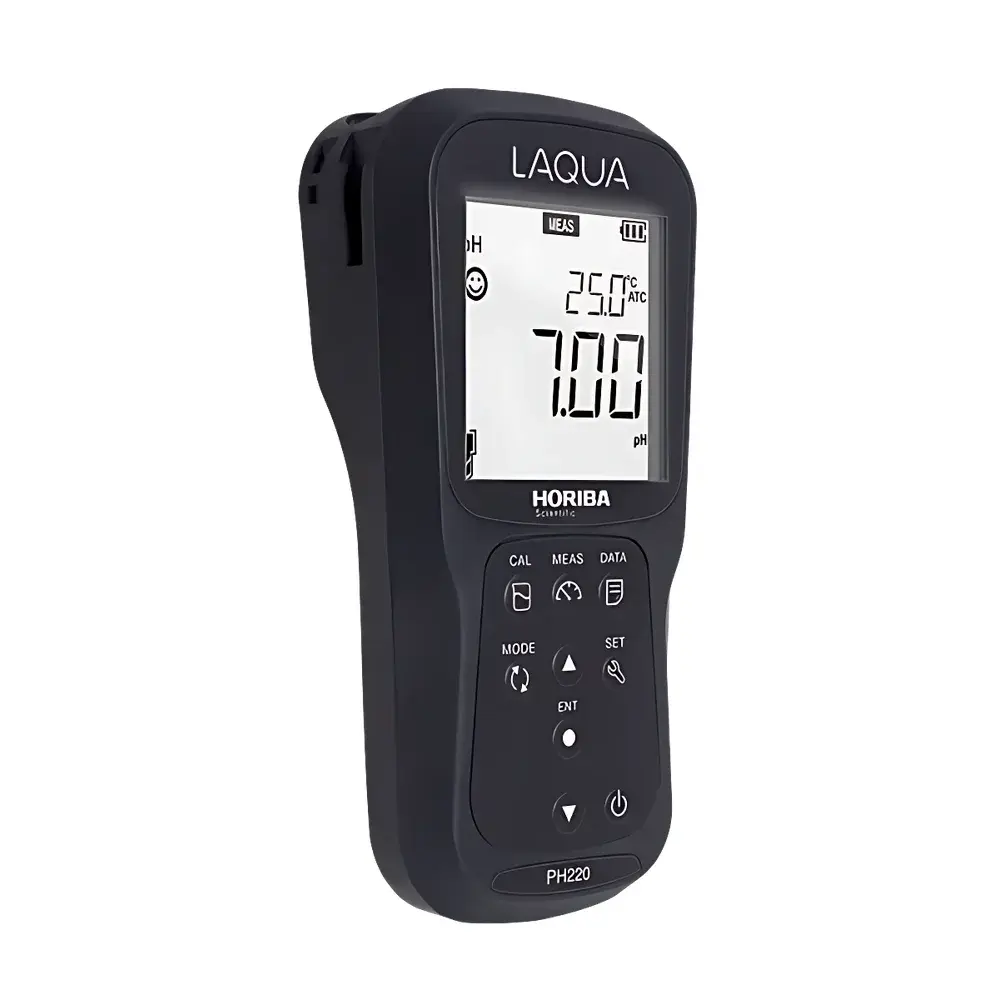
HORIBA LAQUA PH220 Portable pH/ORP/Temperature Meter
| Brand | HORIBA |
|---|---|
| Origin | Japan |
| Model | PH220 |
| Instrument Type | Portable |
| Parameter Type | Single-parameter (pH/ORP/Temperature) |
| Measurement Range | pH: -2.00 to 16.00 |
| Resolution | 0.01 pH / 0.1 mV (<±1000 mV) / 0.1°C/°F |
| Accuracy | ±0.01 pH / ±0.3 mV (<±1000 mV) or ±0.3% of reading (≥±1000 mV) / ±0.5°C |
| Calibration Standards | NIST, US, DIN, Custom |
| Temperature Compensation | Automatic & Manual |
| Data Storage | 1000 points with timestamp |
| IP Rating | IP67 |
| Power | 2 × AA batteries (>500 h life) |
| Dimensions | 160 × 80 × 40.6 mm |
| Weight | 260 g (with batteries) |
Overview
The HORIBA LAQUA PH220 is a high-precision, field-deployable electrochemical meter engineered for reliable pH, ORP (oxidation-reduction potential), and temperature measurements in demanding laboratory, industrial, and environmental applications. Built on a robust potentiometric measurement principle, the PH220 employs high-impedance analog-to-digital conversion and low-noise signal conditioning to ensure stable electrode response and minimal drift—critical for compliance-driven workflows. Its dual-input architecture supports simultaneous connection of a combination pH electrode (with integrated temperature sensor) and an optional ORP electrode, enabling true multi-parameter acquisition without external switching. Designed for GLP (Good Laboratory Practice) and routine QC environments, the instrument features traceable calibration protocols aligned with internationally recognized reference standards including NIST-traceable pH buffers and DIN-certified solutions.
Key Features
- High-resolution measurement: 0.01 pH resolution and ±0.01 pH accuracy across the full range of –2.00 to 16.00 pH, supporting both strongly acidic and highly alkaline sample analysis.
- Multi-standard calibration capability: Up to 5-point calibration using NIST or US buffer sets; up to 6-point calibration with DIN-compliant buffers; fully programmable custom calibration tables for non-standard reference solutions.
- Comprehensive temperature handling: Integrated automatic temperature compensation (ATC) with manual override; temperature range from –30.0 to 130.0°C (–22.0 to 266.0°F); ±0.5°C accuracy with optional temperature probe calibration.
- Dual-mode operation: Real-time, Auto-Hold, and Auto-Stable measurement modes optimize data capture for dynamic or equilibrium conditions.
- Ruggedized field-ready design: IP67-rated enclosure ensures full protection against dust ingress and immersion in water up to 1 m for 30 minutes; impact- and scratch-resistant housing with ergonomic anti-slip texture.
- Intelligent power management: Operates over 500 hours on two standard AA batteries; programmable auto-off (1–30 min) minimizes unintended discharge during extended deployments.
Sample Compatibility & Compliance
The PH220 is compatible with all standard BNC-connectable pH electrodes—including gel-filled, refillable, and double-junction types—as well as dedicated ORP electrodes with phono or BNC termination. Its wide pH range (–2.00 to 16.00) accommodates aggressive process streams, wastewater effluents, caustic cleaning agents, and biological media. The instrument meets essential regulatory expectations for documentation integrity: real-time clock with date/time stamping on every stored record, GLP-compliant data logging (1000 entries with metadata), and visible electrode status diagnostics (e.g., slope, offset, response time). While not inherently 21 CFR Part 11 compliant out-of-the-box, its audit-ready output structure—combined with secure USB data export and timestamped calibration logs—supports integration into validated GMP/GLP systems when deployed with controlled software and procedural controls.
Software & Data Management
Data acquisition and instrument configuration are managed via HORIBA’s proprietary PC interface software (compatible with Windows OS), accessible through the included USB cable (PN 3200779639). The software enables batch export of measurement records—including pH, ORP, temperature, calibration history, and timestamps—to CSV or Excel formats for downstream statistical analysis or LIMS integration. Firmware updates are delivered through the same interface, ensuring long-term supportability and feature enhancements. RS232 printer connectivity (via optional cable PN 3200779638) allows direct hardcopy generation of calibration reports and field measurements—valuable for on-site audits or shift handovers. All internal memory retains data during battery replacement, and no cloud dependency is required for core functionality.
Applications
- Environmental monitoring: Field testing of surface water, groundwater, and wastewater treatment streams per EPA Method 150.1 and ISO 10523.
- Pharmaceutical manufacturing: In-process pH verification during buffer preparation, bioreactor harvesting, and cleaning-in-place (CIP) validation.
- Foods & beverages: Quality control of acidic beverages, dairy products, and fermentation broths where narrow pH tolerances dictate microbial stability.
- Academic research: Teaching labs requiring durable, intuitive instrumentation for electrochemistry fundamentals and sensor characterization.
- Industrial maintenance: Routine verification of boiler feedwater, cooling tower chemistry, and electroplating baths where ORP correlates with oxidant concentration.
FAQ
What calibration standards does the PH220 support?
The instrument natively supports NIST, US, and DIN pH buffer series, and allows user-defined calibration points for proprietary or non-standard reference solutions.
Can the PH220 store calibration data separately for multiple electrodes?
No—the PH220 stores only the most recent calibration set; however, each calibration event is timestamped and logged alongside measurement data for traceability.
Is temperature calibration performed independently from pH calibration?
Yes—temperature sensor calibration is configurable separately, allowing correction of thermistor or RTD drift without affecting pH slope or offset calculations.
Does the PH220 meet any international standards for metrological traceability?
All factory calibrations are performed using NIST-traceable reference materials; final instrument certification includes documented uncertainty budgets per ISO/IEC 17025 principles.
How is electrode health monitored during operation?
The display continuously shows calculated electrode slope (%), asymmetry potential (mV), and response time—enabling predictive maintenance before measurement degradation occurs.
Related Products





