
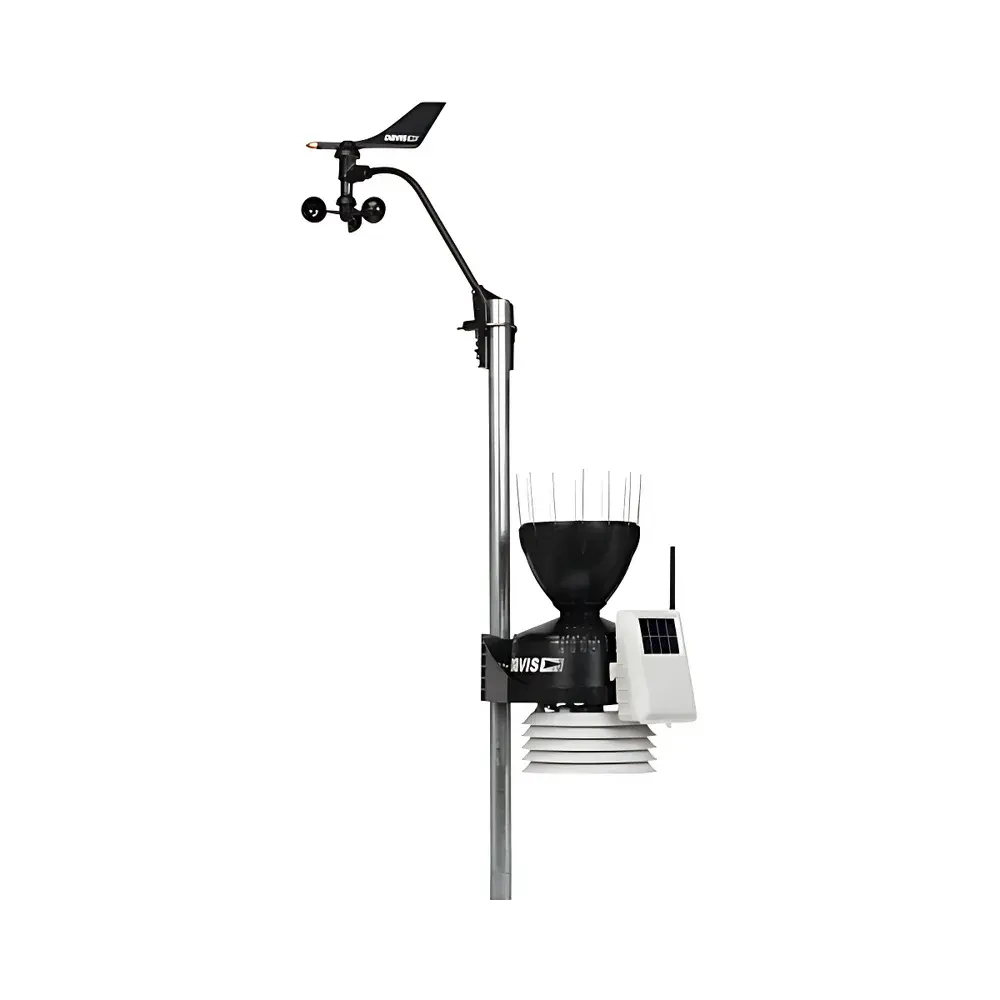
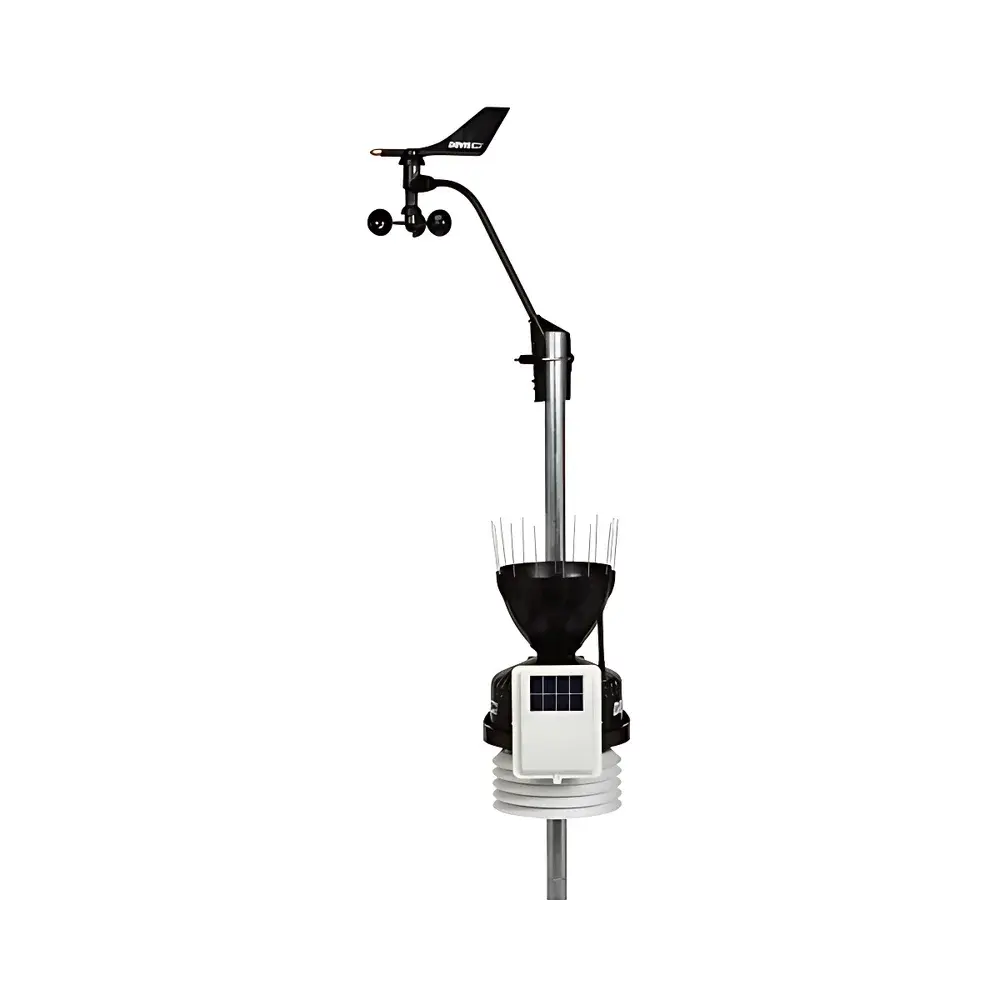
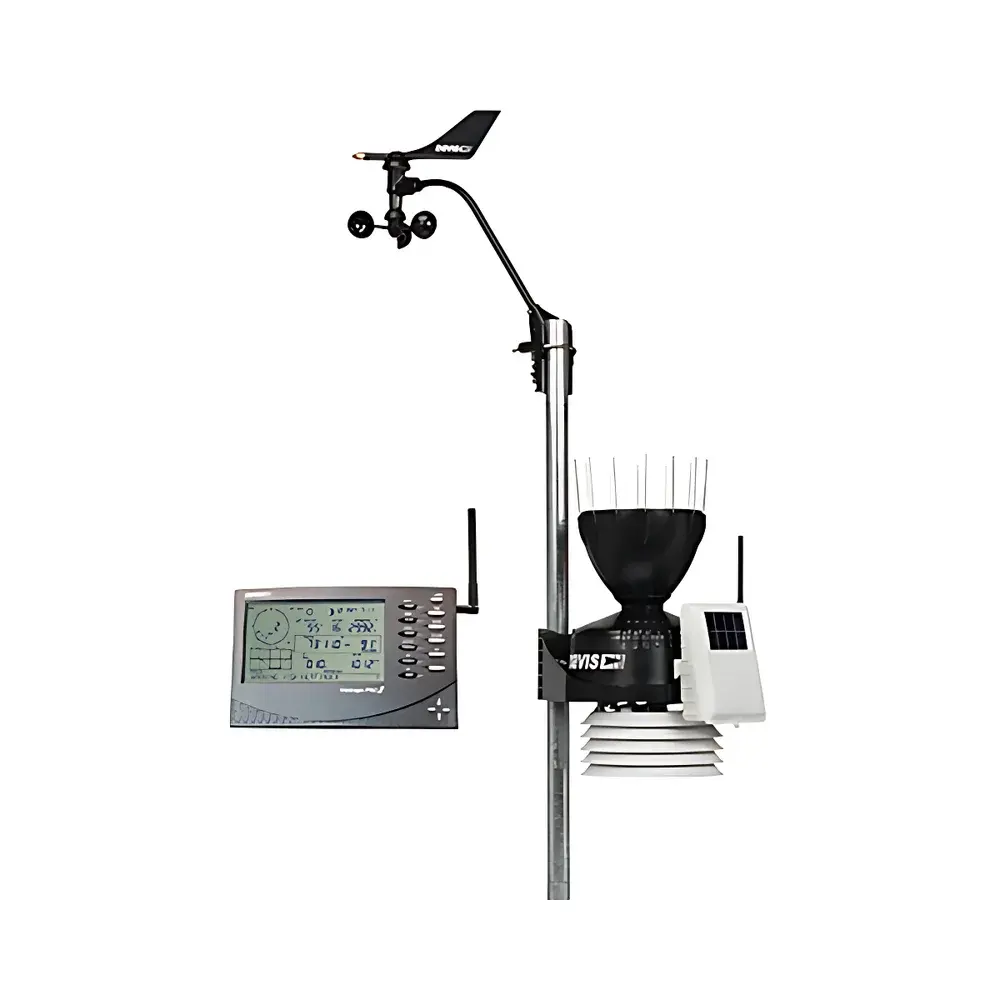
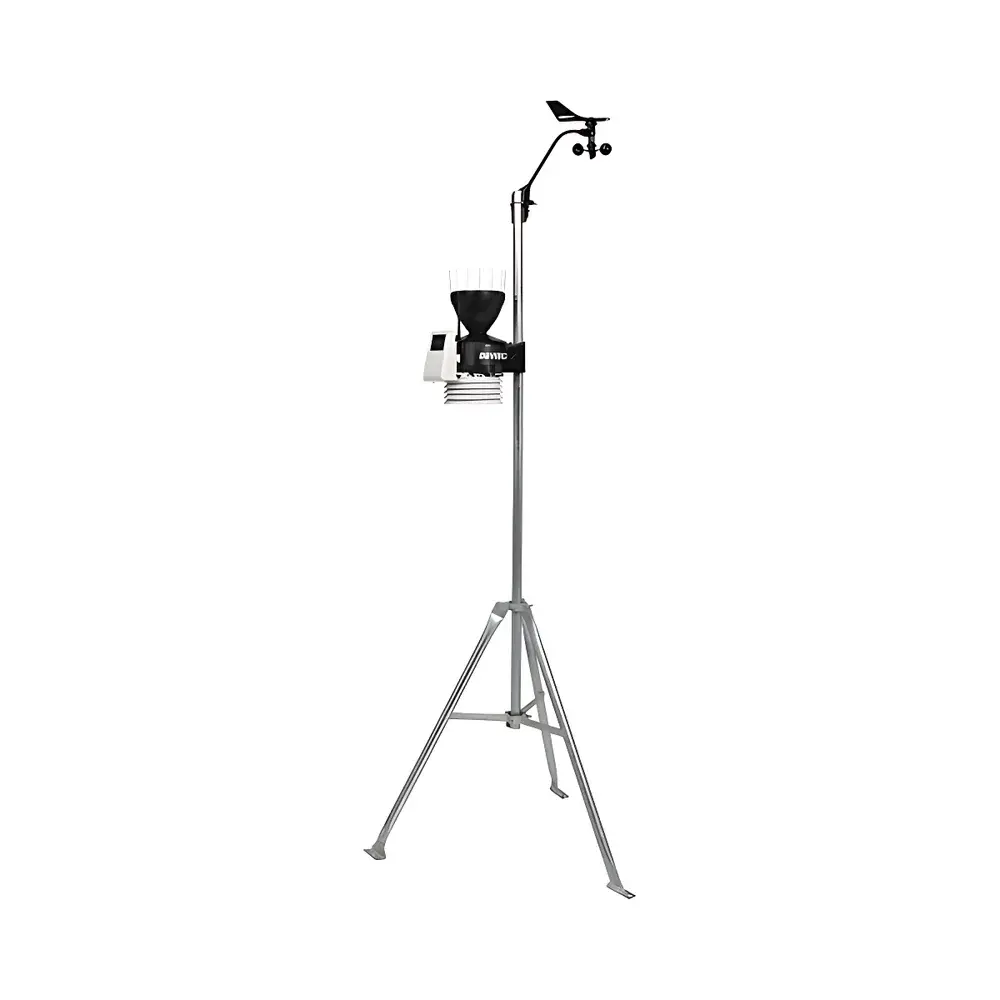
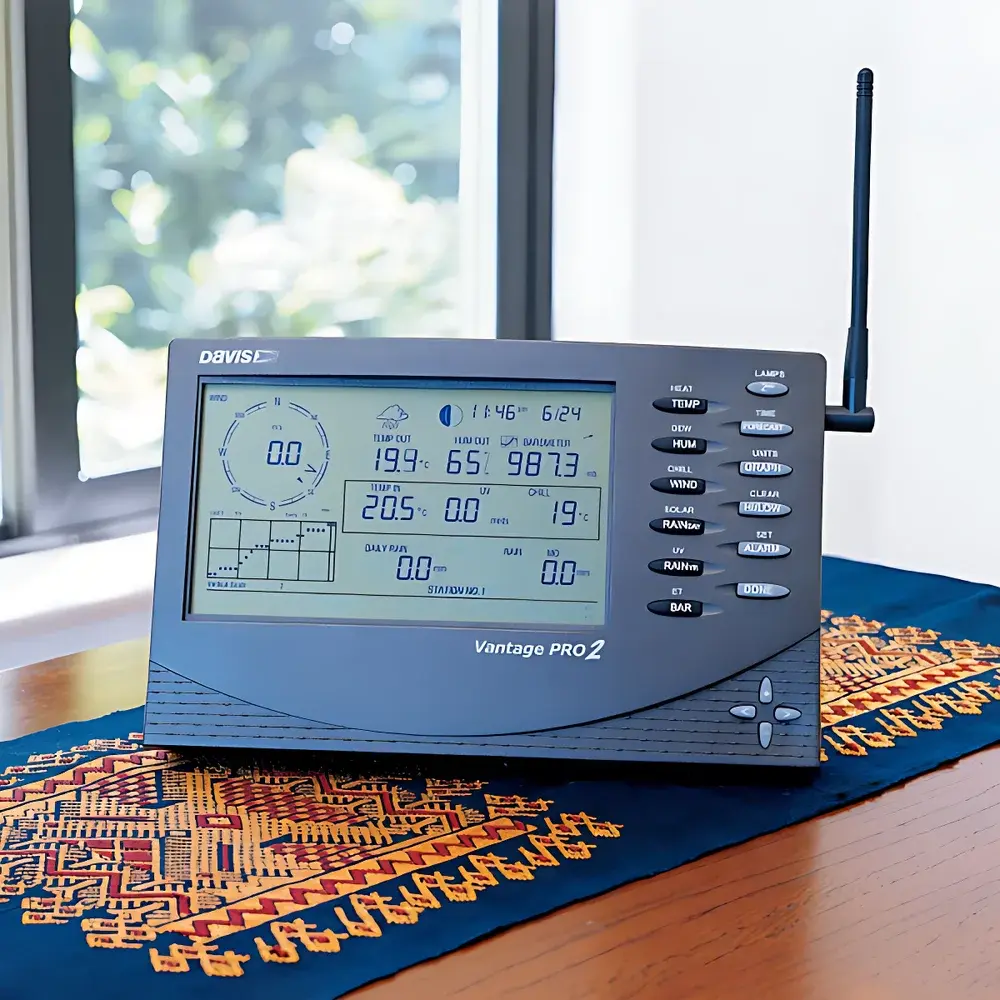
Davis Vantage Pro2 6152 Wireless Weather Station
| Brand | Davis (USA) |
|---|---|
| Origin | USA |
| Model | Vantage Pro2 6152 |
| Type | Portable Wireless Weather Station |
| Power | Solar + CR-123A Li battery (8-month backup) / AC adapter |
| Data Logging | Flash memory (non-volatile) |
| Wireless Range | Up to 165 m (line-of-sight) |
| Operating Temp | –40°C to +65°C |
| Compliance | FCC Part 15, IC RSS-210, RoHS |
Overview
The Davis Vantage Pro2 6152 Wireless Weather Station is a fully integrated, field-deployable environmental monitoring system engineered for long-term, unattended operation in diverse climatic and geographic conditions. Built upon Davis Instruments’ proven ISS (Integrated Sensor Suite) architecture, it employs precision analog-to-digital conversion and calibrated physical sensors to measure core meteorological parameters—including wind speed and direction, ambient temperature and relative humidity, barometric pressure, precipitation volume and rate, solar radiation, UV index, soil moisture and temperature, leaf wetness, and evapotranspiration (ET). All measurements adhere to widely accepted physical principles: cup anemometry with magnetic reed switching for wind speed; vane-based potentiometric sensing for wind direction; silicon diode thermistors and thin-film capacitive hygrometers for temperature and humidity; tipping-bucket rainfall collection with 0.2 mm resolution; and piezoresistive micro-machined transducers for barometric pressure. The system computes derived variables—including wind chill, heat index, dew point, comfort index, sunrise/sunset times, lunar phase, and short-term weather forecasts—using standardized algorithms aligned with NOAA, WMO, and ASCE-EWRI guidelines.
Key Features
- True wireless architecture: ISS communicates with console via 915 MHz FHSS (Frequency-Hopping Spread Spectrum), eliminating wiring constraints and enabling flexible sensor placement up to 165 meters from the console.
- Non-volatile Flash memory: Ensures continuous data integrity during power interruption or battery depletion; retains up to 2,190 days of 1-minute interval data or 16,383 records of high-resolution sampling.
- Dual-power resilience: Primary power supplied by integrated 0.5 W monocrystalline solar panel; secondary backup provided by three CR-123A lithium batteries (8-month operational life in full darkness; 2-year life under typical insolation).
- Industrial-grade environmental protection: UV-stabilized ABS and polypropylene housing; IP65-rated enclosure for rain, dust, and corrosion resistance; lightning-protected circuitry compliant with IEC 61000-4-5 surge immunity standards.
- Low-power design: Average current draw <10 mA (ISS) and <1 mA (console), enabling deployment in remote locations without grid access.
- Modular serviceability: Field-replaceable sensor modules—including rain collector, temp/humidity shield, anemometer assembly, and solar panel—minimize downtime and reduce lifecycle maintenance costs.
Sample Compatibility & Compliance
The Vantage Pro2 6152 supports direct measurement of atmospheric, terrestrial, and surface microclimate variables relevant to agricultural research, hydrological modeling, ecological monitoring, and facility environmental compliance. Its sensor suite meets fundamental metrological requirements outlined in ASTM D5098 (rain gauge calibration), ISO 7726 (thermal environment instrumentation), and WMO Guide to Meteorological Instruments and Methods of Observation (CIMO Guide, Chapter 12). While not certified for regulatory submission under FDA 21 CFR Part 11 or EU Annex 11, its data logging architecture supports GLP-aligned audit trails when used with WeatherLink Live and optional encrypted SD card storage. All electronic components conform to RoHS Directive 2011/65/EU and REACH Regulation (EC) No. 1907/2006. FCC ID: 2AJ9TVANTAGEPRO2 and IC: 23247-VANTAGEPRO2 confirm regulatory compliance for intentional radiators in North America.
Software & Data Management
Data acquisition and analysis are enabled through Davis WeatherLink software (Windows/macOS) and cloud-based WeatherLink.com platform. Local software supports raw data export in CSV, XML, and JSON formats, time-synchronized calibration correction, NOAA-formatted report generation (including METAR-style summaries), and statistical trend visualization (e.g., rolling 24-hr averages, monthly min/max envelopes, anomaly detection). WeatherLink Live gateway enables real-time HTTPS/SSL-secured transmission to the WeatherLink Cloud, supporting MQTT and RESTful API integration for third-party SCADA, GIS, or LIMS systems. Optional GPRS/CDMA cellular modems (e.g., Davis 6510SER) permit remote firmware updates, configuration changes, and on-demand data retrieval—even in off-grid deployments. Audit logs record all user-initiated actions, timestamped to UTC with millisecond precision, satisfying basic traceability requirements for scientific and operational documentation.
Applications
This system serves as a primary observational node in multi-scale environmental monitoring networks. It is routinely deployed in university agricultural extension programs for irrigation scheduling and ET-based water budgeting; by municipal public works departments for stormwater runoff modeling and flood warning systems; within national park service units for phenological tracking and climate change impact assessment; and by commercial greenhouse operators for automated climate control logic inputs. Its portability and low infrastructure dependency make it suitable for temporary deployments—such as construction site air quality baselines, wildfire perimeter monitoring, or post-disaster environmental recovery assessments. When paired with optional soil moisture probes (e.g., EC-5 or 5TM) and leaf wetness sensors, it satisfies FAO-56 dual-crop coefficient methodology requirements for precision agriculture applications.
FAQ
What is the maximum recommended distance between the ISS and console?
The nominal line-of-sight range is 165 meters. Performance may be reduced by terrain, vegetation, or metallic obstructions; repeater units (e.g., WeatherLink Live) extend effective range via mesh networking.
Can the station operate entirely on solar power without batteries?
No—batteries are required for nighttime and low-light operation. The solar panel maintains battery charge but does not power the ISS directly during darkness.
Is the tipping-bucket rain gauge calibrated to NIST-traceable standards?
Davis provides factory calibration against reference gauges traceable to NIST; users may perform field verification using ASTM D5098-compliant funnel-and-scale methods.
Does the system support MODBUS or BACnet protocols for building automation integration?
Native support is limited to WeatherLink’s proprietary protocol. Third-party integration requires middleware (e.g., Node-RED with WeatherLink API) or serial-to-MODBUS gateways.
How frequently are firmware updates released, and how are they applied?
Davis releases firmware biannually for critical bug fixes and feature enhancements; updates are delivered via WeatherLink desktop software or over-the-air through WeatherLink Live gateways.
Related Products







