
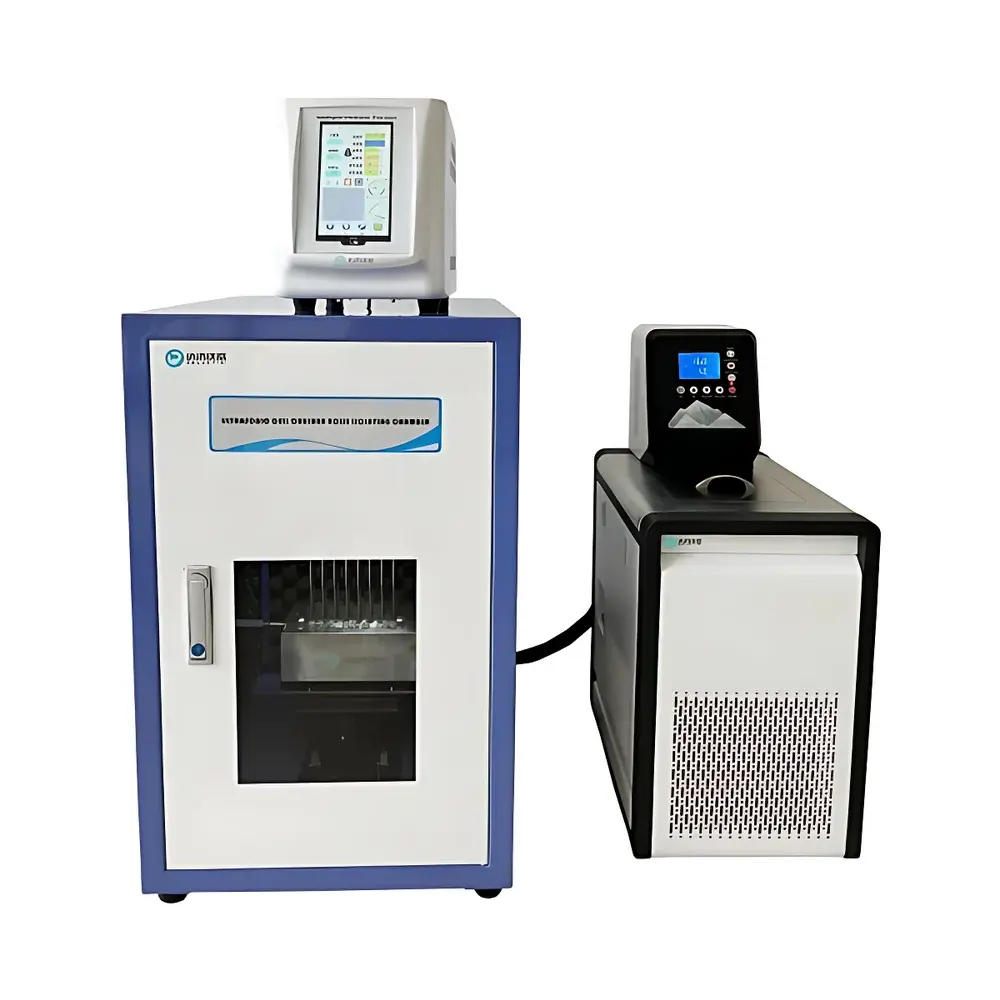
Daxluot Daxluot-4SKII 4-Channel High-Intensity Ultrasonic Cell Disruptor
| Brand | Daxluot |
|---|---|
| Origin | Shanghai, China |
| Model | Daxluot-4SKII |
| Instrument Type | Ultrasonic Cell Disruptor |
| Ultrasonic Power | 18–1800 W (continuously adjustable) |
| Operating Frequency | 20–25 kHz (auto-frequency tracking) |
| Temperature Control Range | −5 to 100 °C |
| Sample Volume per Channel | 5–100 mL |
| Number of Simultaneous Samples | 4 |
| Probe Material | Titanium Alloy (Ti-6Al-4V) |
| Amplitude Regulation | Auto-compensated under variable load |
| Data Storage Capacity | 20 user-defined protocols |
| Display | 7-inch TFT capacitive touchscreen |
| Input Power | AC 220 V ±5%, 50 Hz (110 V optional) |
| Safety Protections | Overtemperature, over-power, and overtime cutoffs |
| Communication Interface | RS-232 or USB (optional) |
| Footswitch Support | Optional |
| Cryogenic Compatibility | Integrated Peltier-cooled sample rack with external chiller port |
Overview
The Daxluot Daxluot-4SKII is a benchtop, multi-channel high-intensity ultrasonic cell disruptor engineered for reproducible, scalable lysis of biological samples under controlled thermal and mechanical conditions. It operates on the principle of acoustic cavitation—where high-frequency ultrasonic energy (20–25 kHz) induces rapid formation and collapse of microbubbles in liquid media, generating localized shear forces, shockwaves, and transient hotspots (>5,000 K, >1,000 atm). This physical mechanism enables efficient disruption of eukaryotic and prokaryotic cells, viral envelopes, spores, and subcellular organelles without chemical additives or enzymatic digestion. Unlike single-probe sonicators, the Daxluot-4SKII integrates four independently driven titanium alloy probes (Φ6 mm), each delivering up to 1800 W of controllable acoustic power. Its closed-loop temperature management system (−5 to 100 °C) ensures thermal stability during extended processing—critical for preserving labile biomolecules such as native proteins, chromatin complexes, and non-coding RNAs.
Key Features
- Four parallel ultrasonic channels with synchronized or independent operation—enabling true high-throughput sample processing while eliminating inter-batch variability.
- Titanium alloy (Ti-6Al-4V) probes with corrosion resistance to organic solvents, acids, and alkaline buffers—certified for >10,000 hours of continuous duty life.
- Real-time amplitude auto-compensation: maintains consistent vibrational displacement across varying sample viscosities and volumes (5–100 mL per channel).
- Intelligent frequency tracking circuitry dynamically locks onto resonant frequency shifts caused by probe wear, temperature drift, or load changes—ensuring optimal energy transfer efficiency.
- 7-inch capacitive touchscreen interface with GLP-compliant audit trail logging (time-stamped protocol execution, parameter changes, operator ID).
- Microprocessor-controlled thermal regulation via integrated Peltier-cooled sample rack and external recirculating chiller interface—supports cryo-sonication down to −5 °C.
- 20 programmable method slots with full parameter recall: pulse-on/pulse-off duration (0.1–99.9 s), total runtime (up to 99 h 59 min 59 s), power ramping profiles, and temperature setpoints.
Sample Compatibility & Compliance
The Daxluot-4SKII accommodates standard centrifuge tubes (1.5–50 mL), custom microtiter-compatible vessels, and low-binding polypropylene racks. It is validated for use with mammalian cell lines (HEK293, CHO), bacterial cultures (E. coli, B. subtilis), yeast, plant tissues, soil suspensions, and nanomaterial dispersions. All operational parameters comply with ISO 13485:2016 (medical device quality management) and support adherence to FDA 21 CFR Part 11 requirements when paired with optional secure login and electronic signature modules. The instrument meets IEC 61000-6-3 (EMC emission) and IEC 61010-1 (electrical safety) standards. No hazardous consumables or disposable transducers are required—reducing long-term operational cost and environmental footprint.
Software & Data Management
The embedded firmware supports export of raw process logs (CSV/Excel) including timestamped power output, real-time temperature readings, cumulative sonication time, and fault codes. Optional PC software (Windows/macOS) enables remote scheduling, batch protocol synchronization across multiple units, and integration with LIMS via RESTful API. Audit trails include operator authentication (password-protected access), modification history, and digital signature fields—fully traceable for GMP/GLP audits. Data encryption at rest (AES-256) and TLS 1.2 encrypted transmission ensure regulatory compliance for sensitive research environments.
Applications
- Nuclear extraction and chromatin shearing for ChIP-seq and ATAC-seq library preparation.
- High-yield protein solubilization from inclusion bodies without denaturants.
- Homogenization of fibrous plant material and soil matrices for metagenomic DNA isolation.
- Preparation of nanoemulsions and lipid nanoparticles (LNPs) for mRNA delivery systems.
- Accelerated solvent-free extraction of bioactive compounds from traditional Chinese medicinal herbs.
- Dispersion and deagglomeration of carbon nanotubes, graphene oxide, and rare-earth nanopowders.
- Ultrasound-assisted enzymatic reactions and transesterification in biodiesel synthesis.
FAQ
Is the Daxluot-4SKII suitable for CLIA- or CAP-accredited clinical laboratories?
Yes—when configured with audit trail logging, user role management, and electronic signature options, it meets key analytical validation requirements for regulated diagnostics workflows.
Can the instrument be integrated into automated liquid handling platforms?
Yes—RS-232 and USB TTL interfaces support command-line control (SCPI-like syntax) for third-party robotic orchestration.
What maintenance is required for long-term reliability?
Annual calibration of temperature sensors and power output verification using NIST-traceable hydrophone-based measurement is recommended; no routine transducer replacement is needed.
Does the system support continuous sonication beyond 100 minutes?
Yes—the 99-hour maximum runtime allows unattended overnight processing; thermal protection automatically pauses operation if preset limits are exceeded.
Are probe replacements available in different diameters or geometries?
Standard Φ6 mm tapered probes are supplied; custom geometries (e.g., flat-tip, stepped, microtip) are available upon request with lead-time confirmation.





