
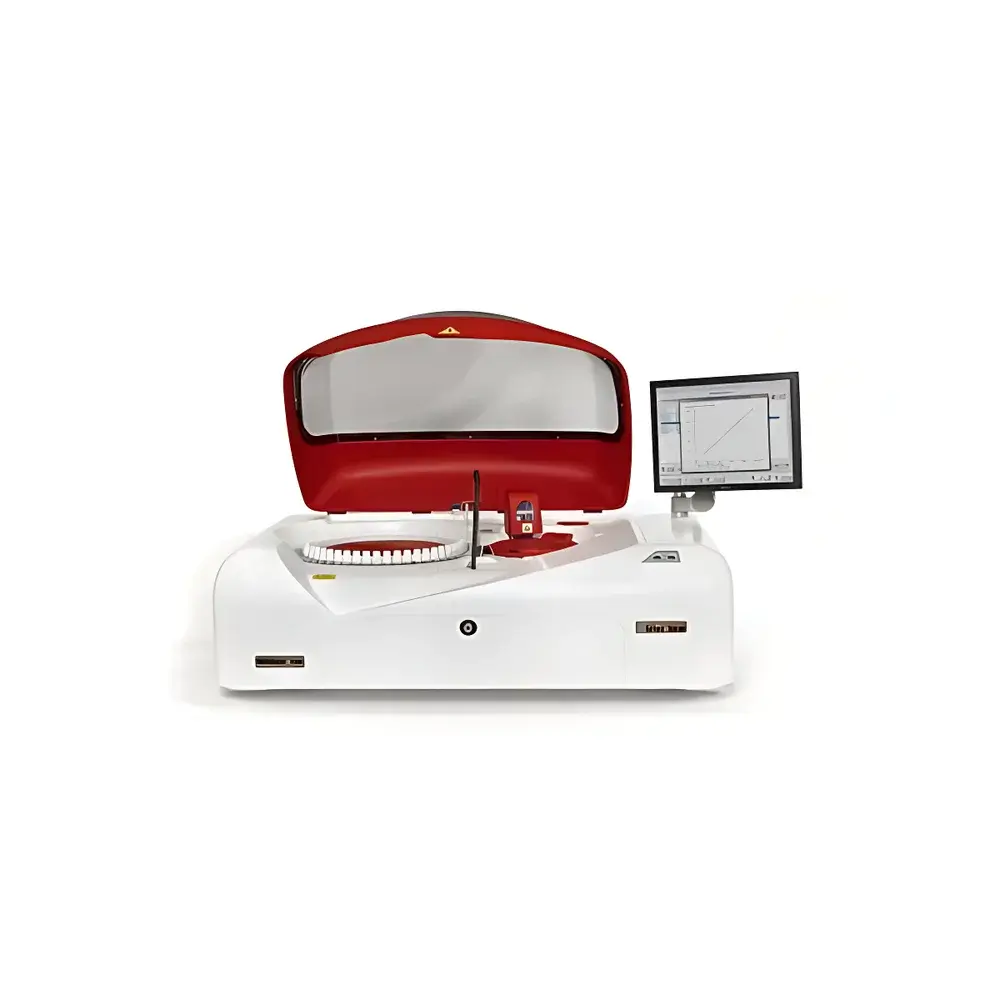
DeChem-Tech CleverChem 380Plus Automated Discrete Analyzer
| Brand | DeChem-Tech |
|---|---|
| Origin | Germany |
| Model | CleverChem 380Plus |
| Product Type | Discrete Flow Analyzer |
| Wavelength Range | 400–900 nm |
| Sample Volume per Vial | 5 mL |
| Reagent Positions | 49 |
| Cuvette Path Length | 10 mm |
| Light Source | Tungsten-Halogen Lamp |
Overview
The DeChem-Tech CleverChem 380Plus is a fully automated discrete analyzer engineered for high-precision, standardized wet-chemical analysis in environmental, agricultural, food, and industrial laboratories. Unlike continuous-flow or segmented-flow systems, the CleverChem 380Plus implements true discrete analysis—mimicking manual spectrophotometric protocols by individually dispensing precise volumes of sample, reagent, and color-developing agent into reusable quartz cuvettes. Each reaction proceeds under controlled timing and temperature conditions, followed by photometric measurement at user-selectable wavelengths (400–900 nm). This methodology ensures stoichiometric fidelity, minimizes cross-contamination, and delivers analytical rigor aligned with reference methods defined in ISO 15681, EPA Methods 365.4, 365.3, and 353.2, as well as Chinese national standards (GB/T) for water and soil testing. The system’s architecture integrates fluidic precision, optical stability, and software-controlled reaction kinetics to support method traceability and regulatory compliance.
Key Features
- High-throughput discrete analysis: Up to 350 determinations per hour across up to 119 sample positions.
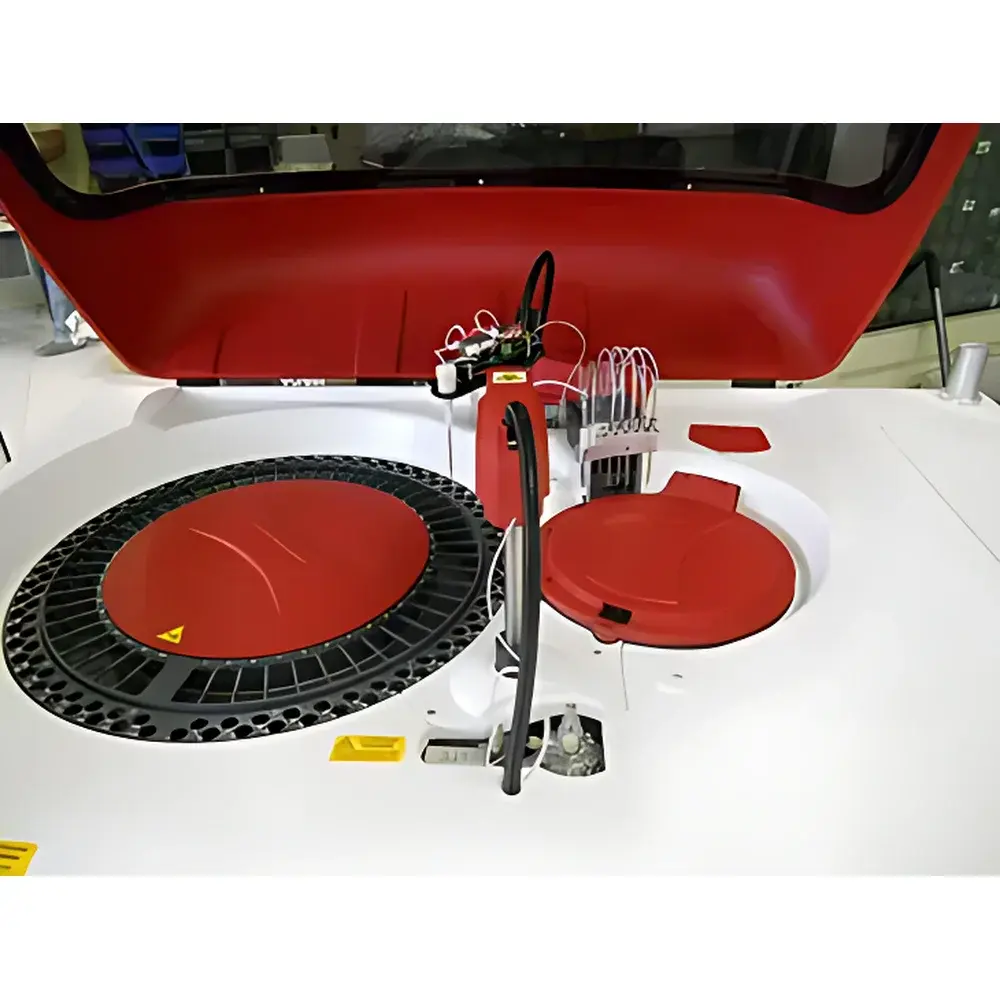
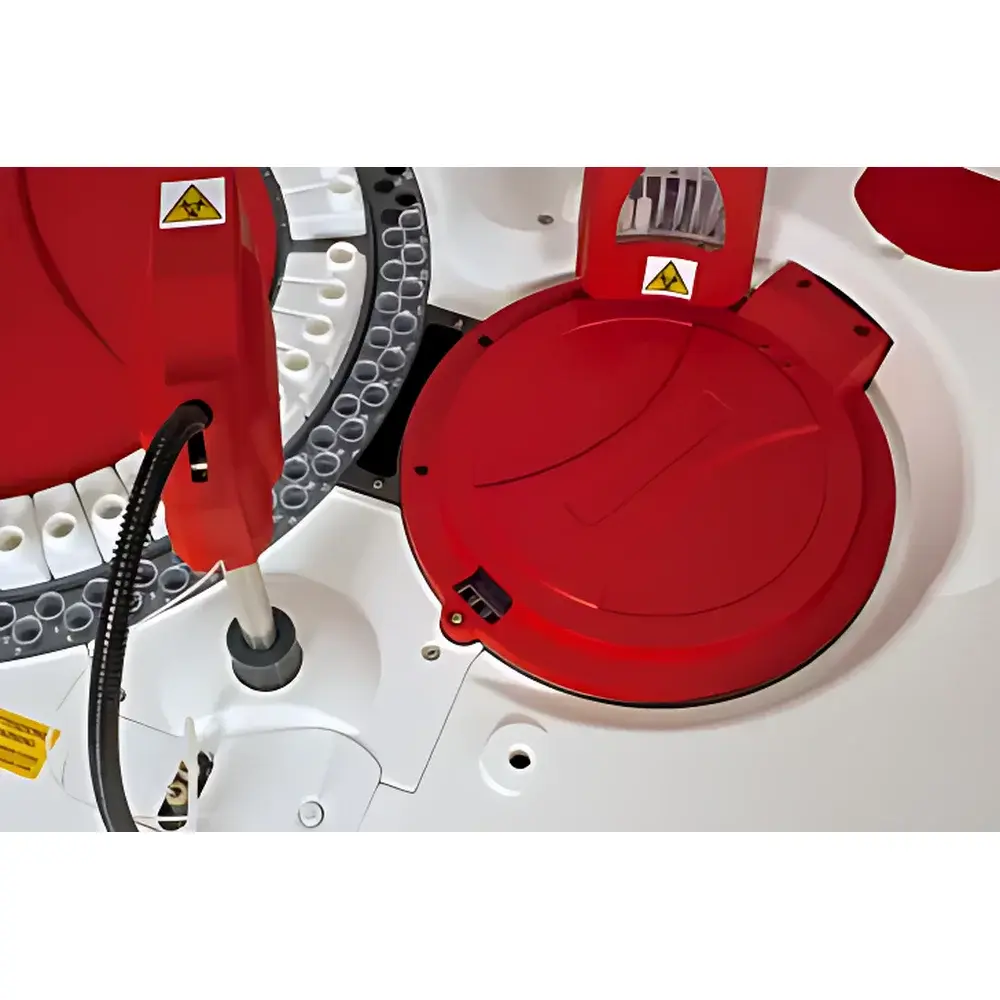
- Reconfigurable 49-position reagent carousel with optional refrigerated storage (4–10 °C) to preserve reagent integrity and extend shelf life.
- 64-position quartz cuvette rack with 10-mm optical path length; each cuvette undergoes an 8-step ultrasonic cleaning cycle and post-cleaning photometric validation before reuse.
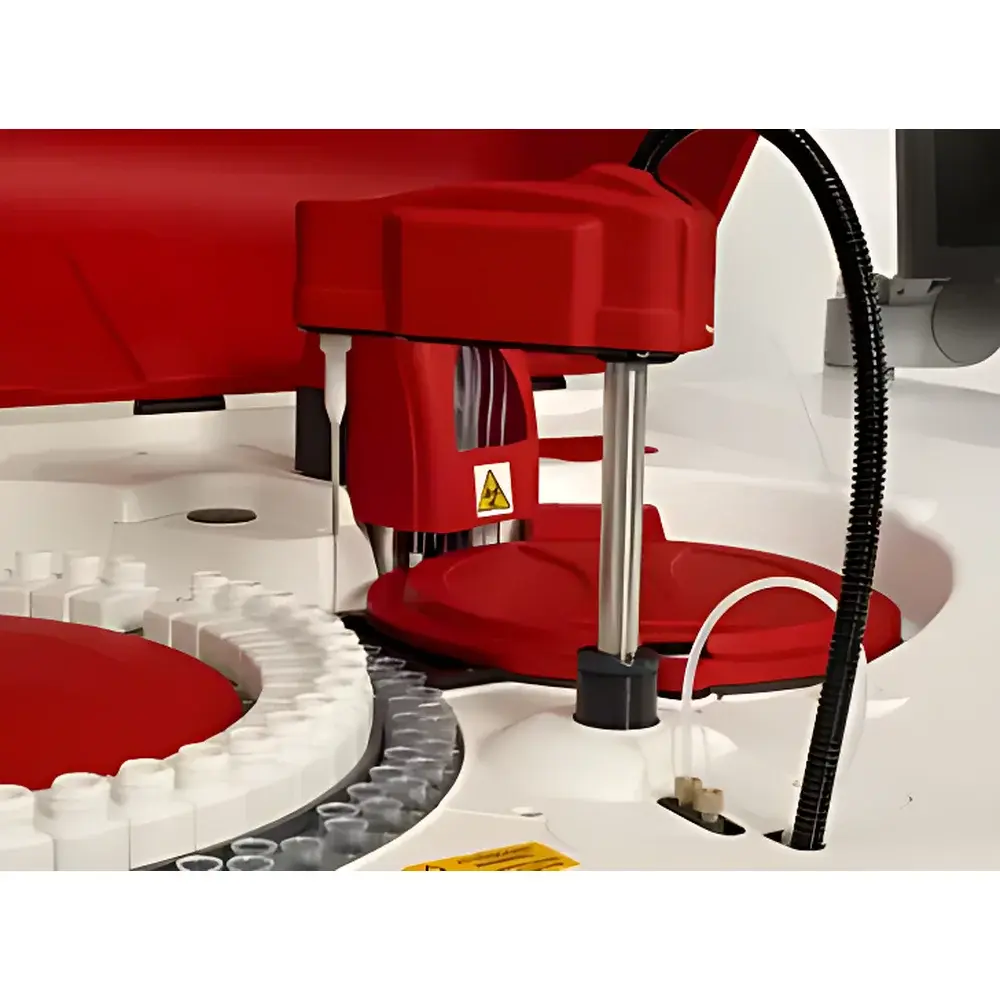
- Microfluidic dispensing with volumetric accuracy: sample volumes 1–900 µL, reagent volumes 1–450 µL—reducing reagent consumption to 3–5% of conventional manual methods.
- On-cuvette dilution capability: integrated 1-mL dilutor enables automatic 2× to 100× dilution of out-of-range samples and standard curve preparation directly within the measurement cell.
- Comprehensive error handling: real-time monitoring of sample/reagent depletion, waste level saturation, wash solution volume, and optical drift—with event logging and alert escalation via software interface.
- Dual blank correction: independent acquisition and subtraction of both sample blank and reagent blank to eliminate matrix and background interference.
Sample Compatibility & Compliance
The CleverChem 380Plus supports aqueous matrices including raw and treated wastewater, drinking water, seawater, soil extracts, plant digests, fertilizer solutions, food homogenates, tobacco leachates, and wine/vinegar filtrates. It is validated for over 50 parameters—including total nitrogen (TN), total phosphorus (TP), ammonia-N, nitrate-N, nitrite-N, orthophosphate, silicate, sulfate, sulfide, chloride, hexavalent chromium, cyanide, phenols, acidity, alkalinity, hardness, Fe, Mn, Al, Cu, Zn, Mg, B, and Ni—using colorimetric, enzymatic, and ion-selective electrode (optional) detection modes. All onboard methods comply with ISO/IEC 17025 requirements for method validation, and data integrity conforms to ALCOA+ principles. When configured with audit-trail-enabled software and electronic signatures, the system meets FDA 21 CFR Part 11 and EU Annex 11 expectations for regulated environments.
Software & Data Management
The CleverChem Control Software (v6.x) provides a bilingual (English/Chinese) GUI with intuitive workflow configuration, method editor, and real-time instrument status dashboard. Method files include full parameter definitions: reaction time, incubation temperature, mixing cycles, measurement wavelength, calibration type (linear, quadratic, or multi-point), and QC rule sets (e.g., Westgard rules). Raw absorbance data, calculated concentrations, calibration curves, and QC charts are stored in a relational database with immutable timestamps and operator attribution. Export formats include CSV, PDF reports, and LIMS-compatible XML. Optional modules support GLP/GMP-compliant electronic lab notebook (ELN) integration, automated report generation with digital signature, and remote diagnostics via secure HTTPS tunnel.
Applications
Environmental laboratories use the CleverChem 380Plus for routine monitoring of nutrient loads and contaminants in surface water, groundwater, and effluent streams—supporting compliance with EU Water Framework Directive (WFD) and US Clean Water Act reporting. Agricultural testing labs deploy it for rapid assessment of NPK availability in soils and fertilizers, enabling precision agronomy decisions. Food safety units apply validated methods for sulfite, nitrite, and heavy metal screening in beverages, dairy, and processed foods—meeting Codex Alimentarius and IFS Food standards. Tobacco and wine producers rely on its reproducibility for quality control of alkaloids, organic acids, and sugar profiles across batch production cycles.
FAQ
What distinguishes discrete analysis from flow injection or segmented flow analysis?
Discrete analysis isolates each sample-reagent reaction in a dedicated cuvette, eliminating carryover and enabling flexible, non-sequential method scheduling—critical for multi-parameter analysis of heterogeneous sample sets.
Can the system perform dilutions automatically without external hardware?
Yes—the built-in 1-mL dilution module performs serial and single-step dilutions directly inside the optical cuvette, with programmable dilution factors up to 100×.
Is the quartz cuvette rack compatible with UV-VIS measurements below 400 nm?
No—the system is optimized for visible-range photometry (400–900 nm); quartz cuvettes are used for optical durability and low scatter, but the tungsten-halogen light source lacks sufficient intensity below 400 nm.
How does the system ensure long-term photometric stability?
Through daily self-calibration using internal reference filters, thermal stabilization of the optical bench, and post-wash cuvette verification that rejects cuvettes failing transmittance thresholds.
Are third-party reagents supported?
Yes—all reagents are vendor-agnostic; the system accepts commercially available analytical-grade reagents, including cost-effective domestic alternatives, without performance compromise.







