
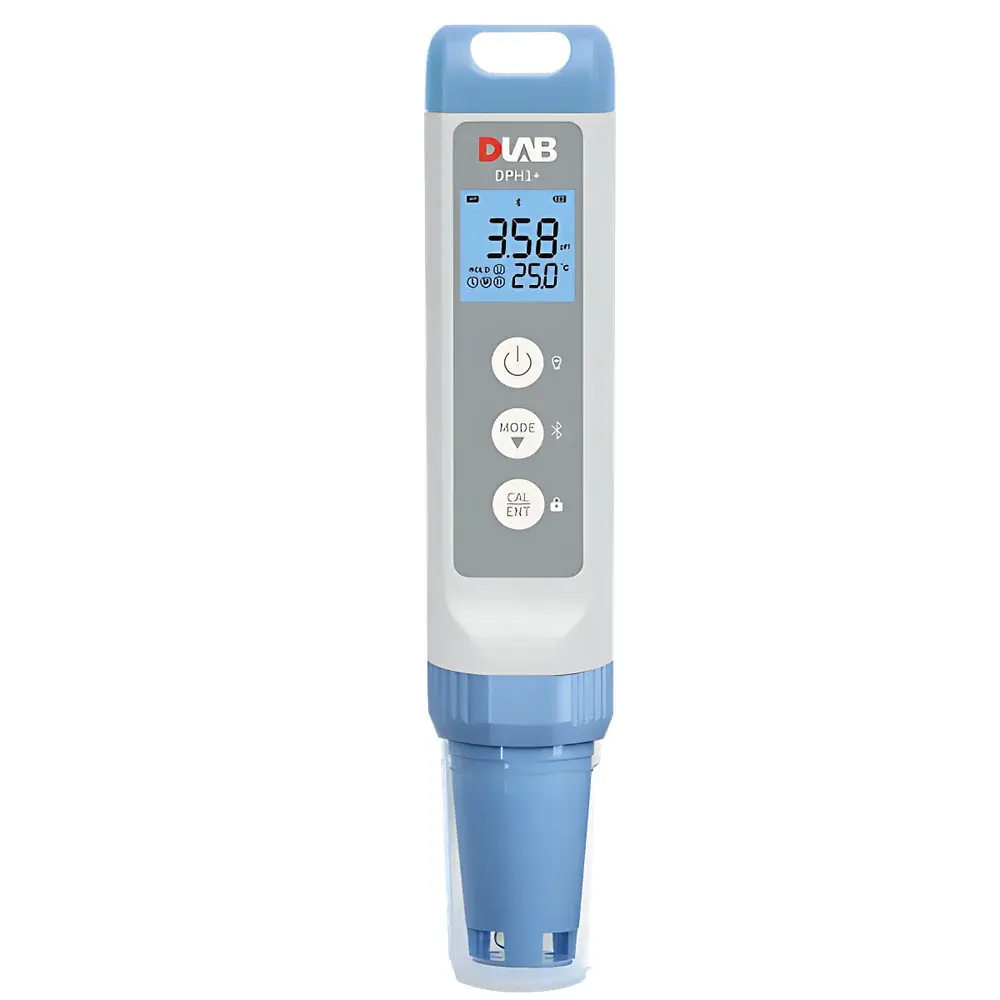
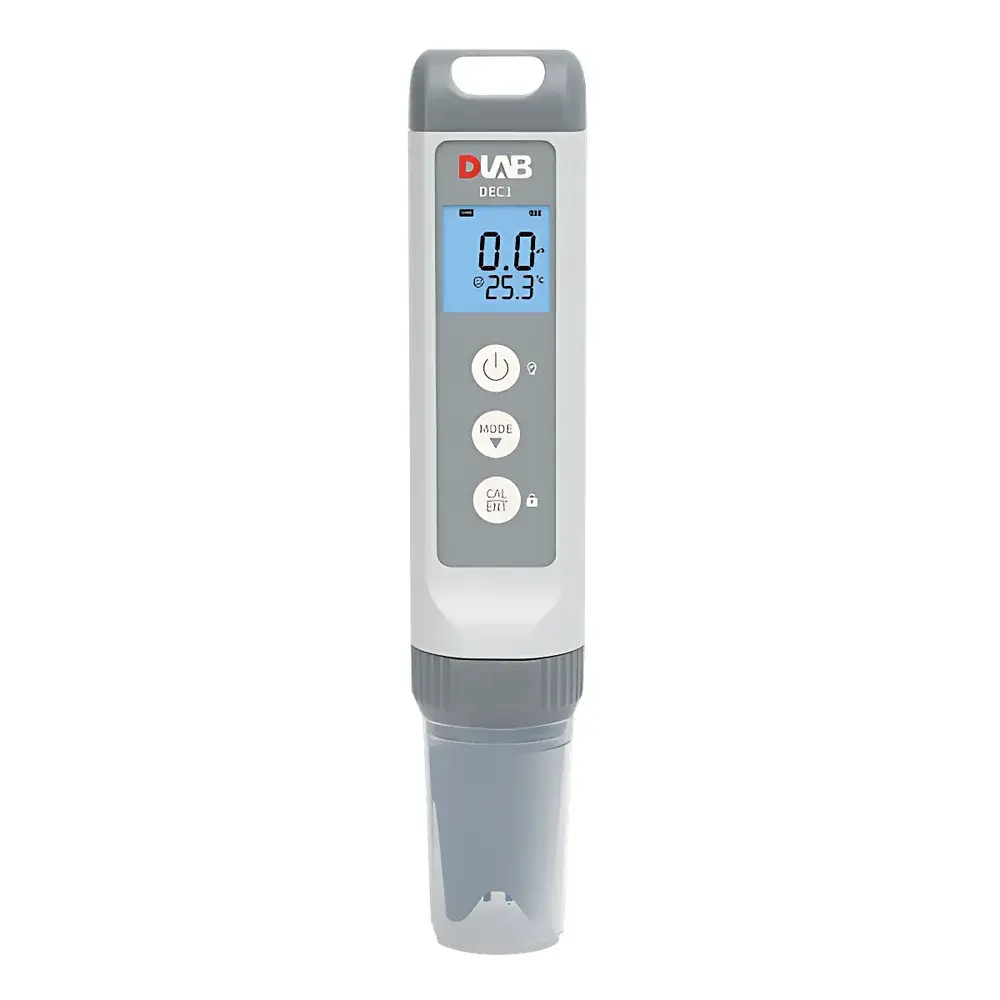
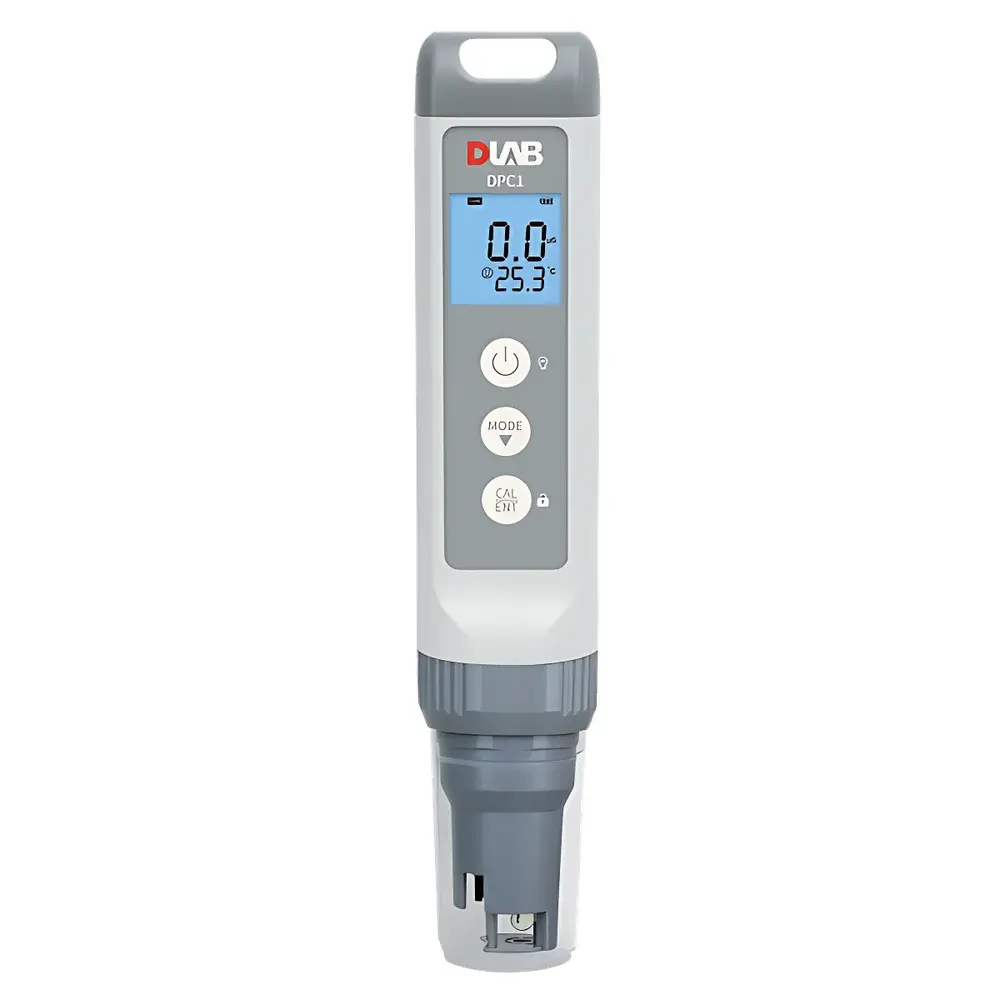
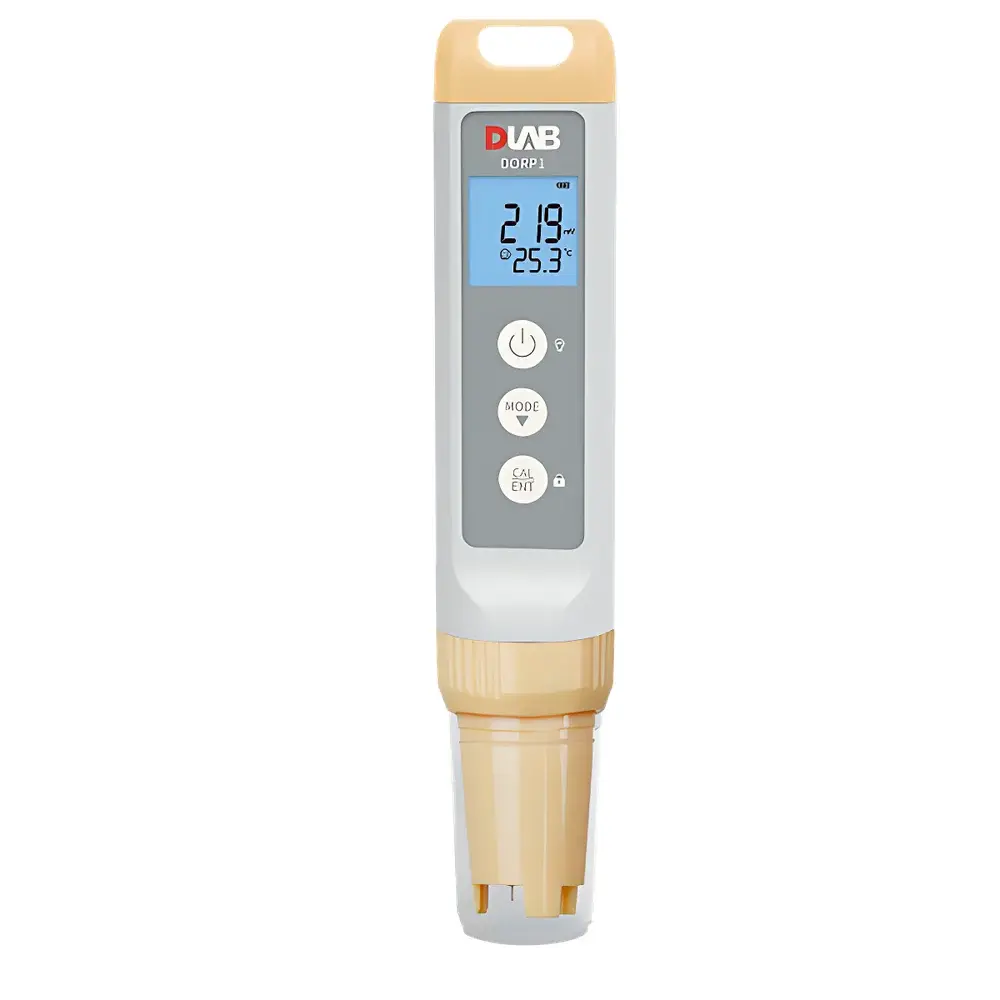
DLAB DPH1 & DPH1+ Portable Multiparameter Pen-Style Analyzer
| Brand | DLAB |
|---|---|
| Origin | Beijing, China |
| Manufacturer | DLAB Scientific Instruments Co., Ltd. |
| Model | DPH1 & DPH1+ |
| Compliance | IP67-rated enclosure |
| Calibration Standards | CH, USA, and NIST traceable buffer solutions |
| Power | Replaceable AAA batteries with low-voltage indicator |
| Auto-off & backlight timeout | User-configurable |
| Connectivity | Bluetooth 5.0 to companion mobile app (iOS/Android) |
| Package Includes | pH 4.01/7.00/10.01 calibration kits, carrying lanyard, protective cap, user manual |
Overview
The DLAB DPH1 and DPH1+ are compact, handheld multiparameter pen-style analyzers engineered for field-deployable electrochemical measurements in environmental monitoring, educational laboratories, aquaculture, food safety screening, and industrial process support. Unlike conventional benchtop meters, these instruments integrate a modular electrode architecture—enabling interchangeable sensor cartridges for pH, mV (ORP), and temperature—within a single ergonomic pen-form factor. Measurement principles follow standardized potentiometric methods per ISO 3696, ASTM D1293, and US EPA Method 150.1, ensuring traceability to international reference standards. The dual-model designation reflects functional differentiation: the DPH1 supports basic pH/mV/°C measurement with manual calibration, while the DPH1+ adds Bluetooth-enabled wireless data transmission, real-time graphing, and extended memory via cloud-synced mobile application integration.
Key Features
- IP67-rated housing—fully dust-tight and submersible up to 1 meter for 30 minutes—validated per IEC 60529, enabling reliable operation in rain, high-humidity greenhouses, or coastal field sites.
- Multi-standard calibration compatibility: configurable selection among Chinese (CH), U.S. (USA), and NIST-traceable pH buffer sets (4.01, 7.00, 10.01), supporting both single- and two-point calibrations with slope and offset diagnostics.
- Intelligent display interface: high-contrast LCD with multi-color backlight (green/blue/red) dynamically adjusted based on measured parameter range and ambient light conditions; visual stability indicator (✓ symbol) and auto-hold function activate upon signal convergence (±0.02 pH / ±1 mV over 3 sec).
- User-definable power management: programmable auto-shutdown (1–60 min) and backlight duration (5–30 sec) to extend battery life without compromising operational readiness.
- Modular electrode system: screw-threaded, O-ring-sealed cartridge design allows rapid field replacement of pH glass electrodes or ORP sensors—minimizing downtime and eliminating cross-contamination between sample matrices.
Sample Compatibility & Compliance
The DPH1/DPH1+ is validated for aqueous samples across pH 0–14 and temperature ranges from 0 °C to 50 °C. Electrode cartridges comply with ISO 8655-5 for volumetric accuracy and exhibit <2 mV drift per hour under continuous immersion in standard buffers. All firmware and calibration routines adhere to GLP documentation requirements, including timestamped calibration logs, operator ID entry (via app), and audit-trail-enabled data export (CSV/PDF). Device firmware conforms to IEC 61326-1 (EMC) and IEC 61010-1 (safety) for laboratory and field use. While not FDA 21 CFR Part 11–certified out-of-box, the DPH1+ mobile application supports ALCOA+ data integrity principles through encrypted local storage, version-controlled firmware updates, and exportable metadata (GPS-tagged location, device serial, calibration history).
Software & Data Management
The companion DLAB LabLink mobile application (v3.2+, available on Apple App Store and Google Play) provides bidirectional communication via Bluetooth 5.0 LE. It enables real-time parameter visualization using three display modes: analog needle gauge (for intuitive trend interpretation), time-series line charts (with adjustable sampling intervals: 1 s–60 s), and tabular numeric view with statistical overlays (mean, SD, min/max). All measurements are stored locally with automatic cloud backup (optional encrypted AWS S3 integration). Export options include timestamped CSV files compatible with LIMS platforms, PDF reports with embedded calibration certificates, and image snapshots annotated with measurement context. Firmware updates are delivered OTA with SHA-256 signature verification.
Applications
- Environmental fieldwork: rapid pH and redox profiling of surface water, wastewater effluents, and soil leachates per ISO 10523 and ASTM D3693.
- Aquaculture management: daily monitoring of pond and recirculating aquaculture system (RAS) water quality to maintain optimal pH (6.5–8.5) and prevent ammonia toxicity.
- Food & beverage QA: spot-checking rinse water pH in HACCP-critical zones, verifying sanitizer concentration via ORP thresholds (>650 mV for hypochlorite).
- Academic instruction: student-led experiments in general chemistry and environmental science labs where portability, durability, and intuitive interface reduce training overhead.
- Industrial maintenance: troubleshooting cooling tower chemistry, boiler feedwater alkalinity, and electroplating bath stability without requiring dedicated lab infrastructure.
FAQ
What electrode types are supported by the DPH1 and DPH1+?
The instruments accept DLAB’s proprietary threaded-pH cartridge (model PH-CAR-01, Ag/AgCl reference, gel-filled electrolyte) and ORP cartridge (model ORP-CAR-01, Pt sensing element). No third-party electrodes are electrically or mechanically compatible.
Is calibration data retained after battery replacement?
Yes—calibration coefficients and date/time stamps are stored in non-volatile flash memory and persist across power cycles and battery changes.
Can the DPH1+ connect to multiple devices simultaneously?
No—Bluetooth pairing is exclusive to one mobile device at a time. Concurrent connections to PCs or other peripherals require USB-serial adapters and third-party terminal software (not officially supported).
Does the IP67 rating apply when the electrode cap is removed?
No—the IP67 certification is valid only when the protective cap is fully seated and the battery compartment cover is sealed. Electrode exposure during measurement does not compromise internal electronics due to the hermetic seal behind the cartridge mount.
How frequently should the pH electrode be recalibrated?
For routine use under stable conditions, recalibration is recommended before each measurement session or every 2 hours of continuous operation. Field applications involving extreme pH, high ionic strength, or organic fouling require pre- and post-sample calibration verification.






