
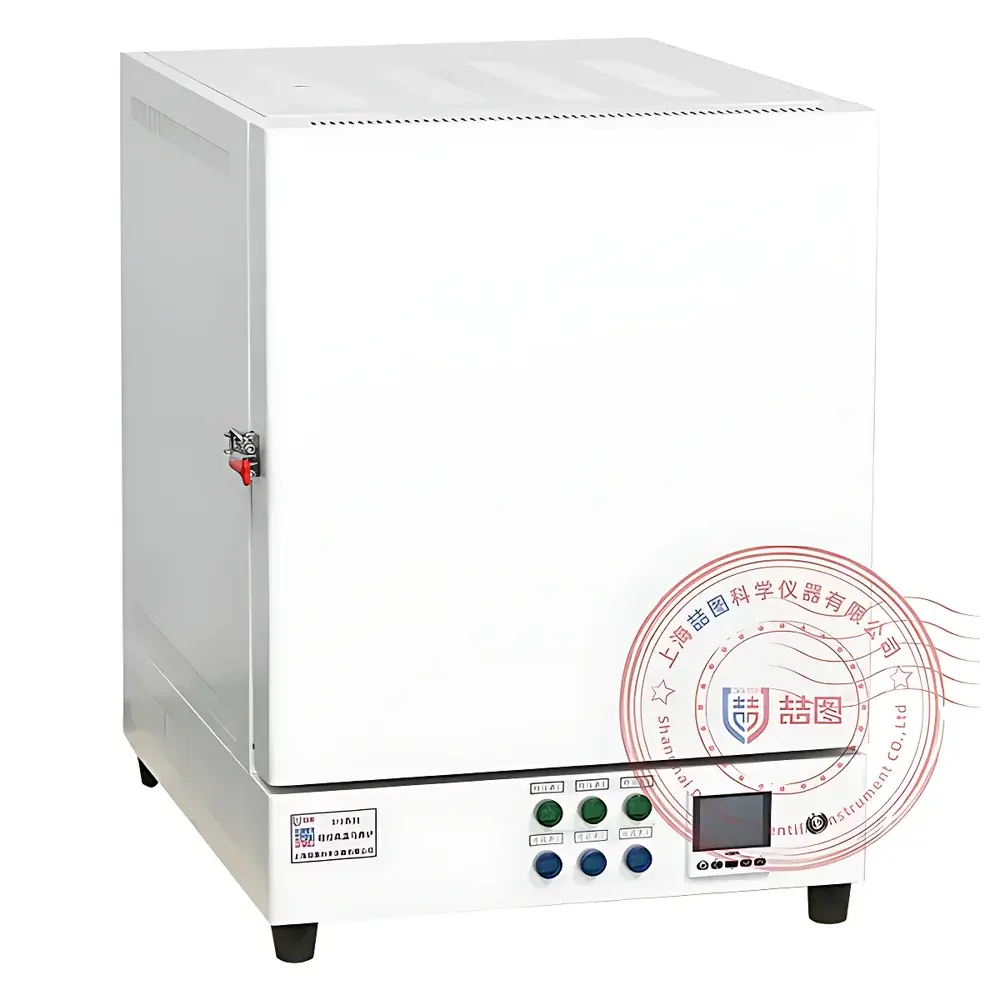
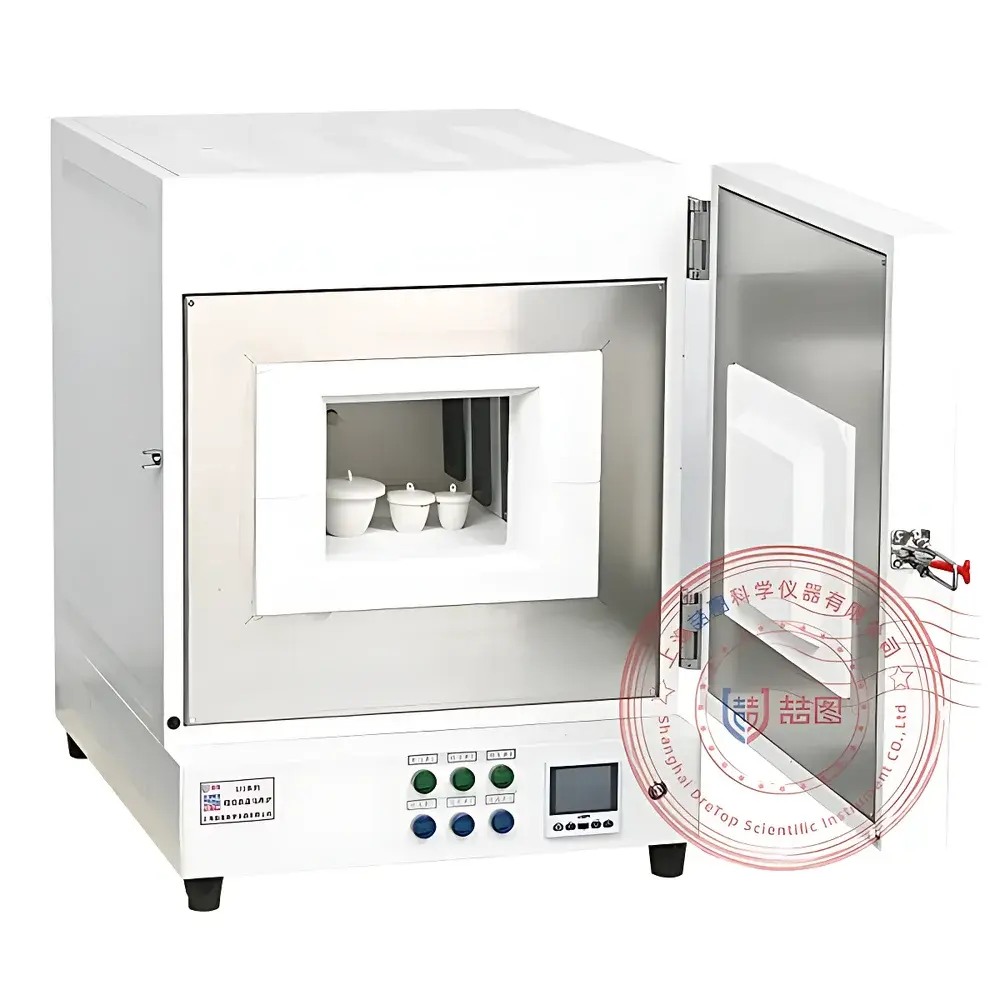
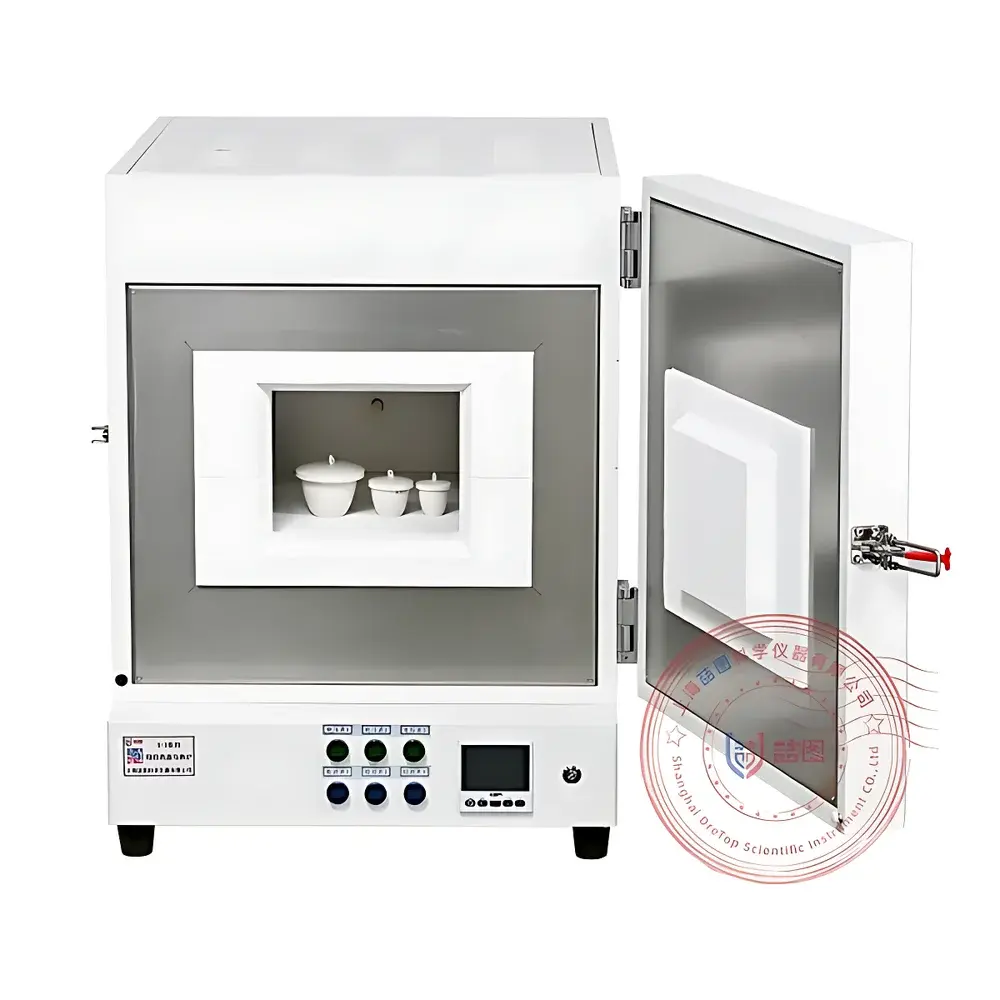
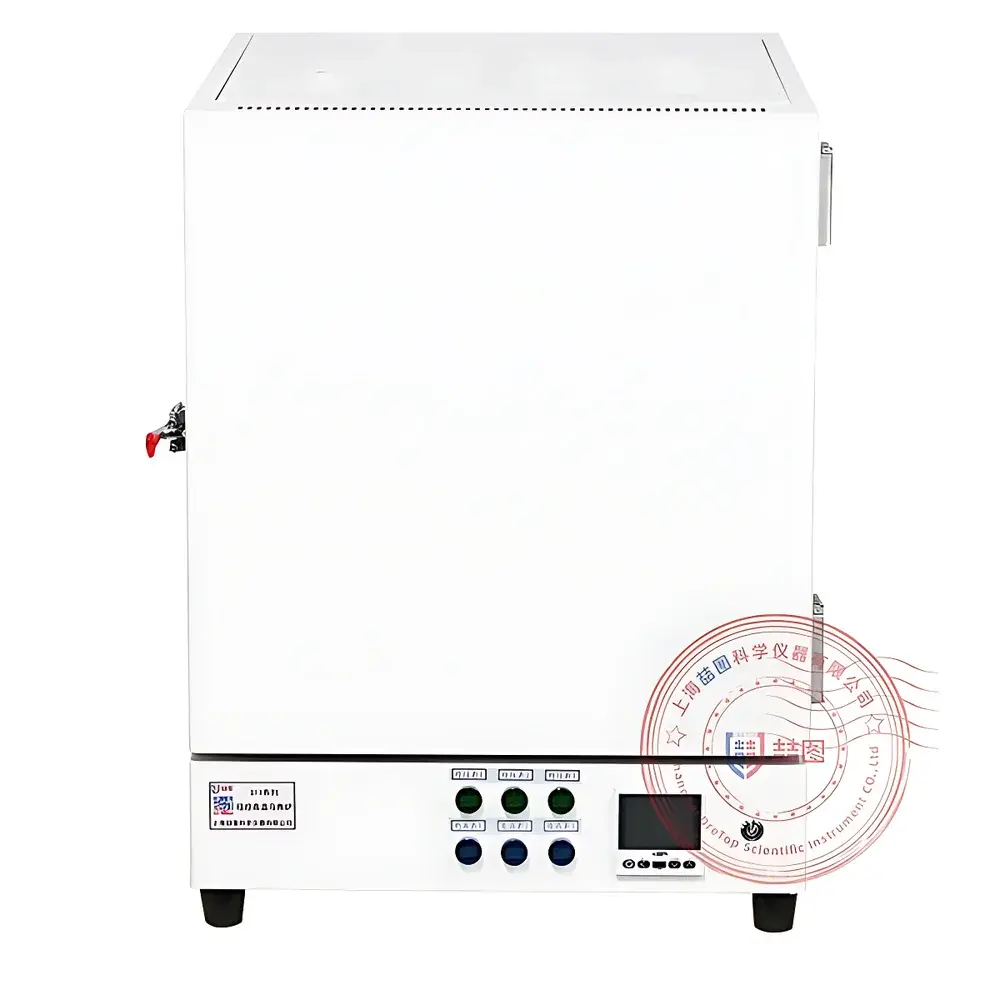
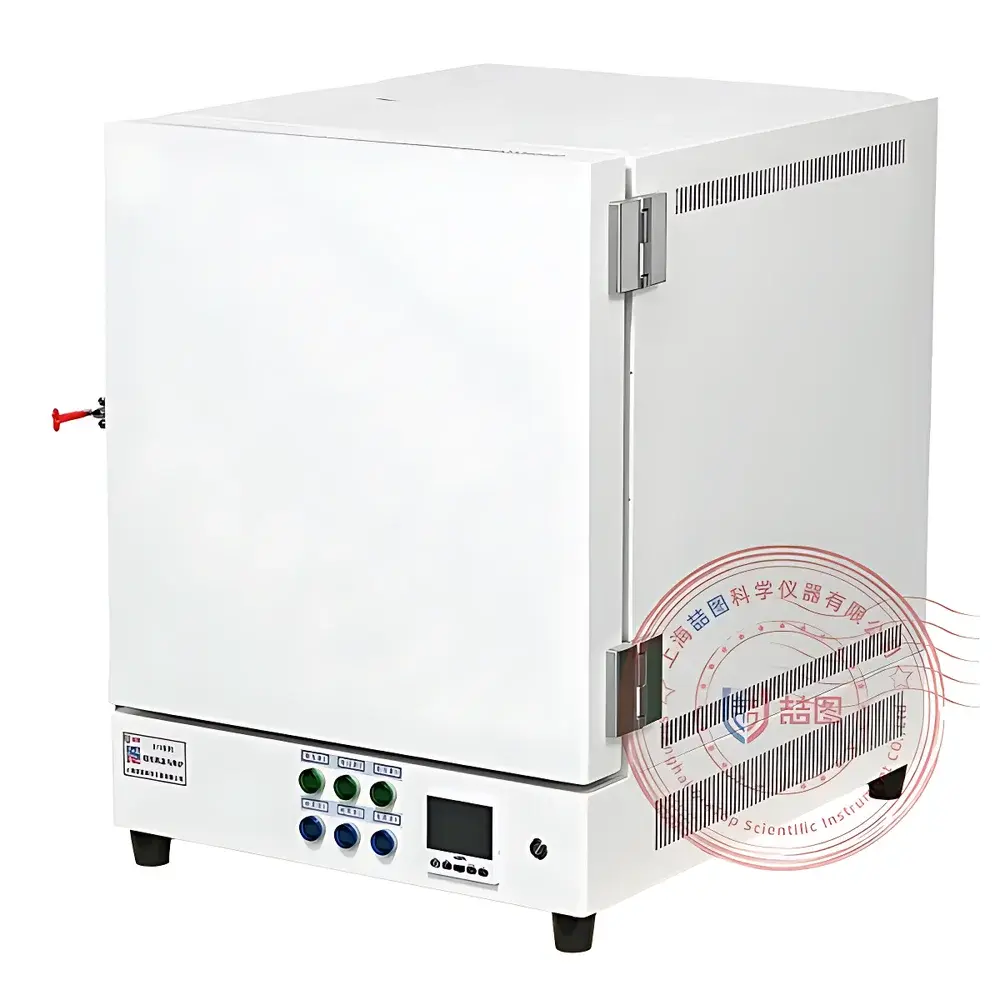
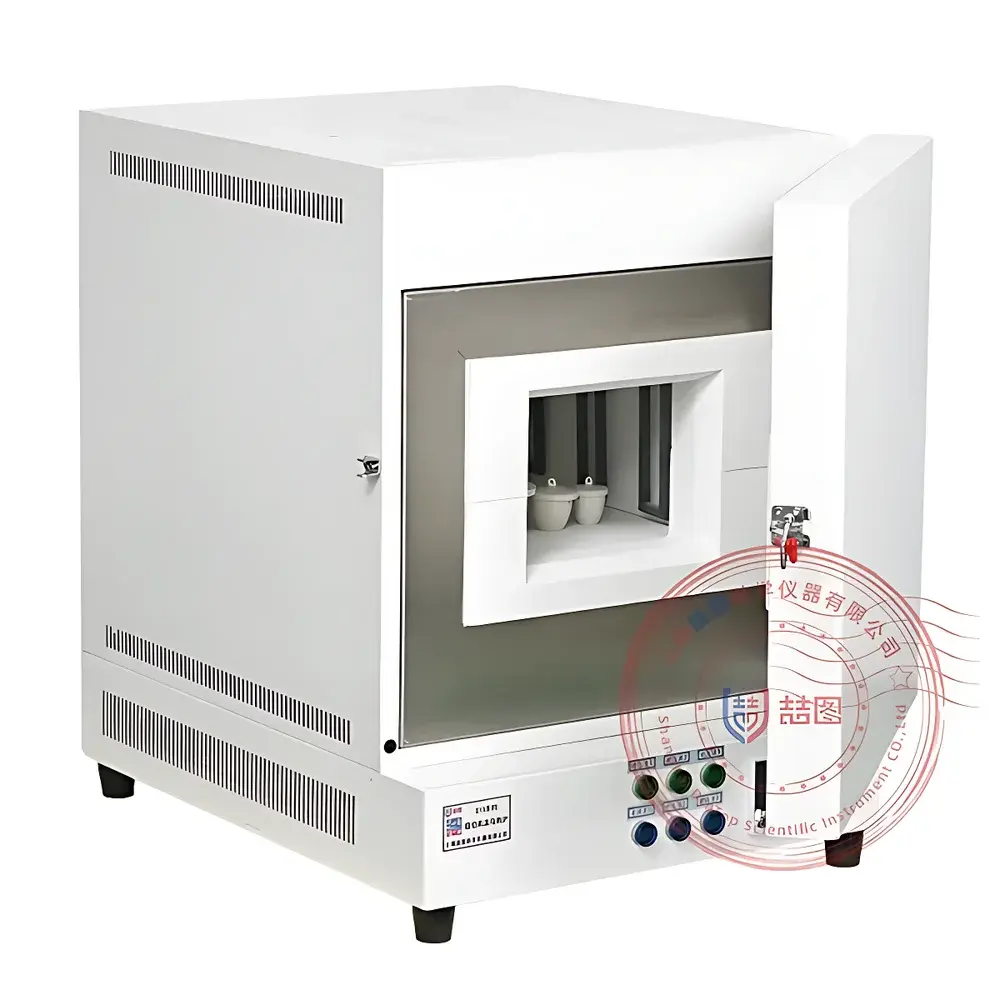
DRETOP B16-36AI High-Temperature Box-Type Muffle Furnace
| Brand | DRETOP |
|---|---|
| Origin | Shanghai, China |
| Model | B16-36AI |
| Type | Box-Type Muffle Furnace |
| Max. Operating Temperature | 1600 °C |
| Rated Power | 15 kW |
| Internal Chamber Dimensions | 300 × 400 × 300 mm (W × H × D) |
| Nominal Volume | 36 L |
| Heating Element | Silicon-Molybdenum (MoSi₂) Rods |
| Temperature Control System | AI-Powered Digital Controller with 7-inch Color Touchscreen |
| Programmable Ramp/Soak Profiles | Multi-segment (up to 30 segments), Linear & Non-linear Fitting Algorithms |
| Thermal Insulation | Vacuum-Microporous Ceramic Fiber Board |
| Safety Features | Dual-stage Overtemperature Protection, Door-Interlocked Power Cut-off, Phase Loss & Thermocouple Break Detection, Power Segment Limitation, Blackout Memory Retention |
| Compliance | Designed for GLP-compliant thermal processing |
| Optional Accessories | Exhaust Chimney, RS485 Communication Module, Inert Gas Inlet Valve, 4G Crucible Kit, Miniature Thermal Printer |
Overview
The DRETOP B16-36AI is a high-precision, programmable box-type muffle furnace engineered for sustained operation at up to 1600 °C in research laboratories, materials science centers, and industrial quality control environments. It operates on resistive Joule heating via silicon-molybdenum (MoSi₂) rods embedded in three furnace walls—enabling rapid, uniform thermal distribution across the entire 36-liter chamber. Unlike conventional resistance-heated furnaces, the B16-36AI integrates a dedicated air-cooled dry-type isolation transformer, minimizing electromagnetic interference and ensuring stable power delivery under variable load conditions. Its vacuum-microporous ceramic fiber insulation achieves thermal conductivity as low as 0.08 W/(m·K) at 1000 °C, significantly reducing standby heat loss and improving energy efficiency over traditional refractory brick designs. The furnace is configured for vertical thermal gradient minimization—verified by ±3 °C uniformity across the working zone at 1400 °C per IEC 60584-2 calibration protocols.
Key Features
- Triple-wall MoSi₂ heating configuration with spiral-wound element layout ensures symmetrical radiant heat flux and eliminates cold spots.
- AI-based digital controller with adaptive PID tuning and auto-parameter optimization—supports ramp rates from 0.1 °C/min to 35 °C/min with ±1 °C setpoint accuracy at 1600 °C.
- 7-inch full-color capacitive touchscreen interface with real-time temperature trend visualization, historical curve overlay, and CSV data export via USB port.
- Integrated door safety interlock system: automatic power cutoff upon door opening; seamless resumption of programmed profile after reclosure.
- Dual-level overtemperature protection: primary limit set at 1620 °C (hardware cut-off), secondary alarm triggered at 1610 °C (software alert with audible/visual notification).
- Structural reinforcement with phosphate conversion coating + high-temp epoxy polyester powder coating provides corrosion resistance and mechanical durability under repeated thermal cycling.
- Front-accessible internal transformer compartment enables serviceability without disassembly of the main chamber or insulation stack.
- Three-zone thermal shielding—including ceramic fiber board, stainless steel inner flange (2 mm thick), and refractory ceramic baffle at the door aperture—reduces peripheral heat leakage by >40% versus standard configurations.
Sample Compatibility & Compliance
The B16-36AI accommodates standard crucibles (alumina, zirconia, graphite) up to Φ120 × 150 mm height, supporting ashing, calcination, sintering, and heat-treatment protocols for metals, ceramics, catalysts, and geological samples. Its chamber geometry complies with ASTM E1112 requirements for uniform temperature distribution during gravimetric ash analysis. The furnace meets Class II electrical safety standards per IEC 61010-1 and supports traceable calibration through integrated Type S thermocouple inputs (certifiable to NIST-traceable standards). When equipped with optional inert gas inlet and exhaust chimney, it satisfies ISO 8573-1 compressed air purity class 3 for controlled-atmosphere processing. Data integrity conforms to FDA 21 CFR Part 11 when paired with audit-trail-enabled software packages (e.g., DRETOP LabLink Suite v3.2+).
Software & Data Management
The embedded AI controller firmware supports multi-user access with hierarchical permission levels (Operator, Technician, Administrator), each requiring unique password authentication. All parameter changes, program executions, and alarm events are timestamped and stored locally for ≥12 months. Data export includes both raw time-series logs (with millisecond resolution) and processed reports (PDF/CSV) containing ramp rate deviation metrics, dwell time compliance, and maximum deviation from target temperature. Optional RS485 Modbus RTU interface enables integration into LIMS or SCADA systems for centralized monitoring and automated batch record generation. Firmware updates are delivered via encrypted USB key with SHA-256 signature verification.
Applications
- Thermal decomposition and ash content determination per AOAC 942.05 and EPA Method 3050B.
- Sintering of advanced ceramics (e.g., SiC, AlN) and solid oxide fuel cell (SOFC) components under controlled oxygen partial pressure.
- Heat treatment of small-scale metal alloys (quenching, annealing, tempering) with precise soak time control and repeatable cooling profiles.
- Calibration of thermocouples and reference materials in metrology labs accredited to ISO/IEC 17025.
- Preparation of catalyst supports and battery electrode precursors requiring exact stoichiometric oxidation states.
- High-temperature XRD sample conditioning where thermal history must be documented per ASTM E1421.
FAQ
What is the recommended maintenance interval for the MoSi₂ heating elements?
MoSi₂ rods require no scheduled replacement under normal operation; however, visual inspection every 200 operational hours is advised to detect surface oxidation or warping. Lifespan typically exceeds 2,000 hours at 1500 °C.
Can the furnace operate continuously at 1600 °C?
Yes—rated for continuous duty at maximum temperature, provided ambient temperature remains ≤30 °C and ventilation clearance ≥300 mm on all sides.
Is the touchscreen interface compatible with third-party SCADA platforms?
Yes—via RS485 Modbus RTU protocol (addressable register map available upon request); custom OPC UA drivers can be developed under NDA.
How does the dual-stage overtemperature protection function during power recovery after blackout?
Upon restoration, the controller reinitializes using last-saved parameters but enforces a mandatory 5-minute cooldown delay before enabling heating—preventing thermal shock to elements or chamber lining.
What validation documentation is supplied with the unit?
Factory-assembled IQ/OQ documentation package (per ASTM E2500), including temperature mapping report (9-point grid at 1000/1400/1600 °C), electrical safety test records, and thermocouple calibration certificates.



