
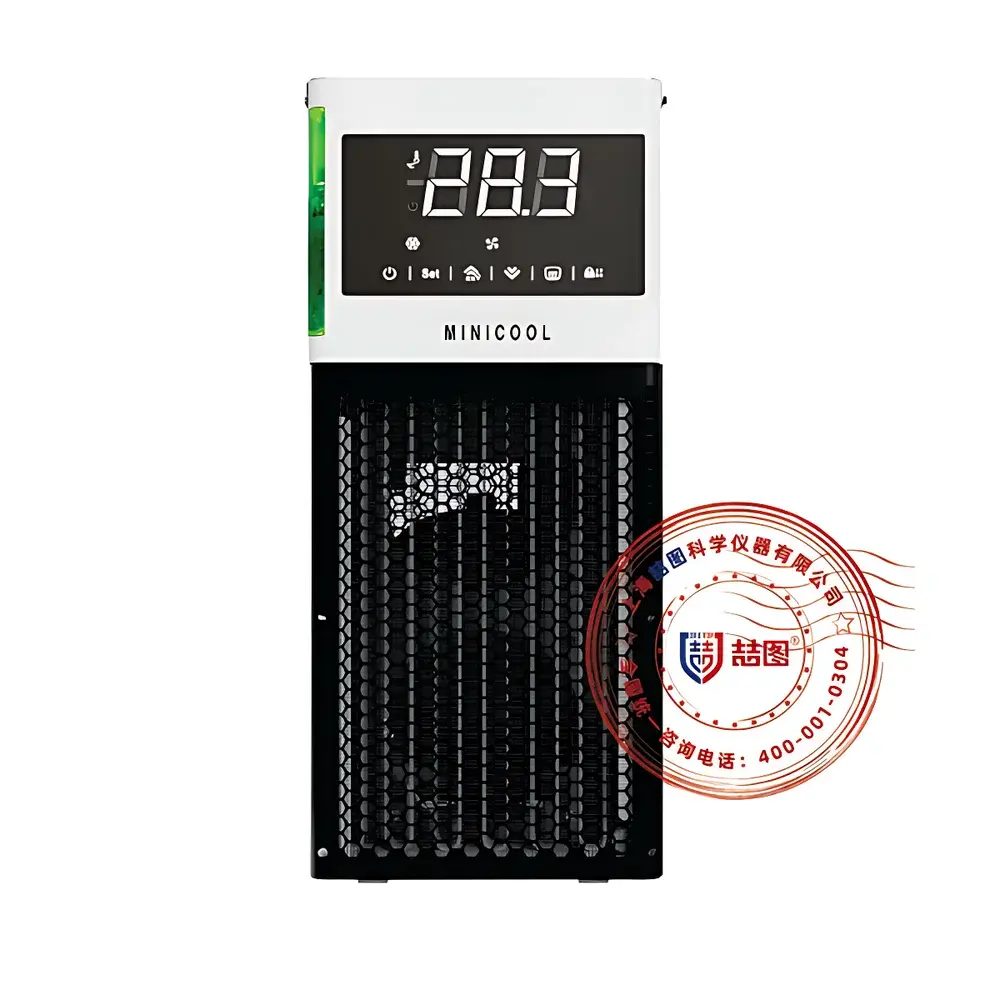
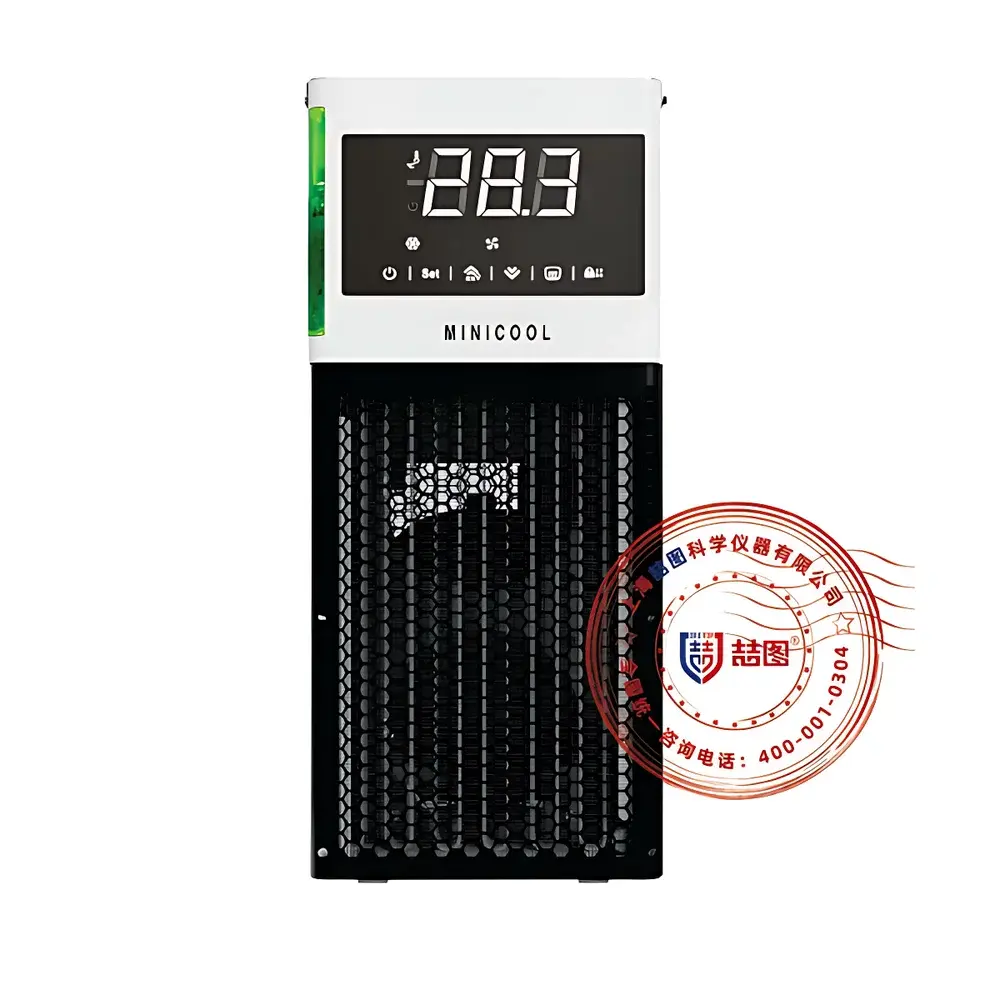
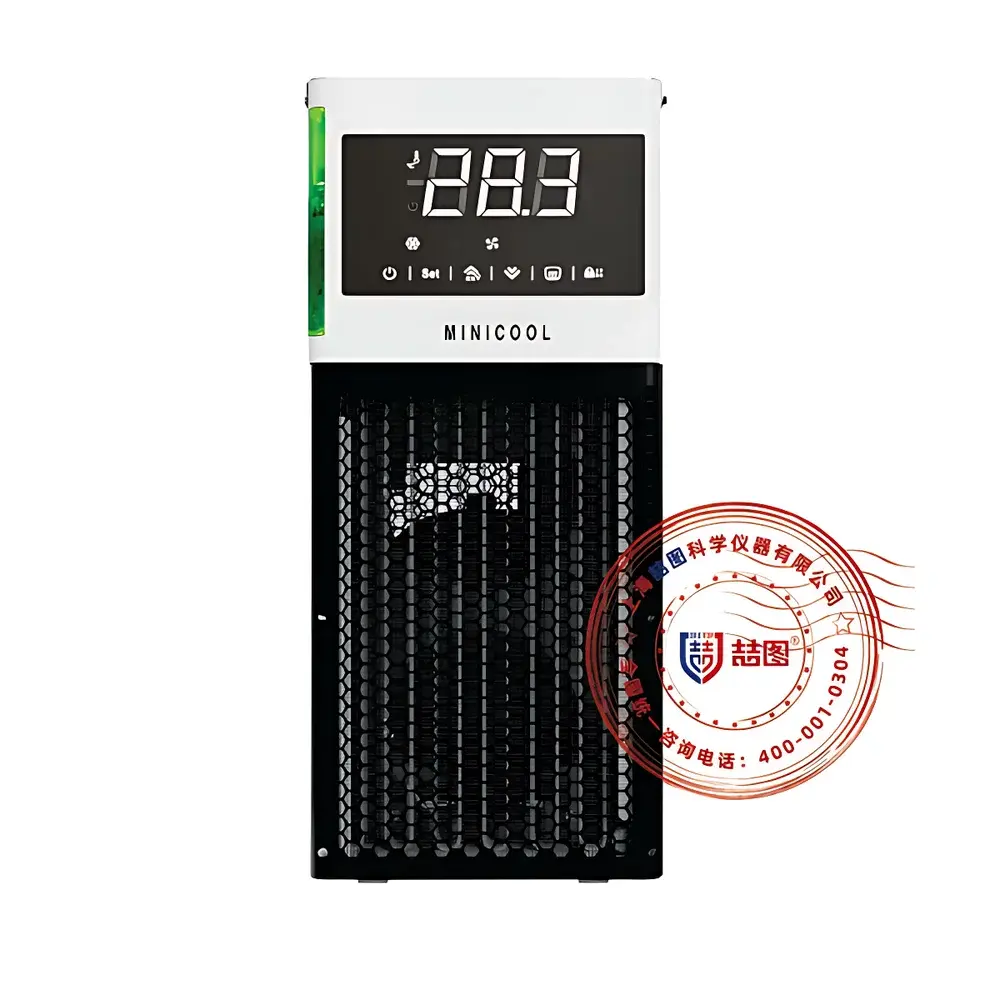
DRETOP LX11-40-2100 Benchtop Circulating Chiller
| Brand | DRETOP |
|---|---|
| Origin | Shanghai, China |
| Model | LX11-40-2100 |
| Instrument Type | Integrated Circulating Chiller |
| Cooling Method | Water-Cooled |
| Temperature Control Range | −40 °C to +40 °C |
| Refrigeration Capacity | 2.1 kW (@20 °C) |
| Temperature Stability | ±2 °C |
| Reservoir Volume | 11 L |
| Circulating Pump Flow Rate | 20 L/min |
| Operating Mode | Continuous |
| Communication Interface | RS485 |
| Corrosion-Resistant Wetted Materials | Yes |
| Safety Protections | Condenser Overtemperature, Tank Temperature Limit, Compressor Overheat/Overcurrent, Low-Level Detection |
| Temperature Sensor | NTC with Single-Point Calibration Capability |
| Power Recovery | Auto-Restart After Power Interruption |
Overview
The DRETOP LX11-40-2100 is a compact, integrated benchtop circulating chiller engineered for precise thermal management in laboratory and pilot-scale environments. It employs a vapor-compression refrigeration cycle with an environmentally compliant refrigerant (R-404A or R-507, per model configuration), enabling stable operation across a wide temperature range from −40 °C to +40 °C. Unlike air-cooled units, its water-cooled condenser design minimizes ambient heat rejection, improves energy efficiency under continuous load, and ensures consistent performance in temperature-sensitive applications such as spectroscopic instrumentation cooling, reaction calorimetry, and cryogenic sample conditioning. The unit’s thermally isolated reservoir and insulated circulation loop minimize external thermal interference, supporting reproducible experimental conditions essential for method validation and GLP-compliant workflows.
Key Features
- Refrigeration system optimized for low-temperature stability: Achieves ±2 °C temperature uniformity over full operating range; optional calibration upgrade available for enhanced precision (±0.1 °C, E-series variant).
- Benchtop form factor (365 × 490 × 700 mm) with robust steel enclosure—designed for placement inside fume hoods, under lab benches, or adjacent to analytical instruments without compromising ventilation or accessibility.
- Corrosion-resistant wetted path: All fluid-contact components—including stainless-steel reservoir, EPDM-sealed pump head, PTFE-coated temperature sensor, copper-nickel cooling coil, and G1/2 BSP quick-connect fittings—are selected for compatibility with aqueous glycol mixtures (e.g., 30% ethylene glycol/water) and mild organic coolants.
- Intelligent pump control: Brushless DC circulating pump delivers constant 20 L/min flow at variable backpressure; automatic load adaptation prevents cavitation and protects connected equipment (e.g., ICP-MS chillers, laser diode mounts, or rotary evaporator condensers) from pressure-induced damage.
- Comprehensive safety architecture: Dual-stage liquid level monitoring (mechanical glass sight gauge + electronic float switch), real-time compressor discharge temperature sensing, high-pressure cut-off, and audible/visual alarm with diagnostic code display (e.g., “E03” = low coolant level; “E07” = condenser overtemperature).
- RS485 serial interface compliant with Modbus RTU protocol—enables integration into centralized lab automation systems for remote setpoint adjustment, temperature logging, and fault reporting aligned with FDA 21 CFR Part 11 audit trail requirements.
Sample Compatibility & Compliance
The LX11-40-2100 is compatible with standard laboratory heat transfer fluids, including deionized water, 20–50% aqueous propylene/ethylene glycol solutions, and low-conductivity silicone oils (viscosity ≤ 50 cSt). Its sealed circulation loop prevents evaporation loss and microbial growth during extended unattended operation. The unit meets CE marking requirements for electromagnetic compatibility (EN 61326-1) and low-voltage safety (EN 61010-1). Refrigerant selection complies with EU F-Gas Regulation (EU No. 517/2014) and Montreal Protocol phase-down schedules. For regulated environments, the chiller supports IQ/OQ documentation packages and can be validated per ASTM E2500 and ISO/IEC 17025 guidelines for equipment qualification.
Software & Data Management
Local operation is managed via a 3.5-inch TFT LCD touchscreen with intuitive menu navigation and password-protected parameter locking. Temperature setpoints, pump enable/disable status, and alarm history are stored in non-volatile memory. When connected via RS485 to a host PC or PLC, the chiller transmits real-time process data—including actual bath temperature, compressor run time, outlet pressure, and error log timestamps—at user-configurable intervals (1–300 seconds). Third-party SCADA platforms (e.g., LabVIEW, Ignition, or Siemens SIMATIC) can ingest this data using open Modbus register mapping. Audit trails generated during remote control sessions satisfy ALCOA+ principles for data integrity in GMP and clinical research settings.
Applications
- Cooling of high-power analytical instruments: NMR magnet shims, X-ray diffractometer detectors, FTIR interferometers, and mass spectrometer ion sources requiring sub-ambient thermal stabilization.
- Controlled reaction environments: Exothermic synthesis in jacketed reactors (≤5 L volume), crystallization studies, and polymerization kinetics where precise ΔT control influences nucleation rate and crystal morphology.
- Pilot-scale process development: Thermal conditioning of small-batch chromatography columns, membrane filtration modules, or electrochemical cell stacks during DOE-based optimization.
- Material testing: Conditioning of tensile specimens prior to mechanical testing per ASTM D638 or ISO 527, and thermal cycling of electronic components per JEDEC JESD22-A104.
- Biotechnology support: Maintaining cold-chain integrity for enzyme storage cabinets, electrophoresis apparatuses, and PCR prep stations in molecular biology labs.
FAQ
What refrigerant is used in the LX11-40-2100, and is it compliant with international environmental regulations?
The unit utilizes R-404A or R-507 refrigerant—both classified as HFCs with zero ozone depletion potential (ODP = 0) and subject to phasedown under the Kigali Amendment. Units shipped post-2024 may include next-generation low-GWP alternatives upon request.
Can the chiller operate continuously for 72+ hours without maintenance?
Yes. Designed for uninterrupted operation, it features sealed bearings, oil-free compressor lubrication, and redundant thermal protection. Recommended preventive maintenance includes annual refrigerant leak check and biannual glycol concentration verification.
Is the RS485 interface compatible with common lab data acquisition software?
Yes. Native Modbus RTU implementation allows direct integration with MATLAB Data Acquisition Toolbox, Python PyModbus libraries, and commercial platforms like DeltaV or WinCC without proprietary drivers.
Does the unit support external temperature feedback from a process sensor?
No—the LX11-40-2100 regulates based on internal bath temperature only. For process-coupled control, a separate PID controller with external sensor input must be interfaced via analog 0–10 V signal (not included).
What is the maximum allowable backpressure at the pump outlet?
Rated for continuous operation up to 2.5 bar (36 psi) static backpressure. Flow rate decreases gradually beyond this threshold; sustained operation >3.0 bar requires external pressure relief valve installation.



