
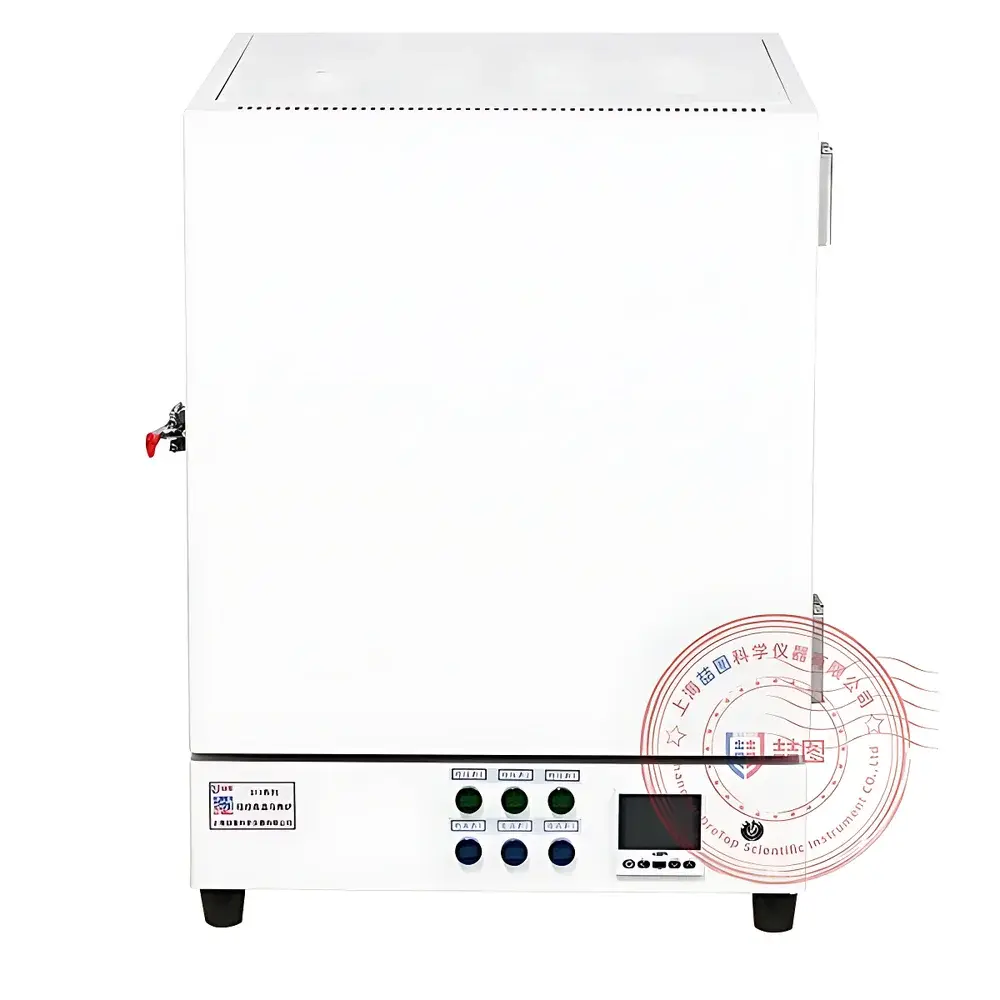
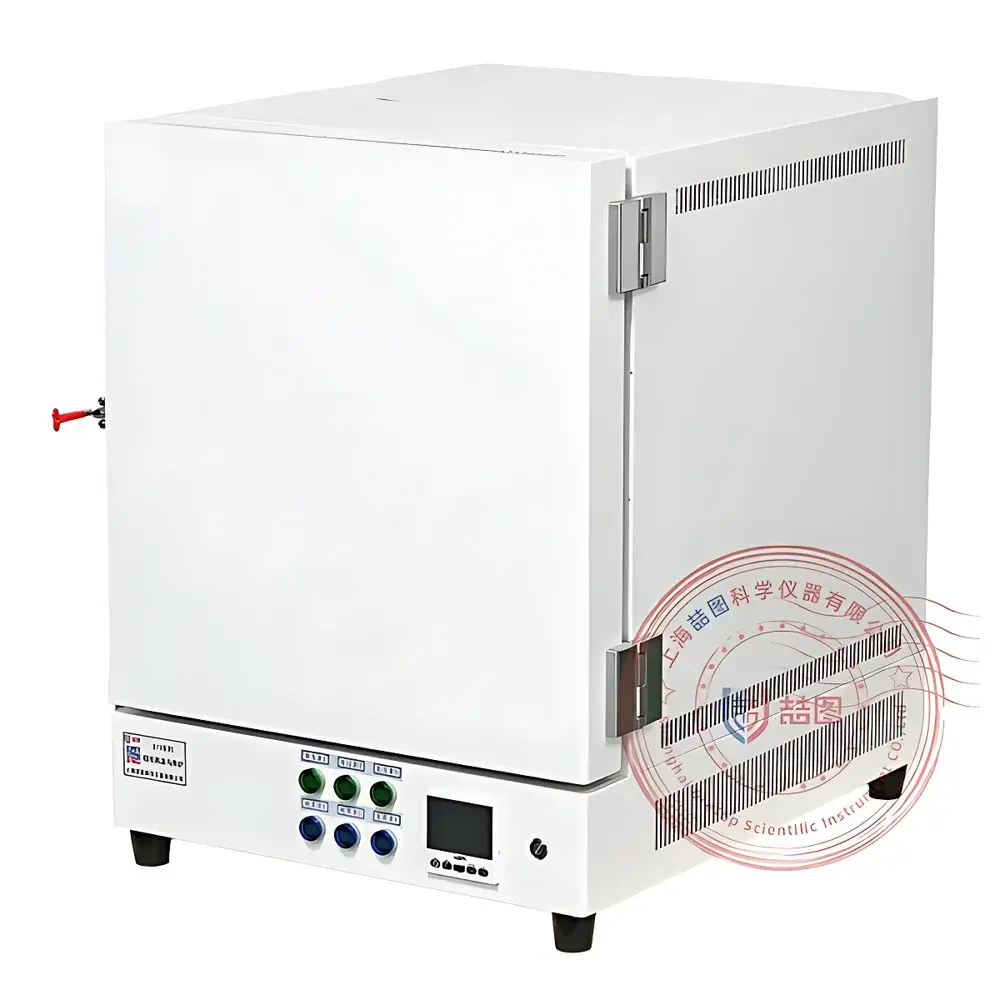
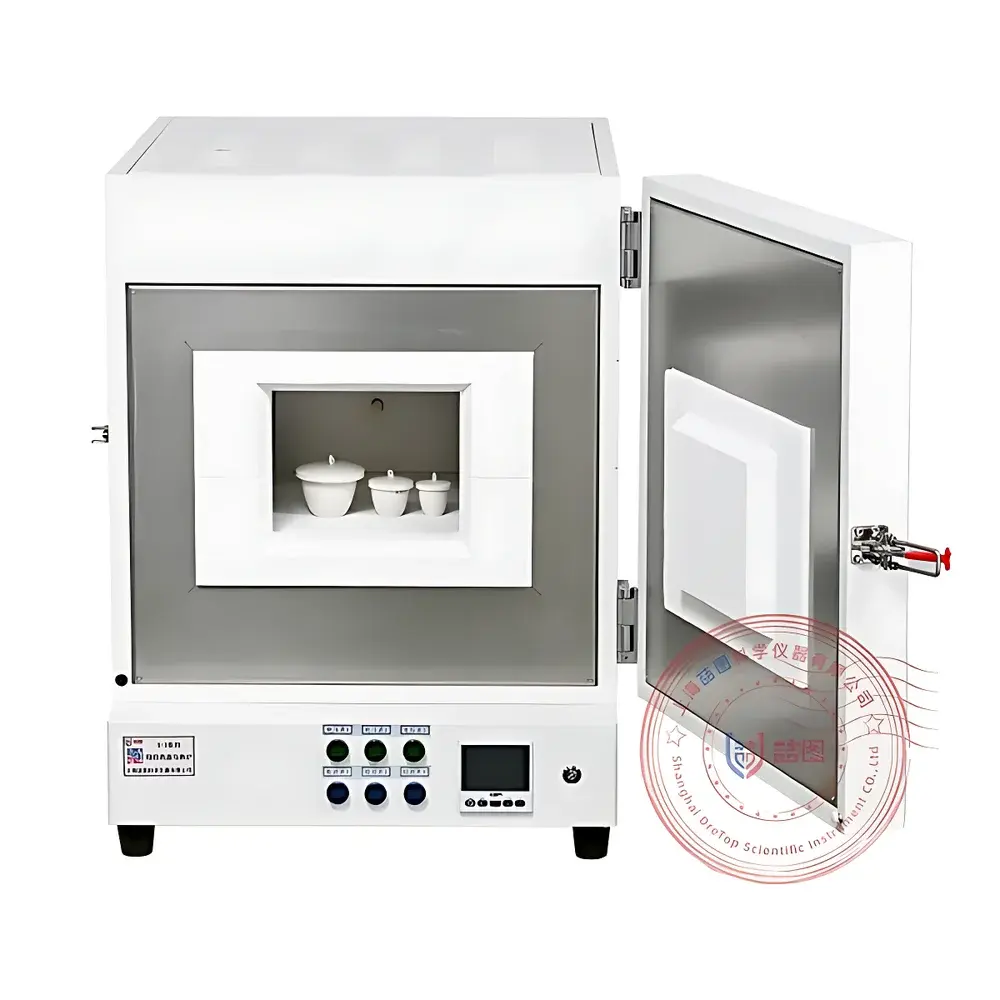
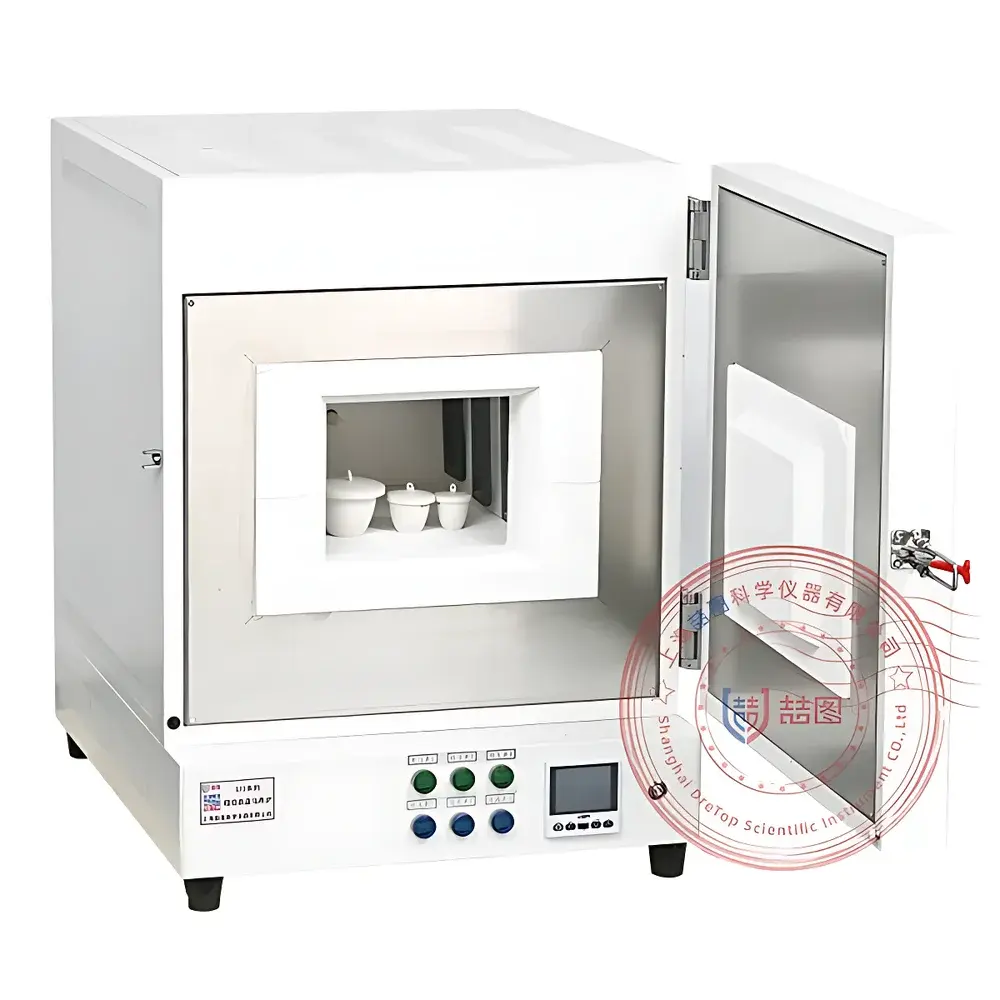
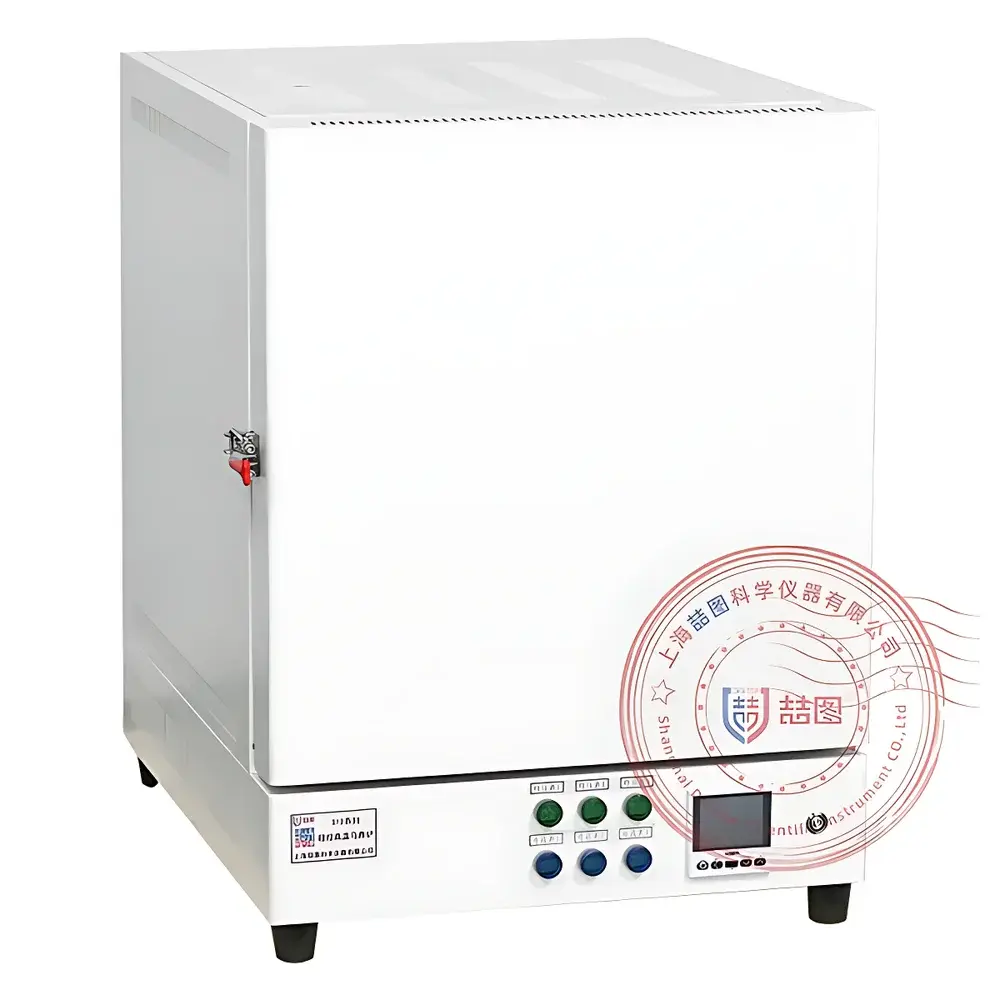
DRETOP S13-9P Programmable High-Temperature Muffle Furnace
| Brand | DRETOP |
|---|---|
| Origin | Shanghai, China |
| Model | S13-9P |
| Furnace Type | Box-Type Muffle Furnace |
| Max Temperature | 1300 °C |
| Temperature Control Accuracy | ±1 °C |
| Rated Power | 12000 W |
| Heating Element | Silicon Carbide Rods |
| Internal Dimensions | 150×200×100 mm to 300×400×300 mm |
| Nominal Chamber Volume | 4 L to 36 L |
| Heating Configuration | Triple-Wall Radiant Heating (Front, Back, Top/Bottom) |
Overview
The DRETOP S13-9P is a programmable high-temperature box-type muffle furnace engineered for precision thermal processing in research laboratories, quality control environments, and industrial R&D settings. It operates on resistive heating principles using silicon carbide (SiC) rods embedded in triple-wall ceramic fiber insulation, enabling uniform radiant heat distribution across the chamber. Designed for applications requiring controlled thermal ramping, hold profiles, and repeatable high-temperature exposure up to 1300 °C, the S13-9P supports standardized thermal protocols used in ASTM E1131 (thermogravimetric analysis), ISO 562 (determination of ash content), ISO 1171 (ash in coal and coke), and USP & EP methods for pharmaceutical residue-on-ignition testing. Its robust construction and integrated safety architecture make it suitable for GLP-compliant sample preparation workflows where traceability, reproducibility, and thermal stability are critical.
Key Features
- Intelligent PID temperature control with auto-tuning capability and dual-stage deviation alarm (upper/lower limit, positive/negative error)
- Programmable controller with large-digit LED display; supports multi-step ramp-soak profiles, automatic shutdown upon completion, and adjustable heating/cooling rates
- Triple-wall heating configuration: SiC rods mounted on front, back, and top/bottom furnace walls ensure superior temperature uniformity (±3 °C at 1200 °C across working zone)
- Vacuum-microporous ceramic fiber insulation (density ~128 kg/m³) minimizes thermal mass and power consumption while maintaining low external surface temperature (<50 °C at 1300 °C ambient)
- Reinforced stainless-steel inner sealing frame (2 mm thick) around furnace opening prevents carbon deposition buildup and enables easy cleaning after repeated ashing cycles
- Interlocked door mechanism: automatic power cutoff upon door opening; seamless resumption of heating sequence after closure without manual reset
- Dual-level safety system including over-temperature cut-off, thermocouple break detection, phase-loss monitoring, and real-time AC voltage/current metering
- Integrated ambient temperature compensation algorithm accelerates initial ramp by dynamically adjusting setpoint based on measured chamber start temperature
- Phosphate conversion coating + high-temp epoxy powder coating on outer chassis provides corrosion resistance and mechanical durability under frequent thermal cycling
Sample Compatibility & Compliance
The S13-9P accommodates crucibles, boats, and trays made from alumina, quartz, silicon carbide, or platinum—compatible with standard ASTM G160, ISO 12944, and IEC 60068-2-11 test specimen geometries. It meets essential electrical safety requirements per IEC 61010-1 and electromagnetic compatibility per EN 61326-1. For regulated environments, optional RS485/USB interfaces support audit-trail-capable data logging aligned with FDA 21 CFR Part 11 expectations when paired with validated third-party software. The furnace is routinely deployed in coal analysis labs (ASTM D3174, D3175), cement clinker testing (ASTM C114), environmental solid waste characterization (EPA Method 3010A), and pharmacopeial ash-residue procedures (USP , Ph. Eur. 2.2.28).
Software & Data Management
The embedded controller stores up to 16 user-defined programs with 30 segments each. Optional color touchscreen upgrade adds graphical temperature curve visualization, password-protected engineering access levels (operator/admin/engineer), and timestamped event logging (door open/close, alarm triggers, program start/end). Data export via USB or RS485 enables integration into LIMS or ELN platforms. When configured with optional inert gas inlet valve and exhaust chimney, the system supports controlled-atmosphere processing compliant with ISO 8501-1 surface preparation standards and ASTM D5259 for oxidative stability testing.
Applications
- Thermal gravimetric analysis (TGA) sample pre-conditioning and residue quantification
- Ash content determination in foodstuffs, biomass, polymers, and lubricants per AOAC 942.05 and ISO 2171
- Volatiles and fixed carbon measurement in coal and coke (ASTM D3172, ISO 562)
- Calcination of catalyst precursors, battery cathode materials (e.g., LiCoO₂, NMC), and ceramic powders
- Preparation of certified reference materials (CRMs) requiring precise thermal history control
- Medical device sterilization validation studies (ISO 11137) and bioburden reduction assessment
- Environmental testing of filter media, fly ash, and incinerator residues
FAQ
What thermocouple type is used for temperature sensing?
Type S (Platinum/Rhodium) thermocouples are factory-installed for long-term stability and accuracy up to 1300 °C.
Is the furnace suitable for inert or reducing atmospheres?
Yes—optional flanged gas inlet port and exhaust chimney allow connection to nitrogen, argon, or forming gas supply lines.
Can the controller log temperature data internally?
The base controller records program execution status and alarms only; continuous time-stamped temperature logging requires the optional USB/RS485 interface and external software.
What is the typical warm-up time to 1200 °C?
Approximately 65–80 minutes depending on chamber volume and starting ambient temperature, enabled by low-thermal-mass insulation and distributed SiC heating.
Does the unit comply with CE marking requirements?
Yes—the design conforms to the EU Machinery Directive 2006/42/EC and Low Voltage Directive 2014/35/EU when supplied with appropriate documentation and labeling.



