
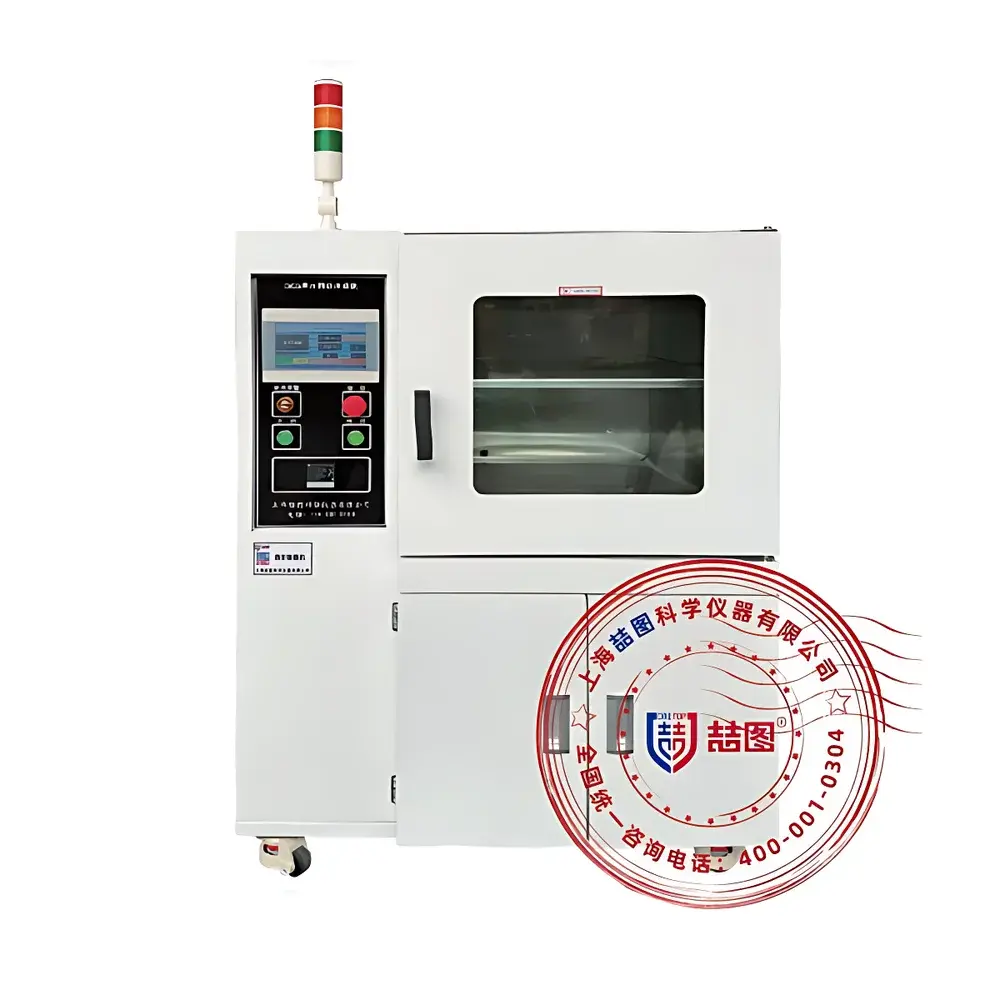
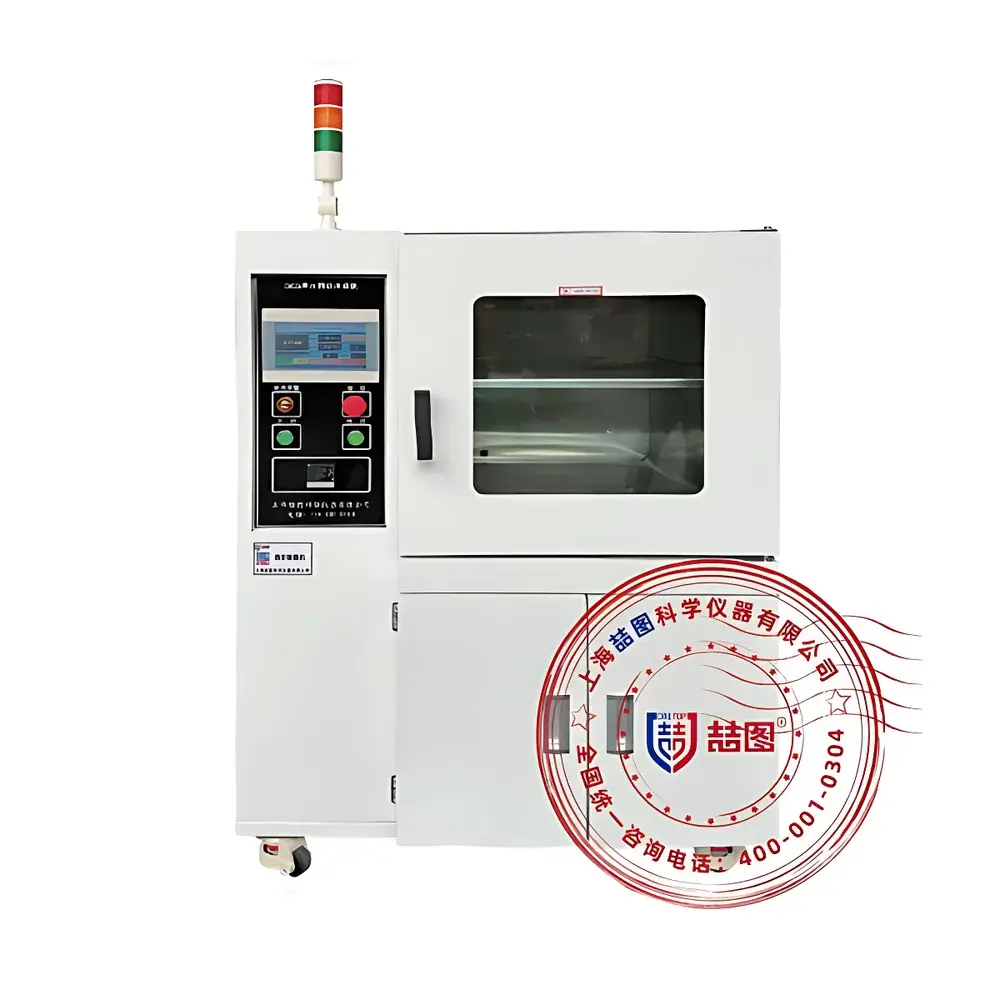
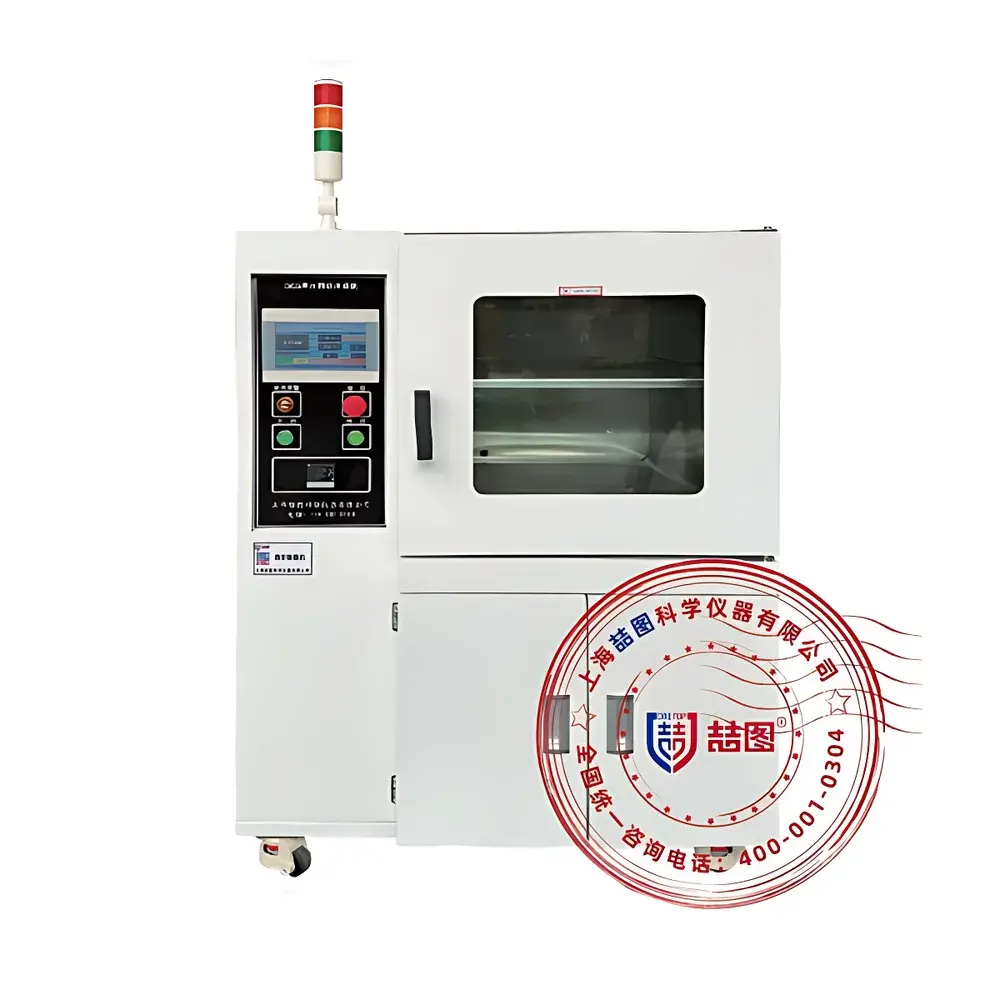
DRETOP TDM-90V HMDS Vapor Priming Vacuum Coating System
| Brand | DRETOP |
|---|---|
| Origin | Shanghai, China |
| Model | TDM-90V |
| Temperature Range | RT+10–200 °C |
| Temperature Uniformity | ±0.1 °C |
| Temperature Resolution | 0.1 °C |
| Chamber Dimensions (W×D×H) | 450×450×450 mm |
| Chamber Volume | 90 L |
| Chamber Material | 316L Stainless Steel |
| Ultimate Vacuum | ≤30 Pa (0.3 mbar) |
| Control System | PLC with Color Touchscreen Interface |
| Vacuum Pump Type | Dry Scroll Vacuum Pump |
| Application | HMDS vapor priming for photolithography substrates |
Overview
The DRETOP TDM-90V HMDS Vapor Priming Vacuum Coating System is a precision-engineered benchtop vacuum processing chamber designed specifically for hexamethyldisilazane (HMDS) surface modification in microfabrication workflows. It operates on the principle of controlled vapor-phase deposition under low-pressure inert conditions—eliminating ambient moisture and oxygen to ensure reproducible, monolayer-level silanization of substrate surfaces. Unlike conventional hotplate or spin-coater HMDS treatments, the TDM-90V enables uniform, conformal functionalization across planar and topographically complex wafers—including 1–12 inch silicon, SiC, GaN, sapphire, fused silica, ITO-coated glass, and MEMS substrates—without edge exclusion or thermal stress-induced warpage. Its architecture integrates vacuum thermal conditioning, vapor saturation kinetics control, and post-process condensate management into a single closed-loop platform compliant with cleanroom-compatible operation standards.
Key Features
- High-integrity vacuum chamber constructed entirely from electropolished 316L stainless steel—resistant to HMDS hydrolysis byproducts and compatible with Class 100 cleanroom environments.
- Dry scroll vacuum pump system achieving ≤30 Pa base pressure (<0.3 mbar), eliminating oil backstreaming and enabling rapid pump-down cycles (typical <8 min to target vacuum).
- Independent dual-zone heating: chamber wall heating (RT+10–200 °C) and optional heated sample stage (RT+10–150 °C), both regulated to ±0.1 °C stability with 0.1 °C resolution via PID-controlled solid-state relays.
- Integrated cold trap with automatic condensate drainage—capturing unreacted HMDS vapor post-process to prevent chamber contamination and reduce operator exposure.
- 7-inch full-color touchscreen HMI with intuitive recipe-based programming; supports up to 99 multi-step programs with independent control over vacuum ramp rate, dwell time, temperature ramp profile, and purge gas flow sequencing.
- Reinforced borosilicate observation window with integrated anti-fog heating element and silicone rubber gasket seal rated for repeated vacuum cycling (>10,000 cycles at ≤30 Pa).
Sample Compatibility & Compliance
The TDM-90V accommodates substrates up to 300 mm (12 inch) in diameter on standard dual-tier stainless steel carriers. Customizable fixture sets support irregular geometries—including optical lenses, ceramic substrates, and flexible polymer films—while maintaining thermal and vacuum integrity. All internal surfaces are passivated and free of organic adhesives, elastomers, or lubricants that could outgas or degrade under HMDS exposure. The system meets ISO 14644-1 Class 5 cleanroom particulate requirements when operated with HEPA-filtered N₂ purge. It supports GLP-compliant process documentation through optional audit-trail-enabled firmware (21 CFR Part 11 ready with user authentication and electronic signature modules). HMDS handling protocols align with OSHA PEL (10 ppm TWA) and ACGIH TLV® guidelines, reinforced by integrated exhaust interlock and real-time chamber leak detection.
Software & Data Management
The embedded PLC-based controller logs all critical process parameters—including chamber pressure (capacitance manometer), wall and stage temperatures, HMDS injection timing, and vacuum hold duration—with timestamped CSV export via USB or Ethernet. Optional Ethernet/IP integration enables remote monitoring and alarm notification via SMTP or Modbus TCP. Recipe management includes version control, user-level access permissions (admin/operator/technician), and automatic calibration log archiving. Data retention complies with ISO/IEC 17025 traceability requirements, supporting retrospective analysis for DOE-driven process optimization and FA investigations.
Applications
- Semiconductor front-end: HMDS priming prior to photoresist spin-coating on logic, memory, and power device wafers to enhance adhesion and reduce standing-wave effects.
- Advanced packaging: Surface activation of redistribution layers (RDLs), fan-out wafer-level packaging (FOWLP) substrates, and TSV-embedded interposers.
- MEMS & photonics: Hydrophobization of micromirror arrays, waveguide facets, and AR-coated optical elements prior to thin-film deposition.
- Research & development: Controlled silanization studies for biosensor functionalization, perovskite precursor layer engineering, and OLED anode interface modification.
- Quality assurance labs: Standardized HMDS treatment per ASTM F392 (flexibility testing) and SEMI S2/S8 safety compliance validation.
FAQ
What vacuum level is required for effective HMDS priming?
A stable vacuum ≤30 Pa (0.3 mbar) is recommended to suppress water vapor partial pressure below 10⁻⁴ mbar—critical for preventing competitive hydrolysis of HMDS and ensuring covalent Si–O–Si bond formation.
Can the TDM-90V be integrated into an automated cluster tool environment?
Yes—via SECS/GEM protocol support (optional module) and mechanical load-port interface design compatible with standard FOUP/SMIF handlers.
Is HMDS residue removal included in the standard cycle?
Yes—the integrated cold trap condenses >95% of unreacted HMDS vapor; residual traces are purged using dry nitrogen before venting.
Does the system support process validation documentation?
Yes—full electronic batch records, calibration certificates, and IQ/OQ templates are provided per ISO 9001 and GMP Annex 11 requirements.
What maintenance intervals are recommended for the dry scroll pump?
Inspection every 2,000 operating hours; oil-free operation eliminates scheduled oil changes, though inlet filter replacement is advised quarterly under continuous use.



