
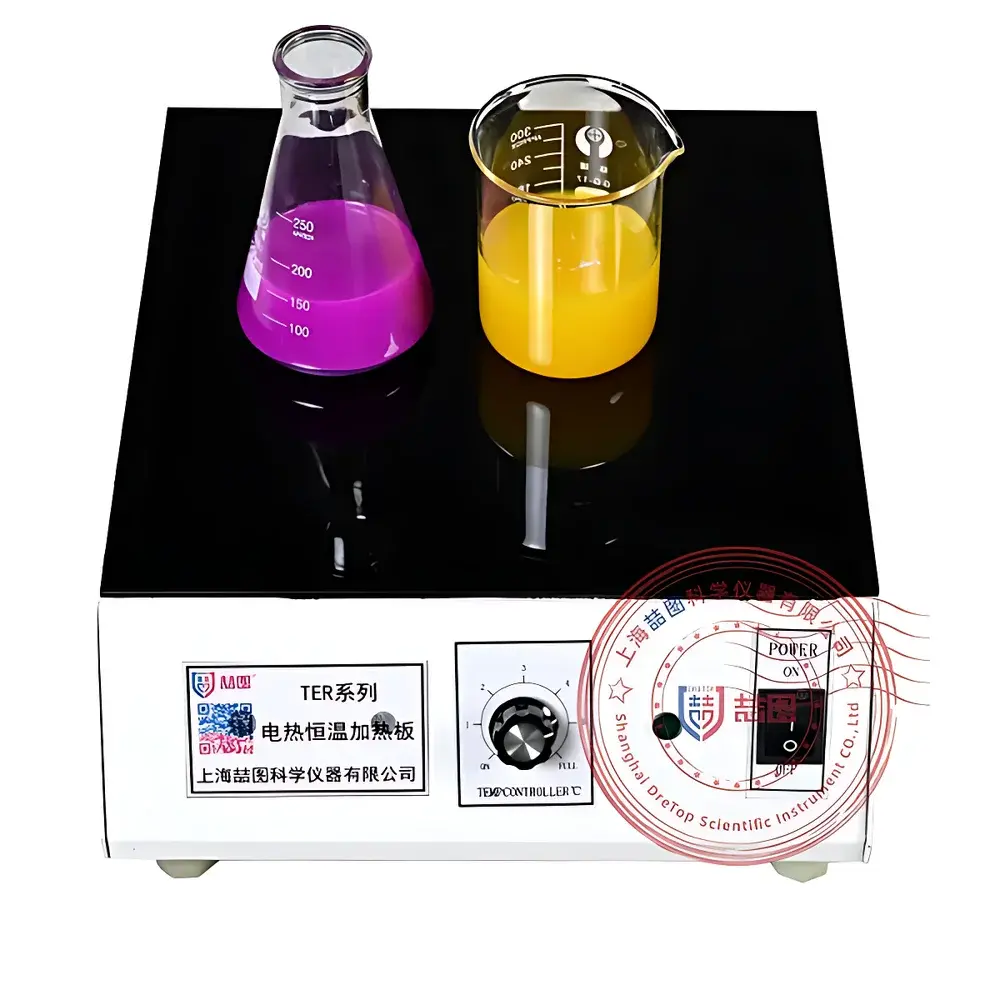
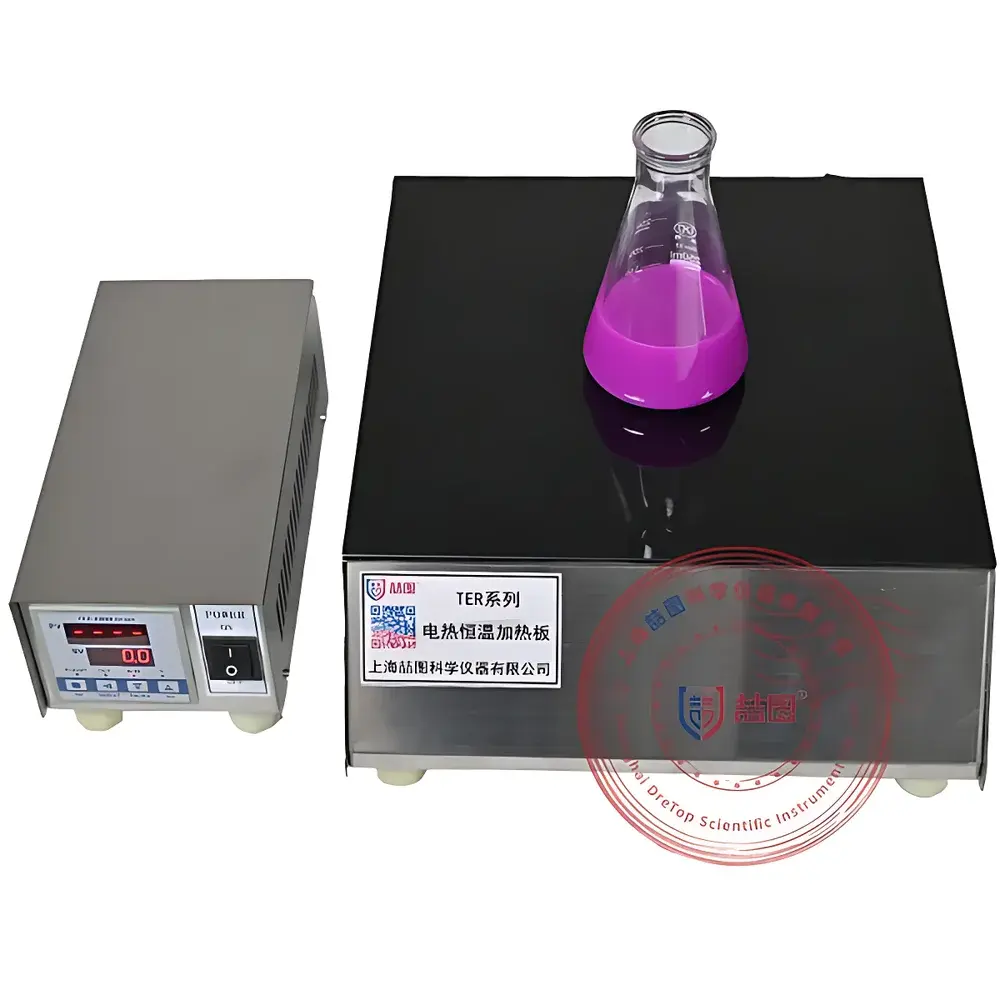
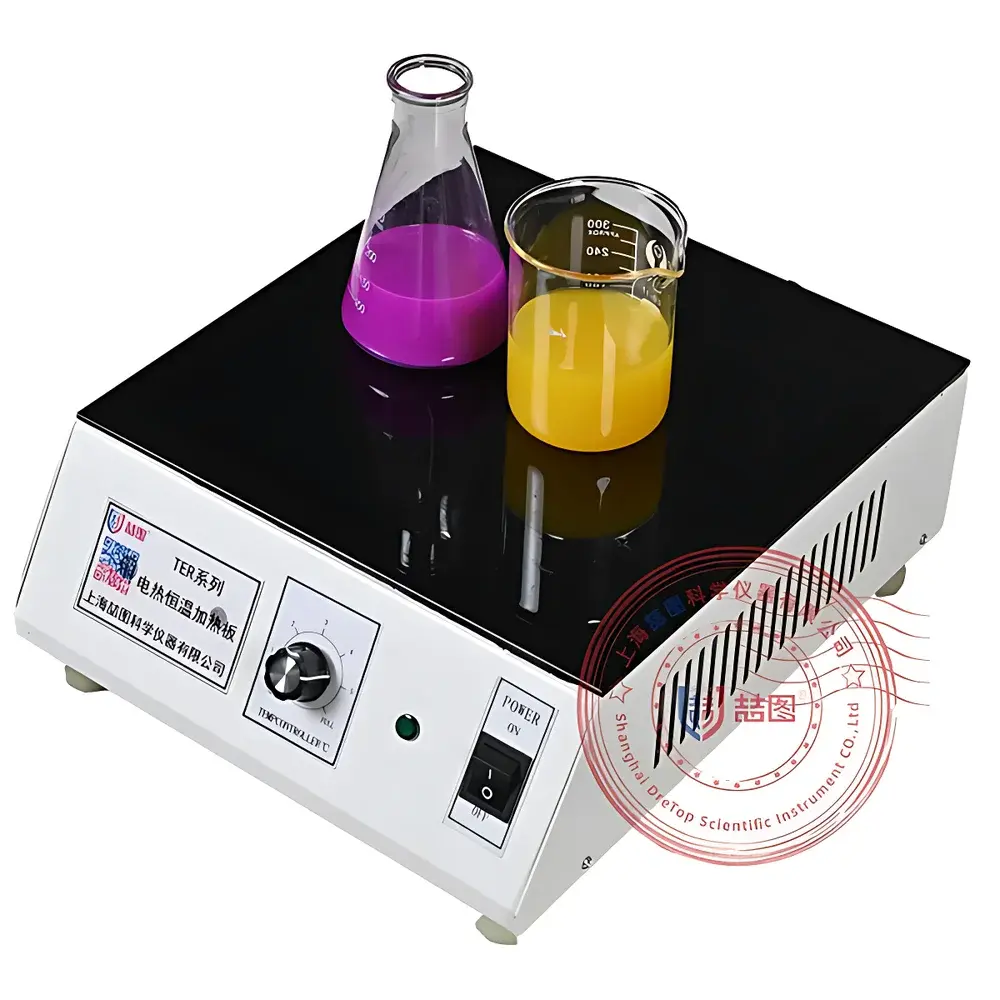
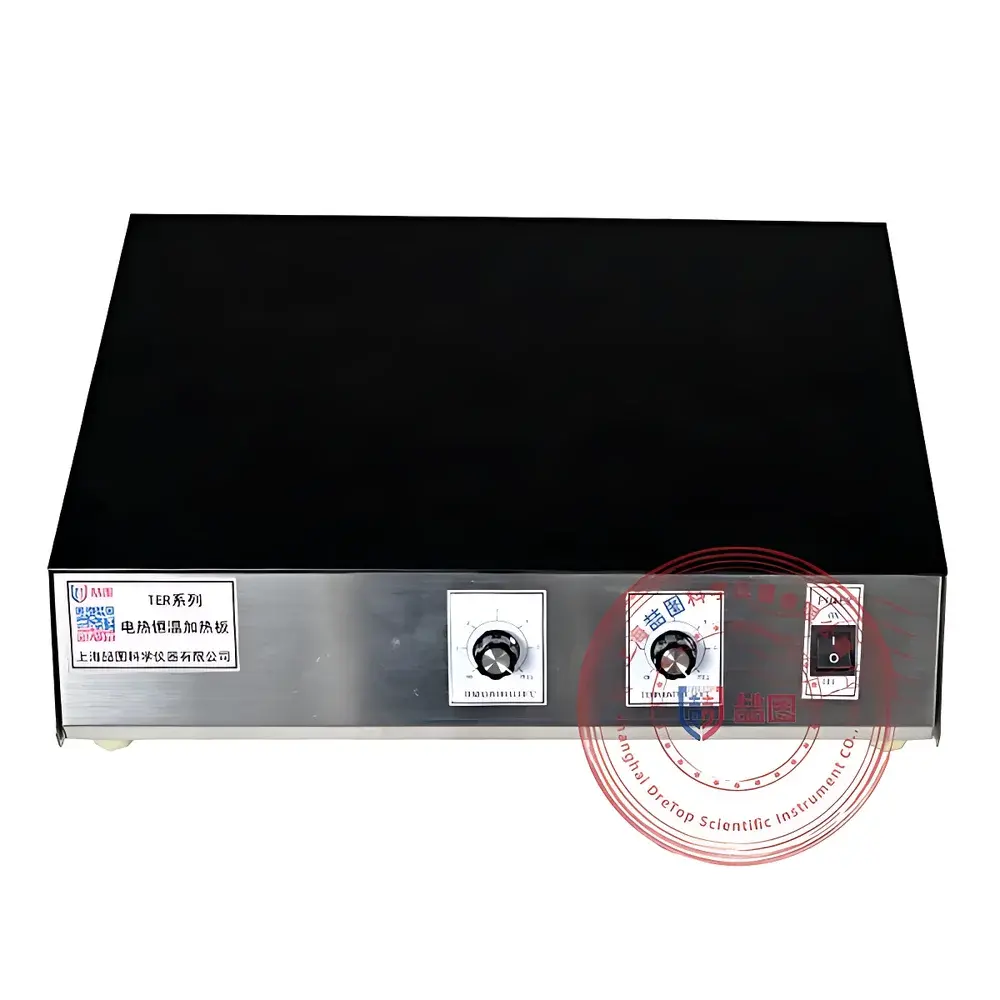
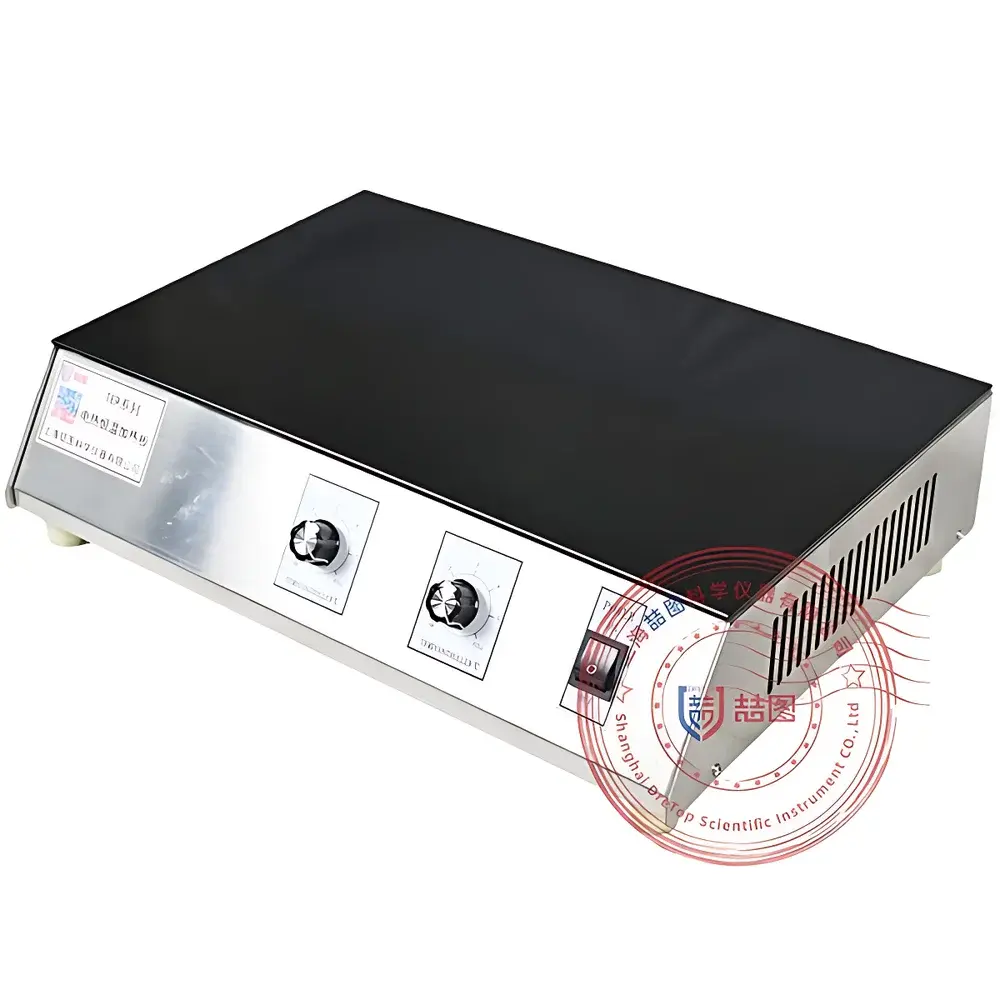
DRETOP TER Series Electric Heating Plate
| Brand | DRETOP |
|---|---|
| Origin | Shanghai, China |
| Model | TER Series |
| Price Range | USD 365 – 1,280 (FOB) |
| Heating Power | 1200 W – 2400 W |
| Controller | PID Microprocessor-Based Temperature Control |
| Max Operating Temperature | 450 °C |
| Surface Dimensions (W×D×H) | 300×355×125 mm to 620×355×200 mm |
| Heating Zone Dimensions | 300×300 mm to 500×300 mm |
| Display & Interface | Analog Rotary Knob (Non-Digital), Optional Digital Display Versions Available (TER-F/TER-S-I) |
Overview
The DRETOP TER Series Electric Heating Plate is a precision-engineered laboratory heating platform designed for stable, uniform, and corrosion-resistant thermal processing in sample preparation, digestion, evaporation, and reaction support applications. Built upon a high-performance ceramic-glass (microcrystalline glass) top plate—fabricated via nanoscale fusion, controlled crystallization, and annealing—the TER Series delivers exceptional thermal shock resistance (ΔT > 300 °C), low coefficient of thermal expansion (~0.1–0.5 × 10⁻⁶ /°C), and outstanding chemical inertness against strong acids (e.g., HNO₃, HCl, HF), alkalis, and organic solvents. Its operating principle relies on resistive Joule heating through embedded high-stability alloy heating elements, coupled with closed-loop feedback regulation via a PID microprocessor controller. This architecture ensures consistent surface temperature distribution (±1.5 °C uniformity across heating zone under steady-state conditions), rapid thermal response (<15 min to reach 400 °C from ambient), and long-term operational stability—critical for ISO/IEC 17025-compliant laboratories and GLP-regulated workflows.
Key Features
- Microcrystalline glass (ceramic-glass composite) heating surface: non-porous, chemically inert, scratch- and stain-resistant; compliant with ASTM C119 and IEC 60068-2-14 for thermal shock testing.
- PID microprocessor-based temperature control system with analog rotary knob interface—robust against electromagnetic interference (EMI), suitable for shared instrumentation labs with high-frequency equipment.
- Sealed internal circuitry with full encapsulation of heating elements and wiring; optional 316L stainless steel perimeter frame (TER-F and TER-S-I models) for aggressive acid digestion environments.
- Zero open-flame design with fully enclosed heating architecture—eliminates fire hazard and meets OSHA 1910.1200 and NFPA 45 safety requirements for chemical laboratories.
- Ergonomic 3–5 mm peripheral thermal buffer zone around active heating area to prevent operator contact burns during extended operation.
- Integrated thermal isolation: non-slip, heat-resistant silicone feet elevate unit ~20 mm above benchtop—ensuring passive airflow beneath chassis and protecting underlying surfaces from thermal degradation.
- Modular thermal management: controller electronics physically separated from heating zone via extended cable harness (standard on digital variants), minimizing exposure to corrosive vapors and condensates.
Sample Compatibility & Compliance
The TER Series accommodates a broad range of sample containers—including borosilicate glass beakers (50–1000 mL), PTFE and quartz digestion vessels, ceramic crucibles, and stainless-steel trays—without adhesion or residue transfer. Its chemically resistant surface supports EPA Method 3050B (acid digestion of sediments and soils), AOAC 985.27 (fat extraction), and USP (thermal stability testing). Models with 316L framing and enhanced sealing meet ISO 15190:2020 laboratory safety standards for corrosive substance handling. All units are CE-marked per Directive 2014/30/EU (EMC) and 2014/35/EU (LVD); RoHS 2011/65/EU compliant. Digital-display variants (TER-F, TER-S-I) include audit-trail-capable firmware supporting FDA 21 CFR Part 11 readiness when integrated with validated LIMS platforms.
Software & Data Management
While the base TER model operates via analog PID control without data logging, the TER-F and TER-S-I variants feature an embedded digital display module with real-time temperature readout (0.1 °C resolution), setpoint memory (up to 5 user-defined profiles), and RS-485 Modbus RTU interface for integration into centralized lab automation systems (e.g., LabVantage, Thermo Fisher SampleManager). Firmware supports timestamped event logging—including power-on, setpoint changes, overtemperature alerts, and thermal stabilization confirmation—enabling traceable documentation per ISO/IEC 17025 Clause 7.7 and GLP Principle 5. No proprietary software is required; standard industrial SCADA or Python-based PyModbus libraries enable seamless acquisition and archival.
Applications
- Environmental & Agricultural Labs: Acid digestion of soil/sediment samples (EPA 3050B, 3051A), heavy metal recovery, pesticide residue evaporation (AOAC 2007.01).
- Food & Beverage QA/QC: Kjeldahl nitrogen digestion, Soxhlet fat extraction pre-heating, protein hydrolysis, moisture content determination (AOAC 950.46).
- Materials Science: Polymer melt flow index conditioning, catalyst thermal activation, nanoparticle annealing (under inert gas shroud), optical resin curing.
- Pharmaceutical R&D: Excipient drying, API crystallization support, dissolution media pre-warming (USP ).
- Electronics Manufacturing: PCB solder paste reflow simulation, semiconductor wafer pre-bake, conformal coating curing.
FAQ
Is the TER Series compatible with Teflon-coated or quartz digestion vessels?
Yes—its smooth, non-reactive microcrystalline glass surface prevents mechanical abrasion and chemical interaction with fluoropolymer and fused silica containers.
What is the typical surface temperature uniformity across the heating zone?
Measured per ASTM E220, uniformity is ±1.5 °C at 300 °C and ±2.0 °C at 450 °C (center-to-corner differential, static load, no cover).
Can the TER heating plate be used inside a fume hood?
Yes—fully sealed construction and absence of moving parts or ventilation fans make it suitable for Class I and II biosafety cabinets and chemical fume hoods.
Does DRETOP provide calibration certificates traceable to NIST or national metrology institutes?
Factory calibration reports (as-found/as-left) are available upon request; third-party ISO/IEC 17025-accredited calibration services can be arranged via authorized distributors.
Are replacement microcrystalline glass plates available as spare parts?
Yes—original-specification ceramic-glass panels are stocked globally and shipped with mounting hardware and thermal gasket kits.
Related Products



