
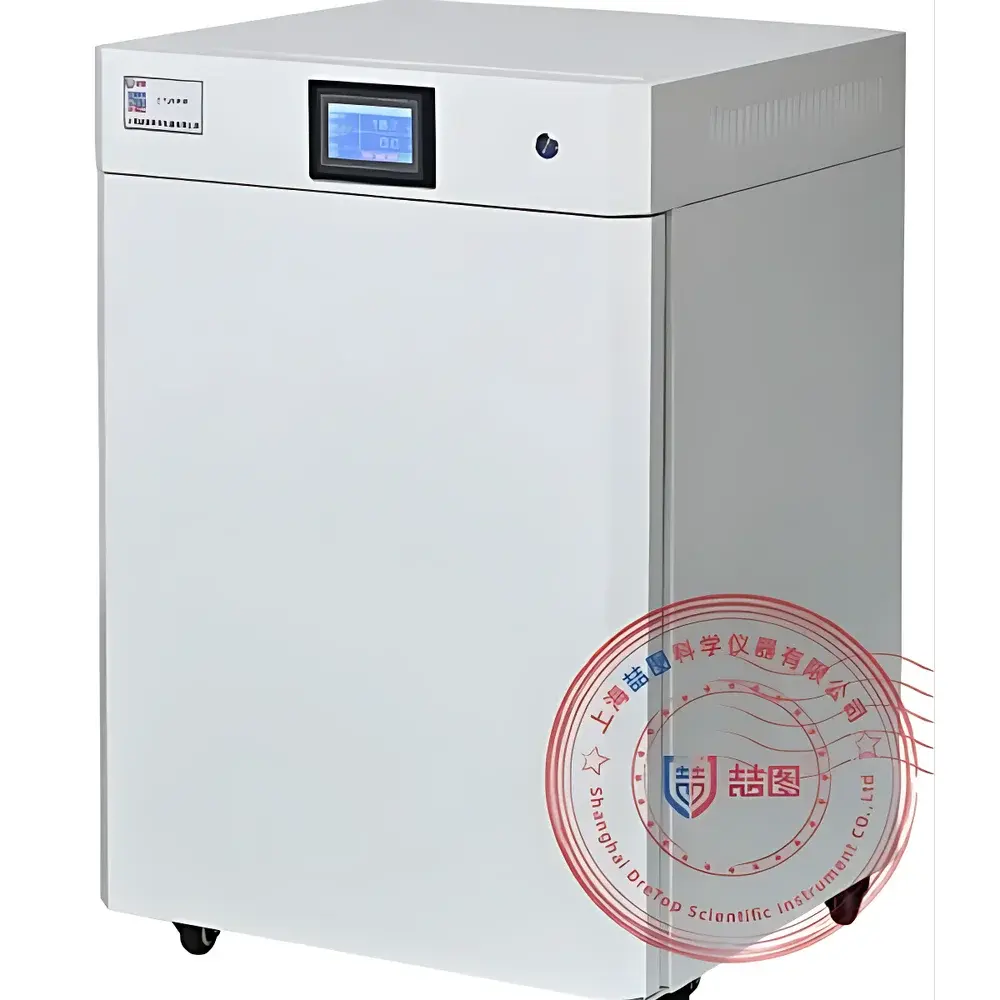
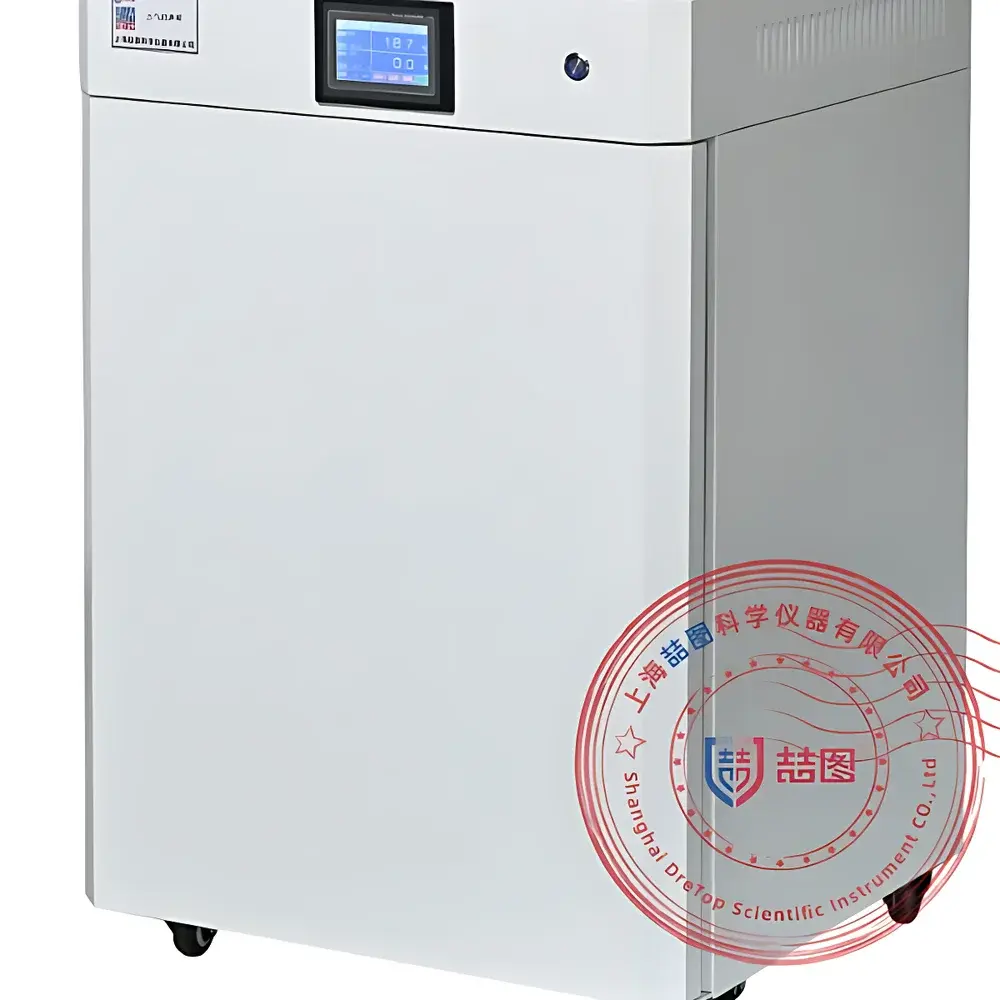
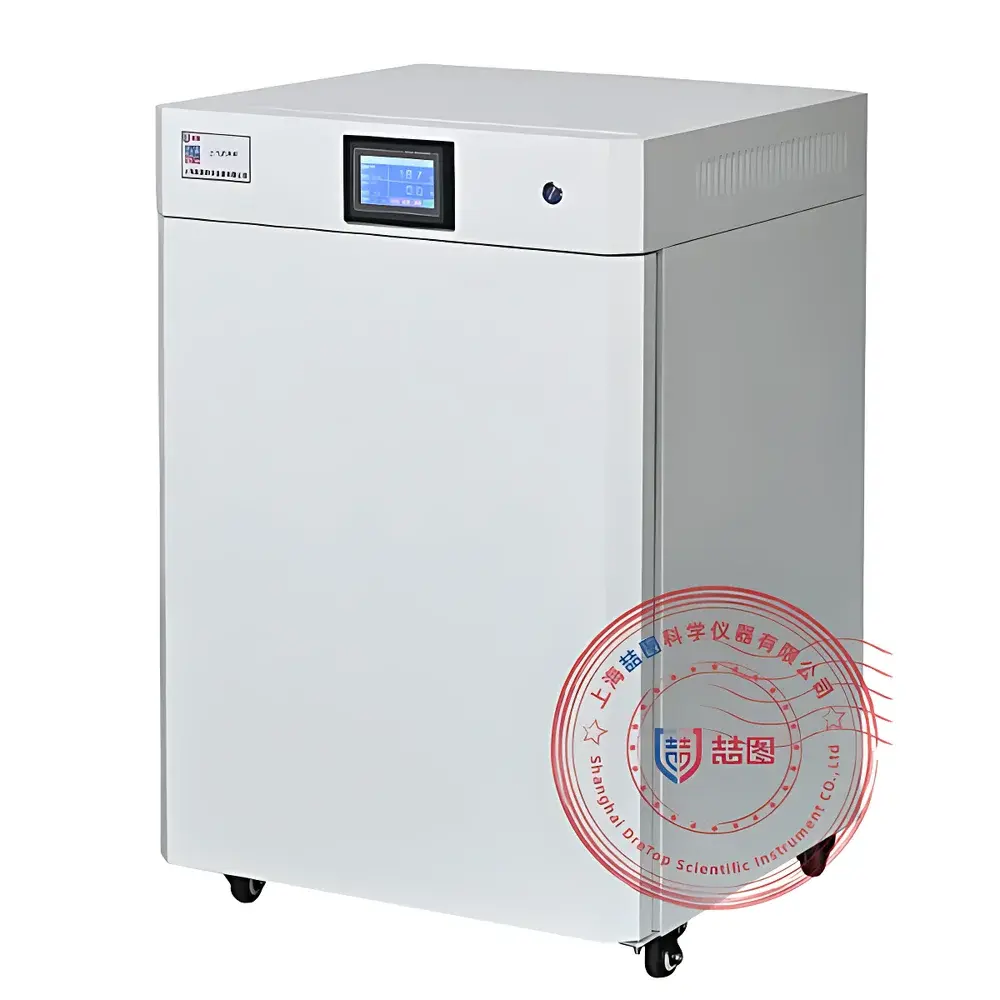
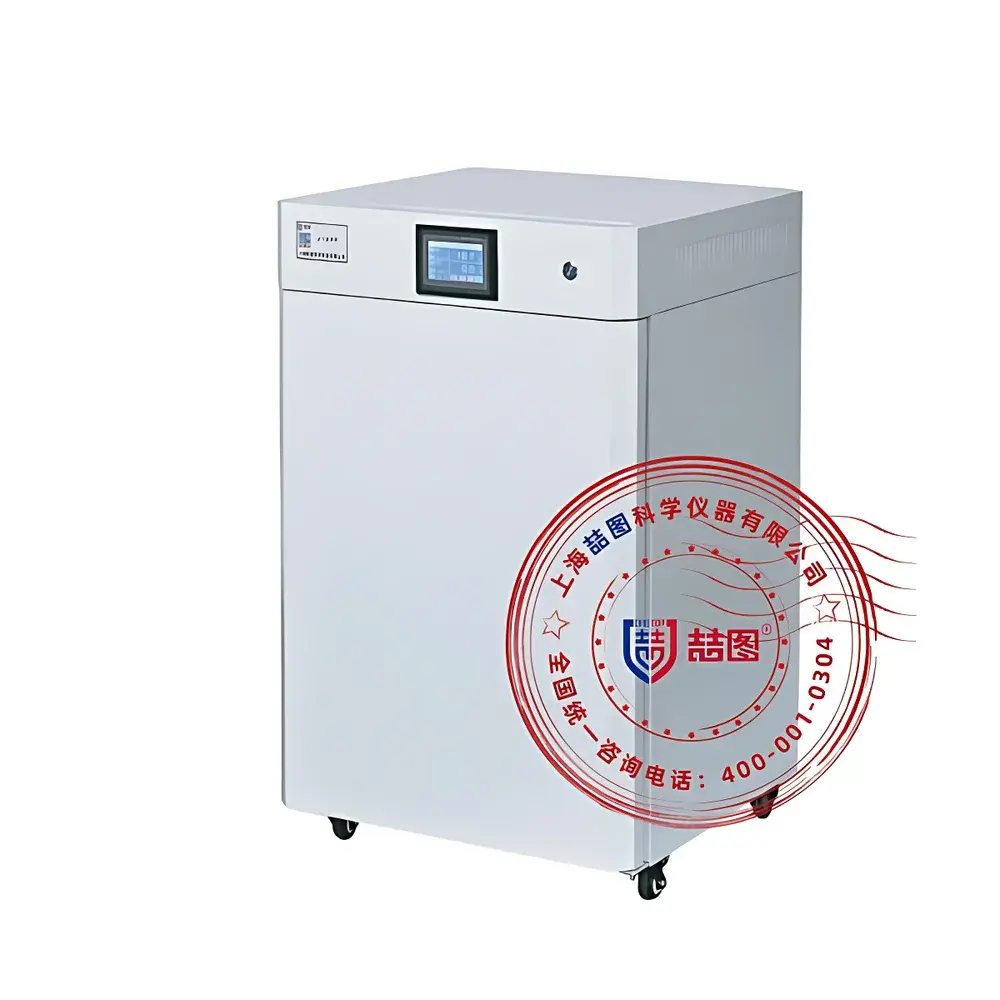
DRETOP TGC-80 Tri-Gas Incubator
| Brand | DRETOP |
|---|---|
| Origin | Shanghai, China |
| Instrument Type | Air-Jacketed Tri-Gas Incubator |
| O₂ Range | 1–21% (Low-Oxygen Capable) |
| Temperature Control Range & Accuracy | RT+5°C to 60°C ±0.1°C |
| Temperature Uniformity | ±0.2°C |
| CO₂ Range & Accuracy | 0–20% ±0.1% |
| O₂ Range & Accuracy | 1–95% ±0.2% |
| Humidity Method | Natural Evaporation via Removable Water Pan (≥90% RH, Uncontrolled) |
| Capacity | 80 L |
| Internal Dimensions | 400×400×500 mm |
| Standard Features | HEPA Filtration, UV Sterilization, Zirconia O₂ Sensor, IR CO₂ Sensor, Six-Surface Heating, Dual-Door Structure with Heated Inner Glass |
Overview
The DRETOP TGC-80 Tri-Gas Incubator is an air-jacketed, microprocessor-controlled environmental chamber engineered for precise regulation of oxygen (O₂), carbon dioxide (CO₂), and nitrogen (N₂) concentrations—alongside temperature and humidity—to replicate physiologically relevant conditions for sensitive biological systems. Unlike standard CO₂ incubators, the TGC-80 implements a closed-loop gas mixing architecture that dynamically balances all three gases to maintain user-defined partial pressures, enabling rigorous modeling of hypoxic, normoxic, hyperoxic, and microaerophilic environments. This capability is essential for applications including stem cell expansion under low-oxygen tension (e.g., 1–5% O₂), tumor spheroid culture, anaerobic pathogen propagation, and mitochondrial respiration studies where ambient O₂ levels introduce experimental artifacts. The chamber employs a six-surface heating system to eliminate thermal gradients and condensation, while its air-jacket insulation ensures rapid recovery (<3 min for CO₂, <5 min for O₂) after door openings—critical for minimizing physiological stress during routine access.
Key Features
- Air-jacketed thermal design with independent six-face heating elements ensures uniform temperature distribution (±0.2°C) and prevents internal condensation, reducing microbial contamination risk.
- Zirconia-based O₂ sensor with linear response across 1–95% range and ±0.2% accuracy—calibration-stable and drift-resistant over extended operation.
- Non-dispersive infrared (NDIR) CO₂ sensor offering ±0.1% accuracy and sub-minute recovery post-door-open events (5% setpoint restored within 3 minutes).
- Intelligent gas priority logic: N₂ is automatically metered to balance total gas volume to 100%, with O₂ or CO₂ prioritized based on user-defined thresholds—eliminating manual stoichiometric calculation errors.
- Dual-door configuration featuring heated inner tempered glass minimizes thermal and humidity loss during observation; anti-fog heating prevents condensation on viewing surfaces.
- Integrated HEPA filtration (ISO Class 5 compliant) continuously recirculates and purifies chamber air, with real-time filter life monitoring displayed on the control interface.
- UV-C germicidal irradiation system (254 nm) provides scheduled or manual sterilization cycles, targeting airborne microbes, surface biofilms on shelves/fans, and water pan aerosols—validated against ISO 14644-1 for cleanroom-grade bioburden reduction.
Sample Compatibility & Compliance
The TGC-80 accommodates standard tissue culture vessels (T-flasks, multiwell plates, Petri dishes) and supports long-term maintenance of primary cells, induced pluripotent stem cells (iPSCs), organoids, and fastidious microorganisms requiring controlled redox potential. Its gas control architecture complies with ASTM E2970-21 (Standard Practice for Hypoxic Cell Culture) and supports GLP-compliant workflows through configurable alarm logging (temperature deviation, gas excursion, door-open duration >60 s, sensor fault). While humidity is maintained passively via a removable stainless-steel water pan (≥90% RH), the absence of active humidification avoids condensate pooling and simplifies validation in regulated environments where uncontrolled moisture introduces variability. All electrical components meet IEC 61010-1 safety standards; CE marking is applied per EU Directive 2014/30/EU (EMC) and 2014/35/EU (LVD).
Software & Data Management
The 7-inch color capacitive touchscreen interface provides real-time visualization of O₂, CO₂, temperature, and HEPA status, with intuitive navigation and password-protected parameter editing. Event logs record all alarms, door openings, sterilization cycles, and gas calibration events with timestamps—exportable via USB to CSV for audit trail retention. Although no remote connectivity (Ethernet/WiFi) is built-in, the system supports third-party SCADA integration via RS-485 Modbus RTU protocol for centralized lab monitoring. Data integrity meets FDA 21 CFR Part 11 requirements when paired with external electronic lab notebook (ELN) systems: user authentication, audit trails, and non-erasable log storage are enforced at the firmware level.
Applications
- Hypoxia research: Maintenance of human mesenchymal stem cells at 1–3% O₂ to preserve undifferentiated phenotype and clonogenic capacity (per ISCT guidelines).
- Cancer biology: Co-culture of tumor spheroids with endothelial cells under gradient O₂ conditions (e.g., 0.5–5% O₂) to model necrotic core formation and angiogenic signaling.
- Microbiology: Cultivation of Campylobacter jejuni, Helicobacter pylori, and Bifidobacterium species requiring microaerophilic (5–10% O₂) or capnophilic (5–10% CO₂) atmospheres.
- Regenerative medicine: Expansion of hematopoietic progenitor cells in 5% O₂/5% CO₂/N₂-balanced environment to enhance engraftment efficiency in preclinical models.
- Toxicology screening: Long-term exposure assays using iPSC-derived cardiomyocytes under pathophysiological O₂ tensions (e.g., 10–15% O₂ mimicking ischemic myocardium).
FAQ
Does the TGC-80 support active humidity control?
No—the system relies on passive humidification via a removable stainless-steel water pan, maintaining ≥90% RH through natural evaporation. Active humidification is omitted to prevent condensate accumulation and simplify cleaning/validation.
What gas supply requirements does the TGC-80 have?
Three independent gas lines are required: medical-grade CO₂ (99.9%), O₂ (99.5%), and N₂ (99.99%). Pressure regulators must deliver 0.1–0.2 MPa; flow rates are auto-adjusted by internal mass flow controllers.
Is UV sterilization validated against specific microbial strains?
Yes—DRETOP provides optional IQ/OQ documentation demonstrating ≥3-log reduction of Bacillus atrophaeus spores and Candida albicans on stainless-steel surfaces following a 30-minute UV cycle.
Can the incubator be integrated into a facility-wide building management system (BMS)?
Yes—via RS-485 Modbus RTU, the TGC-80 transmits real-time O₂, CO₂, temperature, and alarm status to compatible BMS platforms for centralized environmental oversight.
What is the recommended calibration frequency for gas sensors?
Annual calibration is advised for both zirconia O₂ and IR CO₂ sensors; DRETOP supplies certified calibration kits traceable to NIST standards, with onboard zero/span adjustment routines accessible via service mode.





