
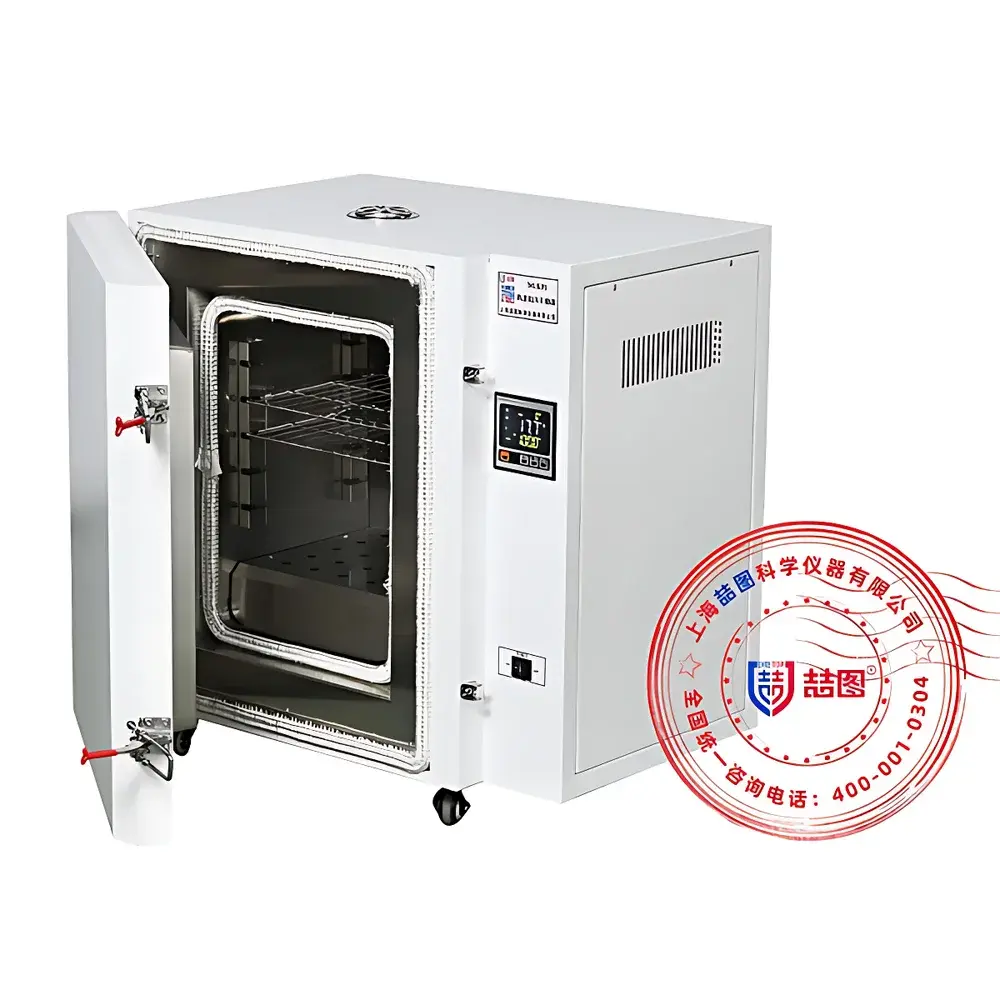
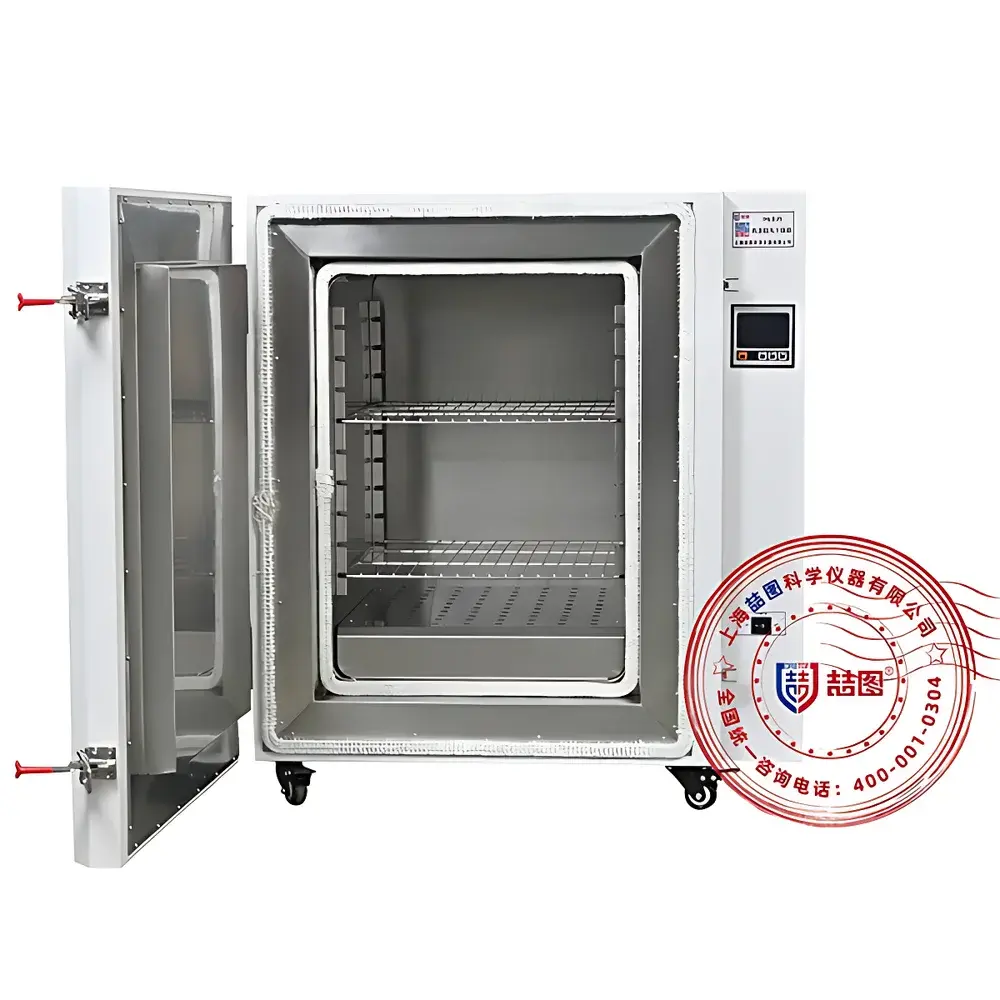
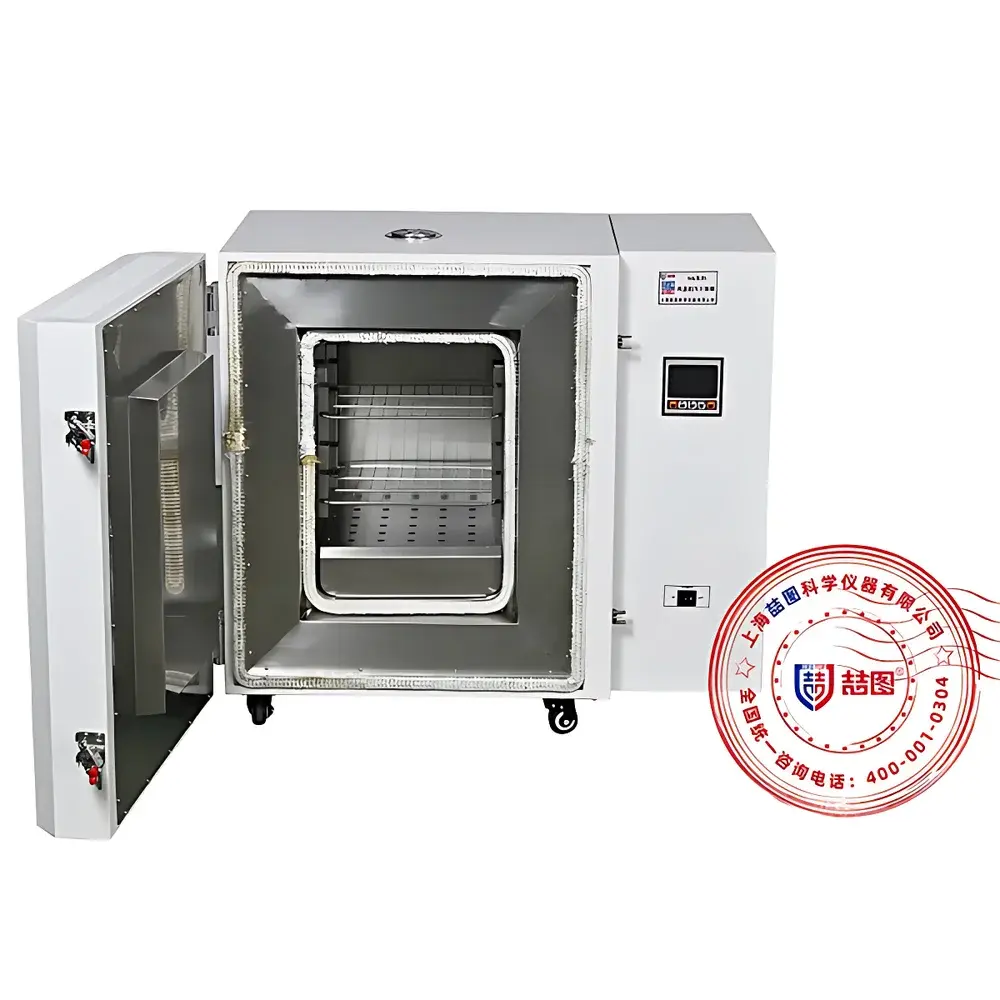
DRETOP TGF Series Forced-Air Drying Oven
| Brand | DRETOP |
|---|---|
| Origin | Shanghai, China |
| Manufacturer Type | Authorized Distributor |
| Product Category | Domestic |
| Model | TGF Series |
| Price Range | USD 700 – 3,600 (FOB) |
| Instrument Type | General-Purpose Forced-Air Oven |
| Temperature Range | 35°C to 200°C (standard) |
| Temperature Fluctuation | ±1°C (steady-state, empty chamber) |
| Chamber Dimensions (W×D×H) | 600 mm × 595 mm × 750 mm (TGF-9070A) |
| Temperature Resolution | 0.1°C |
| Interior Material | Mirror-Finish or Brushed Stainless Steel (SUS304) |
| Temperature Uniformity | ±2.5°C (empty, at 100°C) |
| Power Input | 2.5–2.8 kW (TGF-9070A/9075A) |
| Timer Range | 1–9999 minutes |
| Safety Compliance | Meets IEC 61010-1 for laboratory electrical equipment |
| Optional Interfaces | RS-485, USB data export, optional programmable controller (multi-segment ramp/soak), thermal printer output |
Overview
The DRETOP TGF Series Forced-Air Drying Oven is an engineered solution for precise, repeatable thermal processing in research laboratories, quality control environments, and industrial R&D settings. Utilizing a robust convection-based heating architecture, the oven maintains stable temperature profiles across its stainless-steel working chamber via a high-efficiency axial fan and optimized airflow ducting—ensuring uniform heat distribution without hot or cold zones. Designed for non-volatile, non-flammable materials, it supports critical workflows including moisture determination (per ASTM E1868 and ISO 554), dry-heat sterilization of glassware and metal instruments (validated per ISO 17665-1), thermal aging of electronic components (IEC 60068-2-2), and pre-conditioning of polymer samples prior to mechanical testing. Its RT+10°C to 250°C (or 300°C in high-temp variants) operational envelope accommodates both routine drying and elevated-temperature applications such as ash residue stabilization and binder burnout.
Key Features
- Microprocessor-based PID temperature controller with 0.1°C resolution and ±1°C steady-state fluctuation tolerance, delivering high reproducibility across repeated cycles.
- Dual-layer tempered glass observation window with silicone-gasketed dual-latch door mechanism—ensuring thermal integrity and visual monitoring without compromising insulation performance.
- Self-diagnostic system with alphanumeric fault code display on backlit LCD panel; enables rapid troubleshooting and minimizes instrument downtime.
- Programmable over-temperature cut-off with independent hardware limiter (optional), compliant with IEC 61010-1 Class II safety requirements for lab-grade thermal equipment.
- Modular interior configuration: adjustable, removable stainless-steel shelves with tool-free positioning; smooth-welded, crevice-free chamber walls for GMP-compliant cleaning protocols.
- Energy-efficient thermal management: custom-designed high-temp silicone door gasket (rated to 350°C), electrostatically coated exterior housing, and insulated double-wall construction (≥50 mm mineral wool).
- Power-loss recovery function retains setpoints and timer status during unexpected outages—critical for unattended overnight operations.
Sample Compatibility & Compliance
The TGF Series is validated for use with inert solids, ceramics, metals, pharmaceutical excipients, food matrices, and analytical standards where solvent-free thermal treatment is required. It is not suitable for organic solvents, volatile compounds, or biological aerosols. Chamber geometry (up to 268 L net volume) and forced-air circulation meet ISO 15184:2022 criteria for uniformity in drying ovens used in coating and material characterization labs. All models comply with CE marking directives (2014/30/EU EMC, 2014/35/EU LVD) and carry factory calibration certificates traceable to NIM (National Institute of Metrology, China). Optional configurations support GLP audit readiness—including timestamped event logs, user-access levels, and password-protected parameter modification (when equipped with programmable controller).
Software & Data Management
While base models operate via standalone front-panel interface, optional digital upgrades enable full data governance. The USB export module allows direct transfer of time-stamped temperature logs (CSV format) to external storage for offline analysis in Excel or MATLAB. RS-485 Modbus RTU connectivity permits integration into centralized Lab Information Management Systems (LIMS) or SCADA platforms for real-time chamber telemetry. With the color touchscreen controller (optional), users define multi-step thermal profiles (up to 30 segments), configure alarm thresholds, and generate PDF-formatted test reports—including max/min/mean deviation from setpoint, dwell time accuracy, and cycle completion timestamps. All digital modules adhere to FDA 21 CFR Part 11 principles when deployed with audit-trail-enabled firmware.
Applications
- Moisture content analysis in coal, soil, and agricultural feedstocks (ASTM D3173, ISO 589)
- Dry-heat sterilization of surgical instruments and glassware (ISO 17665-1, USP <1211>)
- Thermal stability assessment of polymers and composites (ISO 294-4, ASTM D648)
- Baking and curing of printed circuit board (PCB) substrates and conformal coatings
- Pre-drying of filter papers, crucibles, and volumetric glassware prior to gravimetric analysis
- Accelerated aging studies for battery electrode materials and encapsulant resins
- Residue removal from metal parts after machining or plating processes
FAQ
What is the maximum allowable operating temperature for standard TGF models?
Standard TGF units are rated to 250°C; high-temperature variants (e.g., TGF-9240AH) extend to 300°C with upgraded heating elements and insulation.
Does the oven support validation documentation for regulated environments?
Yes—factory calibration certificates (NIM-traceable) are included. IQ/OQ documentation templates and temperature mapping protocols can be provided upon request for GMP/GLP installations.
Can the unit be integrated into a building management system (BMS)?
Via optional RS-485 interface with Modbus RTU protocol, enabling remote start/stop, setpoint adjustment, and alarm status polling.
Is the interior chamber fully welded and passivated?
All stainless-steel chambers use TIG-welded seams and electropolished surfaces (Ra ≤ 0.8 µm) to prevent particle shedding and facilitate cleaning validation.
What maintenance intervals are recommended for long-term reliability?
Fan motor lubrication every 12 months; gasket inspection every 6 months; annual verification of temperature uniformity and controller accuracy using NIST-traceable reference thermometers.



