
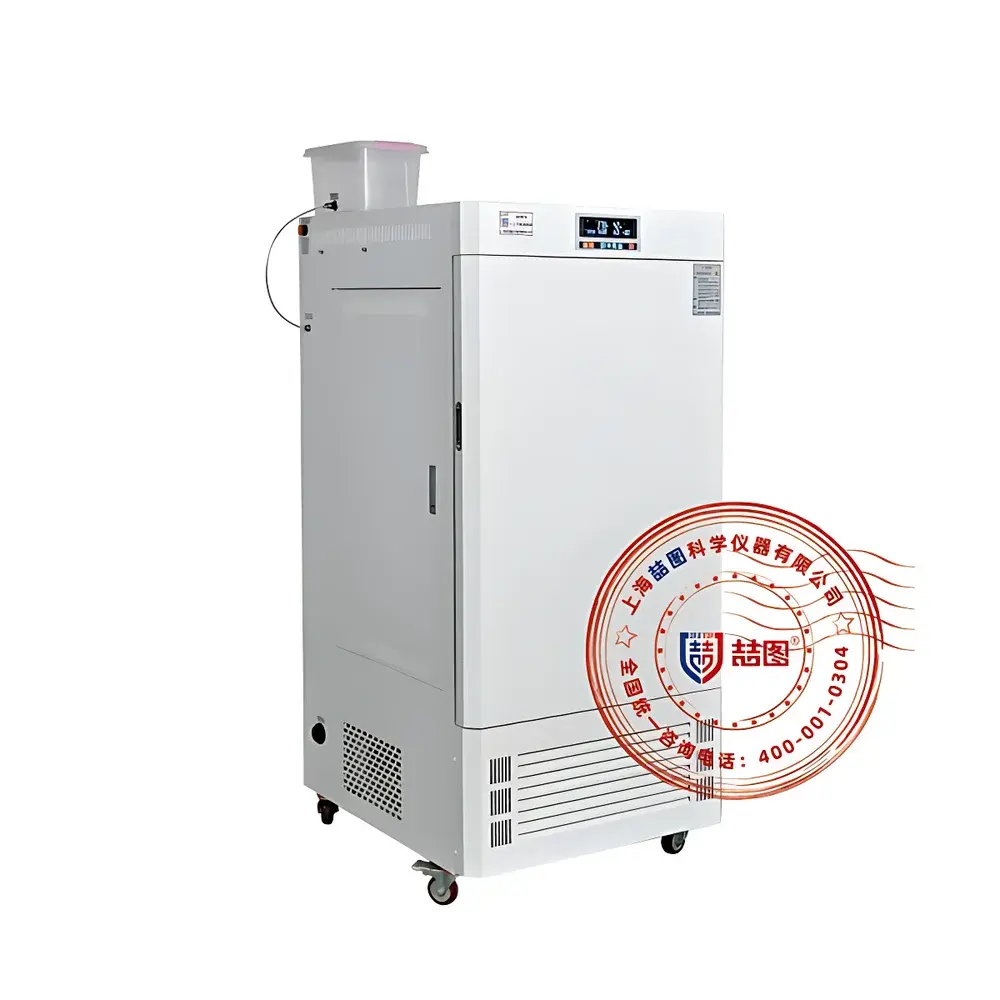
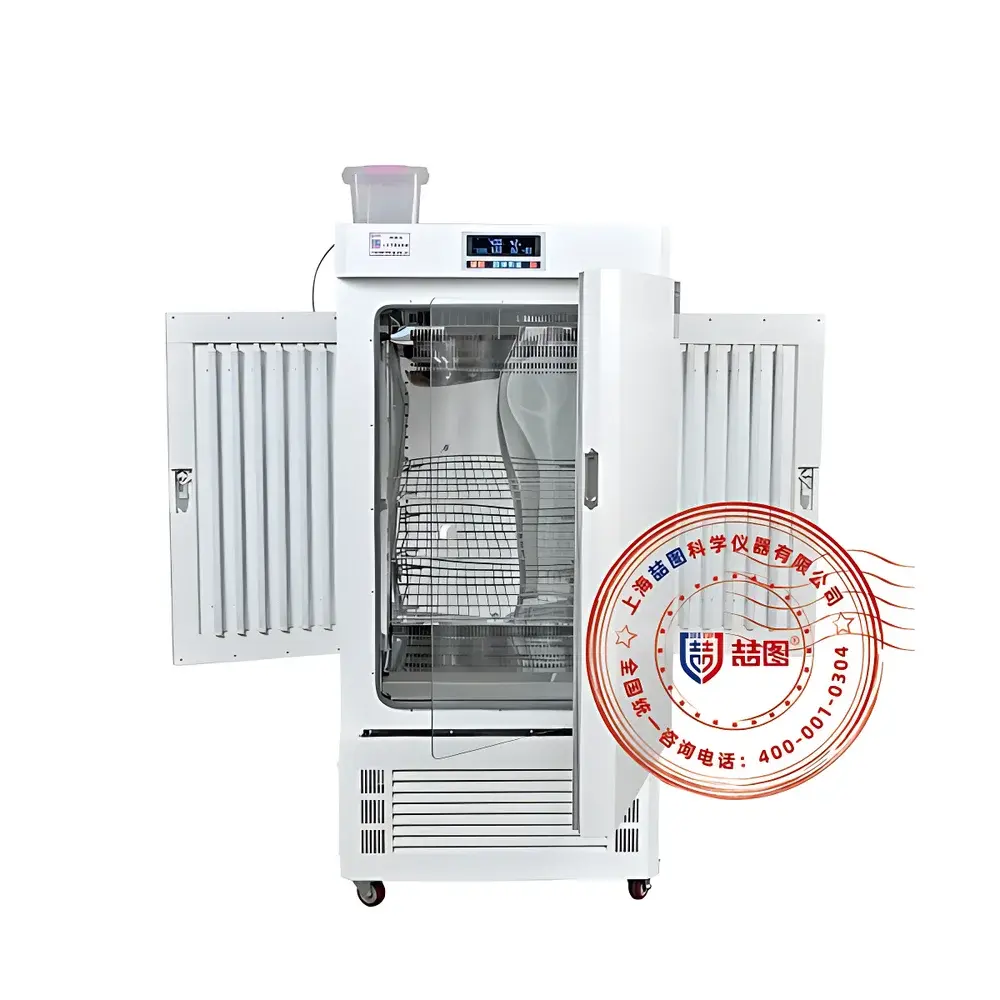
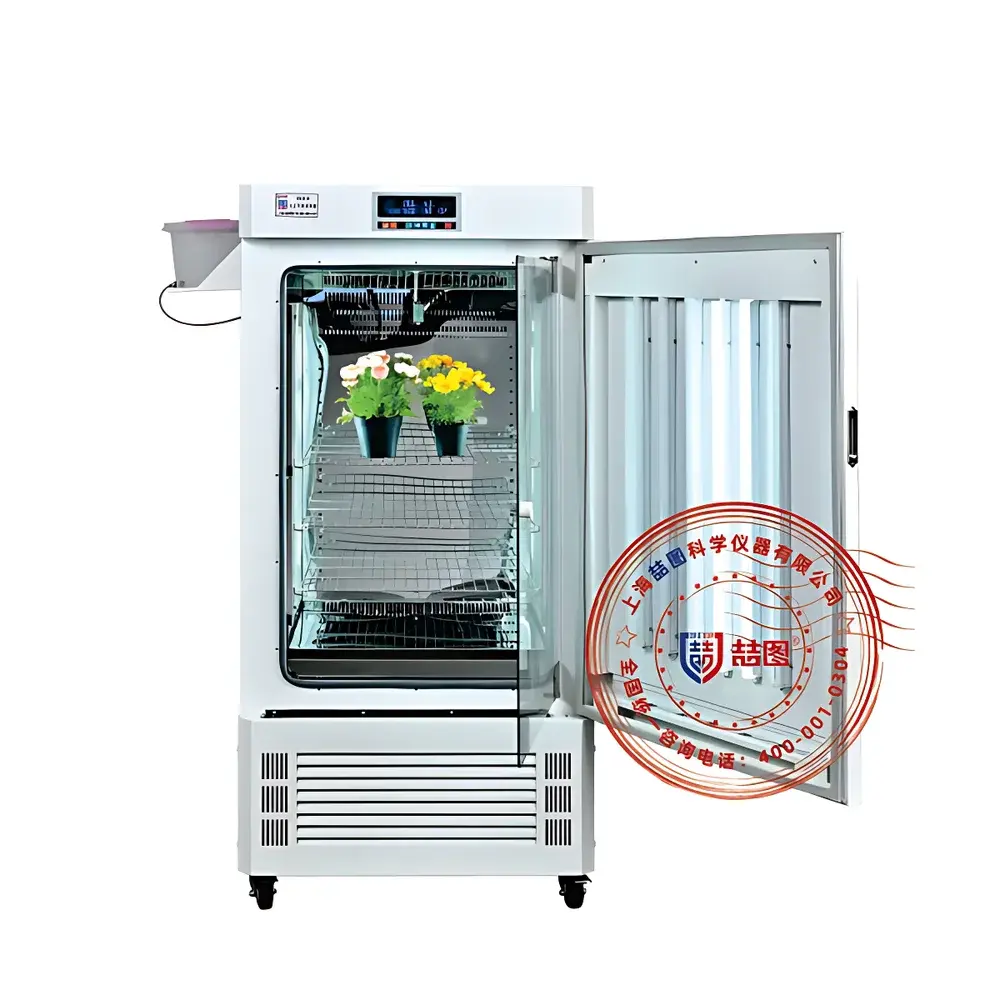
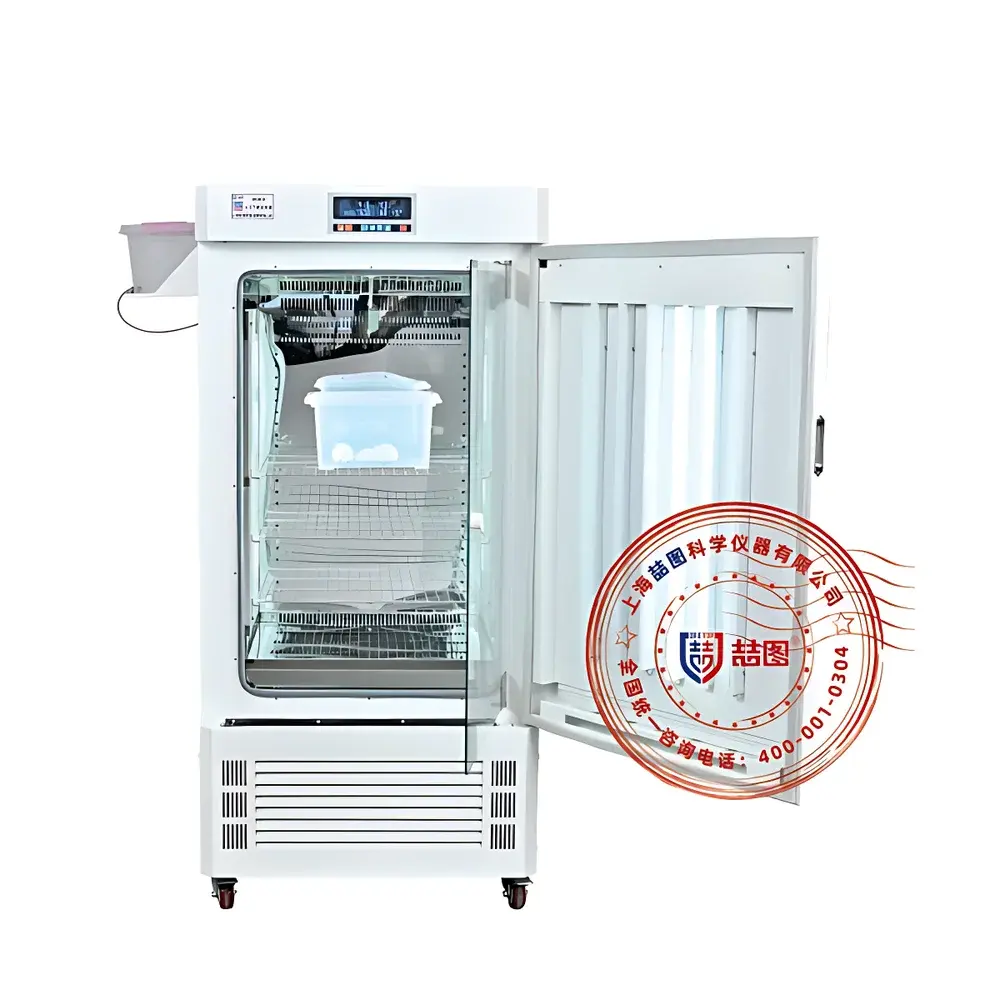
DRETOP THS-400BM Multi-Function Artificial Climate Incubator
| Brand | DRETOP |
|---|---|
| Origin | Shanghai, China |
| Manufacturer Type | Authorized Distributor |
| Country of Origin | China |
| Model | THS-400BM |
| Instrument Type | Fully Automated (Programmable) |
| Capacity | 400 L (nominal) |
| Temperature Range | –40 °C to +65 °C (with/without illumination) |
| Temperature Uniformity | ±0.5 °C |
| Humidity Range | 30–98% RH |
| Humidity Uniformity | ±3% RH |
| Illumination Intensity | 0–25000 lx (triple-sided, 6-level adjustable LED array) |
| Internal Dimensions (W×D×H) | 680 × 550 × 1050 mm |
| External Dimensions (W×D×H) | 700 × 665 × 1480 mm |
| Power Supply | AC 220 V, 50 Hz |
| Cooling Medium | Eco-friendly non-CFC refrigerant |
| Temperature Resolution | 0.1 °C |
| Humidity Control Method | Automatic humidification system |
| Lighting Spectrum Options | R (620–780 nm), B (420–490 nm), G (490–570 nm), W (400–830 nm), V (380–450 nm), UVA (320–400 nm), IR (770 nm–1 mm) |
| Shelf Configuration | 3 adjustable stainless-steel shelves |
| Safety Features | Independent over-temperature limiter, door-open alarm, low-water alarm, illumination deficiency alarm, real-time logging of temperature/humidity/lighting events |
| Data Logging Interval | 1 minute |
| Compliance Support | GLP-compliant audit trail (time-stamped event logs), 21 CFR Part 11-ready configuration (user authentication, password-protected access tiers, session timeout, screen lock) |
Overview
The DRETOP THS-400BM Multi-Function Artificial Climate Incubator is a programmable, precision-controlled environmental chamber engineered for reproducible simulation of natural climatic conditions in life science research and industrial applications. Based on closed-loop thermoelectric and vapor-phase humidity regulation, it integrates high-efficiency compression cooling, P.I.D.-driven microprocessor control, and spectrally tunable multi-zone LED illumination to maintain stable, user-defined gradients of temperature (–40 °C to +65 °C), relative humidity (30–98% RH), and photosynthetic photon flux density (0–25000 lx). Its architecture supports long-term unattended operation under GLP and ISO 17025-aligned laboratory workflows—particularly where diurnal cycling, photoperiod manipulation, or multi-factor stress response studies are required. The unit is designed for compliance with ASTM E1825 (Standard Guide for Laboratory Environmental Chamber Testing), ISO 8573-1 (compressed air quality for humidification systems), and ICH Q5C (stability testing of biopharmaceuticals), serving as a validated platform for plant phenotyping, microbial growth kinetics, seed germination assays, small-animal acclimation (with optional ventilation ports), and BOD incubation per APHA Standard Methods 5210B.
Key Features
- Triple-sided, six-level adjustable LED lighting system with independently controllable red (620–780 nm), blue (420–490 nm), white (400–830 nm), green (490–570 nm), violet (380–450 nm), and UVA (320–400 nm) spectral bands—enabling precise photobiological experimentation including phytochrome and cryptochrome activation studies.
- 30-segment programmable controller supporting complex diurnal cycles, ramp-hold profiles, and conditional triggers (e.g., illumination-dependent temperature setpoint shifts), with real-time visualization via 7-inch color capacitive touchscreen interface.
- Stainless-steel interior chamber (680 × 550 × 1050 mm) with three height-adjustable, removable shelves; reinforced double-glazed observation window with magnetic gasket and nano-coated thermal seal minimizes thermal leakage during visual inspection.
- Dual-stage temperature control architecture: primary PID-regulated refrigeration circuit with eco-friendly R134a-free refrigerant, backed by nickel-chromium heating elements and intelligent defrost logic ensuring frost-free operation down to –40 °C.
- Integrated humidity generation via ultrasonic misting with auto-refill detection and condensate management; humidity uniformity maintained within ±3% RH across full volume through laminar airflow distribution via axial fans and baffle-guided recirculation ducts.
- Comprehensive safety layering: independent mechanical over-temperature limiter, door-open detection sensor, low-water alarm, illumination deficiency alert (triggered when cumulative light deficit exceeds user-defined threshold), and automatic system recovery after power interruption.
- Onboard data historian stores timestamped records—including temperature, humidity, illumination intensity, alarm states, and operational mode transitions—at 1-minute intervals for ≥30 days; exportable via USB to CSV-compatible formats for traceability and regulatory reporting.
Sample Compatibility & Compliance
The THS-400BM accommodates diverse biological specimens without cross-contamination risk: plant tissue cultures (Arabidopsis, rice, lettuce), fungal isolates (Aspergillus spp., Saccharomyces cerevisiae), bacterial colonies (E. coli, Bacillus subtilis), nematodes (C. elegans), and juvenile rodents (with optional forced-air ventilation kit meeting Second Military Medical University specifications). Its stainless-steel chamber meets ISO 14644-1 Class 8 cleanroom compatibility requirements for low-particulate environments. All electronic controls conform to IEC 61000-4 electromagnetic immunity standards; refrigeration subsystem complies with EU F-Gas Regulation (EU) No 517/2014. Optional validation packages support IQ/OQ/PQ documentation aligned with FDA 21 CFR Part 11, EU Annex 11, and WHO TRS 986 Annex 6 for GxP environments.
Software & Data Management
The embedded firmware provides dual-language (English/Chinese) UI with tiered access control: operator, supervisor, and administrator levels governed by time-limited password policies and session timeouts. Audit trail functionality logs all parameter changes, manual overrides, alarm acknowledgments, and login/logout events with immutable timestamps. Historical datasets—including real-time curves of temperature, humidity, and illumination over the preceding 60 minutes—are viewable directly on the touchscreen. USB export enables integration with LIMS platforms or statistical analysis tools (e.g., JMP, GraphPad Prism). Optional Ethernet/WiFi module (sold separately) supports remote monitoring via SNMP or Modbus TCP protocols, enabling centralized facility-wide climate chamber management.
Applications
- Controlled-environment plant physiology: photomorphogenesis studies, shade-avoidance response quantification, circadian rhythm entrainment, and drought/stress acclimation modeling.
- Microbial stability testing: accelerated shelf-life assessment of probiotics, yeast fermentations, and spoilage organism kinetics under variable hygrothermal regimes.
- Seed viability and germination standardization per ISTA Rules and OECD Seed Certification Schemes.
- Biochemical oxygen demand (BOD5) determination per ISO 5815-1:2019, maintaining strict 20 °C ±0.5 °C and darkness conditions for 5-day incubation.
- Entomological rearing: synchronized development of Drosophila melanogaster, Tribolium castaneum, and other model arthropods under programmable photoperiods.
- Pharmaceutical stability chambers: ICH Q1A(R2)-compliant long-term and accelerated storage condition simulation (e.g., 25 °C/60% RH, 30 °C/65% RH).
FAQ
What is the lowest operational temperature with full illumination active?
The THS-400BM maintains its full –40 °C to +65 °C range regardless of illumination status; LED thermal load is actively compensated via enhanced heat-sink design and adaptive compressor duty cycling.
Can the unit operate continuously for >30 days without maintenance?
Yes—designed for uninterrupted operation up to 180 days; automated defrost, self-diagnostic routines, and redundant temperature sensing ensure sustained reliability under GLP audit conditions.
Is UV-C (100–280 nm) illumination supported?
UV-C output is not factory-installed due to biosafety and material degradation concerns; however, custom UVC-capable LED modules may be integrated under engineering review and IEC 62471 photobiological safety certification.
How is humidity uniformity verified across the chamber volume?
Calibration follows ISO 17025-accredited procedures using NIST-traceable hygrometers at nine spatial points (center + eight corners) per IEC 60068-3-5; results are documented in the Certificate of Conformance supplied with each unit.
Does the system support 21 CFR Part 11 electronic signature functionality?
The base configuration provides audit-trail logging and role-based access; full Part 11 compliance requires optional software license enabling electronic signatures, biometric authentication, and sealed electronic records—available upon request with validation support package.



