
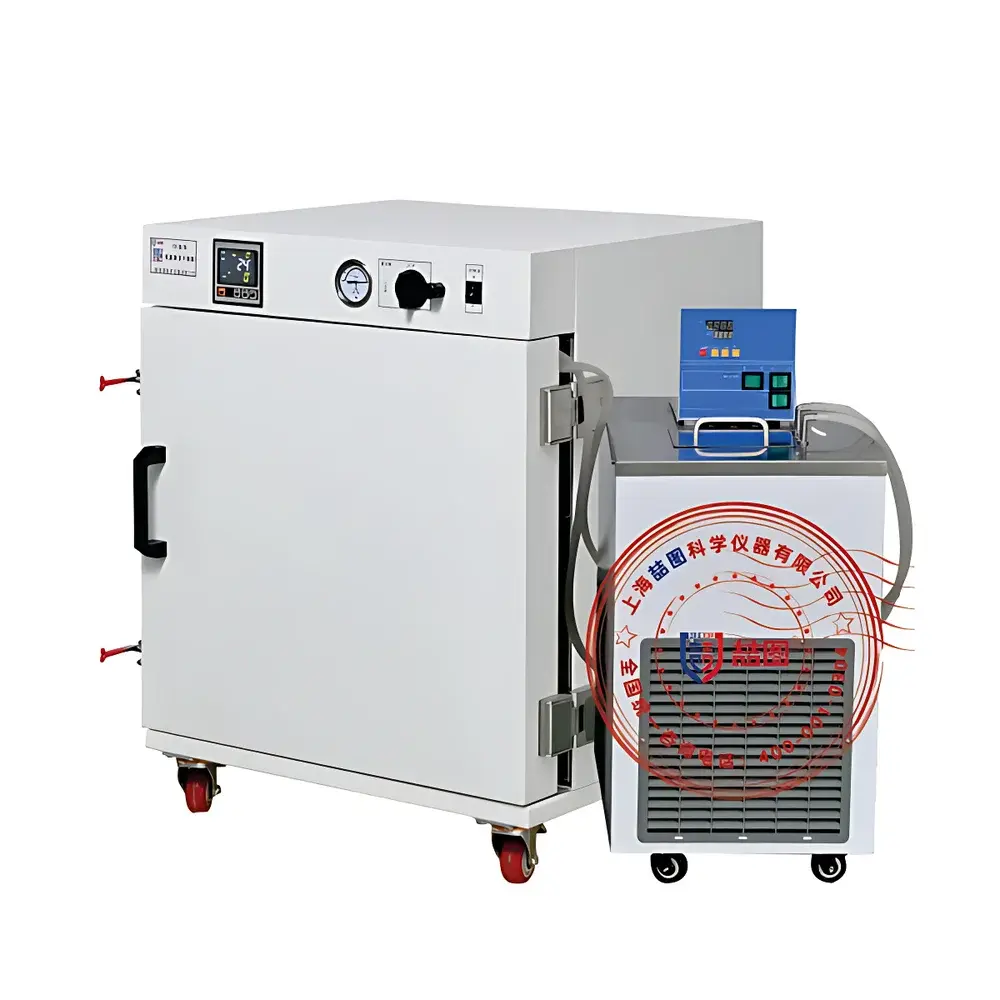
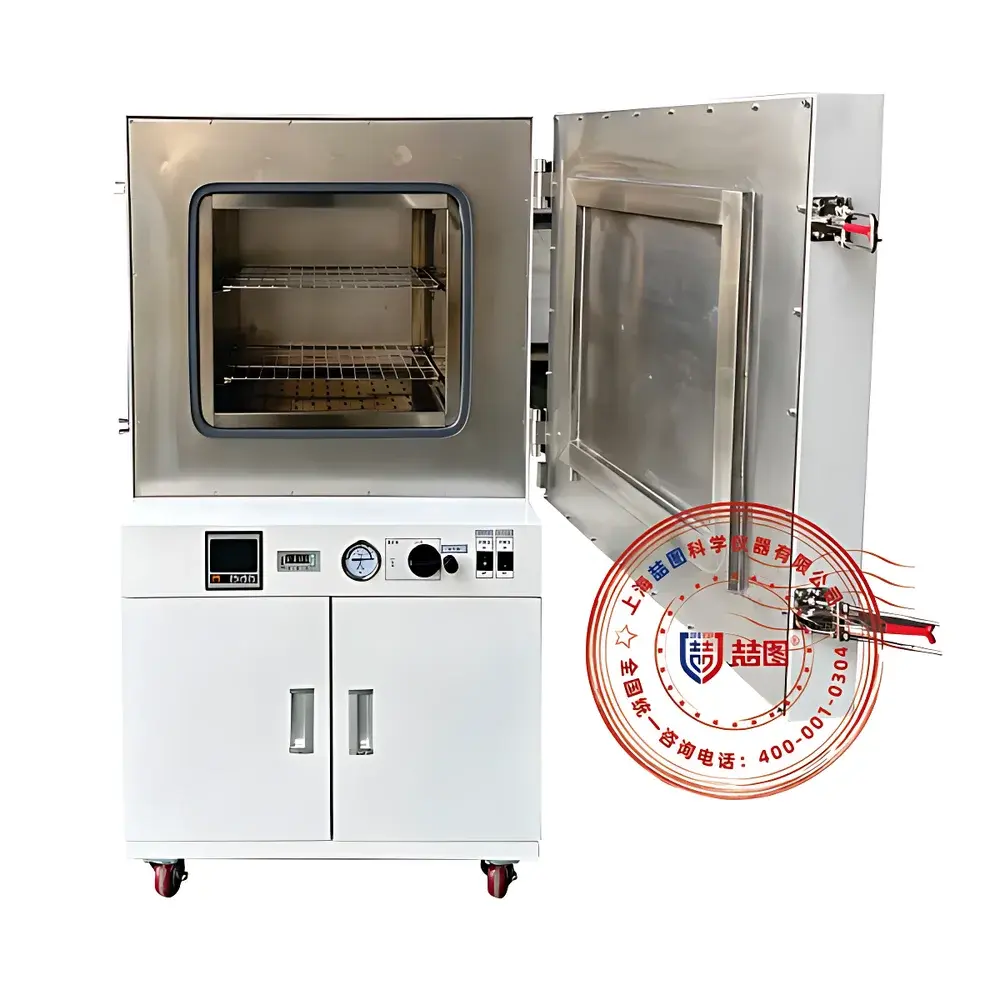
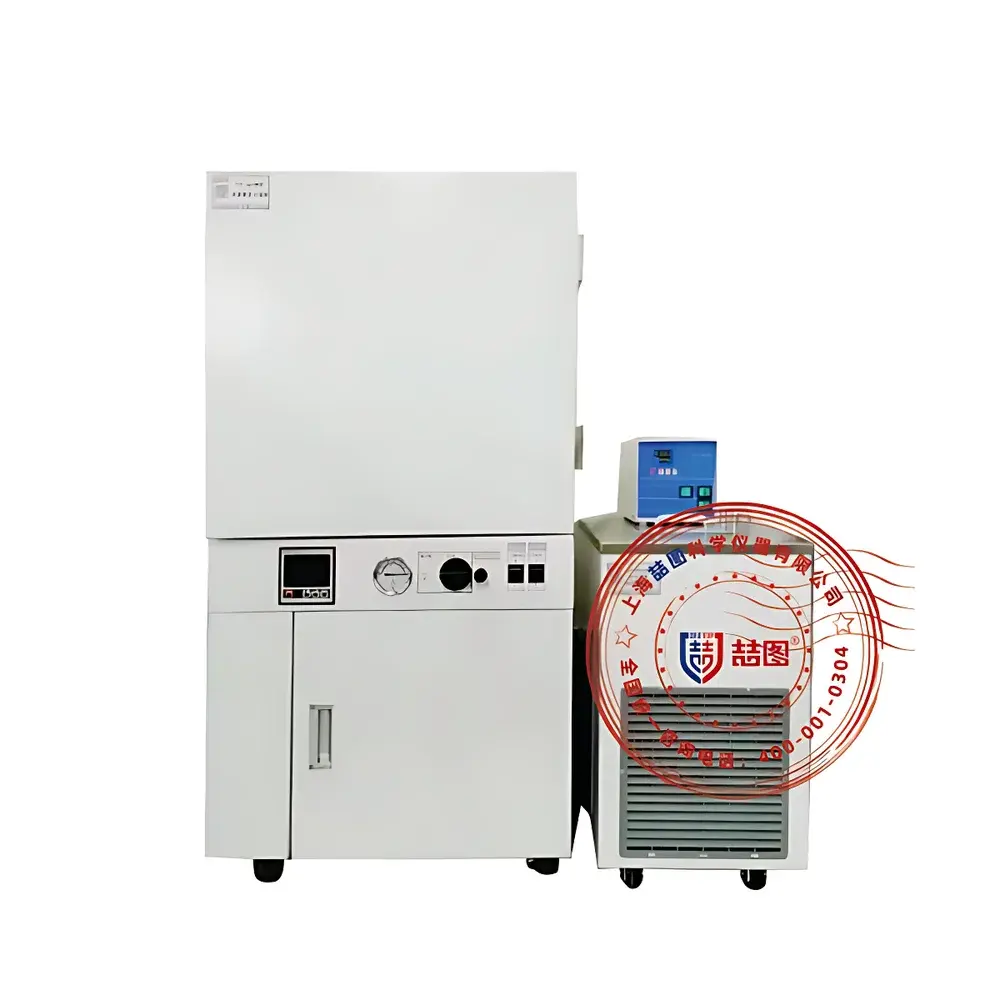
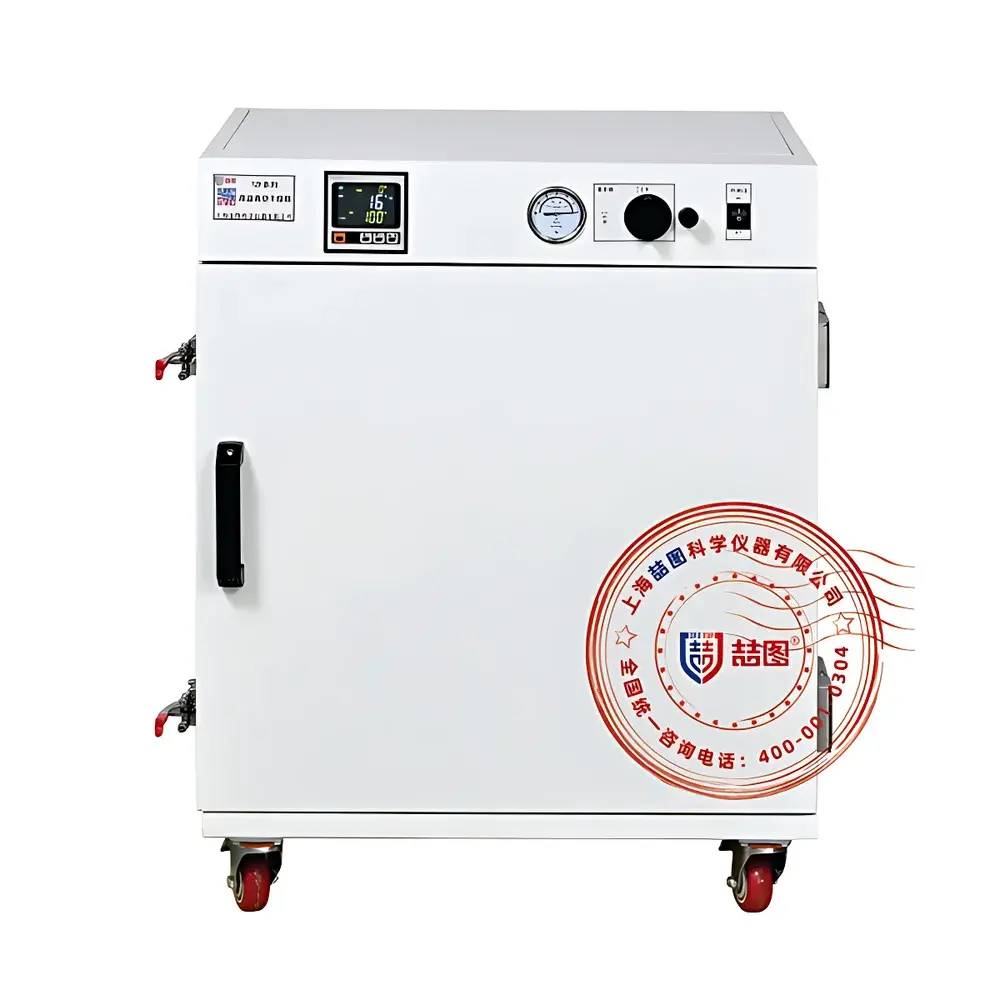
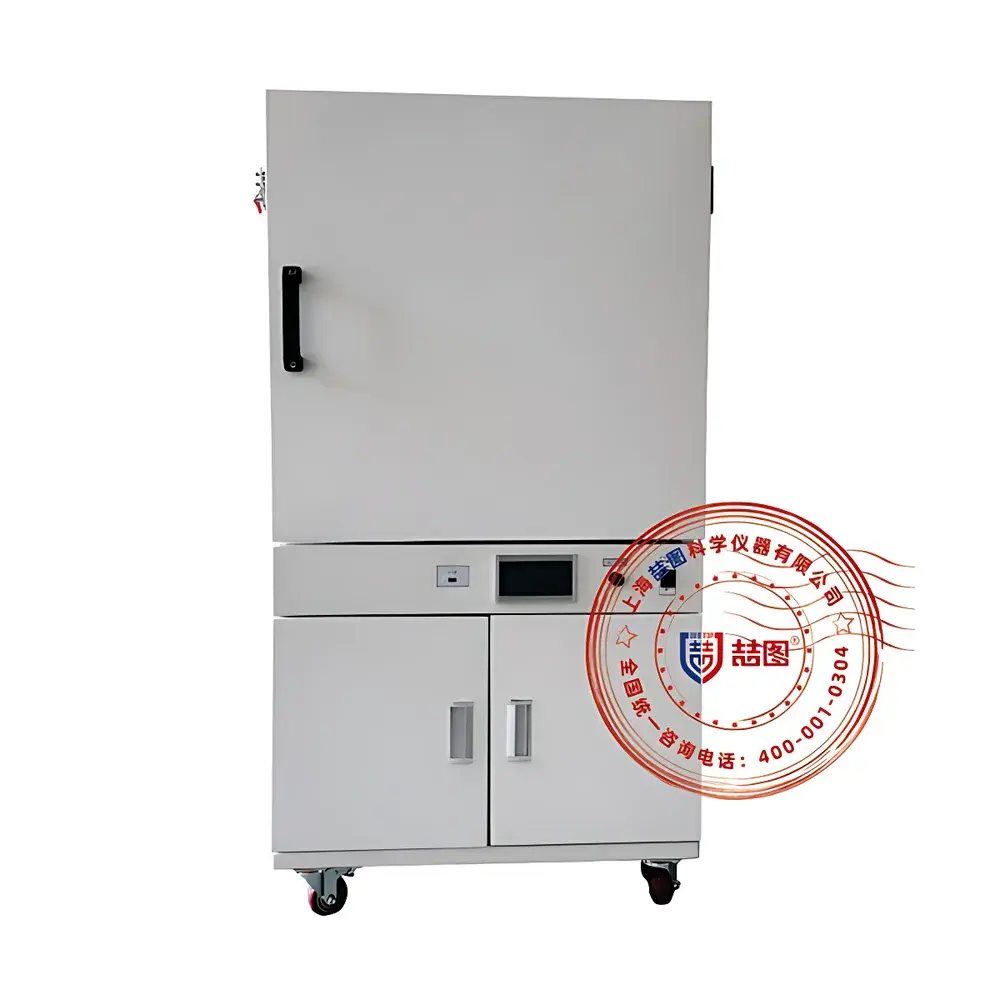
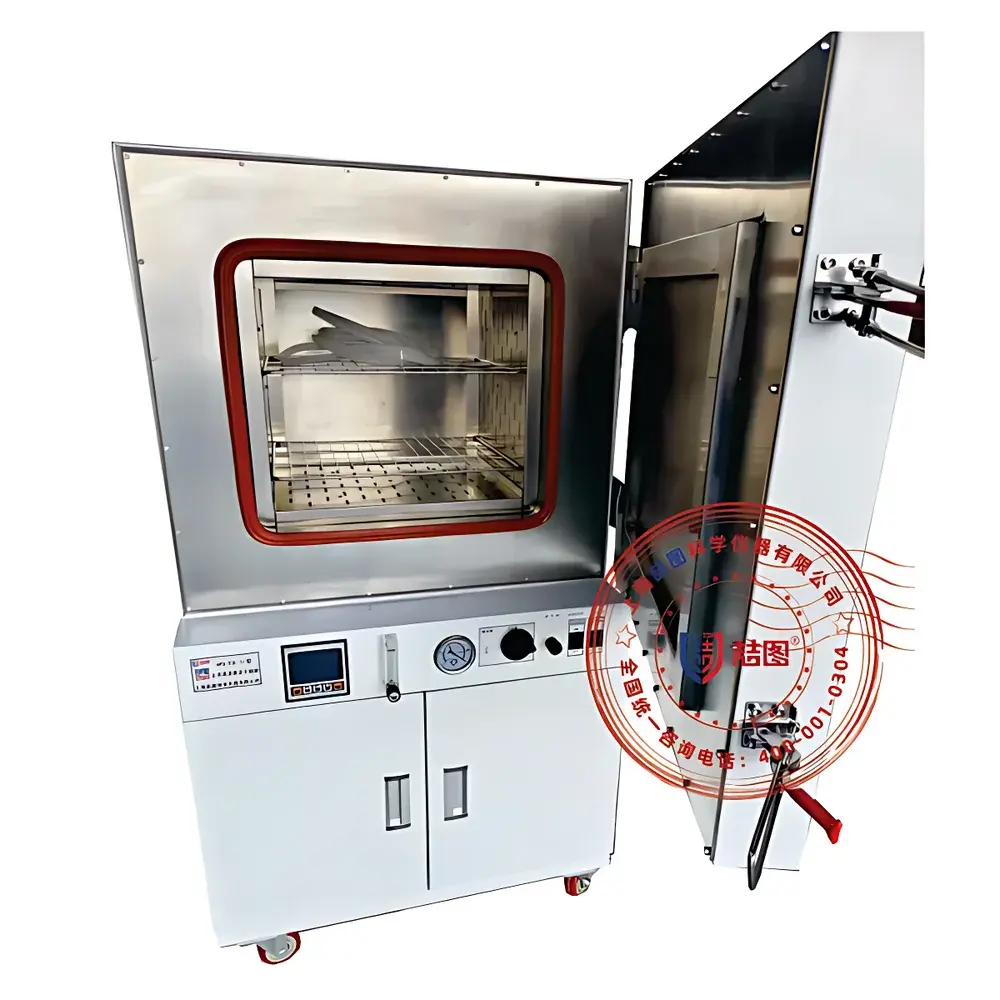
DRETOP UR4-50JV High-Temperature Vacuum Drying Oven
| Brand | DRETOP |
|---|---|
| Origin | Shanghai, China |
| Model | UR4-50JV |
| Instrument Type | Vacuum Oven |
| Temperature Range | RT+10°C to 400°C |
| Temperature Uniformity | ±1°C |
| Temperature Resolution | 0.1°C |
| Vacuum Level | ≤133 Pa |
| Internal Chamber Dimensions | 450 × 450 × 450 mm (W×D×H) |
| Chamber Material | Stainless Steel (AISI 304) |
| Heating Method | Forced Air Circulation |
| Working Environment Temperature | RT+5°C |
| Power Supply | AC 220 V, 50 Hz |
| Rated Power | 4000 W |
| Standard Accessories | Recirculating Water Cooling Unit, Rotary Vane Vacuum Pump, J-Type Intermediary Condensate Trap |
Overview
The DRETOP UR4-50JV High-Temperature Vacuum Drying Oven is a precision-engineered thermal processing system designed for controlled dehydration, thermal stabilization, degassing, and annealing under vacuum conditions. It operates on the fundamental principle of lowering the vapor pressure of volatile components—primarily water and solvents—by reducing ambient pressure, thereby enabling effective drying at significantly lower temperatures than atmospheric ovens. This mechanism preserves thermally sensitive materials while achieving high drying efficiency and minimizing oxidation risks. The UR4-50JV is engineered for laboratory-scale R&D and pilot production in fields requiring strict environmental control: semiconductor packaging, lithium-ion battery electrode conditioning, aerospace composite curing, electronic component outgassing, and advanced ceramic sintering pre-treatment. Its maximum operating temperature of 400°C—combined with a stable vacuum level of ≤133 Pa—enables reproducible processing of high-performance materials where inert or oxygen-free environments are mandatory.
Key Features
- Stainless steel (AISI 304) double-walled chamber with argon arc welding joints ensures structural integrity and long-term vacuum integrity.
- Dual-layer tempered safety observation window with vacuum-sealed edge allows real-time visual monitoring without compromising chamber pressure.
- Forced-air convection heating system with rear-mounted centrifugal blower provides uniform thermal distribution across the 50 L chamber volume.
- Microprocessor-based PID temperature controller with digital display, ±1°C stability, and 0.1°C resolution supports precise thermal ramping and hold profiles.
- Integrated dual-stage mechanical vacuum sealing system with high-temperature silicone door gasket and rotary locking handle guarantees consistent vacuum retention over extended cycles.
- Water-cooled jacket design mitigates heat transfer to the door seal, extending gasket service life and maintaining vacuum integrity during prolonged high-temperature operation.
- Comprehensive safety architecture includes over-temperature alarm, leakage current protection, short-circuit cutoff, thermal overload relay, and non-volatile parameter memory for power-failure recovery.
Sample Compatibility & Compliance
The UR4-50JV accommodates powders, granules, thin-film substrates, coated wafers, battery cathode/anode sheets, and small-volume polymer composites without risk of dispersion—unlike forced-air ovens. Its vacuum-only environment eliminates convective particle movement, making it suitable for fragile or low-density samples. The stainless steel chamber complies with ISO 8573-1 (compressed air purity) and meets general requirements for cleanroom-compatible equipment per ISO 14644-1 Class 8. While not certified to UL/CSA or CE as a standalone unit (intended for integration into user-defined lab infrastructure), its electrical design adheres to IEC 61010-1 safety standards for laboratory equipment. Vacuum performance aligns with ASTM E104–22 (Standard Practice for Maintaining Constant Relative Humidity by Means of Aqueous Solutions) when used with calibrated condensate traps and water-cooling systems.
Software & Data Management
The UR4-50JV features an embedded S-type split-control interface comprising a dedicated digital vacuum gauge and a high-contrast LCD temperature controller with multi-step programmable timing. Though not equipped with Ethernet or USB data logging as standard, the controller supports RS-485 Modbus RTU protocol (optional module) for integration into centralized LabVantage or DeltaV SCADA systems. All setpoints, dwell times, vacuum hold durations, and alarm thresholds are stored in non-volatile EEPROM. Audit-trail functionality—including timestamped parameter changes and fault code logs—is available via optional T-type color touchscreen controller upgrade (UR4-50JVT), which supports FDA 21 CFR Part 11-compliant electronic signatures and GLP/GMP audit-ready reporting when paired with validated software.
Applications
- Lithium-ion battery R&D: Electrode drying prior to cell assembly; removal of residual NMP solvent from cathode slurries.
- Semiconductor manufacturing: Wafer-level degassing of die-attach adhesives and underfill materials to prevent void formation.
- Aerospace engineering: Outgassing of composite layups and thermal interface materials for satellite payload qualification.
- Pharmaceutical development: Solvent removal from lyophilized intermediates under inert gas backfill (N₂ or Ar).
- Materials science: Annealing of metal oxide thin films; pre-sintering of ceramic green bodies; moisture desorption kinetics studies.
- Environmental testing labs: Accelerated aging of encapsulated sensors and MEMS devices under controlled thermal-vacuum stress.
FAQ
What vacuum level can the UR4-50JV achieve, and how is it maintained?
The system achieves and sustains ≤133 Pa using a factory-integrated single-stage rotary vane vacuum pump. Vacuum stability is enhanced by the water-cooled door jacket and high-temperature elastomeric sealing system.
Is the chamber atmosphere controllable beyond vacuum?
Yes—optional inert gas inlet ports (N₂ or Ar) enable backfilling to defined partial pressures, supporting processes such as vacuum-assisted gas-phase sintering or controlled oxidation suppression.
Can the UR4-50JV be validated for GMP compliance?
As supplied, it meets baseline IQ/OQ prerequisites. Full PQ validation requires user-defined protocols covering temperature mapping (per ISO 17025), vacuum decay testing, and alarm response verification—facilitated by its programmable controller and accessible sensor outputs.
What maintenance is required for long-term vacuum performance?
Quarterly inspection of vacuum pump oil, annual replacement of condensate trap cartridges, and biannual verification of door gasket compression force are recommended. Stainless steel chamber surfaces require only IPA wipe-down between runs.
Does the unit support ramp-soak-hold thermal profiles?
Yes—the standard PID controller supports up to 8 segment programs; the optional T-type touchscreen controller expands this to 32 segments with independent vacuum and temperature interlocks.



