
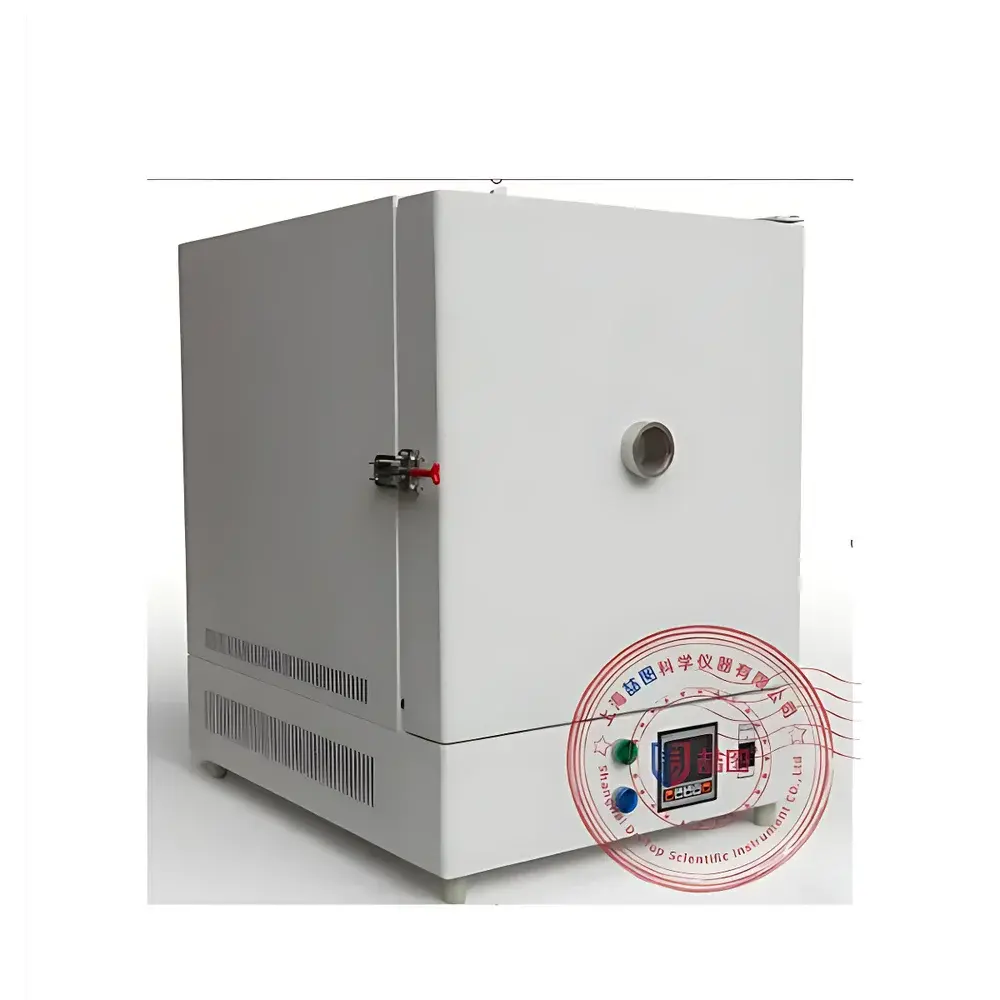
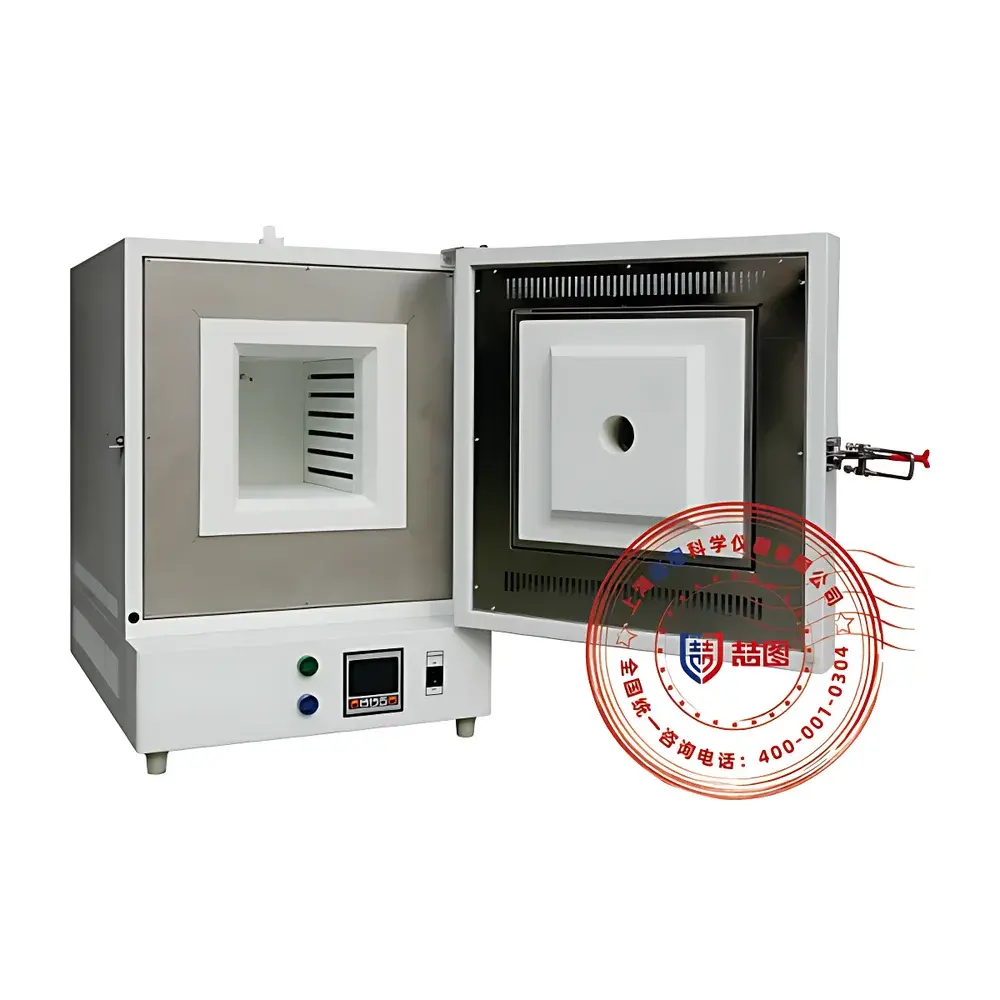
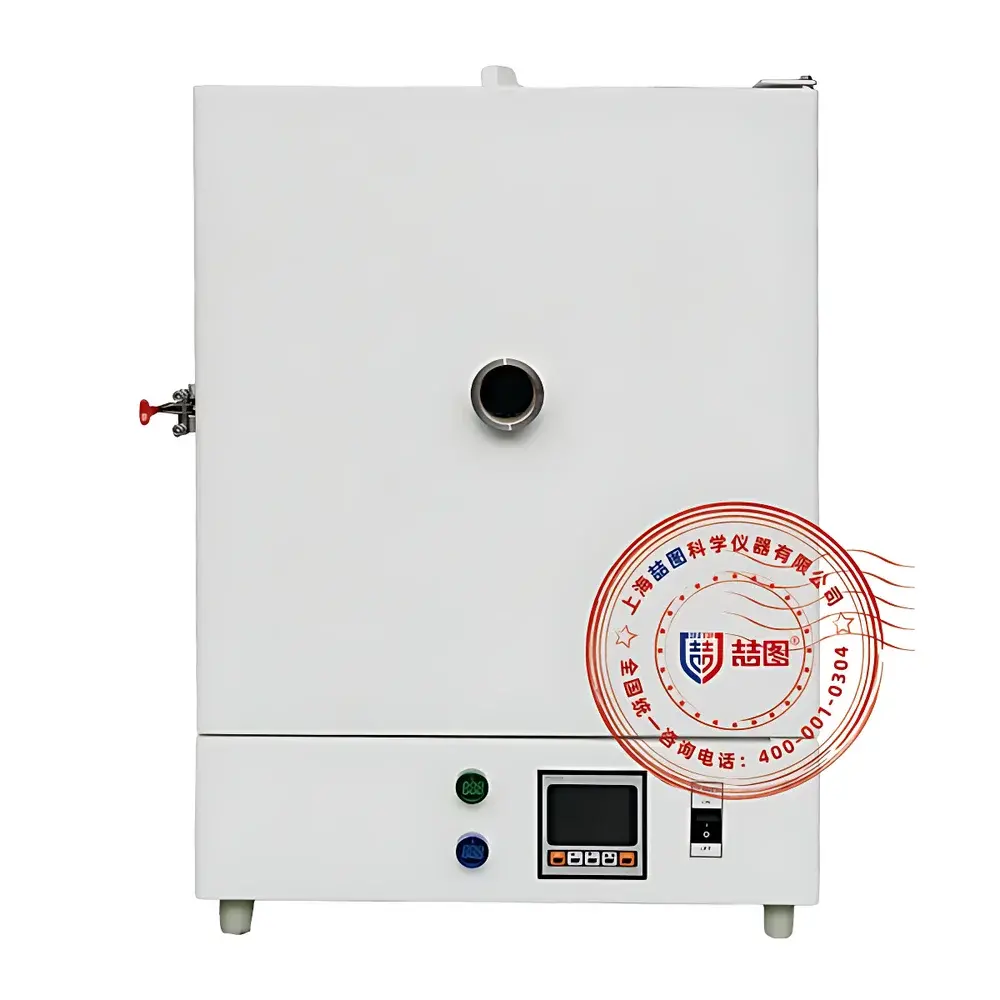
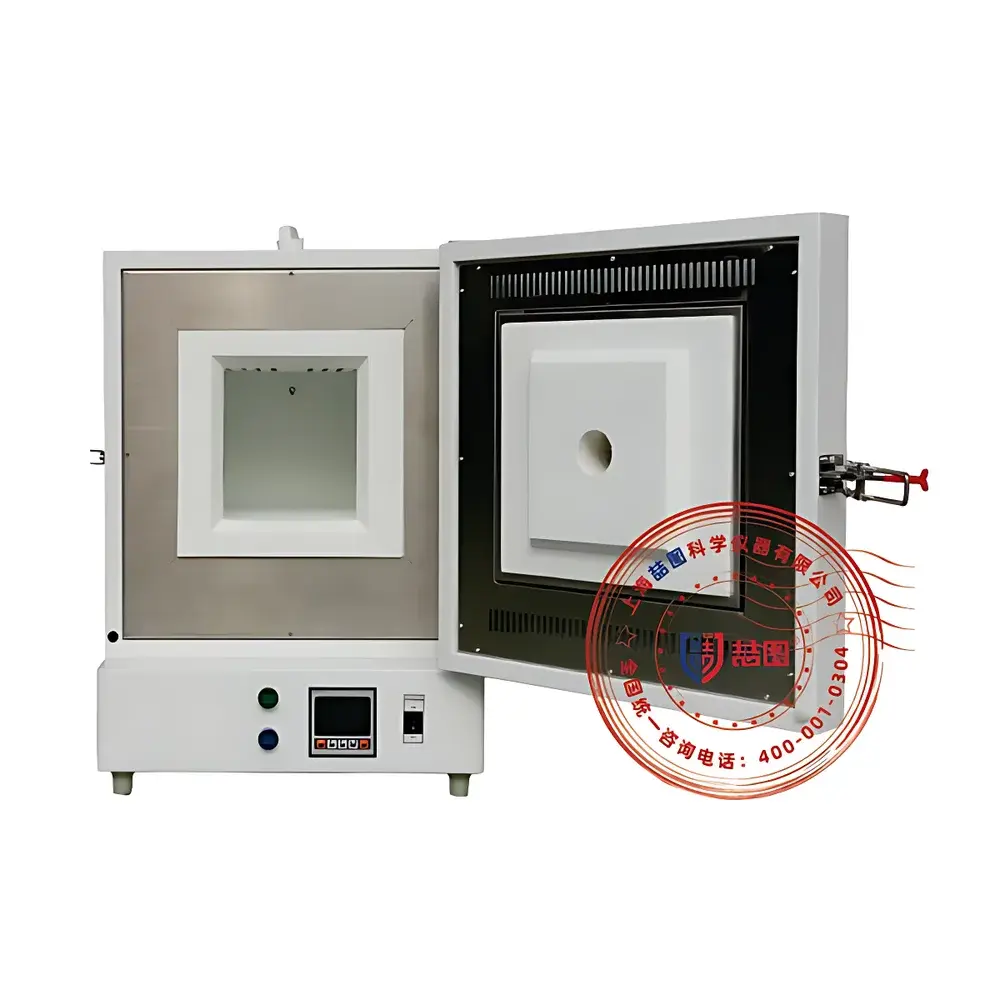
DRETOP WTP-1210K Cat-Eye Viewing Muffle Furnace
| Brand | DRETOP |
|---|---|
| Origin | Shanghai, China |
| Model | WTP-1210K |
| Instrument Type | Box-Type Muffle Furnace |
| Max Temperature | RT + 50 °C to 1000 °C |
| Temperature Control Accuracy | ±1 °C |
| Rated Power | 21 kW |
| Heating Time to Max Temperature | ≤90 min |
| Heating Element Material | Ni-Cr-Mo Alloy |
| Internal Chamber Dimensions (W×D×H) | 200 × 300 × 200 mm |
| Nominal Volume | 12 L |
| Viewing Window Diameter | 5 cm |
| Control System | Programmable LCD Controller (30-Stage Ramp/Soak) |
| Insulation | Vacuum-Microporous Ceramic Fiber Board |
| Safety Features | Dual-Stage Over-Temperature Protection, Door-Interlocked Power Cut-off, Phase Loss & Thermocouple Break Detection, Auto-Restart with Power Recovery Memory |
Overview
The DRETOP WTP-1210K Cat-Eye Viewing Muffle Furnace is a high-performance, laboratory-grade box-type muffle furnace engineered for precision thermal processing in research, quality control, and industrial R&D environments. It operates on the principle of resistive heating via embedded Ni-Cr-Mo alloy heating elements arranged in a triple-wall configuration—ensuring uniform radiant heat distribution across the entire chamber volume. The furnace achieves stable thermal equilibrium through advanced PID temperature regulation and vacuum-microporous ceramic fiber insulation, minimizing thermal mass and maximizing energy efficiency. Its defining feature—the 5 cm diameter cat-eye viewing port—enables real-time visual monitoring of sample behavior during critical thermal transitions (e.g., sintering onset, phase transformation, or decomposition), without compromising chamber integrity or temperature stability. Designed for applications demanding rapid ramp rates, precise dwell control, and repeatable thermal profiles, the WTP-1210K conforms to core operational expectations of ASTM E1112 (Standard Specification for Laboratory Muffle Furnaces) and supports GLP-compliant workflow documentation when integrated with optional RS485 or printer modules.
Key Features
- Triple-wall heating architecture with spiral-wound Ni-Cr-Mo alloy elements ensures exceptional temperature uniformity (±3 °C within working zone at 1000 °C), validated per ISO 9001 calibration protocols.
- 30-stage programmable controller enables complex thermal profiles—including ramp rates (0.1–30 °C/min), soak durations (1–9999 min), and automatic shutdown—with non-volatile memory retention for power interruption recovery.
- Cat-eye quartz viewport (5 cm Ø) provides optical access under full operating temperature; viewport seal maintains inert atmosphere integrity and resists thermal shock up to 1000 °C.
- Dual-level safety system includes primary over-temperature cutoff (setpoint +10 °C) and secondary independent thermocouple-based protection, compliant with IEC 61000-4-5 surge immunity requirements.
- Door-interlocked circuitry de-energizes heating elements immediately upon opening—eliminating thermal runaway risk during sample insertion or inspection.
- Phosphate-treated steel housing with high-temp epoxy coating ensures corrosion resistance and mechanical durability under repeated thermal cycling.
- Integrated digital ammeter/voltmeter provides real-time electrical diagnostics, facilitating preventive maintenance and fault tracing per ISO/IEC 17025 laboratory equipment management standards.
Sample Compatibility & Compliance
The WTP-1210K accommodates standard crucibles (alumina, quartz, silicon carbide), ceramic tiles, metal coupons, powder compacts, and geological specimens up to 200 × 300 × 200 mm. Its low-thermal-mass chamber supports rapid cooling (forced-air assist optional) and repeatable thermal cycling without measurable drift. The furnace meets structural and electrical safety requirements of GB/T 10066.1–2004 (General Safety Requirements for Industrial Electric Heating Equipment) and is compatible with inert gas purging (via optional inlet valve) for oxygen-sensitive processes. When equipped with data logging accessories, it satisfies audit trail requirements under FDA 21 CFR Part 11 for electronic records in regulated laboratories.
Software & Data Management
While the base unit features a standalone 30-stage LCD controller, optional RS485 serial interface enables integration with SCADA systems or custom LabVIEW/Python-based acquisition platforms. The controller logs timestamped setpoint/actual temperature pairs internally (10,000-point buffer); external export is supported via USB-to-serial adapters. Optional color touchscreen upgrade adds multi-tier user authentication, real-time curve overlay, and CSV export—facilitating SOP-driven operation in GMP environments. All firmware updates are performed via secure bootloader protocol to prevent unauthorized modification.
Applications
- Thermal analysis of inorganic powders (TGA pre-conditioning, ash content determination per ASTM D3174).
- Sintering of oxide ceramics, ferrites, and solid electrolytes under controlled atmosphere.
- Heat treatment of metallurgical samples: annealing, tempering, and stress-relief cycles per ASTM A108.
- Crucible-based fusion for XRF sample preparation (borate flux melting).
- Controlled devitrification of glass batches and microcrystallization studies.
- Pre-burning of catalyst supports and zeolite templates prior to activation.
- Calibration of thermocouples and reference materials in metrology labs.
FAQ
What is the maximum recommended continuous operating temperature?
The WTP-1210K is rated for continuous operation at 1000 °C. Short-term excursions to 1020 °C are permissible but reduce element service life.
Can the furnace be operated under nitrogen or argon atmosphere?
Yes—when fitted with the optional inert gas inlet valve and sealed viewport gasket, it maintains <100 ppm O₂ residual under 0.1 bar overpressure.
Is the cat-eye viewport suitable for quantitative pyrometry?
No—the quartz viewport transmits visible and near-IR radiation but lacks spectral calibration; use of external infrared pyrometers requires separate emissivity compensation.
Does the controller support remote monitoring via Ethernet or Wi-Fi?
Not natively—the standard interface is RS485; Ethernet/Wi-Fi connectivity requires third-party protocol converters certified to IEC 62443-4-2 cybersecurity standards.
What maintenance intervals are recommended for optimal performance?
Inspect heating element continuity and thermocouple calibration every 200 operating hours; replace ceramic fiber seals after 1,500 cumulative hours at >800 °C.
Related Products



