
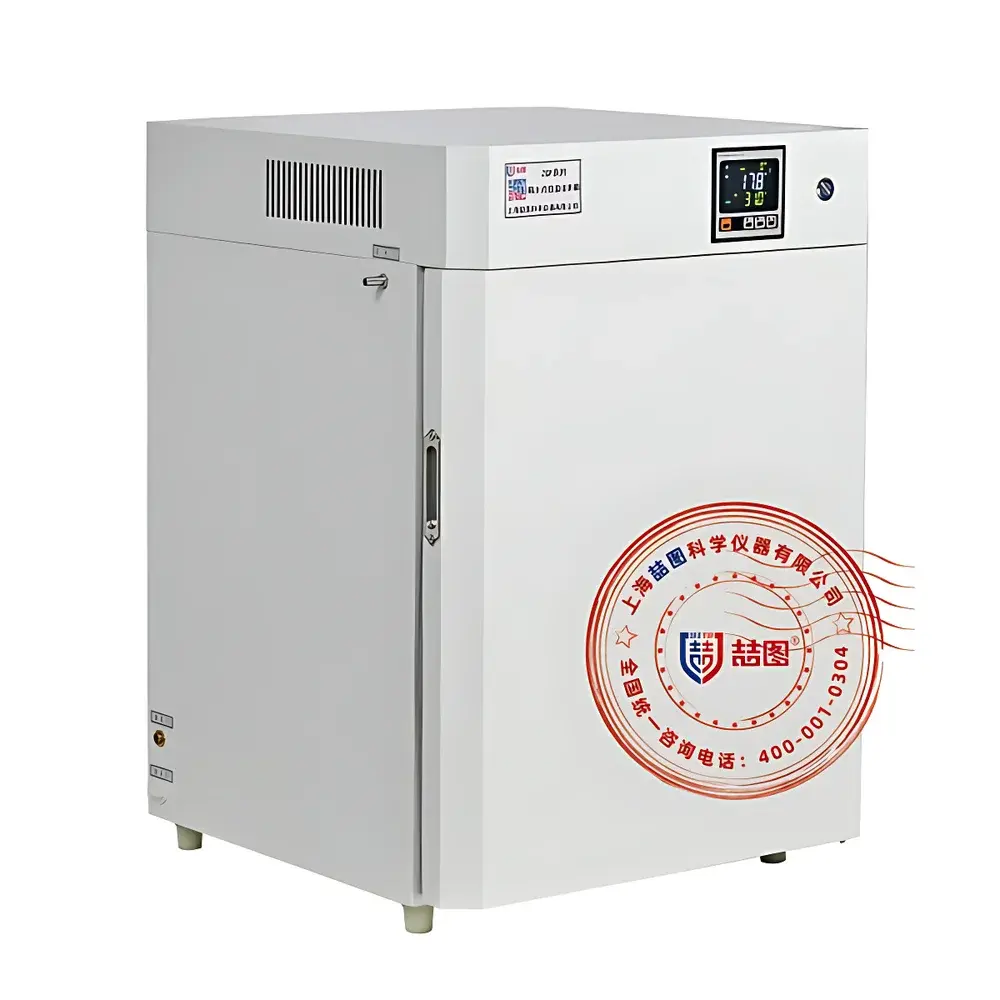
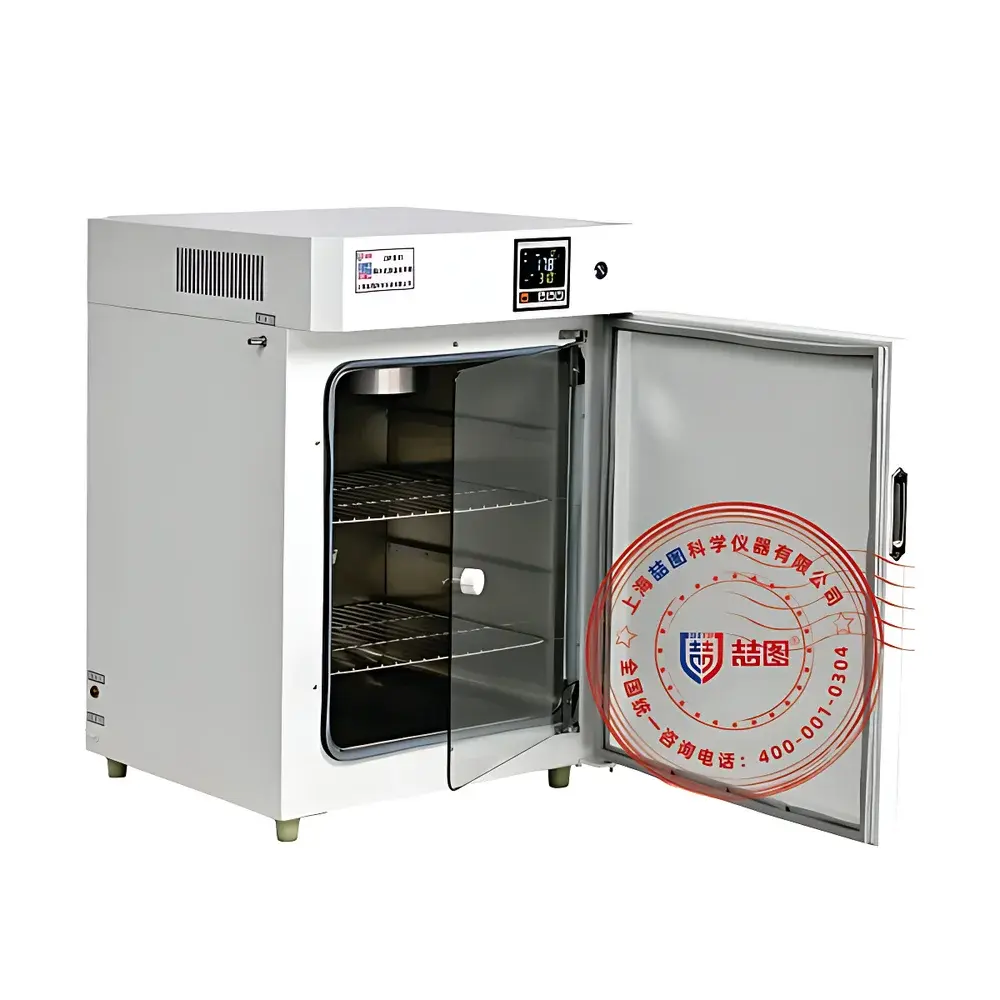
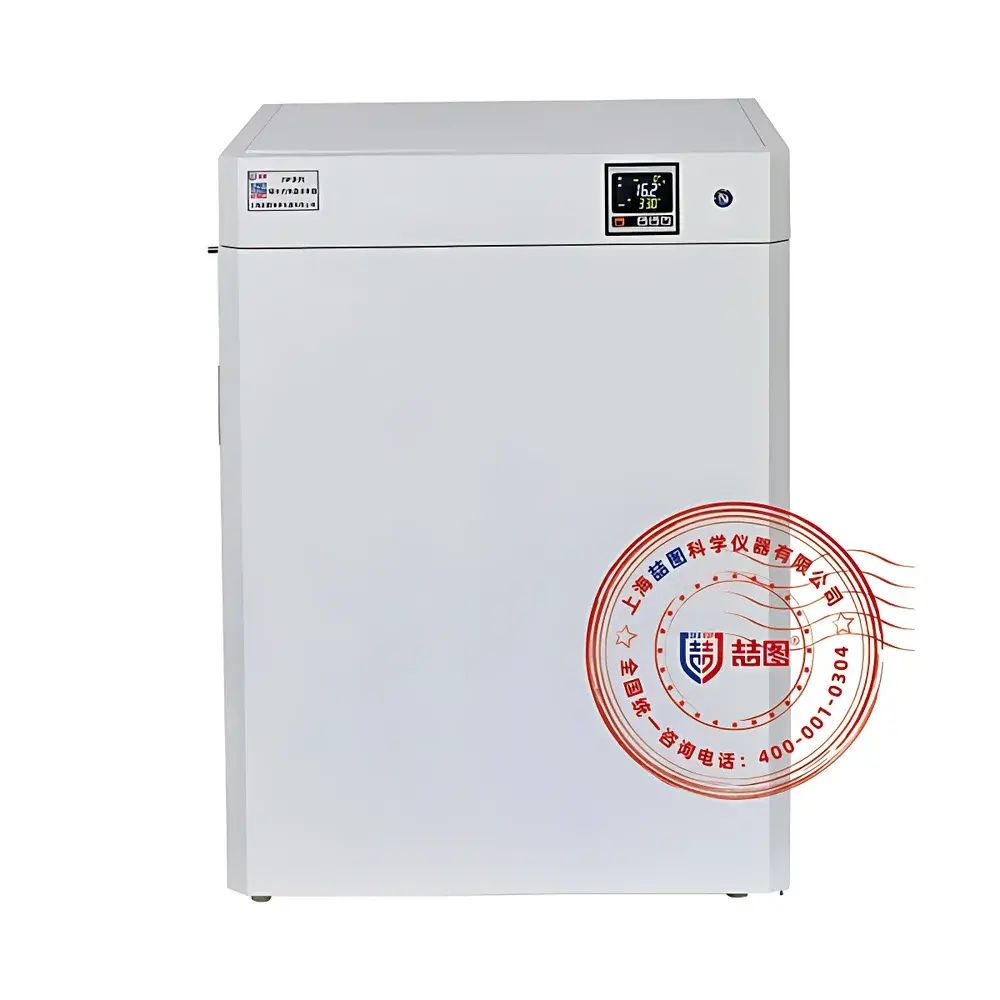
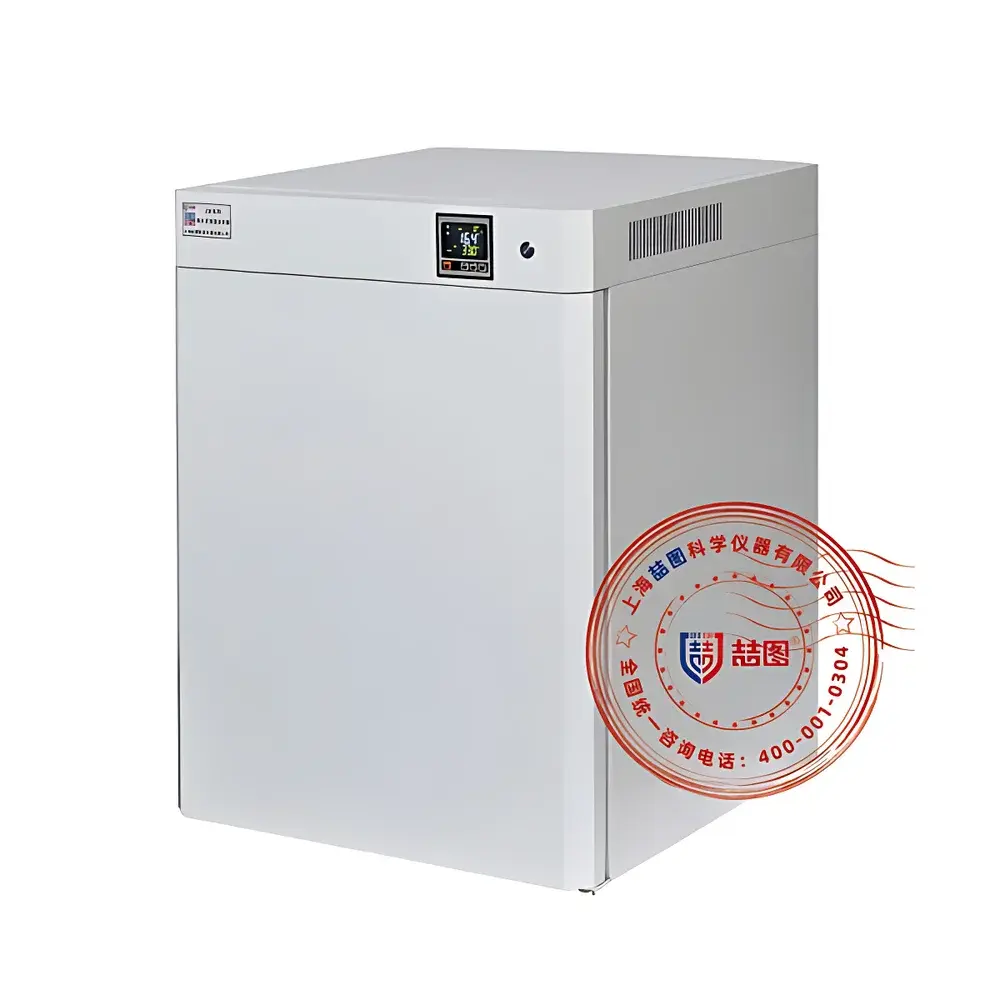
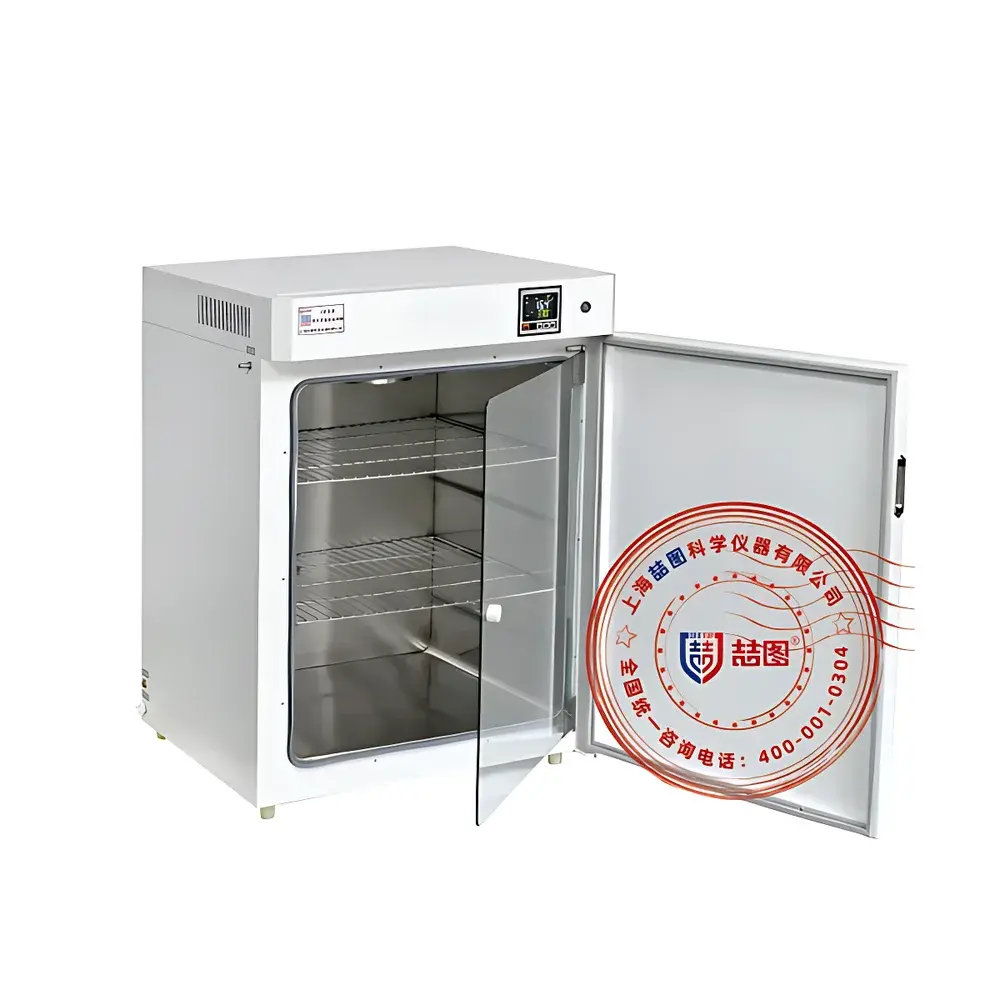
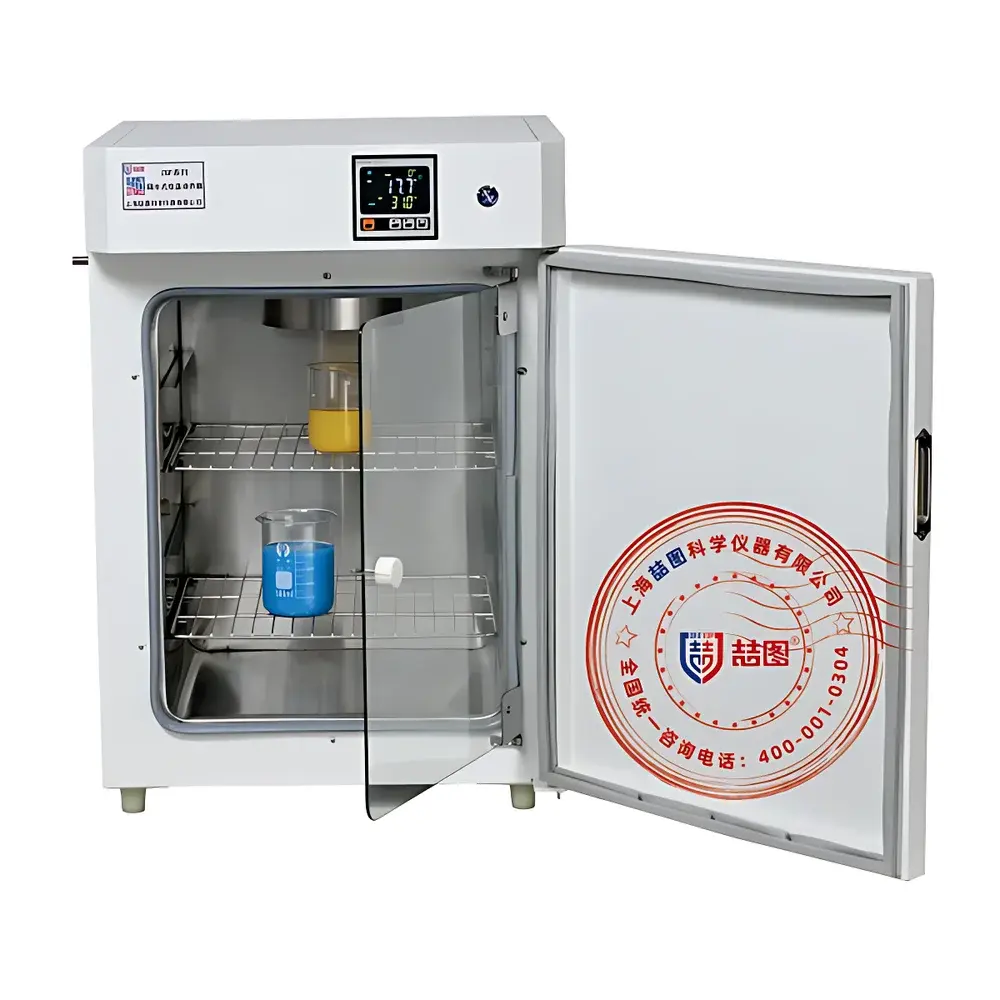
DRETOP ZGP-9160 Water-Jacketed Constant Temperature Incubator
| Brand | DRETOP |
|---|---|
| Origin | Shanghai, China |
| Model | ZGP-9160 |
| Convection Type | Forced Air |
| Control Method | Digital PID Temperature Control |
| Temperature Range | RT + 2°C to 65°C |
| Temperature Control Accuracy | ±0.1°C |
| Temperature Uniformity | ±0.5°C (at 37°C, empty chamber) |
| Temperature Fluctuation | ±0.2°C |
| Chamber Volume | 160 L |
| External Dimensions (W×D×H) | 675 × 660 × 950 mm |
| Power Input | 850 W |
| Heating Method | Water-Jacketed |
| Display | Large LCD Panel |
| Door Design | Dual-Layer Door with Tempered Glass Inner Door and Magnetic Seal |
| Interior Material | Stainless Steel (304) |
| Removable Adjustable Shelves | Yes |
| Water Jacket Fill/Overflow System | Integrated Inlet & Overflow Port |
| Safety Features | Over-Temperature Alarm, Power-Failure Data Retention, Auto-Recovery Function |
Overview
The DRETOP ZGP-9160 Water-Jacketed Constant Temperature Incubator is engineered for long-term, high-stability thermal environments required in microbiological culture, cell propagation, enzyme activity assays, and fermentation studies. Unlike forced-air incubators, this model employs a water-jacketed heating architecture—where a sealed outer chamber filled with deionized water surrounds the inner stainless-steel working chamber. Heat is transferred via conduction through the water layer, resulting in exceptional thermal inertia, minimal temperature overshoot, and superior uniformity across the entire volume. This design is particularly advantageous for sensitive applications where even transient fluctuations can compromise experimental reproducibility—such as mammalian cell line maintenance, mycological growth, or BSL-1/BSL-2 compliant bacterial cultivation. The unit operates within a precise range of RT + 2°C to 65°C, with resolution to 0.1°C and certified uniformity of ±0.5°C at 37°C (empty chamber), meeting baseline requirements for ISO 13485-supported quality control workflows and GLP-aligned laboratory practices.
Key Features
- Water-jacketed thermal architecture with integrated overflow and fill ports—ensures safe, repeatable water-level management and eliminates risk of overfilling or dry-heating;
- Digital PID temperature controller with large backlit LCD display—enables real-time monitoring of setpoint, actual temperature, and system status across multiple parameters;
- Forced-air internal circulation system with optimized duct geometry—enhances convective homogeneity without compromising water-jacket stability;
- 304 stainless-steel interior with fully removable, height-adjustable shelves—supports autoclaving, chemical sterilization (e.g., 70% ethanol, hydrogen peroxide vapor), and complete cavity access;
- Dual-door configuration: inner tempered glass door minimizes radiant heat loss; outer magnetic-seal door provides effective thermal insulation and mechanical durability;
- Intelligent safety suite including programmable over-temperature alarm, power-failure memory retention, and automatic restart upon grid recovery—ensures data integrity during unplanned outages.
Sample Compatibility & Compliance
The ZGP-9160 accommodates standard microbiological and cell culture formats—including Petri dishes (up to 150 mm), multi-well plates (6–96-well), Erlenmeyer flasks (up to 2 L), and roller bottles—without airflow-induced desiccation. Its water-jacketed design inherently suppresses relative humidity drift, making it suitable for non-humidified applications where condensation control is critical (e.g., agar plate storage, anaerobic pre-incubation). While not equipped with active humidity control, its thermal mass stabilizes ambient moisture content within the chamber over extended cycles. The unit complies with IEC 61010-1:2010 for electrical safety in laboratory equipment and supports audit-ready operation under GLP and GMP frameworks when paired with external validation protocols (e.g., IQ/OQ/PQ per ASTM E2500). Optional RS485 interface enables integration into centralized lab monitoring systems compliant with FDA 21 CFR Part 11 requirements for electronic records.
Software & Data Management
The ZGP-9160 operates via embedded firmware with no proprietary software dependency. All operational parameters—including setpoint, real-time temperature, elapsed time, and alarm history—are displayed and logged locally on the LCD interface. For traceable data acquisition, optional accessories include an RS485 communication module (Modbus RTU protocol) for connection to SCADA or LIMS platforms, and a micro-printer for hard-copy temperature logs. When configured with the optional programmable controller, users may define up to 30 segmented temperature profiles with ramp/soak sequences—supporting complex protocols such as thermal shock preconditioning or circadian rhythm simulation. All configuration changes are timestamped and retained through power interruption, satisfying basic ALCOA+ principles (Attributable, Legible, Contemporaneous, Original, Accurate) for raw data integrity.
Applications
- Bacterial and fungal culture maintenance (e.g., E. coli, S. aureus, A. niger) under ISO 11133-compliant conditions;
- Mammalian and insect cell line propagation where thermal consistency outweighs humidity control needs;
- Enzyme kinetics studies requiring stable sub-physiological or elevated temperatures (e.g., 4°C cold-adapted proteases, 55°C thermostable polymerases);
- Pharmaceutical stability testing per ICH Q1A(R2) guidelines for intermediate storage conditions;
- Agricultural seed germination trials and plant tissue culture pre-incubation;
- Quality assurance incubation for media sterility checks and endotoxin assay controls.
FAQ
What is the primary advantage of water-jacketed over air-jacketed incubation?
Water’s high specific heat capacity provides superior thermal mass, reducing sensitivity to ambient temperature shifts and maintaining stable internal conditions during brief power interruptions—typically sustaining target temperature for >30 minutes post-power-loss.
Can the ZGP-9160 be validated for ISO/IEC 17025-compliant laboratories?
Yes—its documented temperature uniformity (±0.5°C), stability (±0.2°C), and repeatability support third-party qualification using calibrated thermistors or PT100 probes per ISO/IEC 17025 clause 6.4.1.
Is deionized water mandatory for the water jacket?
Yes—use of deionized or distilled water prevents mineral scaling, corrosion of the stainless-steel jacket, and thermal resistance buildup that would degrade performance over time.
Does the unit support remote monitoring?
With the optional RS485 interface and compatible gateway hardware, real-time temperature telemetry and alarm alerts can be routed to networked dashboards or email/SMS notification systems.
How often should the water jacket be refilled or serviced?
Under normal operation with sealed overflow protection, water top-up is required only every 6–12 months; annual inspection of seals, heater elements, and sensor calibration is recommended for sustained compliance.




