
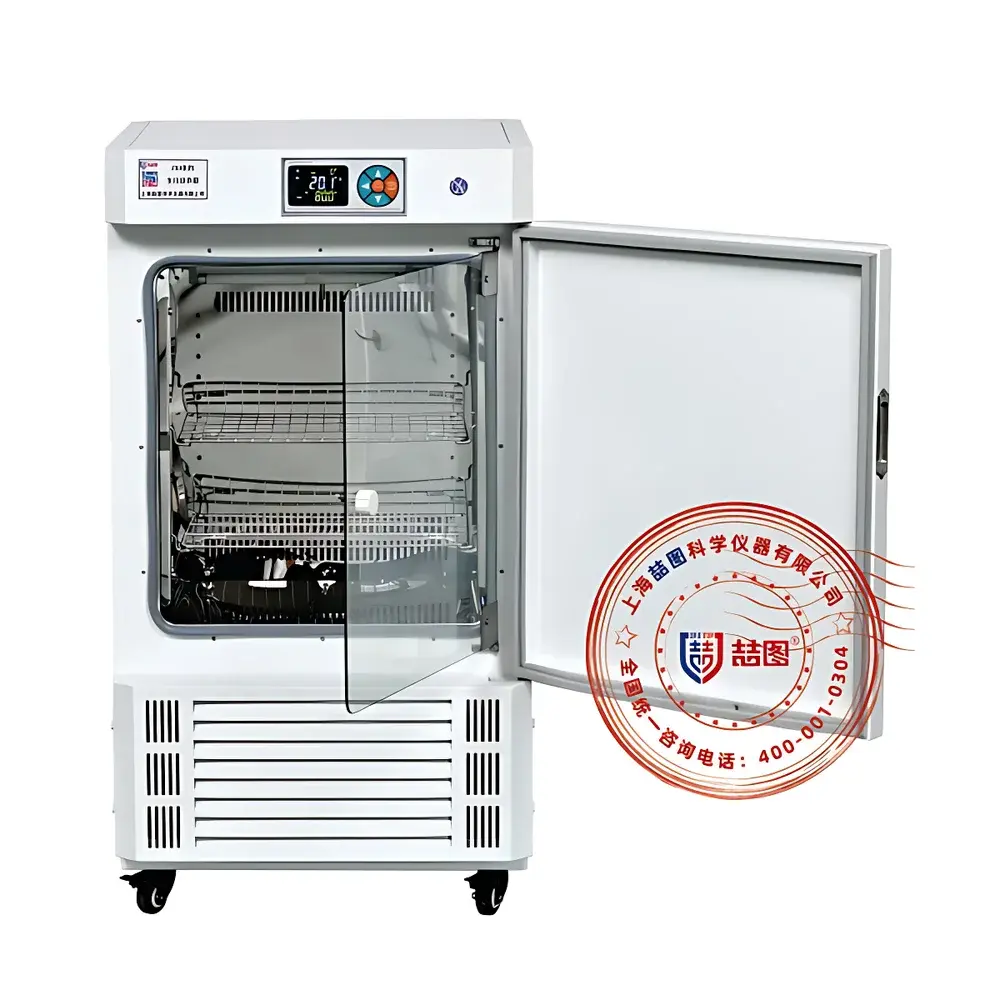
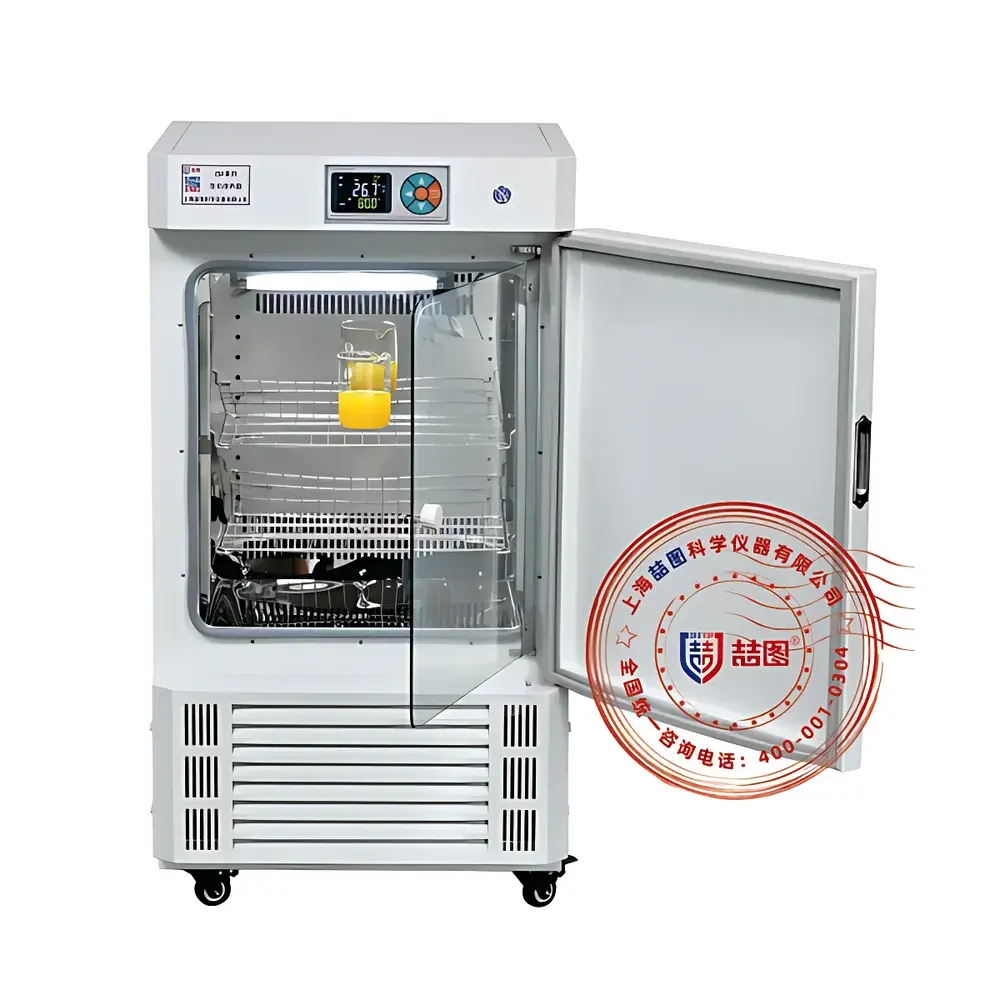
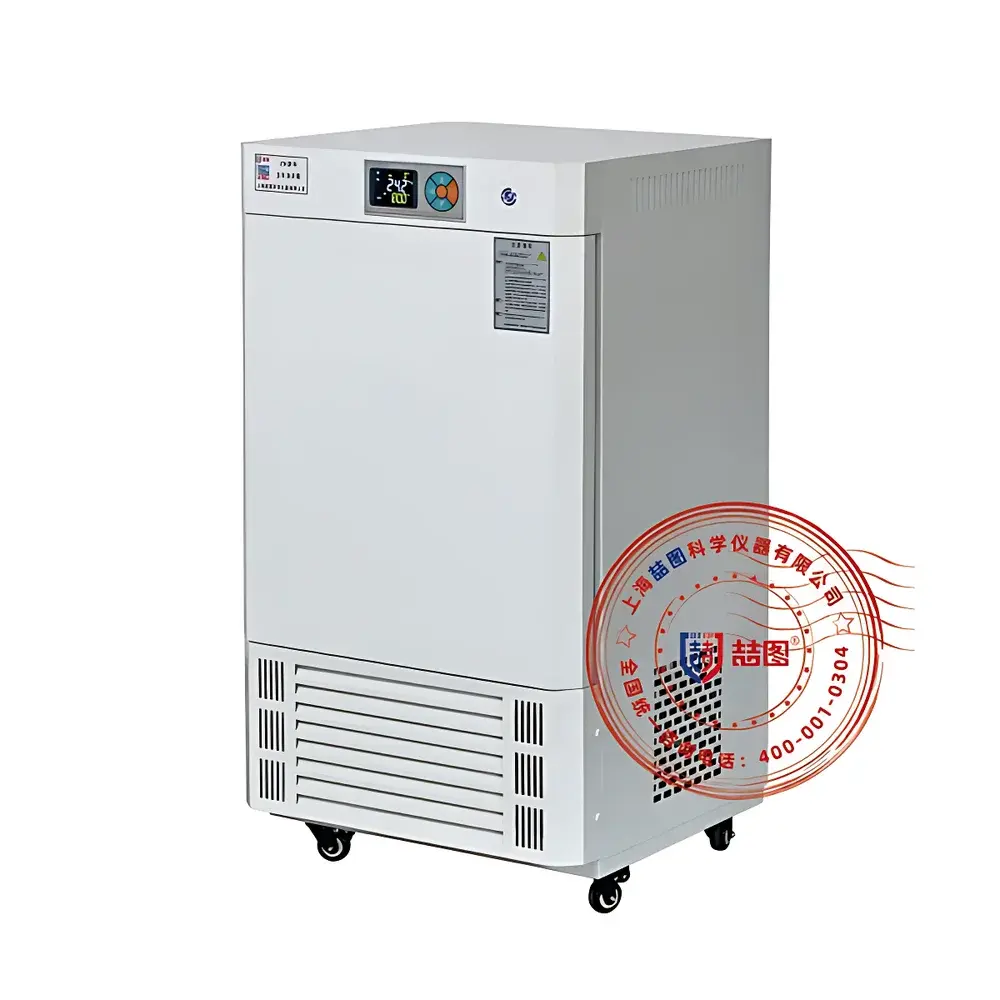
DRETOP ZSH-150F-III Biochemical Incubator
| Brand | DRETOP |
|---|---|
| Origin | Shanghai, China |
| Model | ZSH-150F-III |
| Heating Method | Air-jacketed |
| Cooling Method | Compressor-based refrigeration |
| Convection Type | Natural convection |
| Temperature Range | 0–70 °C |
| Temperature Accuracy | ±0.1 °C |
| Temperature Fluctuation | ±0.5 °C |
| Temperature Uniformity | ±1 °C (empty chamber @ 25 °C) |
| Chamber Volume | 150 L |
| External Dimensions (W×D×H) | 580 × 550 × 1100 mm |
| Power Supply | AC 220 V, 50 Hz |
| Input Power | 1150 W |
| Refrigerant | Eco-friendly non-CFC (R134a or equivalent) |
Overview
The DRETOP ZSH-150F-III Biochemical Incubator is a precision-engineered, dual-mode (heating and cooling) environmental chamber designed for stable, long-term temperature control in life science laboratories. Operating on an air-jacketed heating principle and a hermetically sealed compressor-based refrigeration system, it maintains setpoint temperatures across the full 0–70 °C range with high reproducibility and minimal thermal drift. Its natural convection architecture—enhanced by optimized internal airflow channels and a low-noise贯流 (axial-flow) fan—ensures uniform thermal distribution without mechanical agitation that could disturb sensitive biological samples. This incubator meets the operational requirements of BOD (Biochemical Oxygen Demand) testing, microbial culture, enzyme activity assays, cell viability studies, and environmental stability testing under standardized laboratory conditions. It is engineered for continuous unattended operation in GLP-compliant environments and supports routine calibration verification per ISO/IEC 17025 guidelines.
Key Features
- Microprocessor-controlled P.I.D. temperature regulation with real-time digital display (LCD), offering 0.1 °C resolution and programmable alarm thresholds for over-temperature protection.
- Air-jacketed heating system ensures rapid thermal response and reduced energy consumption compared to direct-heating designs; integrated compressor features auto-start delay and cycle-interval protection to extend service life.
- Stainless steel interior chamber (304 grade) with removable, height-adjustable shelves—designed for autoclave compatibility and residue-free cleaning in accordance with USP and ISO 14644-1 cleanroom maintenance protocols.
- Dual-door observation window: outer magnetic door seal and inner tempered glass panel provide superior thermal insulation and visual monitoring without compromising chamber integrity.
- Eco-conscious refrigeration using non-ozone-depleting refrigerant (R134a or equivalent), compliant with EU F-Gas Regulation (EU No 517/2014) and aligned with global sustainability mandates.
- Modular power management: includes power-fail recovery mode, parameter memory retention, and configurable time-delay startup to safeguard experimental continuity during grid fluctuations.
- Four-point leveling feet with locking casters enable precise positioning and safe relocation within shared lab spaces—conforming to IEC 61000-4-2 ESD immunity standards.
Sample Compatibility & Compliance
The ZSH-150F-III accommodates standard Petri dishes, multi-well plates, culture flasks (up to T225), serum bottles, and BOD bottles (with optional BOD socket kit). Its 150 L chamber volume and ±1 °C temperature uniformity (measured at nine points per ASTM E2239-22) support parallel sample processing while maintaining statistical confidence in replicate assays. The unit complies with electrical safety standards IEC 61010-1 and EMC directive 2014/30/EU. Optional RS485 interface enables integration into centralized lab monitoring systems adhering to FDA 21 CFR Part 11 data integrity requirements when paired with validated software platforms.
Software & Data Management
While the base model operates via embedded firmware with local parameter storage, optional upgrades include RS485 communication for remote configuration and real-time temperature logging via SCADA-compatible master controllers. When deployed with third-party LIMS or ELN systems, audit trails—including user login, setpoint changes, alarm events, and power-cycle timestamps—are retained for ≥30 days onboard and exportable as CSV. Firmware supports manual calibration offset input (±5.0 °C range) traceable to NIST-traceable reference thermometers, satisfying ISO/IEC 17025 clause 6.4.10 on equipment verification.
Applications
- BOD5 incubation per APHA Standard Methods 5210B and ISO 5815-1 for wastewater quality assessment.
- Maintenance of mesophilic bacterial cultures (e.g., E. coli, Bacillus subtilis) and fungal isolates requiring precise 25–30 °C stabilization.
- Controlled-temperature storage of reagents, antibodies, and diagnostic kits per manufacturer-specified stability profiles (e.g., CLSI GP26-A3).
- Environmental simulation for seed germination, soil respiration, and biodegradation studies under OECD 301 series test guidelines.
- Pre-incubation conditioning of biosensors and microfluidic devices prior to functional validation.
FAQ
What is the recommended calibration frequency for this incubator?
Annual calibration against a NIST-traceable reference thermometer is advised; interim verification using a calibrated portable probe (e.g., Fluke 1523) every 3 months is recommended for GLP/GMP workflows.
Can the ZSH-150F-III be used for CO₂-sensitive applications?
No—this model lacks CO₂ control or humidification; it is strictly a temperature-stabilized biochemical incubator. For cell culture requiring CO₂ regulation, consider DRETOP’s CO₂-specific series (e.g., ZSC-150C).
Is the BOD socket kit compatible with all standard BOD bottles?
Yes—the IP67-rated socket accepts 60 mL, 250 mL, and 300 mL BOD bottles with standard screw-thread necks and provides isolated 24 V DC output per socket to prevent cross-contamination.
Does the unit meet UL or CSA certification requirements?
It carries CE marking per Directive 2014/35/EU (LVD) and 2014/30/EU (EMC); UL/CSA certification is available upon request for North American deployment with factory-installed safety enhancements.
How is temperature uniformity verified during installation qualification (IQ)?
IQ protocol requires mapping with ≥9 calibrated thermistors placed at defined locations (center, corners, mid-levels) per ISO 14644-3 Annex B; data must demonstrate ≤±1.0 °C deviation from setpoint at 25 °C and 37 °C.





