
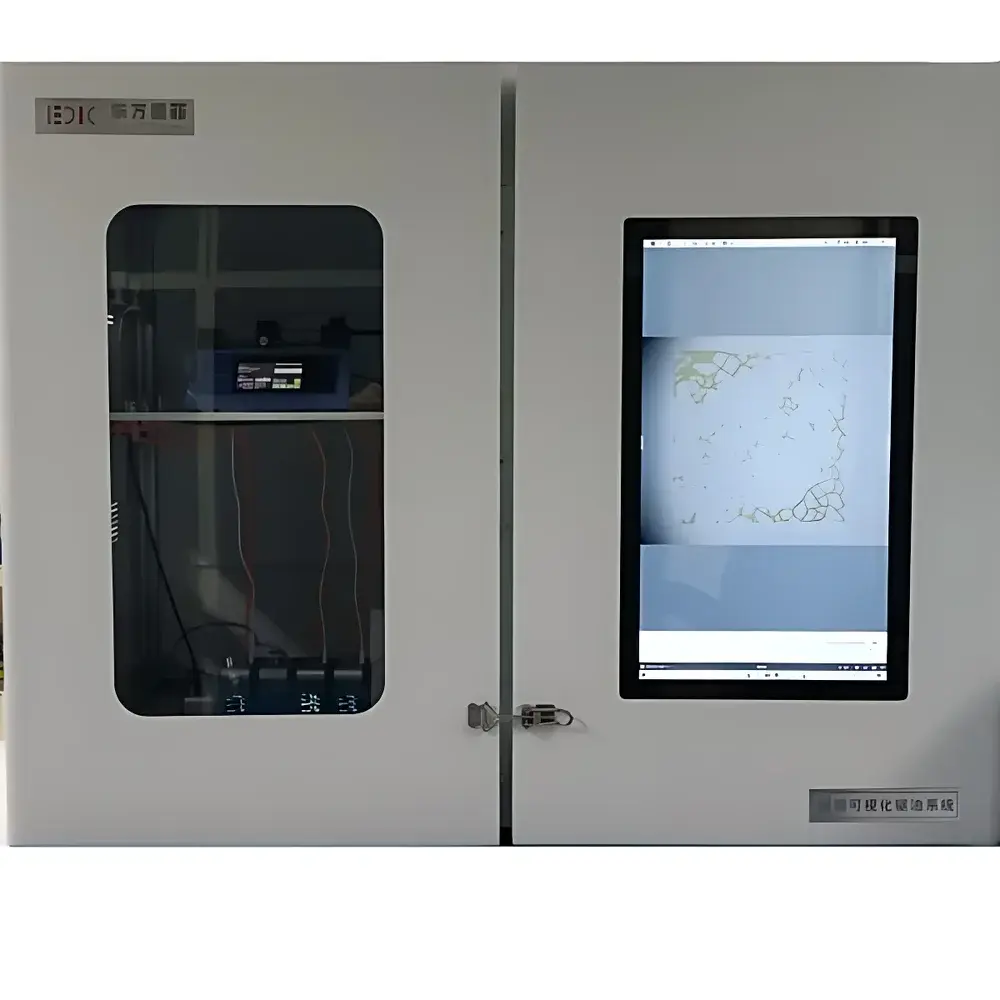
Eastern-Dataphy VMF100 Micro-Visualized Oil Displacement Workstation
| Brand | Eastern-Dataphy |
|---|---|
| Origin | Beijing, China |
| Manufacturer Type | Authorized Distributor |
| Product Category | Domestic Instrumentation |
| Model | VMF100 |
| Pricing | Upon Request |
Overview
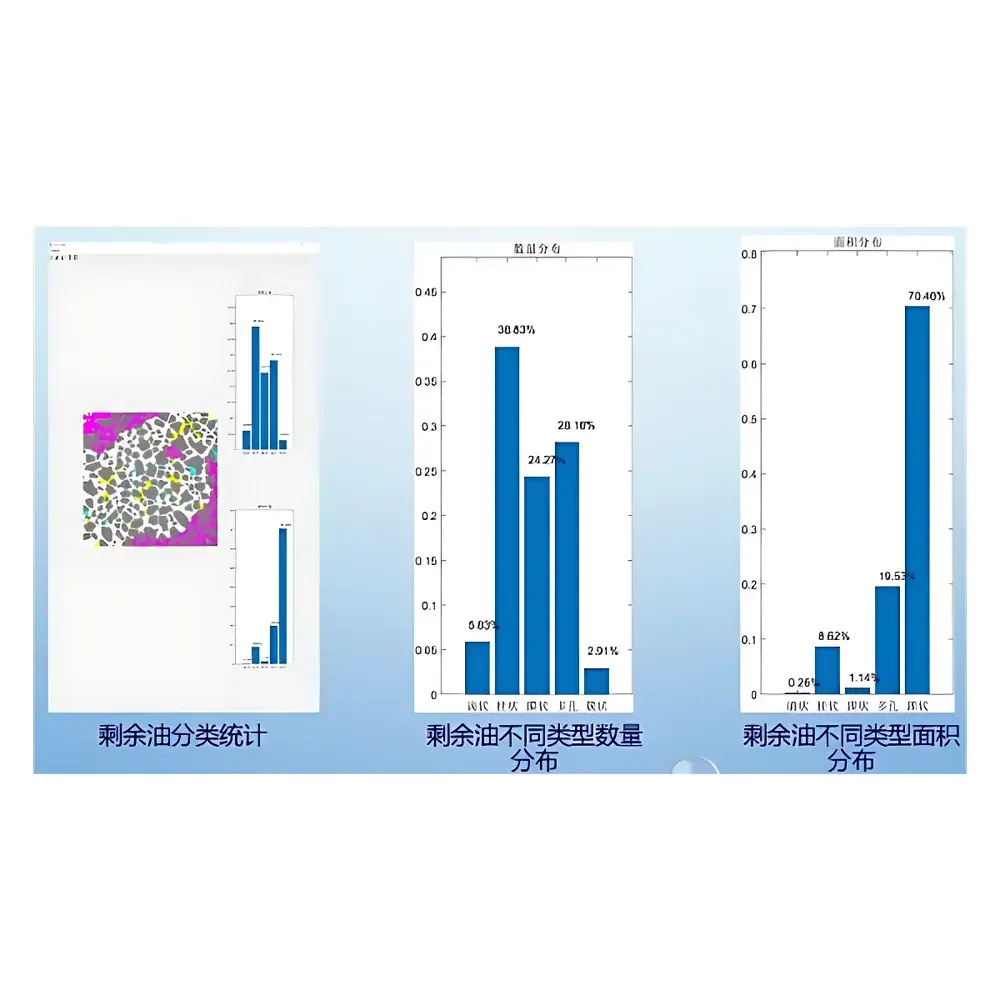
The Eastern-Dataphy VMF100 Micro-Visualized Oil Displacement Workstation is an integrated experimental platform engineered for quantitative, high-resolution investigation of microscale oil displacement mechanisms in porous media. Built upon microfluidic chip-based visualization principles, the system enables real-time optical observation and precise hydrodynamic control of oil saturation and subsequent chemical or water flooding processes within fabricated quartz micromodels. Its core measurement methodology combines controlled pressure/flow injection physics with high-magnification stereoscopic imaging and pixel-level image analytics—effectively bridging pore-scale fluid dynamics with reservoir-scale recovery efficiency evaluation. Designed in collaboration with the State Key Laboratory of Enhanced Oil Recovery (EOR) at PetroChina Research Institute of Petroleum Exploration & Development (RIPED), the VMF100 supports fundamental research into residual oil trapping, mobilization thresholds, and flow regime transitions (e.g., film, droplet, columnar, cluster, and porous-type residual oil) under varying saturation and interfacial conditions.
Key Features
- Multi-modal injection architecture: Dual independent fluid delivery systems—one for ultra-low-flow crude oil saturation (down to 1.28 pL/min), and one for programmable pressure-controlled displacing fluid injection (0–200 bar, 7.5 nL/min–5 mL/min).
- High-fidelity microfluidic monitoring: Integrated fluorinated oil pressure transducers (0–115 PSI, ±0.0007 PSI accuracy) provide real-time, low-drift pressure feedback synchronized with video acquisition.
- Optimized quartz micromodel compatibility: Wet-etched silica chips (standard 1.5 cm × 1.5 cm active area; channel cross-sections down to 20 µm × 7 µm) support homogeneous, fractured, parallel-channel, and looped topologies—customizable per experimental design.
- Robust sealing interface: Magnetic compression sealing (rated to 500 PSI) ensures leak-free operation with PEEK tubing (1/16″ OD) and maintains optical clarity across extended experiments.
- High-resolution stereomicroscopy: Equipped with a 20 MP color CMOS camera, 0.5× plan-apochromatic objective, LED illumination, and 3.75×–67.5× zoom range—optimized for long-duration, vibration-damped imaging at working distance of 71 mm.
- Fully integrated control suite: Embedded 24″ touchscreen PC coordinates hardware synchronization (injection, pressure logging, video capture) and executes analysis workflows without external computing dependencies.
Sample Compatibility & Compliance
The VMF100 accommodates standard and custom-fabricated quartz micromodels conforming to industry-established dimensions and surface treatment protocols (e.g., silanization for contact angle tuning). Chip substrates are compatible with common reservoir fluids—including live crude oils, polymer solutions, surfactant formulations, and low-salinity brines—provided viscosity and particulate content remain within microchannel transport limits (<500 cP, <1 µm filtration recommended). All pressure and flow instrumentation complies with ISO 9001 calibration traceability standards. Data acquisition meets GLP-aligned requirements for audit trails: timestamped pressure logs, frame-stamped video metadata, and software-generated analysis reports include operator ID, session ID, and parameter versioning. While not FDA 21 CFR Part 11-certified out-of-box, the system architecture supports integration with validated electronic lab notebook (ELN) platforms for regulated EOR method development.
Software & Data Management
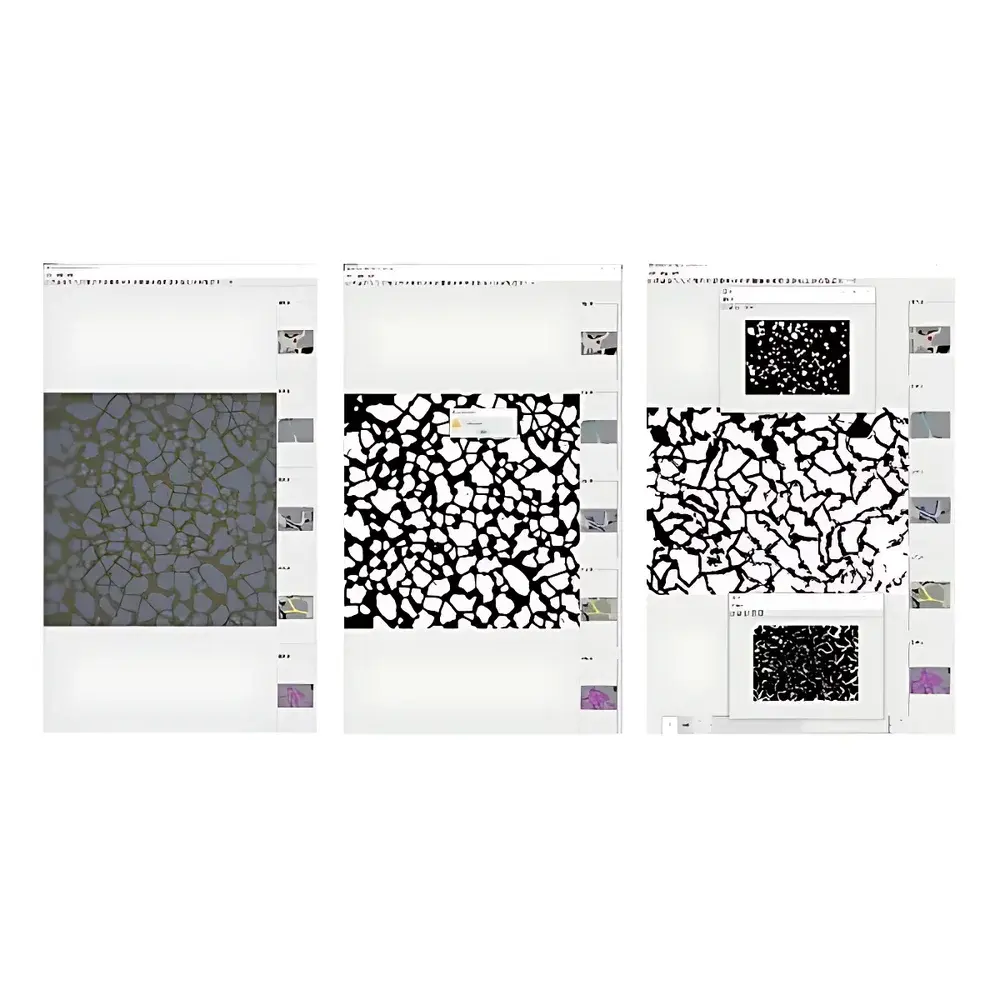
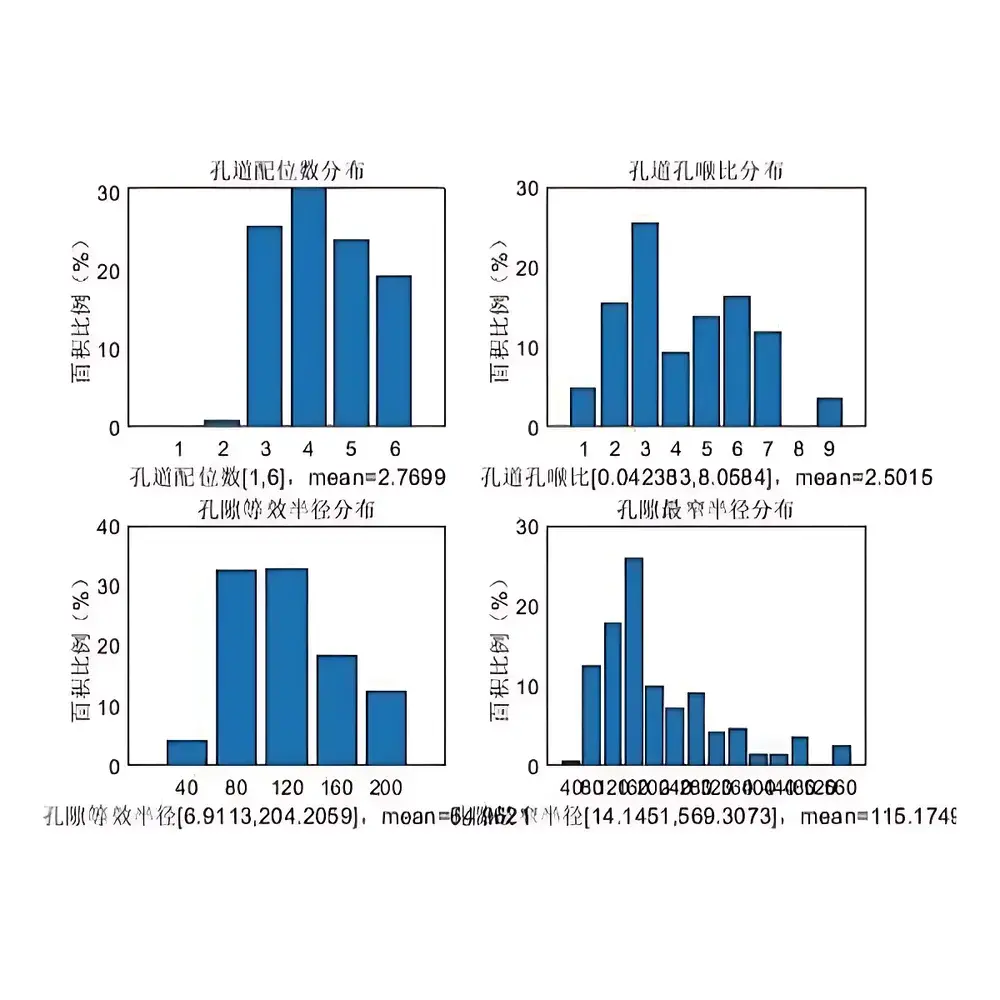
The proprietary VMF-Analyze software provides a modular, scriptable environment for post-acquisition processing. Core modules include: (1) Residual oil segmentation and classification (film/droplet/columnar/cluster/pore-type) via adaptive thresholding and morphological feature extraction; (2) Rock matrix segmentation using grayscale gradient inversion and watershed partitioning; (3) Pore-network parameterization—calculating coordination number distribution, throat-to-pore ratio histograms, equivalent radius profiles, and minimum constriction radius maps; (4) Contact angle quantification using tangent-fit algorithms on meniscus contours, with probability density function (PDF) generation across multiple pore throats. Video files (AVI/H.264) and processed datasets (CSV, TIFF, JSON) are stored with embedded metadata (flow rate, pressure setpoint, time index). Batch processing pipelines enable reproducible analysis across multi-condition experiments—critical for statistical validation of EOR agent performance.
Applications
- Quantitative evaluation of surfactant-polymer (SP) and alkali-surfactant-polymer (ASP) flooding efficiency at pore scale.
- Residual oil saturation (Sorw) mapping under varying capillary numbers (Ca = μv/σ) and wettability states.
- Mechanistic validation of numerical pore-network simulators against empirical displacement sequences.
- Interfacial tension (IFT) and contact angle sensitivity studies under dynamic flow conditions.
- Design and screening of nano-fluidic EOR agents (e.g., silica nanoparticles, zwitterionic surfactants) based on trapped oil morphology evolution.
- Training and benchmarking of machine learning models for automated residual oil classification from raw microscopy feeds.
FAQ
What types of micromodels are supported?
Standard wet-etched quartz chips (1.5 cm × 1.5 cm active area, 20 µm × 7 µm channels) are supplied; custom geometries—including fractured networks, heterogeneous permeability fields, and serpentine loops—are available upon request.
Can the system operate with live crude oil?
Yes—provided the oil is filtered to <1 µm and its viscosity does not exceed 500 cP at operating temperature; thermal control options (not included) may be added for viscosity stabilization.
Is pressure data synchronized with video frames?
Yes—hardware-triggered acquisition ensures sub-millisecond alignment between pressure sensor output and individual video frames via shared TTL clock signal.
Does the software support third-party data export formats?
All analysis outputs are exportable as CSV (numerical parameters), TIFF (segmented masks), and JSON (metadata + configuration), enabling interoperability with MATLAB, Python (NumPy/Pandas), and commercial reservoir simulators.
What maintenance is required for long-term reliability?
Routine calibration of syringe pump displacement volume (biannual), pressure transducer zero-check (pre-experiment), and optical path cleaning (after each oil experiment) constitute the primary maintenance protocol.





