
ECM AFM1000 Wide-Range Air-Fuel Ratio (AFR) Analyzer Module
| Brand | ECM |
|---|---|
| Origin | USA |
| Manufacturer Status | Authorized Distributor |
| Origin Category | Imported |
| Model | AFM1000 |
| Instrument Type | Online Gas Analyzer |
| Detection Principle | Electrochemical (Wideband Lambda/UEGO Sensor) |
| Measurement Range | 8.0–18.0 AFR |
| Accuracy | ±1.5% of reading |
| Output Signal | Linearized 0–5 V DC (AFR-proportional) |
| Sensor Thread | M18 × 1.5 mm |
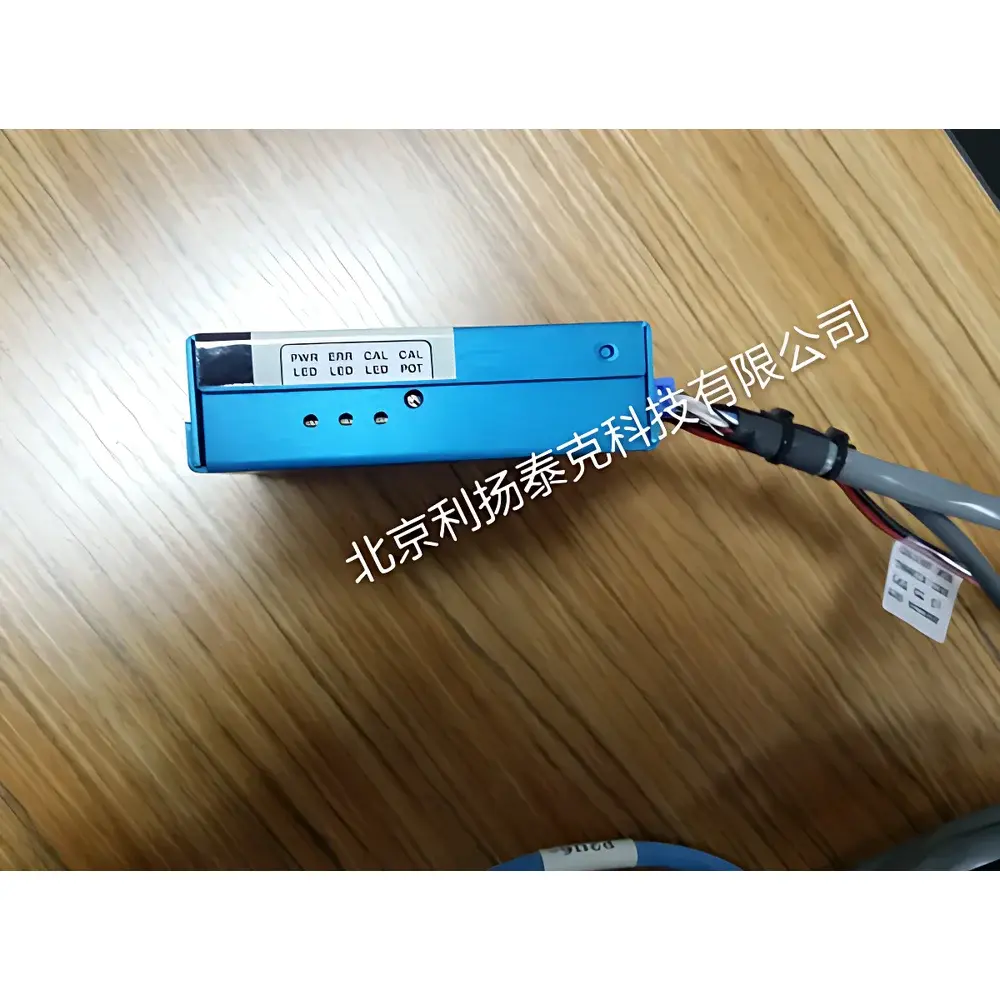
| Dimensions | 4″ × 3.5″ × 1″ (101.6 × 88.9 × 25.4 mm) |
| Weight | 160 g |
| Power Supply | 11–28 VDC |
| Calibration | Single-point zero calibration in ambient air |
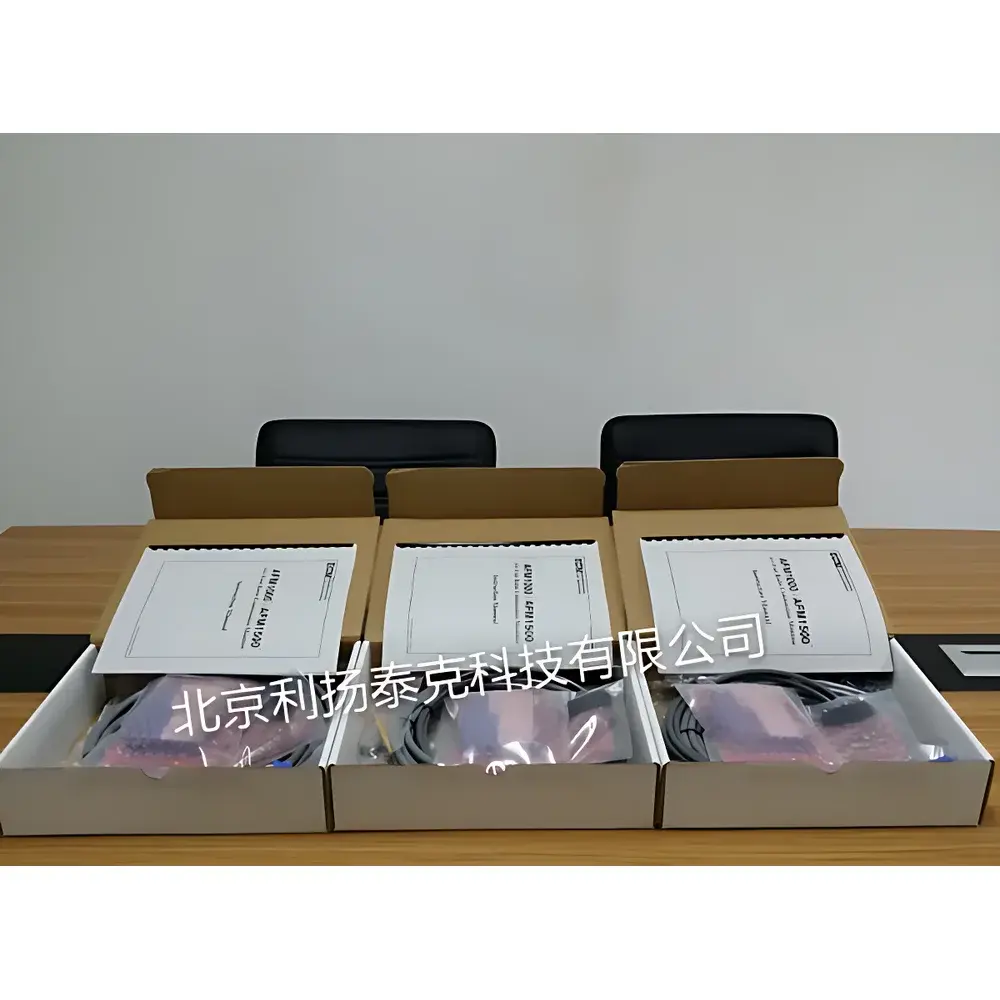
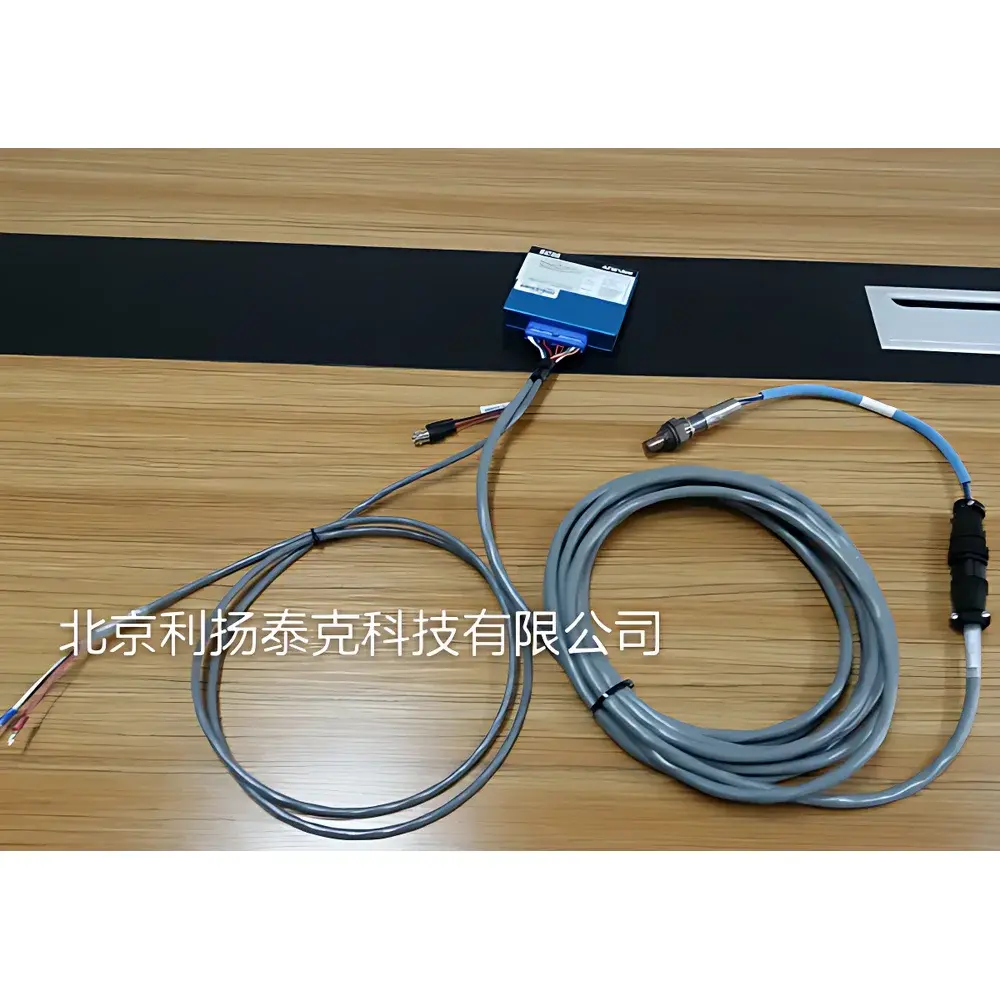
| Kit Includes | UEGO sensor, control module, shielded cable assembly, mounting adapter sleeve, blanking plug, and user manual |
Overview
The ECM AFM1000 is a compact, online air-fuel ratio (AFR) analysis module engineered for real-time stoichiometric monitoring and closed-loop combustion control in internal combustion engine development and calibration environments. It employs a zirconia-based wideband electrochemical (UEGO) oxygen sensor operating on the principle of limiting-current amperometry, where the sensor’s pumping current is precisely controlled to maintain a reference Nernst voltage—enabling continuous, high-fidelity measurement of lambda (λ) and its derived AFR values across both lean and rich combustion regimes. Unlike narrowband sensors limited to λ = 1.0 detection, the AFM1000 delivers true wide-range quantification from λ ≈ 0.57 (AFR ≈ 8.0 for gasoline) to λ ≈ 1.29 (AFR ≈ 18.0), supporting transient engine mapping, emissions optimization, and aftertreatment system validation. Its direct exhaust pipe mounting—via standard M18 × 1.5 mm threaded port—minimizes thermal lag and sampling delay, ensuring sub-second response times critical for dynamic test cell applications.
Key Features
- True wide-range AFR measurement from 8.0 to 18.0 (gasoline-equivalent), corresponding to λ = 0.57–1.29
- High-accuracy analog output: linearized 0–5 V DC signal directly proportional to AFR, traceable to NIST-traceable calibration protocols
- Integrated UEGO sensor with built-in heater control and temperature compensation circuitry for stable operation across exhaust gas temperatures up to 900 °C
- Robust, lightweight aluminum housing (160 g) rated IP65 for under-hood and dynamometer bay deployment
- Wide-input DC power range (11–28 VDC) compatible with vehicle battery systems and bench power supplies
- Factory-calibrated using ambient air (λ = 1.0) as reference; no field recalibration required under normal operating conditions
- Modular architecture: sensor, control module, and cabling are pre-matched and thermally optimized to minimize signal drift and cross-sensitivity to NOx or CO
Sample Compatibility & Compliance
The AFM1000 is validated for use with gasoline, ethanol blends (E10–E85), and compressed natural gas (CNG) combustion exhaust streams. It exhibits minimal cross-interference from CO, HC, and NOx within typical engine-out concentrations (< 2000 ppm CO, < 1000 ppm NOx). The device complies with SAE J1930 diagnostic terminology conventions for AFR reporting and meets electromagnetic compatibility requirements per CISPR 25 Class 3 for automotive component testing environments. While not certified for safety-critical engine control (e.g., ASIL-B), it is routinely deployed in R&D, homologation, and durability testing workflows aligned with ISO 26262 functional safety development guidelines. All firmware and hardware revisions are documented per ISO 9001 quality management system requirements.
Software & Data Management
The AFM1000 operates as a stand-alone analog transducer and requires no embedded software or driver installation. Its 0–5 V output is fully compatible with industry-standard DAQ systems—including National Instruments CompactDAQ, dSPACE SCALEXIO, ETAS INCA, and AVL PUMA Open—enabling seamless integration into existing testbed data acquisition architectures. When used with compliant DAQ hardware, timestamped AFR data supports full GLP-compliant audit trails when paired with metadata logging (e.g., engine speed, load, coolant temperature). The analog interface inherently satisfies FDA 21 CFR Part 11 requirements for electronic records when implemented within validated data acquisition environments that enforce user access controls and change history tracking.
Applications
- Fuel injection and carburetor system calibration across steady-state and transient engine operating maps
- Real-time feedback control for adaptive lambda regulation in prototype ECU development
- Exhaust gas recirculation (EGR) rate validation and diesel particulate filter (DPF) regeneration monitoring
- Aftertreatment catalyst light-off characterization and oxygen storage capacity (OSC) assessment
- Engine benchmarking studies comparing alternative fuels and combustion strategies (e.g., HCCI, SPCCI)
- On-vehicle OBD-II correlation testing and regulatory compliance verification per EPA Tier 3 and Euro 6d protocols
FAQ
Does the AFM1000 require periodic recalibration?
No—calibration is performed at the factory using ambient air as the λ = 1.0 reference point. Under normal operating conditions and proper installation, recalibration is not required. However, users may verify sensor health via zero-check procedures outlined in Section 4.2 of the operator manual.
Can the AFM1000 be used with diesel engines?
Yes, but AFR interpretation must account for diesel’s higher stoichiometric ratio (~14.5 vs. gasoline’s 14.7); the module measures lambda directly, and AFR output is scaled accordingly. For accurate equivalence ratio calculation in compression-ignition applications, users should configure downstream data processing to apply fuel-specific stoichiometric constants.
Is the sensor compatible with exhaust gas temperatures exceeding 800 °C?
The UEGO sensor is rated for continuous exposure up to 900 °C; however, sustained operation above 850 °C may accelerate aging. Use of the included thermal shielding sleeve and proper mounting depth (minimum 10 mm insertion into exhaust flow) is recommended to extend service life.
What is the typical response time (T90) from rich to lean transitions?
Measured T90 response time is ≤ 150 ms under standard test conditions (exhaust gas velocity ≥ 10 m/s, temperature = 400 °C), verified per ISO 16183 Annex B methodology.
Does the AFM1000 support digital communication protocols such as CAN or LIN?
No—the AFM1000 provides analog-only output. For digital integration, users must employ an external analog-to-CAN converter or integrate via DAQ systems with native analog input channels.







